


Quick answer
Amazon seller reputation in 2026 rests on three connected signals: seller feedback, Account Health Rating, and the performance metrics that affect Buy Box eligibility. Seller feedback and product reviews are different systems, and Amazon can remove feedback that includes obscene language, personal information, or a product review posted on the seller profile instead of the ASIN. If harmful feedback stays live, fix the fulfilment or service failure first, then use the right route: feedback removal, buyer revision request, or an account-health appeal. BGR Review handles removal work at $0 upfront and $449 per removed review link.
This page is written for operators because the practical question is always the same: what hurts sales first, and what can you fix fastest. In removal work, the deciding evidence is usually basic order material most sellers already have but fail to attach on the first try: tracking scans, buyer-seller messages, refund timestamps, and the exact feedback text mapped against Amazon's removal grounds.
We also state the limit plainly. If a comment is a genuine service complaint without a policy trigger, removal often fails, so the cheaper move is to correct the defect, answer the issue, and watch whether Buy Box share and account-health warnings settle before you pay for outside help.
Which Amazon reputation signal hits Buy Box access first, and which one can you fix fastest?
Buy Box eligibility usually moves first on operational metrics, not public sentiment on its own. Fix order defect rate exposure, shipping misses and fulfilment gaps before you chase every negative seller feedback comment, because those inputs can change eligibility faster than a feedback average.
The wrong move is to treat every negative signal on Amazon as equal. That fails because a harsh seller feedback comment can depress conversion trust on the listing page, but an operational defect can affect whether you are competitive for the Buy Box at all. If your price is fine yet late dispatch, cancellation issues or defect pressure are building, you can spend hours drafting replies and still lose the sale before the buyer ever reads your feedback profile.
Use a 72-hour triage. In our own workflow at BGR Review, the first pass is defects first, feedback second, catalogue issues third, because that order matches payoff. Day 1: check order defect rate and any fulfilment failures tied to recent orders. Day 2: isolate seller feedback that reflects service failure versus feedback that may qualify for removal or strikethrough under Amazon’s feedback rules. Day 3: clean up listing or catalogue friction that hurts conversion but does not usually change eligibility as fast.
This is the order we use because it gets the fastest commercial result. Shipping, price and fulfilment changes can restore Buy Box eligibility quickly; seller feedback cleanup helps click-through and conversions after the offer is visible again. If you later need removal support, BGR Review handles review-link removals on a pay-after-success basis at $449 per removed link with $0 upfront, but the cheaper move is often to fix the operational blocker before you pay anyone for reputation cosmetics.
| Signal | What it hits first | Priority in the first 72 hours |
|---|---|---|
| Order defect rate | Buy Box eligibility | First |
| Shipping, price, fulfilment issues | Eligibility and offer competitiveness | First |
| Seller feedback | Buyer trust and conversion rate | Second |
| Catalogue issues | Listing quality and conversion friction | Third |
How does Amazon seller feedback actually work once a buyer leaves a rating?
Amazon seller feedback rates the buying experience with a specific seller. Product reviews rate the item on the ASIN. That split matters because seller feedback ties directly to merchant service issues such as dispatch, packing, communication and refund handling, while product reviews speak to item quality.
The wrong approach is to treat every negative comment as a listing problem. That fails because a buyer can leave a 1-5 star seller feedback rating with an order-specific comment about late delivery, a rude reply or a missing refund even when the product review on the ASIN stays positive. If you answer the wrong problem, you waste the first removal window on arguing about product quality when Amazon is looking at seller-service records tied to that order.
The right approach is to read seller feedback against the order trail. Check the star rating, the comment, your buyer-seller messaging, any refund or return action, and the fulfilment history for that order before you decide whether to request removal, post a public reply, or fix an internal service issue. In our workflow, this classification step comes first because feedback sits beside message history and order handling, not inside the product review stream, and that is what makes it useful for later account-health checks and Buy Box triage.
What should you do in the first 24 hours after negative Amazon feedback goes live?
Pull the order record, shipment scan, buyer messages and refund status before you take any public step. Your first 24 hours are for evidence, containment and checking whether the same complaint also puts order defect rate, an A-to-z Guarantee claim or account health at risk.
The wrong move is a defensive reply under the seller feedback as soon as it appears. That fails because you can box yourself into a version of events that the tracking history, message log or refund record does not support, and a rushed public answer does nothing to stop a linked defect if the buyer has already opened a claim. Check the promised dispatch date, carrier acceptance scan, delivery timestamp, buyer contact history and whether support missed a message that should have had a same-day answer.
If the complaint is about late delivery, no response from support or a broken return promise, answer the buyer within 24 hours and keep the message factual. Fast customer service response time can contain escalation, protect future conversions on your listing traffic and reduce the chance that one piece of seller feedback turns into a broader account issue. In the same log, record three flags: feedback only, feedback plus refund, or feedback plus A-to-z Guarantee claim.
When can Amazon remove seller feedback, and when does it only get struck through?
Amazon will not remove seller feedback because it feels unfair. Removal usually turns on a valid policy ground, and some fixed cases stay public as strikethrough feedback instead of disappearing.
The wrong move is to argue that the buyer was rude, exaggerated, or “obviously wrong”. That usually fails because Amazon reviews seller feedback against feedback-specific content rules, not against your sense of fairness.
FBA vs FBM matters here. On FBA orders, complaints about fulfilment Amazon controlled, such as packing, shipping, or delivery handling, can be easier to challenge because the fault sits with Amazon’s fulfilment chain rather than your seller conduct. On FBM orders, the same complaint often stays tied to your account unless the wording itself breaks Amazon’s feedback rules, so your request needs order evidence, dispatch records, and a clean explanation rather than a generic protest.
Some disputes end in visibility reduction, not full deletion. If you resolve the buyer issue, Amazon may leave the rating visible with strikethrough feedback status, which signals that the original complaint has been addressed but still leaves a trace for anyone reviewing your seller history. That outcome can still help if the feedback was damaging conversion on your offer page, but it is weaker than removal and you should watch whether Buy Box eligibility improves after the change.
What should an Amazon feedback removal request actually say?
A strong Amazon feedback removal request is short, policy-based and tied to one order. Put the order number, the exact disputed wording, the matching Amazon rule and your request for removal or strikethrough in a single note, without emotion or backstory.
Long complaints fail because they bury the policy ground. For seller feedback removal, Amazon reviews the rule match first, so your note should quote the marketplace-specific rules issue that applies, such as product-review content posted in seller feedback: comments about item quality, packaging or product performance rather than the seller’s service. Keep the request under 150 words and attach only relevant evidence, usually the order page, delivery scan or buyer-seller message thread.
Order: 123-1234567-1234567. Disputed seller feedback: “The charger stopped working after two days.” This feedback concerns product performance, not the seller’s service, and appears to fall under Amazon’s seller feedback rules for product-review content. Please remove it, or apply strikethrough if Amazon determines that is the correct action. Supporting evidence attached: order record only.
How does Account Health Rating turn reputation problems into suspension risk?
Account Health Rating matters because it turns scattered seller issues into one compliance signal Amazon can act on. Public complaints hurt trust and click-through on your listing, but a weakening account-health record is what pushes you towards intervention, review, or suspension risk.
The wrong approach is to treat Account Health Rating as a dashboard score you check after a bad week. That fails because Amazon uses it as an intervention trigger tied to policy violations, not as a cosmetic reputation metric. A buyer complaint that starts as poor seller feedback can also surface as an A-to-z Guarantee claim, an order defect, or an abuse flag if your messages, refund handling, or fulfilment conduct break marketplace rules. Once those issues stack, Buy Box eligibility can tighten before your branded search demand or conversions show the damage.
The better approach is to read AHR like an operations queue. If seller feedback mentions late delivery, item condition, or misleading communication, check the same order for linked defects, open claims, and any policy contact from Amazon’s Account Health team the same day. In BGR Review’s own case file of 12,000+ negative review cases logged June 2025 to June 2026, reviews raised within 28 days and backed by a clear policy issue resolved successfully in roughly 90% of cases; comparable cases raised later fell to approximately 25–30%. That is our observed removal outcome profile, not an Amazon rule, but the operating lesson is clear: fix the compliance issue first, then track whether account-health pressure eases and Buy Box access returns.
A-to-z Guarantee claims, defects, and abuse flags often travel together because Amazon reviews the order, not just the public comment. If one order has a complaint, a refund dispute, and message misuse, you are no longer dealing with reputation alone; you are dealing with suspension exposure.
Can Amazon suspend sellers for review abuse, feedback manipulation, or message misuse?
Yes. Amazon can suspend a seller for manipulation patterns that include incentivised reviews, abusive requests to change feedback, and misleading buyer-seller messaging. The exact trigger sits inside Amazon’s own marketplace-specific rules, and consumer-protection law can also apply in the US, UK and EU; this is general information, not legal advice.
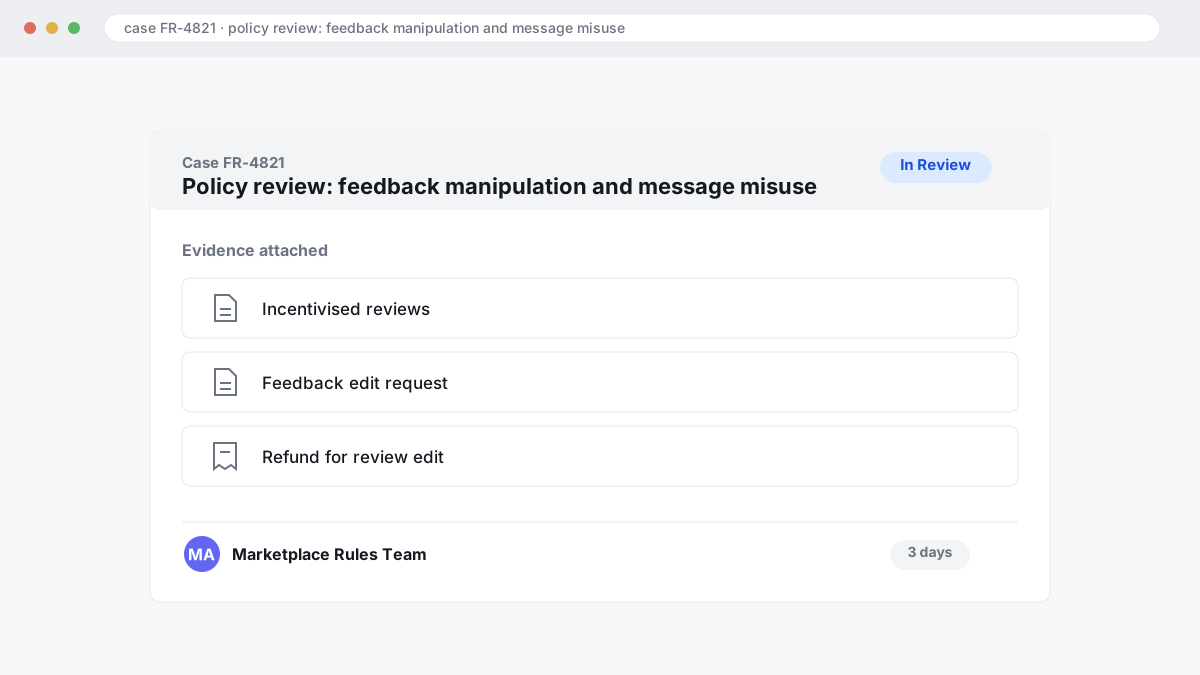
Most sellers think only fake five-star reviews create risk. That misses the easier way to create policy violations: offering a refund, replacement, coupon or future discount in exchange for a review edit, or sending repeated messages that pressure a buyer to remove negative feedback. Amazon’s Buyer-Seller Messaging rules and review policies are built to catch conduct that tries to influence the content or timing of feedback, even when the original order was real.
The safer approach is narrow and boring. Use buyer-seller messaging to fix the order issue, keep the message tied to fulfilment or customer service, and ask for a review or feedback change only where Amazon’s local rules allow it and without any incentive, threat or repeated chasing. That works because it reduces the signal Amazon reads as manipulation and it keeps you clear of a second problem outside the platform: the FTC’s 2024 Rule on Fake Reviews and Testimonials in the US, plus the UK’s DMCC Act 2024 and EU consumer-protection rules on misleading commercial practices.
If you have already crossed the line, stop the message sequence first.
How much do seller feedback, defects, and fulfilment choices change Buy Box odds?
Buy Box eligibility usually shifts on a bundle of operational signals: fulfilment method, delivery reliability, price competitiveness and defect pressure. A seller with slightly weaker feedback can still win more often than a five-star seller whose order defect rate or late shipment rate is putting service standards at risk.
Most guides tell you to chase stars first. That fails because seller feedback is only one trust input after the order is complete, while the Buy Box decision is trying to predict whether the next order will land cleanly and on time. If your feedback falls from positive to mixed, that hurts click-through and conversions on your offer page; if your defect pressure rises or late dispatch starts stacking up, Buy Box access can drop faster because Amazon treats those as live execution risk.
The faster fix is usually operational, not cosmetic. Tighten handling times, remove SKUs you cannot dispatch reliably, and audit cancellations before you spend on a feedback clean-up.
Seller-fulfilled prime can improve conversions because the badge lifts trust at the point of choice, but it only helps when delivery performance stays stable under Prime-level expectations. The wrong move is adding seller-fulfilled prime to lift visibility while your fulfilment team is already stretched. The right move is using it only on SKUs, cut-off times and regions you can support consistently; otherwise the badge increases exposure, late deliveries follow, and Buy Box eligibility gets tighter rather than looser.
When does FBA beat FBM for reputation control, and when does it create blind spots?
FBA usually cuts shipping-led reputation risk because Amazon controls dispatch, tracking and most delivery messaging. FBM gives you more room to fix a bad order yourself, but it exposes you to late shipment rate pressure, tracking gaps and slower customer service response time if your support queue slips.
The wrong approach is treating FBA as automatically safer. That fails when your main complaints come from damaged prep, commingled inventory issues, refund disputes or stockouts you cannot personally recover; you lose direct fulfilment control, and seller feedback can still mention a bad delivery experience even if Amazon later removes or strikes it through under its feedback rules.
The better approach is to match FBA vs FBM to the complaint pattern hurting Buy Box access first. If missed scans and carrier delays are driving defects, FBA usually helps. If your margin is tight and your team can answer messages fast, ship accurately and offer same-day service recovery, FBM can protect conversions better because you can stop a bad order turning into negative feedback before it hardens into an Account Health problem.
Check the same four lines every week:
| Weekly check | FBA | FBM |
|---|---|---|
| Refund causes | Look for fulfilment damage, returns handling, lost units | Look for packing errors, dispatch delays, wrong-item sends |
| Delivery failures | Usually lower seller-side risk | Watch late shipment rate and tracking validity closely |
| Feedback themes | Less “arrived late”, more fulfilment dispute wording | More comments about dispatch, courier choice and response speed |
| Margin | Higher fulfilment fees can squeeze recovery options | Lower fees can fund proactive refunds or replacements |
Should you manage Amazon reputation in-house or use a specialist service?
In-house handling works when feedback volume is low and one person owns the queue every day. Outside help starts to make sense when seller feedback issues, Account Health Rating checks, and multiple Amazon marketplaces make slow handling cost more than the fee.
The wrong comparison is vendor fee versus doing it yourself for free. That fails because the real cost sits in staff time, delayed feedback removal, slower customer service response time, and the extra days a harmful comment keeps pushing down trust while your team juggles orders, claims and AHR alerts. The better comparison is fee versus labour plus delay cost, and any specialist should be able to show a disciplined evidence workflow rather than vague promises. On our side, we log outcomes as success, unresolved or unknown across 12,000+ negative review cases recorded June 2025 to June 2026, because a claimed removal hit rate means little if unknown outcomes get counted as wins.
This is the comparison worth making before you decide.
| Model | Monthly workload | Response SLA | Removal hit rate check |
|---|---|---|---|
| In-house | Several staff hours across case review, order evidence, buyer-message checks and follow-up | Depends on queue discipline; often slips behind fulfilment and support | Usually undocumented, with basic report-button use and weak audit trail |
| Specialist | Internal owner still approves facts, but templates and escalation cut admin time | Set workflow, fixed handoffs, faster resubmission when Amazon rejects first pass | Should be evidenced from logged outcomes, not a headline percentage alone |
Keep it in-house if one operator can review feedback daily, classify policy grounds correctly, and tie each case back to AHR risk. Use a specialist if your team keeps replying late, misses policy-based removal opportunities, or cannot hold a clean response SLA across UK, US and EU marketplace-specific rules.
How should multi-marketplace brands run one Amazon reputation system without losing local rule control?
Multi-marketplace brands need one operating rhythm, not one blunt global rulebook. Centralise tracking, then localise policy checks, fulfilment standards, and escalation paths by marketplace so Account Health Rating problems do not spread quietly from one region to another.
The wrong approach is to standardise every action across the US, UK, and EU stores. That fails because marketplace-specific rules and buyer expectations differ: a product reviews spike on one ASIN in Germany is a catalogue issue, while negative seller feedback on late delivery in the UK is a service defect, and those should not sit in the same queue. Your dashboard should split ASIN-level content from seller-service defects, then split both again by marketplace, so the catalogue owner is not chasing fulfilment errors and the fulfilment team is not rewriting listings.
The workable model is one shared weekly review with three owners in the room: catalogue, fulfilment, and account-health. Review each marketplace separately, check whether the issue threatens Buy Box eligibility or Account Health Rating first, and only then choose the local escalation route. That structure works because you standardise tracking and ownership, while compliance stays local to the marketplace where the breach, buyer complaint, or policy trigger actually happened.
What should you monitor every week so reputation problems do not hit sales twice?
Monitor seller feedback percentage, Account Health Rating, Order Defect Rate, claims, Buy Box share and your response backlog every week. Watched together, they show the same problem in two places: first as customer friction, then as lost visibility or conversion, while you still have time to stop it spreading.
The wrong approach is a monthly reputation review. It fails because Amazon damage compounds faster than that: a delay in customer service response time can push up negative feedback, then A-to-z Guarantee claims, then pressure your Account Health Rating, while Buy Box share slips on the same SKU group. Review the trend every 7 days by fulfilment channel, marketplace and top-revenue product cluster, and keep Voice of the Customer warnings beside those numbers so you can see whether the issue starts in fulfilment, listing quality or service handling.
If one metric worsens for 2 consecutive weeks, open an investigation before sales losses stack. Start with the affected orders, claim reasons, late dispatches, message backlog and any SKU-level Voice of the Customer complaints, then decide whether the fix is operational or appeal-led.
Where to go from here
Run one weekly audit across the three signals that change seller visibility fastest on Amazon: recent seller feedback, your Account Health Rating, and fulfilment defects such as late shipment rate, A-to-z Guarantee claims and valid tracking problems. Put each issue into one of three buckets: policy-removable, operational-fixable, or monitor. That stops you wasting time on product reviews that will not change seller metrics while a feedback strike, policy violation or recurring FBM dispatch delay keeps Buy Box eligibility under pressure.
Move quickly once you spot harmful feedback. Pull the order ID, buyer-seller messages, tracking scan, refund record and any FBA or FBM handling notes, then choose the route: removal request, buyer resolution, or internal process fix. In BGR Review’s negative-review case file of 12,000+ cases logged June 2025 to June 2026, reviews raised within 28 days of posting and backed by an identifiable policy issue resolved successfully in roughly 90% of cases; comparable cases raised later fell to approximately 25–30%.
Your next step is simple: review the last 30 days of orders and open a live defect sheet today. You should expect a clearer priority list within an hour, faster escalation on removable feedback, and a cleaner read on whether the real problem sits in customer service response time, seller-fulfilled prime performance, or a single policy issue dragging account health.