

Quick answer
Reviews affect SEO most clearly in local search. On Google Business Profile, reviews feed prominence, shape local pack visibility, lift click-through rate from Maps results, and change whether a visitor calls or books after the click. They do far less as a simple ranking signal for standard organic pages, where Google’s structured data rules also limit when star ratings can show as review snippets. The practical effect depends on search type, page type and platform, but review quantity, recency, sentiment and response quality usually change leads before they change rankings.
We handle review acquisition, disputed-review removals and profile recovery across Google, Trustpilot, Yelp, Clutch and TripAdvisor, so this page is based on platform workflow rather than recycled SEO theory. A bad review rarely follows one neat path: the first move is usually a public reply, then the in-platform flag, then an evidence pack built around the exact policy issue, because the basic report button on its own gets rejected far more often than most owners expect.
If you are asking how do reviews affect seo, the useful split is visibility versus clicks versus conversion. That distinction matters in practice, because a one-star hit can leave rankings mostly intact while cutting call volume from the local pack within days.
Where do reviews change rankings, clicks, and leads — and where do they not?
Reviews change search performance in two different places: they can influence local pack visibility, and they can change click-through and conversions even when position stays the same. If you separate those effects first, you stop treating every new review on your Google Business Profile as a ranking event when many of the wins show up earlier in clicks, calls and form fills.
Most guides fold everything into “SEO” and then over-credit reviews for broad organic rankings. That fails because Google uses reviews far more directly around local pack rankings, prominence and profile choice than it does for your standard blue-link pages; in BGR Review’s dataset of 1,485 businesses observed from February to July 2026, trades businesses reached early review momentum quickly and the visibility lift showed up first on profile-led enquiries, which fits what Google Business Profile drives in the map pack far better than what a service page ranks for organically.
This split is the useful one to work from:
| Bucket | What reviews usually change | What they usually do not change fast |
|---|---|---|
| Local pack visibility | Review quantity, recency and star rating can strengthen prominence signals in Google Business Profile | Distance and query relevance still cap movement |
| Organic traffic | Brand searches can rise after stronger reputation signals | Core rankings for non-local pages rarely jump from reviews alone |
| Click-through rate | Higher stars and fresh review text lift click-through rate before rank shifts | A better snippet cannot fix a weak offer or poor title tag |
| Lead quality | Brand trust improves when searchers read recent reviews and owner replies | Bad intake, pricing friction and slow response still kill bookings |
The right approach is to fix the bucket that is actually leaking. If your rankings are flat but your average rating slipped, your first problem is often click-through rate and brand trust, which means lost bookings long before Google changes placement; if a review issue is false or policy-breaching, BGR Review’s removal work runs on $0 upfront and $449 per removed review link, but plenty of profiles need better acquisition and response discipline before they need removal at all.
How do reviews actually help local SEO inside Google Business Profile?
Reviews help local SEO through prominence in Google Business Profile, not as a substitute for links or on-page SEO. A stronger review profile can lift your local pack rankings when distance and relevance are already close, because Google has more evidence that your business is established in that area.
The common mistake is treating reviews as a ranking override. They do not beat a badly matched category, weak service description, or a searcher who is physically closer to a competitor. Where reviews do matter is the tie-break zone: two nearby profiles in the same category, both reasonably complete, often separate on review quantity, review recency and review sentiment. Fresh, detailed comments give Google more confidence in prominence, and they also make the profile look active to the searcher before they click.
Maps visibility usually moves faster than website rankings because Google Business Profile reacts to profile signals inside its own system, while organic search still depends on your site, links, technical health and page relevance. In BGR Review’s dataset of 1,485 businesses observed from February to July 2026, new trades and local service businesses that reached 20–30 reviews in the first three months were associated with improved local visibility, though other ranking factors were active at the same time. That is why a plumber can climb the map pack before the website’s service pages move much at all.
Why do local businesses feel review impact more strongly than service-area and multi-location brands?
Review impact feels strongest where the buyer chooses in the map pack itself, weaker where service pages and proximity carry more of the job, and more fragmented across chains where each branch needs its own rating, review quantity and brand trust.
The wrong approach is one review strategy for every model. A restaurant, dentist or clinic often wins or loses at the decision moment because the star rating sits beside opening hours, directions and call buttons inside Google Business Profile, so a weak average cuts click-through and leads before your site gets a chance to help. In BGR Review's dataset of 1,485 businesses observed February-July 2026, established practices such as dentists, lawyers and accountants usually needed 30-50 reviews before profile performance stabilised, which tells you visible social proof matters early and locally.
Service-area businesses work differently. A roofer, locksmith or cleaning company can still rank and convert through proximity, a relevant service page and enough review trust to remove doubt; in BGR Review's dataset of trades businesses with complete enquiry-source data, observed February-July 2026, 70-80% of calls and bookings were attributed to a Google Business Profile or Yelp listing rather than a standalone website. Reviews matter here, but they work with distance, category relevance and page intent, not in isolation.
Multi-location reputation breaks when head office treats it as one corporate score. Google evaluates each branch listing on its own signals, so one London clinic with fresh reviews does not rescue a thin New York profile, and uneven review quantity across locations creates uneven map-pack visibility, click-through and lead quality.
Which review fixes usually produce the fastest SEO ROI?
The fastest review ROI usually comes from fixing review acquisition, review recency and any damaging star rating gap before you spend hours refining low-impact details. Review responses help, but a thin or stale profile usually costs more local pack visibility and click-through rate than an imperfect reply ever will.
The wrong approach is to start with the easiest task because it feels productive: polishing every response, rewriting owner replies, or tweaking profile wording while review quantity stays flat. That fails because Google Business Profile can only work with the signals on the profile in front of it, and buyers scanning the map pack react first to star rating, how recent the last few reviews look, and whether the profile feels active enough to trust with a call.
Start where the gap is hurting visibility or trust most. If your last review is months old, fix review request timing. If your average rating has slipped, fix the service issue behind it and bring in fresh legitimate feedback before you obsess over reply perfection. In BGR Review's dataset of 1,485 businesses observed from February to July 2026, new trades and local service businesses typically saw first reviews around two weeks after launch, and reaching 20-30 reviews over the first three months was associated with better local visibility while other ranking factors were active too.
Measure the return properly. Track calls, direction requests and booked leads for 8-12 weeks after you restart review requests, because the first lift often shows up in click-through rate and lead quality before you see a clear ranking jump. If you use outside help, judge it by whether it closes the quantity, recency and rating gap first; at BGR Review, review delivery starts in 24-48 hours and packages carry a 30-day free replacement guarantee, but the scorecard still has to be calls and bookings, not busywork.
How much do review count, recency, and rating each matter when buyers choose a result?
Buyers usually read review count, recency and star rating in that order of doubt: quantity answers “are you established?”, recent reviews answer “are you still active?”, and rating answers “how risky is the click or call right now?”
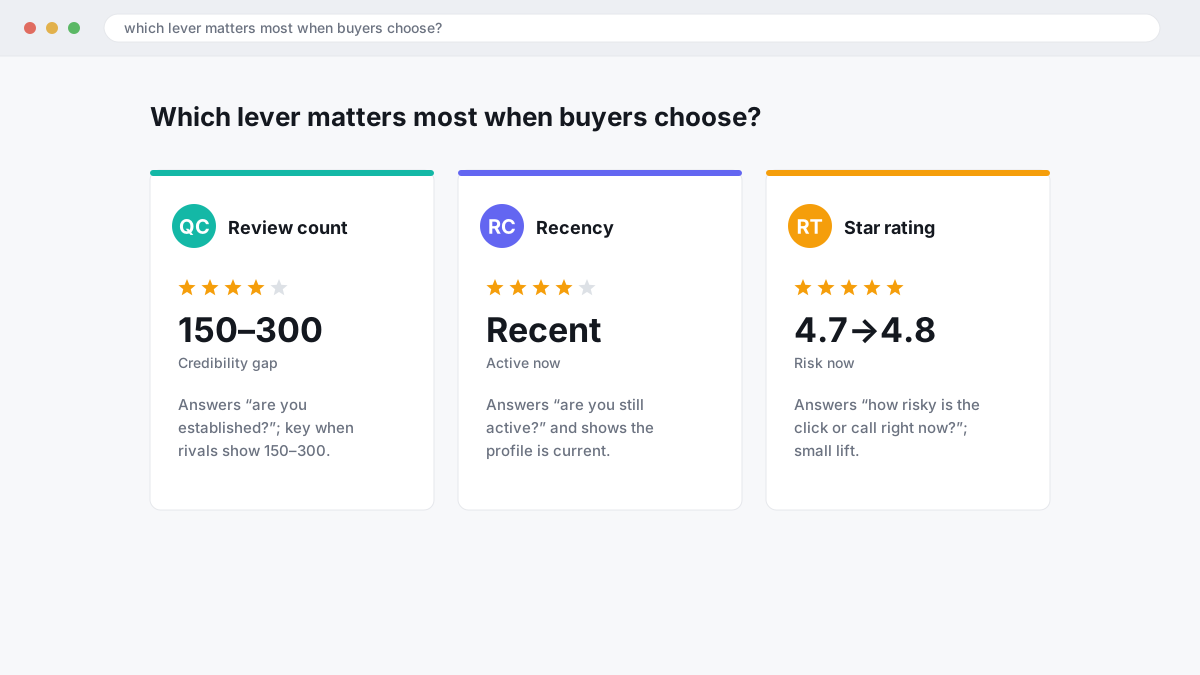
The wrong approach is chasing one metric as if it always wins. That fails because the gap on the page decides the lever. If the local pack shows rivals with 150 to 300 reviews, your review quantity does more for credibility than moving from 4.7 to 4.8. In BGR Review’s dataset of 1,485 businesses observed February to July 2026, dentists, lawyers, accountants and roofers typically needed 30 to 50 reviews before profiles performed consistently, which matches what buyers do in high-trust categories: they look for enough volume to believe the rating.
This is the practical comparison to use before you spend time or money on the next fix.
| Lever | What the buyer reads into it | When it matters most | When it matters less |
|---|---|---|---|
| Review quantity | Social proof and market credibility | When competitors already show triple-digit counts | When everyone in the result set has low volume |
| Review recency | Proof the business is active now | Emergency services, restaurants, clinics, seasonal demand | Slow-cycle B2B decisions where older reviews still fit |
| Star rating | Perceived risk before reading details | Close decisions between similar profiles | When one profile has far stronger quantity and fresh feedback |
The right approach is matching the lever to the category and competitor spread. Recent reviews usually lift click-through rate fastest because they reassure a buyer before they read detail, while star rating shapes trust at a glance, and quantity helps once the page makes your profile look thin. If a bad review lands, that often hurts conversion before it changes visibility, which is why a fast reply, a flag where policy grounds exist, and a fresh review request in the next few days usually beat obsessing over a tiny rating change.
Can fake reviews hurt SEO, trust, or your account standing?
Yes. Fake reviews can damage brand trust straight away and can also trigger filtering, removals, or platform scrutiny that weakens profile performance on a Google Business Profile. Rules vary by country and by platform, and this is general information rather than legal advice.
The wrong approach is treating fake reviews as a legal problem only. That fails because the first loss usually shows up in clicks and leads: a profile with suspicious review patterns, repeated wording, or sudden bursts from low-history accounts can look manipulated to buyers before any regulator or platform acts, which cuts conversion even if your local pack position does not move much. Google’s Google Business Profile prohibited and restricted content policy bars fake engagement, and enforcement can mean filtered reviews, removals, or extra scrutiny on the profile rather than an obvious public penalty.
The safer approach is simple: earn genuine reviews, disclose any material connection where the law requires it, and remove policy-violating content with evidence instead of trying to outnumber it. In the US, the FTC’s endorsement rules require clear disclosure for paid endorsements, and the FTC’s 2024 rule on fake reviews and testimonials sharpened the enforcement picture around fabricated or purchased feedback. False factual claims inside a review can also raise defamation issues, but the route changes by country and by platform policy, so the practical fix is usually policy evidence first and legal advice second.
If a fake review is already live, speed matters. Across 12,000+ negative review cases logged by BGR Review from June 2025 to June 2026, reviews raised within 28 days of posting and supported by an identifiable policy issue resolved successfully in roughly 90% of cases, while comparable cases raised later fell to approximately 25–30%; if you need help, BGR Review handles removals on a pay-after-success basis at $449 per removed review link with $0 upfront.
Do review responses help SEO enough to justify the time?
Review responses usually justify the time because they move click-through, reassurance and lead quality more reliably than rankings; a clear owner reply on Google Business Profile within 24-72 hours signals attention, while a monthly batch of replies looks managed from a distance.
The wrong approach is treating review responses as a direct ranking lever and posting generic “thanks for your feedback” lines across every review. That fails because the ranking effect is usually weak, and scripted replies do little for brand trust when a buyer is comparing two similar local results in the map pack. The right approach is faster, specific replies that acknowledge the service issue or win the reviewer mentioned, use plain language, and show a real next step. That works because buyers read the exchange before they call.
Replies also help you read review sentiment properly instead of guessing from the star score alone. If five recent reviews mention late arrivals, confusing quotes or rude front-desk calls, consistent review responses surface the same service theme fast enough to fix the operation behind it.
Which review response template helps SEO without sounding scripted?
A response that supports search performance sounds brief, specific and human: thank the reviewer, mention one real detail, address the issue if there is one, and suggest an offline follow-up. Believable customer service helps more than stuffing the same service keywords into every reply, so keep review responses to about 80 words for readability and speed.
The weak approach is pasting one keyword-rich block across every review: “Thanks for choosing our best plumber in London” repeated 20 times. That fails because readers spot the script, brand trust drops, and the reply adds nothing useful for the next person comparing you in the local pack. The stronger approach keeps one structure but changes one detail each time, which is the method we use when drafting replies for clients across Google Business Profile, Trustpilot and Yelp.
Use this four-part frame: thanks, specific detail, resolution, next step. Example: “Thanks, Sarah. Glad the boiler repair was completed the same afternoon. Sorry the arrival window slipped by 20 minutes. We’ve raised that with dispatch. If you want to check the annual service plan, email us and we’ll send the options.” Leave out incentives, private data, booking IDs, and copied keyword blocks.
When can review stars appear in search results — and when does schema do nothing?
Review stars in organic results depend on page eligibility and structured data, not on the fact that reviews exist somewhere online. Google Business Profile ratings, website schema, and local pack displays run on separate systems, so one does not automatically populate the others.
The wrong move is adding schema to every page and expecting stars everywhere. That fails because Google only shows structured data review snippets on eligible page types, and Google’s review snippet guidelines restrict self-serving markup for many LocalBusiness and Organization cases where your own site marks up reviews about your own business. A plumber can have a 4.8 on Google Business Profile and still get no organic stars on the homepage, even with valid schema.
The right move is checking the page type first. Schema works best where the page itself is the thing being reviewed, such as a product, course, software app or a clearly defined service page that meets Google’s eligibility rules; it does little on a generic local homepage that simply republishes testimonials. That distinction matters for click-through rate: rich results can lift organic clicks when they appear, but they do not change local pack visibility, and your Google Business Profile star rating still influences map-pack clicks on its own track.
How should you get more Google reviews without triggering filters or policy problems?
The safest way to grow Google reviews is a steady request flow tied to real customer volume. Ask soon after the job, send one direct Google Business Profile review link by SMS or email, and avoid incentives or sudden spikes that can trip filters or policy checks.
Delay is where most profiles lose momentum. Review recency matters because fresh feedback keeps your profile active in the local pack and gives new searchers something recent to read before they click or call. In BGR Review's dataset of 1,485 businesses observed February-July 2026, new trades and local service firms typically saw first reviews around two weeks after launch, which lines up with a simple rule: ask right after service completion, while the job is still clear in the customer's mind.
The wrong move is blasting every past customer at once after months of silence. That creates an unnatural burst, inflates review quantity in a way that does not match real transaction volume, and often sits beside weaker lead quality because the oldest customers are less likely to leave detailed, relevant feedback. The safer workflow is plain: trigger a request from your CRM or invoice close-out, send one message, use one direct link, and let the pace of requests mirror the pace of actual jobs.
Google Business Profile review policy gives you very little room for shortcuts. Review gating, bulk incentives, or filtering happy customers into Google while unhappy customers go elsewhere can create compliance problems, and a cleaner-looking star rating is not worth risking suppressed reviews or account scrutiny. If you need help building the process, BGR Review sets up compliant acquisition flows and backs review packages with a 30-day free replacement guarantee.
When does DIY review management stop being efficient compared with outsourced help?
DIY review management stays efficient when one person can still read every new review, publish review responses the same day, and handle the occasional fake review without pulling sales or operations staff away from booked work.
The wrong approach is to assume outside help only matters once removals start. That fails as soon as multi-location reputation becomes a coordination problem: one branch replies within hours, another leaves complaints untouched for a week, and nobody tracks which fake reviews were flagged, escalated, or left to sit and damage lead quality. Internal handling is usually fine for one location or a modest weekly review volume. It gets expensive when templates, monitoring, escalation notes, and manager approvals start eating staff time.
This comparison matters more than the monthly fee headline.
| Area | DIY internal handling | Specialist support |
|---|---|---|
| Staff hours | Usually workable at low volume; becomes fragmented across reception, marketing, and location managers | Centralises monitoring, review responses, and escalation workflow across locations |
| Response SLA | Depends on who is on shift | Set process and queue ownership |
| Escalations | Basic in-platform flagging often stops here | Fixed price per removed link |
| Reporting depth | Manual spreadsheets | Location-by-location tracking for trends, unresolved risks, and repeat policy issues |
The right time to outsource is when consistency matters more than control. Agencies earn value by standardising review responses, spotting fake reviews early, and keeping multi-location reporting clean enough for you to act on, while your team stays focused on calls, bookings, and fulfilment.
What should you fix first this month if reviews are holding back SEO performance?
Benchmark your top three local rivals on review quantity, star rating, review recency and reply rate, then close the biggest visible gap first. For most profiles, fresh legitimate reviews move local pack rankings, click-through rate and lead quality more than cosmetic profile edits or scattered replies.
Use one simple sheet for the comparison below, and check the same core service plus the same town or service area so the benchmark reflects the map pack you are actually trying to win.
| Check | Your profile | Top 3 rivals |
|---|---|---|
| Review quantity | Total reviews | Total reviews each |
| Rating | Current average | Current average each |
| Review recency | Last 5 review dates | Last 5 review dates each |
| Reply rate | % replied in last 90 days | % replied in last 90 days each |
The wrong move is trying to improve everything at once. You burn time on old replies, minor wording edits and review widgets while the real trust gap stays visible in search. If your rating is weaker than nearby competitors, fix service recovery and response quality first; if your rating is close but your latest review is months old, fix the acquisition gap with a clean request flow tied to job completion or purchase follow-up.
If fake reviews are part of the problem, escalate them properly. In BGR Review's record of 12,000+ negative review cases logged June 2025 to June 2026, roughly 90% of businesses that came to us after a failed attempt had used only the basic in-platform flag with no evidence, and 70-80% of those initial requests had been rejected. Send screenshots, timestamps, order or booking checks, and proof the reviewer is missing from customer records; if a policy-grounded case is raised within 28 days, observed outcomes were far stronger than late filings in the same dataset.
Where to go from here
Start with a review audit, not another batch of review requests. Check your Google Business Profile for category accuracy, missing services, duplicate listings, unanswered reviews, rating drift, and gaps in review recency across locations. Then separate the problem by impact: issues that suppress local pack visibility, such as weak profile health and stale review velocity, go in one list; issues that hurt click-through rate and conversions, such as a visible 1-star review with no reply, go in another.
If a review looks fake or policy-breaking, move fast. In BGR Review's own case file of 12,000+ negative review cases logged June 2025 to June 2026, reviews raised within 28 days and backed by an identifiable policy issue resolved successfully in roughly 90% of cases; comparable cases raised later dropped to approximately 25-30%. Expect the first pass to be evidence-heavy: screenshots, order records, staff notes, reply draft, flag route, and platform-specific policy matching.
If the damage is already visible, the next practical step is a removal assessment.