


Quick answer
You can sue for defamation after an online attack if the post makes a false statement of fact, was published to other people, and caused provable harm such as lost sales, cancelled bookings or damaged business relationships. Start by preserving evidence, checking whether the content also breaches a platform's review or content policy, and reviewing anti-SLAPP risk under your state law before filing. Section 230 of the Communications Decency Act generally protects platforms such as Google from liability for user posts, so the claim usually targets the reviewer, not the site. Rules vary by country and platform; this is general information, not legal advice.
This page is written for people dealing with live review disputes, not abstract legal definitions. In the removal work we handle at BGR Review, the weak point is usually evidence: the first report often fails because the business only clicked the in-platform flag and did not preserve the URL, timestamps, profile details, screenshots and policy match the platform or lawyer needs.
Across 12,000+ negative review cases logged June 2025 to June 2026, our records showed a clear pattern: older complaints with thin documentation performed worse than fresh complaints tied to a named policy issue. That is the practical context behind any decision to sue for defamation, push for platform removal, or do both.
Should you report the post, send a demand, or sue first?
For most online attacks, filing suit is rarely the first move that gets results. Check for platform policy violations, preserve the post immediately, and send a targeted cease and desist letter before you sue for defamation unless losses are actively mounting or the statute of limitations is close.
The wrong move is treating every bad post like a court case. That fails because a review that breaks a named rule such as Google Business Profile prohibited and restricted content, an impersonation rule, or a platform's fake-engagement policy can often be removed faster through the platform than through litigation, while a weak lawsuit burns time, legal spend and attention that can drag down click-through rate from your branded search and your local pack listing.
If the author is identifiable and the post states provably false facts, start with a cease and desist letter that names the statement, why it is false, what evidence you hold, and the deadline to remove or correct it. That works because a specific demand can stop republication, frame the dispute for counsel, and sometimes resolve the issue before the false claim keeps depressing conversions such as calls, bookings and form fills.
Move to court faster when the damage is ongoing and a filing deadline is near. Defamation deadlines vary by country and state, so this is general information rather than legal advice, but once the statute of limitations is tight, delay can cost the claim entirely; in BGR Review's own log of 12,000+ negative review cases recorded June 2025 to June 2026, reviews raised within 28 days and backed by a clear policy issue resolved successfully in roughly 90% of cases, while comparable cases raised later fell to approximately 25-30%.
Why do review-platform rules and platform immunity change what actually works?
Online defamation disputes work differently from offline smears because the platform controls visibility, while Section 230 in the US usually blocks claims against the host for user posts. That shifts the practical first move toward evidence preservation and policy-based reporting before, alongside, or instead of a lawsuit.
The wrong approach is suing Google, Yelp, Reddit, or a forum simply because it published the review to third parties on your profile page. That usually fails because Section 230 often shields the host from liability for what a user wrote, even when the post is damaging. The better approach is to treat the platform and the reviewer as separate problems: the reviewer may face a defamation claim, while the host may still remove the content under its own rules for impersonation, conflicts of interest, or spam without any court order. Google Business Profile review policies, Yelp’s content guidelines, and forum moderation rules often give you a faster route than litigation.
Evidence preservation comes first because posts change, accounts disappear, and edits can wipe out the version that caused the harm. Save the exact URL, the reviewer name, the date and time shown on the page, screenshots of the full review and profile context, and any reply already posted before you click report. In BGR Review’s dataset of 12,000+ negative review cases logged June 2025 to June 2026, roughly 90% of businesses that came to us after a failed attempt had used only the basic in-platform report button with no supporting documentation, and 70–80% of those initial requests had been rejected. A bare flag gives the platform very little to work with.
That matters on Monday morning because the removal route and the lawsuit route use different proof. A platform moderator looks for platform policy violations. A court looks at falsity, fault, and harm. If your evidence pack is clean, you can report first, escalate if needed, and still hand the same file to counsel later; if removal succeeds, you may protect click-through rate in the map pack, steady conversions from branded search, and avoid paying $449 per removed review link through BGR Review’s pay-after-success model unless a specialist removal is actually needed.
Does the post state a false fact, or is it protected opinion?
Defamation usually turns on a false statement of fact, rather than a nasty opinion. Specific claims about conduct, pricing, credentials, crimes or a made-up customer experience are usually far more actionable than insults or disappointment.
The wrong approach is to treat any damaging language as enough to sue for defamation. That fails because a court usually separates a statement of fact vs opinion: “they overbilled me by $800” can be checked against invoices, while “worst company ever” usually cannot. In the review disputes BGR Review handles before any paid-after-success removal at $449 per removed link, this is often the first split that decides whether a lawyer has a real claim to assess or whether the better route is a platform-policy complaint.
The right approach is to isolate every sentence and ask one question: can this be proved true or false. Falsity matters. A mixed statement can still be actionable if the opinion implies undisclosed false facts, such as “in my opinion this accountant fabricates tax returns” or “I think this dentist uses unlicensed staff,” because readers may hear a factual allegation hiding inside the opinion.
Context changes meaning. The same words land differently in a Google review, a Trustpilot title, an Instagram caption or a forum thread, and publication to third parties is usually easy to show once strangers could read it. That public setting also affects business reality: a factual accusation in a review can depress map-pack click-through, branded search demand and conversions much faster than a rant that reads as obvious opinion.
How do you prove the post is false and preserve evidence before it changes?
A solid online defamation file combines preserved copies of the post with records that disprove it. Save the URL, posting date, username, visible star rating and full text the same day, then tie each false allegation to a business record, witness note or platform timestamp.
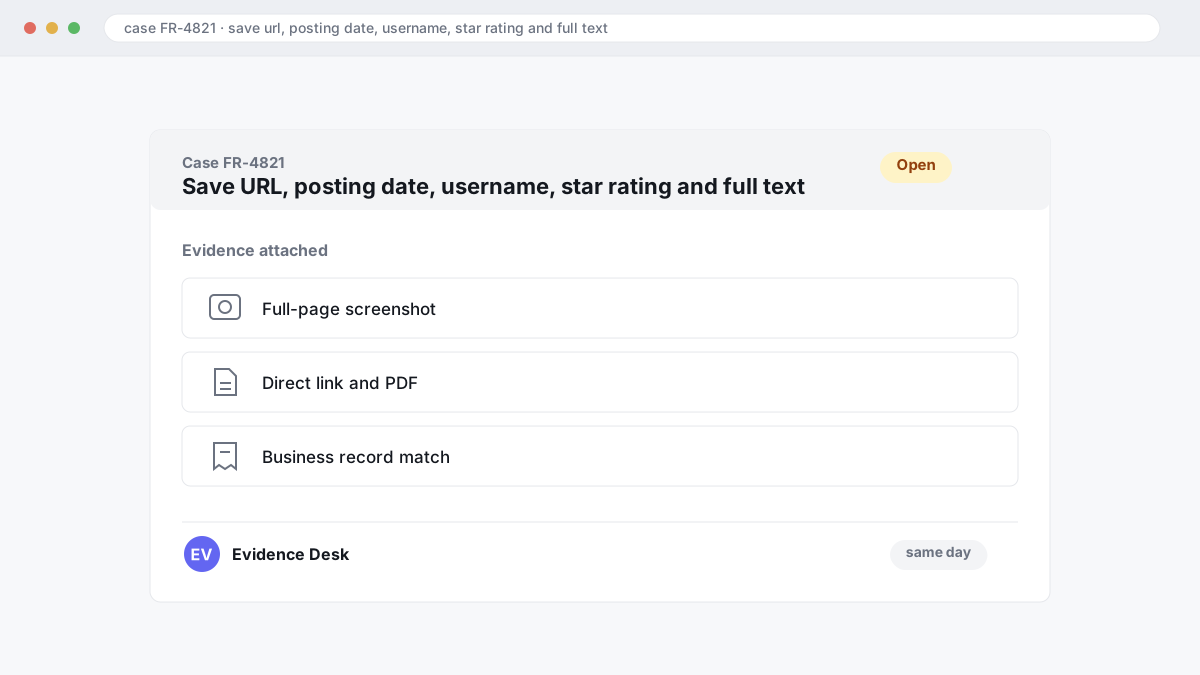
The weak approach is one cropped screenshot. It fails because you lose context that matters later: the review page, profile name, star rating, edit history, and whether the post sat beside your reply before it changed. Evidence preservation means taking full-page screenshots on desktop and mobile, saving the direct link, and exporting or printing the page to PDF before you report it through Google Business Profile, Trustpilot or Yelp. In BGR Review's case file of 12,000+ negative review cases logged June 2025 to June 2026, reviews raised within 28 days of posting and backed by an identifiable policy issue resolved successfully in roughly 90% of cases; beyond 28 days, the observed success rate fell to approximately 25–30%.
The stronger approach matches each statement of alleged fact to the record that contradicts it. If the post says “your engineer never arrived”, pull the booking data, dispatch log, invoice and, if you have it, CCTV or doorbell footage showing the visit. If it says “you charged me twice”, save the card receipt, refund log and account notes. Business records do more than support falsity; they also show you acted from contemporaneous documents rather than a reconstructed story.
Keep a running archive after the first capture. Save your public reply, any reviewer edits, any deletion date, and the platform case number if you report it.
How do you show real business harm instead of just feeling attacked?
Courts usually care about measurable harm, not your sense of outrage alone. The strongest proof links a false post, after its publication to third parties, to cancelled bookings, lost deals, lower conversion, refund costs, or other documented business damage that started after it went live.
The wrong approach is to tell the court the review hurt your reputation and stop there. That often fails because harm and damages need a paper trail, especially in business disputes where the post sat on Google, Yelp or Trustpilot and prospective customers could actually read it before deciding whether to call, book or fill in a form. In BGR Review’s dataset of trades businesses with complete enquiry-source data, observed February to July 2026, 70–80% of calls and bookings were attributed to a Google Business Profile or Yelp listing, which is why a false review on a visible profile can affect map-pack click-through, conversions and branded search demand soon after publication.
The better approach is to build a dated timeline. Match the post date to cancelled appointments, refund requests, sales dips, and lost leads in your CRM; keep call recordings or call logs where a prospect says “I saw that review”; save support tickets and receptionist notes that mention the allegation. Some statements may count as defamation per se, but many business claims still turn on concrete loss evidence.
Can you still move forward if the attacker hides behind a fake name?
Yes, you can still move forward, but a fake name adds cost and uncertainty. You usually need preserved screenshots, a legally viable claim, and court-approved discovery before you can seek account data, IP logs, or registration details from a platform, ISP, or other intermediary.
The wrong move is to assume anonymity ends the case and give up after a basic report button rejection. That fails because anonymous reviewer identification often starts with a John Doe lawsuit, then a subpoena aimed at the platform or another holder of account data, and courts commonly want a prima facie showing first: a specific statement of fact, evidence of falsity, publication, and some proof of harm. Across 12,000+ negative review cases logged by BGR Review from June 2025 to June 2026, roughly 90% of businesses who came to us after a failed attempt had filed only the in-platform report with no supporting documentation, and 70–80% of those initial requests had been rejected.
The better approach is to treat anonymity as a process problem, not a dead end. That works when usable records still exist; it stalls when the platform keeps limited logs, the data is stale, or the account sits behind foreign-hosted services that make enforcement slow or unrealistic.
What does a practical complaint and demand package need before you file?
A usable pre-suit package names each statement you say is defamatory, attaches proof of falsity, records who saw it and what damage followed, and asks for retraction or removal by a fixed date. It should also demand evidence preservation and avoid threats you will not carry through.
An angry email fails because it blurs facts, opinion, and emotion. A dated cease and desist letter works better when it goes line by line: quote the exact words, explain why each statement is false, identify publication to third parties such as a Google Business Profile, Trustpilot page, or Yelp listing, and tie the post to harm you can show, such as lost calls, weaker map-pack click-through, lower conversions from branded search, or a cancelled booking after the review went live.
Build the packet before you send it:
- the full review or post, URL, profile name, and timestamp
- screenshots, page source if available, and any reply thread for evidence preservation
- documents that disprove the statement: job records, invoices, messages, CCTV, call logs
- a request to preserve account data, edit history, IP logs if counsel later seeks disclosure
- a clear deadline, usually a specific date such as 10 business days from service
Rules on defamation, demand letters, and pre-action conduct vary by state and country, so treat this as general information rather than legal advice.
When does hiring a defamation lawyer beat handling platform removal yourself?
Platform removal usually wins on speed and cost when a post breaks site rules. A defamation lawyer matters more once identity, damages, injunctions, subpoenas, settlement pressure or anti-SLAPP risk make the dispute legal rather than procedural.
The wrong move is choosing one route and ignoring the other.
A lawyer earns the fee when the post states a false fact, your losses are material, and you need leverage the platform cannot give you. A cease and desist letter from counsel can force a choice the reviewer has been avoiding: retract, preserve records, disclose identity through later process, or defend the statement in court. Across 12,000+ negative review cases logged by BGR Review from June 2025 to June 2026, reviews raised within 28 days and backed by an identifiable policy issue resolved successfully in roughly 90% of cases, while comparable cases raised later fell to approximately 25–30%; that is our observed outcome profile, not a platform rule.
The better approach is a dual track. Report the rule breach immediately to protect map-pack click-through and conversions while counsel prepares the demand, damages file and filing decision if branded search starts filling with the accusation or settlement leverage is needed.
Is suing for defamation worth it once you factor cost, speed, and business payoff?
Suing is worth it when a false post causes material harm, other removal routes look weak, and the likely upside beats the legal cost, delay and management drag. In many local review disputes, fast removal plus reputation repair produces a better return than litigation.
The common mistake is treating a lawsuit as the strongest response by default. That fails because legal spend can outrun the value of a single removed review fast, while the post stays live, leadership loses time, and brand trust keeps leaking in the map pack, on branded search clicks, and on booking pages. Review platforms also change the economics: if the post breaks a named rule such as Google Business Profile's prohibited and restricted content policy, a policy-led removal attempt can solve the visibility problem sooner than a court case, and Section 230 usually blocks claims against the platform itself.
This comparison is the one to make before you file.
| Route | Speed | Direct cost | Best fit |
|---|---|---|---|
| Platform removal | Often faster if you can prove platform policy violations | Fixed price per removed link | Single review, weak reviewer identity, limited damages |
| Defamation claim | Usually slower | Legal fees and leadership time can rise quickly | False allegations suppressing high-ticket bookings, provable harm and damages |
The better route is often removal first, then recovery work: replace lost trust with fresh verified reviews, reply cleanly, and repair conversions while counsel assesses whether the remaining damages justify court. Sue when the numbers support it, especially if false criminal, safety or fraud claims are blocking valuable enquiries that one removed post will not fully fix.
How can this case backfire with anti-SLAPP, fees, or a weak fact pattern?
Yes, your case can backfire badly. In states with anti-SLAPP laws, a weak defamation suit can be thrown out early and trigger fee shifting, so you end up paying the other side’s legal fees, especially if the post touches a public issue or your proof of falsity is thin.
The wrong approach is filing to scare the speaker. That fails when your facts are mixed, the statement reads like opinion, or the dispute concerns a public controversy, because anti-SLAPP laws are built to test weak claims fast and move costs onto the claimant. Public figures, and some business owners drawn into public-interest disputes, face a much higher bar: you may need evidence of actual malice, meaning the speaker knew the statement was false or acted with reckless disregard for the truth.
The safer approach is pressure-testing the fact pattern before you sue. Across 12,000+ negative review cases logged by BGR Review from June 2025 to June 2026, businesses who came to us after a failed self-filed removal attempt had usually relied on the basic report button alone, and in that subset 70–80% of initial requests had been rejected; that does not prove the review was lawful, but it does show how often weak evidence loses early. If your documentation is thin, a platform route or a tightly drafted demand often beats a lawsuit that opens you to counterclaims, discovery bills, and a Streisand effect that pushes more branded search around the attack.
Measure the commercial downside as well as the legal one.
What should you do if the platform rejects your report or removes the post but the damage lingers?
If a platform rejects your report, rebuild it around one published rule breach you can prove with preserved evidence. If the post comes down, move straight into recovery: watch for reposts, add genuine recent reviews, and fix the trust gaps that hurt click-through, calls and map-pack performance after the attack.
The wrong move is sending the same vague report again with “this is false” and no policy match. That usually fails because the reviewer on the platform side is checking for a named rule, such as impersonation, conflict of interest, harassment or deceptive content, and your evidence preservation file needs to show the original URL, screenshots, timestamps, profile details and any order or CRM records that prove the reviewer was never a customer. In BGR Review’s case file of negative review disputes with prior self-filed attempts, logged June 2025 to June 2026, roughly 90% had used only the in-platform report button with no supporting documentation, and 70–80% of those initial requests had been rejected.
The better move is a rule-specific resubmission. If the post looks bought or incentivised, say that directly and tie it to the platform’s policy on deceptive or inauthentic content; if there was undisclosed payment or free product in exchange for a review, that can also raise issues under the FTC endorsement rules in the US, separate from platform policy violations.
If the post is already gone but the damage lingers, assume the trust signal did not reset overnight. Keep monitoring for reposts on the same profile and elsewhere, ask recent real customers for fresh reviews under the platform’s rules, and update your FAQ or response copy so the next searcher gets a clear answer before doubt drags down conversions or branded search. BGR Review’s review packages carry a 30-day free replacement guarantee, and that matters here because recent authentic review volume often does more for recovery than a long argument under a deleted post.
Where to go from here
Sort the post into one of three buckets before you spend another pound on it: a clear platform-policy violation, a legal defamation claim, or both. That triage decides the next move. If the review contains a provably false statement of fact, shows publication to third parties and has caused measurable harm such as lost calls, bookings, form fills, weaker map-pack click-through or a drop in branded search demand, send it to a lawyer with your evidence pack. If the post looks fabricated, off-topic, duplicated, incentivised or otherwise non-compliant with platform rules, start with removal.
Your next action is simple: preserve evidence today. Capture the review URL, screenshots, profile context, timestamps, account details, customer records, call logs and any proof of falsity, then match the post against the platform's written policy before filing anything. That usually tells you within a day whether you have a realistic removal route, a litigation route, or both. In BGR Review's records of 12,000+ negative review cases logged June 2025 to June 2026, reviews raised within 28 days and backed by an identifiable policy issue resolved successfully in roughly 90% of cases; older cases dropped sharply.