


Quick answer
Section 230, at 47 U.S.C. § 230, usually shields online platforms from being treated as the publisher or speaker of user-generated content and lets them moderate reviews in good faith. Passed in 1996 as part of the Communications Decency Act, it is why Google, Yelp and Trustpilot often cannot be sued simply because a user posted a bad review. The protection has limits. It does not block federal criminal law, intellectual property claims or certain sex-trafficking claims, and it does not turn a false review into lawful content.
We handle the problem that starts after that legal rule kicks in: a harmful review stays live, the platform cites its policy, and your flag either goes nowhere or comes back with a generic rejection. In practice, the result usually turns on evidence, not outrage: whether your complaint names the exact policy bucket, attaches proof the reviewer was never a customer, and targets the author, the platform, or both. BGR Review has served 15,000+ businesses, and our removal work is pay after success at $0 upfront and $449 per removed review link, so this guide explains section-230 the way you need it explained before you spend money or threaten action that will not move the platform.
What Section 230 says in plain English
Section 230 is a US law, codified at 47 U.S.C. § 230, that usually stops a platform being treated as legally responsible for content written by its users. For review sites, forums and social platforms, the plain-English point is simple: if a customer posts a review on Google, Yelp, Trustpilot or a forum, the platform itself is usually not the party you sue over the words in that post. That is the legal backdrop behind most review disputes our team handles through BGR Review’s Google, Trustpilot, Yelp and Clutch work, whether the client contacts our New York, London or Thornhill office.
The statute has two core protections. Section 230(c)(1) says an “interactive computer service” is not treated as the publisher or speaker of information provided by another content provider, which is the part platforms rely on when a user review contains the alleged problem. Section 230(c)(2) separately protects good-faith moderation, so a platform can remove, restrict or filter content it considers objectionable without taking on publisher liability for everything else it leaves up. “Interactive computer service” is broad enough to cover review platforms, social networks, message boards and marketplaces with user comments. If you are paying BGR Review $449 per removed review link on a pay-after-success basis, or buying verified review campaigns with our 30-day free replacement guarantee, this is the statute that explains why platform liability is usually the wrong angle.
Who Section 230 protects and who it does not
Section 230 usually protects the platform that hosts a review, not the person who wrote it and not a business speaking in its own name. If a review appears on Google Business Profile, Yelp or Trustpilot, the site is generally treated as an interactive computer service, while the original reviewer can still face a defamation or false statement claim.
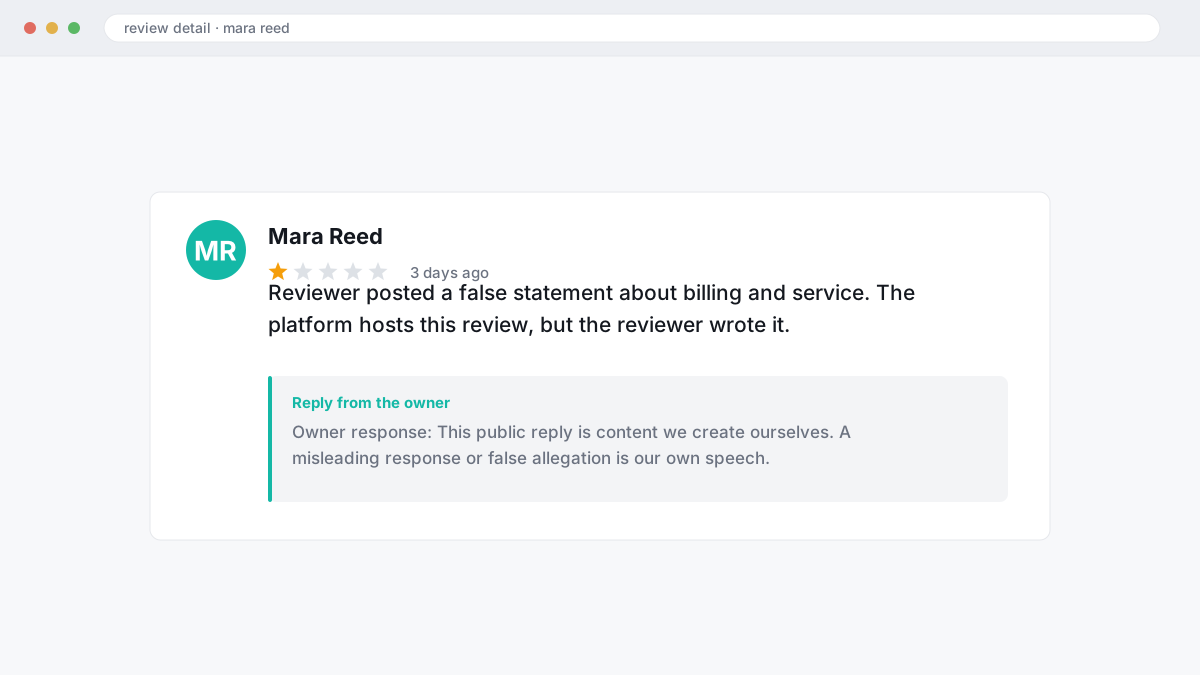
Your business does not get that shield for content you create yourself. If you post a misleading owner response, upload a false allegation in a public reply, or publish fake testimonials on your own site, you are the speaker of that content. Section 230 is about third-party material, not self-authored marketing copy or review responses.
Courts also ask whether the service materially contributed to what made the content unlawful. Hosting, ranking or refusing to remove a review usually does not cross that line; helping create the illegal part can. In practical review disputes, that distinction matters more than the headline rule, because a platform complaint only moves when you show a policy breach in the text, account behaviour or attached evidence, not because you argue the host should be liable for publishing it.
Why review platforms can host harsh criticism without becoming the publisher
Review platforms usually keep Section 230 protection even when they host sharp criticism and decide how reviews appear on the page. A site does not become the legal speaker of a review just because it displays it, sorts it by “most relevant”, recommends it, or folds it into an average star score. That is why Google Business Profile, Yelp and TripAdvisor can show a one-star review beside your listing without usually taking on the reviewer’s defamation risk themselves.
Most guides miss the ranking point. Recommendation systems, search results, review ordering, snippets and star aggregation are generally treated as platform functions tied to third-party content, not as a fresh publication by the site. The same logic often covers ordinary editorial framing such as category labels or review counts, provided the platform did not create the unlawful statement itself.
For you, that changes the removal route.
What moderation rights platforms keep under Section 230
Section 230 lets a review platform keep control of moderation, including removing or restricting material in good faith, even when that material could still be lawful.
The key part is Section 230(c)(2). It supports action against content a platform considers obscene, harassing, excessively profane, violent or otherwise objectionable, and courts have generally read that power broadly. For you, that means Google, Yelp and Trustpilot can take down, hide or limit reviews under their own rules without waiting for a judge to call the post illegal. Google says this directly through its Google Business Profile prohibited and restricted content policy, which covers spam, impersonation and off-topic reviews.
Platforms also keep the right to demote visibility, filter reviews out of the main display, freeze posting rights or suspend accounts. Yelp’s recommendation software is the clearest example: a review can stay live on the profile but move out of the recommended section, which changes what most users see.
Small edits usually do not strip that protection away. If a platform trims for length, standardises formatting, masks profanity or adds labels and warnings, it usually keeps its immunity because the user still supplied the underlying claim.
Where Section 230 stops protecting a platform
Section 230 stops protecting a platform when the claim falls into carved-out areas or when the platform helped create the unlawful content itself.
The clearest carve-out is federal criminal law. Section 230 does not block federal prosecution if a platform's own conduct breaches criminal statutes, and Congress added another express limit in 2018 through FOSTA-SESTA for certain sex-trafficking claims. In review disputes, this matters less than many owners think: sending Google or Yelp a complaint that cites "Section 230 has limits" rarely moves anything unless you can tie it to a specific legal or policy breach, which is why our evidence packs focus first on the platform rule the review breaks, not a broad immunity argument.
Intellectual-property claims sit outside the usual Section 230 shield as well. Copyright and trademark complaints follow separate rules, such as DMCA takedown processes for copyright or platform trademark forms where available. If a review copies your site text, lifts a photo, or uses your mark in a way that creates confusion, that route can be stronger than a fake-review complaint; if the issue is only that the review is unfair, it usually is not.
Creation is the other trigger. If a platform materially creates or develops the unlawful part of the content, Section 230 may not apply. That is different from ordinary moderation, ranking, or removing posts under a review policy.
How Section 230 affects fake reviews and impersonation complaints
Section 230 usually shields Google or Yelp from liability for a fake review, but it does not shield the person who posted it. That distinction matters the moment a review looks invented, copied from a rival, or posted under a false identity. In our removal work, the platform almost never acts because someone cites section-230; it acts when the report matches a named policy and the evidence pack shows why.
Most fake-review disputes are policy disputes first. Google Business Profile uses its Prohibited and restricted content policy, which covers spam, fake engagement, off-topic posts, and content based on a conflict of interest; Yelp routes similar issues through its Content Guidelines and conflict reporting flow. If the problem is impersonation, review swapping between businesses, or an undisclosed incentive, your first move is the platform form, not a legal threat.
Google and Yelp both give you report paths for non-customer reviews, conflicts, and incentives, but the quality of the submission decides the outcome. The strongest packs line up the review URL, profile name, dates, transaction records, staff rota, and a short note showing there was no customer match or that compensation was offered for the post.
Why a business usually cannot force Google or Yelp to remove a review
A business usually cannot force Google or Yelp to remove a review simply by sending a demand letter, because Section 230 generally shields a platform from liability for hosting user-written reviews.
That matters in practice. If the review is user speech, Google and Yelp usually treat your complaint as a platform-policy issue first, not as a private legal demand they must obey. Google Business Profile removals tend to move when you show a breach of its prohibited and restricted content policy, such as impersonation, off-topic content, or a conflict of interest. Yelp takes a similar line through its content guidelines and legal process. A solicitor's or attorney's letter on its own rarely changes that.
Most platforms act when you give them one of three things: clear policy evidence, a court order, or a verified legal defect tied to the content itself. A broad claim that a review is "false and damaging" usually stalls because the platform is not there to decide ordinary fact disputes between you and a reviewer. The faster route is usually an evidence pack: order records, staff logs, screenshots, timeline gaps, and proof the author was never a customer. The workable route is proving a removable defect, not threatening the host.
When defamation claims target the reviewer instead of the platform
Defamation claims usually run against the reviewer who made a false factual allegation, not against Google, Yelp or another platform protected by Section 230. The key split is fact versus opinion: “the technician stole my watch” can be defamatory if false, while “terrible service” is usually treated as opinion and much harder to sue over. That distinction decides whether your next step is a legal claim against the author or a policy flag under the platform’s review rules. If you ask BGR Review to assess a harmful post before a removal filing, we first isolate the exact sentence that asserts a verifiable fact, because vague outrage rarely gives you a clean legal route.
Anonymous reviews create a second problem: you may need a subpoena or court order to identify the reviewer before a claim can move. Platforms often will not hand over account details on a simple demand email, even if the review is false. That is why citing “defamation” in a complaint box usually fails unless you attach something concrete such as an order, a police record disproving the event, or dated service logs showing the reviewer was never a customer. This is general information, not legal advice; the rules vary by country, and the US, UK and EU all handle defamation, disclosure and consumer speech differently.
A practical review-removal workflow that still works when Section 230 applies
A review-removal workflow that still works under Section 230 starts with evidence, then ties that evidence to a named platform rule, then escalates through the platform’s own channels in the right order.
First capture everything before the review changes or disappears. Save full-page screenshots, the review URL, the profile URL, the reviewer name as shown, the date and time, and any order, booking or CRM record that proves whether the person had a real transaction with you. For Google Business Profile, keep the Maps listing link and business profile ID if you have it; for Trustpilot, keep the invitation or reference number if the review followed a verified invitation flow.
Most removal requests fail because they argue fairness instead of policy. “This is hurting my business” rarely moves a platform. “This review breaches Google’s prohibited and restricted content policy because it is off-topic, impersonation, or conflict of interest” gives support a rule to apply. The same logic applies on Yelp and Trustpilot: match the complaint to the platform’s published content policy, not your view of what is reasonable.
Escalation usually runs in three steps: in-platform flag, support ticket, then legal request if the facts justify it. Give each step the same evidence pack so details do not drift. In live removal work, the field that often decides the outcome is the one linking the review to a policy breach, not the longest narrative.
If you want outside help, keep the economics clear. That does not override Section 230, and it does not create a guaranteed takedown; it means the practical route is still policy evidence first, platform escalation second, and reviewer-focused legal action only where the facts support it.
The platform rules that matter more than Section 230 day to day
Day to day, review-platform policy decides what gets removed far more often than Section 230 does.
| Platform | Rules that usually matter | What you need to show |
|---|---|---|
| Google Business Profile review policy bars spam, fake engagement, impersonation, and off-topic content. | Review URL, profile link, timeline, proof the reviewer was never a customer, and any mismatch between the review text and the business listed. | |
| Yelp | Yelp's content guidelines restrict conflicts of interest, compensation, and reviews that are not based on a firsthand consumer experience. | Evidence of employee, competitor, or agency ties, plus screenshots showing any offer, incentive, or copied wording. |
A platform can keep its Section 230 protection and still remove a review for breaking its own rules. That is why citing "Section 230" in a complaint rarely moves Google or Yelp. The flag that gets traction is the one tied to a named policy bucket, backed by an evidence pack that matches the form field the platform actually asks for.
If you are deciding between DIY and paid help, start with the policy route first. This route will fail if the review is genuine opinion from a real customer, even when it is harsh, unfair, or commercially damaging.
Country and legal-system limits businesses should not overlook
Section 230 only applies in the United States, so a review dispute changes shape as soon as the platform, reviewer or business falls under UK or EU rules instead. Google, Yelp and Trustpilot still decide most takedowns under their own review policies first, but the legal backdrop behind that decision is not the same in New York, London and the EU.
The U.S. side also has separate consumer-protection rules that sit outside Section 230. The FTC’s Endorsement Guides, plus the FTC’s 2024 rule on fake reviews and testimonials, target undisclosed paid endorsements, review suppression and deceptive review practices by advertisers and intermediaries. In the UK, the Digital Markets, Competition and Consumers Act 2024 tightened the position on fake reviews, and EU platforms also operate under different notice-and-action duties.
Use this as general information, not legal advice. Defamation standards, court orders, disclosure duties and platform complaint routes vary by country, which is why an evidence pack that works in a Google Business Profile policy flag can fail if your only argument is a U.S. statute the platform does not need to rely on.
How do fake-review rules, FTC guidance, and local laws change the playbook?
Section 230 can shield a review platform from being treated as the publisher of a user's post, but it does not wipe out FTC exposure for undisclosed paid endorsements, defamation risk for a reviewer who states false facts, or local consumer-protection rules on deceptive review conduct.
The wrong approach is to treat every fake or unfair review as a platform-policy problem and stop after the report button fails. That fails because Google, Trustpilot or Yelp can reject a policy report and still leave you with broader legal exposure untouched: a bought review with no disclosure can breach the FTC endorsement guides in the US, and misleading-commercial-practice rules in the UK and EU can catch incentivised or deceptive review activity even where the platform leaves the content live. The right approach is to split the issue early: platform violation on one track, regulatory or legal risk on the other. That is usually where the playbook changes.
A reviewer who says “I never received my refund” may be airing an opinion backed by a transaction record; a reviewer who says “this clinic forged my records” or “this builder stole my deposit” is making a factual accusation that can support state law claims, including defamation, if the statement is false and you can prove falsity with contracts, payment records, messages or job logs. Rules vary by country, platform and state, so this is general information, not legal advice.
Where to go from here
Section 230 usually protects the platform from being treated as the speaker of a review. It does not automatically protect the person who wrote a false factual claim, and it does not force Google, Trustpilot or Yelp to remove a post because you cite the statute. Your next move is practical: save the live URL, take dated screenshots, pull transaction or contact records, and match the review against the platform's published policy before you file anything.
That evidence review tells you which route is realistic. Policy breaches can support a platform flag. False statements tied to an identifiable author may support a separate legal claim, which depends on your country, the platform's rules and the wording of the review; this is general information, not legal advice. If the review is only harsh opinion, removal is unlikely and a reply is often the better option.
Expect a policy check first, an honest no when the facts do not support removal, and a clear evidence list when they do.