

Quick answer
Online harassment can be illegal, but the rule that matters depends on where you are, what happened, and whether the conduct was a one-off or a repeated pattern. In the UK, the Protection from Harassment Act 1997 usually turns on a course of conduct rather than a single rude message. In the US, harassment, cyberstalking and threat laws are largely state-based. For a business, the first usable step is evidence preservation: save the live URL, full-page screenshots, timestamps, account names and any linked posts before you choose platform reporting, legal advice, or both.
We handle cases where abuse appears inside Google reviews, Trustpilot posts, Yelp comments and public listing edits, so this guide is written from the reporting side, not from abstract legal summaries. Across 12,000+ negative review cases logged by BGR Review from June 2025 to June 2026, a rejected in-platform report often came down to thin evidence: one cropped screenshot, no timestamp, no profile link, no pattern showing repeated contact. That is why this page separates online harassment from defamation, policy breaches and review platform appeals, and shows the evidence pack each route actually needs.
Which route fits first: platform violation, legal claim, or immediate safety report?
Sort the abuse into three tracks first: a breach of platform community guidelines, a legal claim, or an immediate safety risk. That choice changes the proof you gather, who reviews it, and whether a post can come down in hours rather than drift for months.
The wrong move is treating every abusive post like a lawsuit. That usually fails because courts look for legal elements such as false statements, a credible threat, or a repeated course of conduct, while platforms remove content under their own rules for harassment, hate, impersonation, privacy breaches, or doxxing long before a judge would review it. For live reviews and profile attacks, speed usually sits with the platform route first. In BGR Review's case file of 12,000+ negative review cases logged June 2025–June 2026, reviews raised within 28 days of posting and backed by an identifiable policy issue resolved successfully in roughly 90% of cases; comparable cases raised later fell to approximately 25–30%.
Use the route that matches the conduct. If a reviewer posts your staff member's home address, phone number, or shift pattern, treat that as doxxing and file both a platform privacy report and, where there is a safety risk, a same-day police report. If the post says "I know where you work and I'm coming tonight", the issue is no longer reputation alone; a credible threat can justify urgent law-enforcement contact even while the review platform is still processing moderation. This is general information, not legal advice, and the legal threshold varies by country and state.
This is the practical split you need before you touch the report button.
| Route | Best used for | Proof that moves it | Typical speed |
|---|---|---|---|
| Platform report | Harassment, privacy breach, impersonation, review-policy violation | Post URL, account handle, full thread, dates, rule matched to the content | Often fastest for live posts |
| Legal claim | False factual statements, repeated targeting, business loss | Exact wording, falsity evidence, timeline, preserved records | Slower, higher effort |
| Police or emergency report | Credible threat, doxxing with safety risk, stalking behaviour | Identity details, timestamps, threats, location data if available | Same day where risk is immediate |
What usually gets damaged first when online harassment hits a business?
Online harassment usually hits staff safety, customer trust and lead conversion before it turns into a clean legal claim. You should stabilise those first, because waiting for a solicitor-ready case lets harmful posts, review-profile attacks and copied screenshots keep spreading.
The wrong move is to rank the problem by legal drama. A review that may or may not support a defamation claim can still cut click-through from the local pack and suppress calls today. In BGR Review's dataset of trades businesses with complete enquiry-source data, observed February to July 2026, 70–80% of calls and bookings were attributed to a Google Business Profile or Yelp listing, so abuse on those profiles usually hurts conversions before any court or police threshold is met.
The right move is fix order. If the post includes doxxing, staff names, home addresses or family details, treat that as a safety issue first and report it to the platform and, where risk is credible, to police. Then preserve evidence, contain the profile damage, and only then assess legal escalation. That sequence works because platform action can stop reach faster, while BGR Review's pay-after-success removal model for review links starts at $0 upfront and charges $449 only after removal, which is often a better ROI decision than opening with legal spend.
When does abuse become a legal pattern instead of a one-off incident?
Harassment law usually becomes relevant when the conduct is repeated and aimed at the same target, not when someone sends one offensive message. A dated pattern across reviews, emails, DMs or posts usually carries more weight than one dramatic screenshot.
The mistake is saving the worst item and binning the rest. That fails because many harassment frameworks look for a course of conduct — linked acts over time that show targeting, persistence and effect on your business. Under the UK Protection from Harassment Act 1997, two or more connected acts can matter, which is why one rude review often stays a platform dispute while repeated review bombing, follow-up emails and tagged social posts can move into legal territory. Rules vary by country and platform, and this is general information, not legal advice.
Build the file around repetition. Keep the date, time, channel, account handle, URL, and who was targeted each time, then show the links between them: same wording, same demand, same name, same business location, same staff member, same timing after a refund dispute or removal request. In BGR Review’s case file of 12,000+ negative review cases logged June 2025 to June 2026, most rejected self-filed reports arrived with minimal evidence, and a single screenshot was rarely enough to prove linkage when abuse appeared across more than one platform. Moderators and solicitors both need duration and connection, not outrage alone.
How is cyberstalking different when the target is being watched, pursued, or threatened?
Cyberstalking goes beyond abusive online conduct because it adds monitoring, repeated pursuit, or implied surveillance. If messages mention your office, your route home, staff routines, or someone “watching” future posts, the risk level changes at once and you should treat it differently from ordinary online harassment.
Most businesses make the same mistake here: they file it as generic abuse and attach one screenshot. That fails because cyberstalking turns on sequence, not tone. A credible threat can be indirect, such as repeated references to where your team parks, when reception closes, or which account posted on Instagram after the same person contacted you on Google, Yelp and email. Police and outside counsel usually assess that as pursuit and surveillance behaviour, while a platform moderator often starts with its harassment or violent-threat policy and looks for cross-platform links you can prove.
The better route is to build a dated timeline first, then split the action. Report any review or post under the platform’s community guidelines, but send stalking facts separately to police or counsel with timestamps, usernames, profile URLs, message headers and location references in one evidence pack. If the abuse sits inside a review, BGR Review can challenge the review link under platform rules on a pay-after-success basis at $449 per removed link with $0 upfront, but that does not replace a safety report where cyberstalking signals are present.
How do you tell abusive opinion from defamation, fake reviews, or deceptive endorsements?
Defamation turns on false statements of fact. Many abusive or fake reviews are easier to remove under platform community guidelines, and undisclosed paid endorsements can raise FTC endorsement guides issues even where a defamation claim is weak.
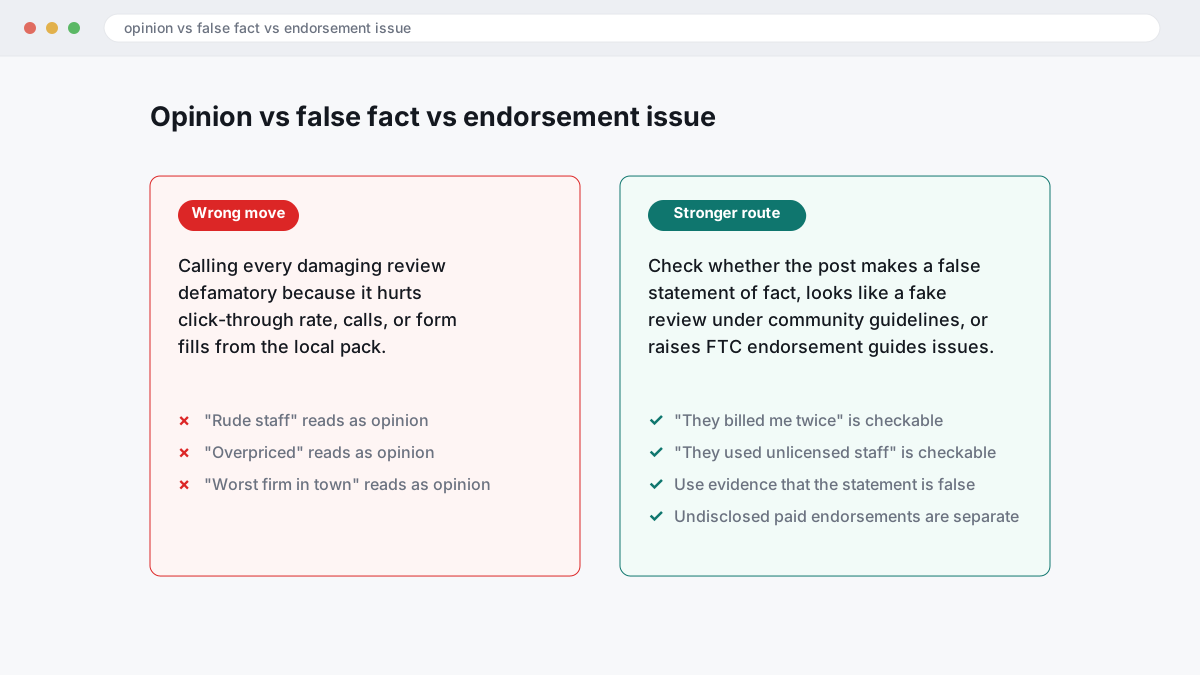
The wrong move is calling every damaging review defamatory. “Rude staff”, “overpriced” or “worst firm in town” usually read as opinion, even when they hurt your click-through rate from the local pack and drag on calls or form fills; a defamation route usually needs a checkable factual claim such as “they billed me twice” or “they used unlicensed staff”, plus evidence that the statement is false. In BGR Review’s log of 12,000+ negative review cases recorded June 2025 to June 2026, cases where a business had already failed once were usually thin on proof, and roughly 90% had used only the in-platform report button with no supporting documents.
The better test is falsity, evidence and disclosure. If the reviewer was never a customer, used a duplicate account, copied text across profiles or posted prohibited personal abuse, platform community guidelines are often the faster route because moderators can act on account behaviour and content rules without deciding a full legal dispute; that matters when branded search demand is already being hit by a visible review thread. Google Business Profile, Trustpilot and Yelp each give you a policy route for inauthentic or conflicted reviews, even where a court-grade defamation claim would be expensive or uncertain.
Disclosure changes the analysis again. If a review came from someone paid, gifted, employed or otherwise connected to the business and that relationship was not disclosed, the FTC endorsement guides are the issue to test first, because the problem is deceptive endorsement practice rather than harassment law. BGR Review sells review and removal services, so the compliance line matters here: any incentivised review campaign without proper disclosure creates risk even before you ask whether the wording was false.
Is online harassment illegal where you are, or just against the platform’s rules?
Online harassment can be criminal, civil, both, or mainly a platform-policy issue depending on your jurisdiction and the evidence you can prove. Rules differ by country and by site, so you should check local law against the platform community guidelines before you escalate.
Most guides treat illegality as the gatekeeper for action. That fails because state harassment laws in the US vary sharply on credible threat, repeated contact, required intent, and whether a single post counts at all; one state may focus on threatening communications, another on a broader course of conduct, and local police may still view a review dispute as low priority unless there is doxxing, stalking, or a direct threat. If the abuse is sitting on Google, Trustpilot, Yelp or TripAdvisor, your first workable route is often policy enforcement, because moderators can remove content that breaches platform community guidelines even where criminal enforcement is unlikely.
The UK is more straightforward on repeated behaviour. The UK Protection from Harassment Act 1997 can apply where there is a repeated course of conduct, and it supports civil claims as well as criminal ones, which matters if the posts are damaging your local pack click-through rate, branded search demand, and bookings before the police are ready to act. This is general information, not legal advice.
If abuse appears inside reviews, speed usually beats legal theory. In BGR Review's case file of 12,000+ negative review cases logged June 2025 to June 2026, reviews raised within 28 days of posting and backed by an identifiable policy issue resolved successfully in roughly 90% of cases, while comparable cases raised later fell to approximately 25-30%; that is our observed outcome profile, not a platform rule.
What should an evidence pack include before you report anything?
A usable evidence pack combines screenshots, direct URLs, timestamps, account identifiers and a short chronology. Gather it before you report anything, because posts, usernames and visible context often change or vanish after moderation, editing or deletion.
Most businesses send screenshots alone. That fails because a moderator, platform investigator or police officer cannot verify where the content appeared, whether it was edited, which account posted it, or whether the abuse formed a course of conduct across review sites, email and social messages. In BGR Review’s dataset of negative review cases with prior self-filed attempts, logged June 2025 to June 2026, roughly 90% of businesses came to us after using only the basic in-platform report button with no supporting documentation, and 70–80% of those initial requests had been rejected.
The pack should show sequence as well as content. Save the full page screenshot, the exact URL, the posting date and time, the username, the account profile link, the channel used, and who was targeted, then place each item in order within 24 hours so the timeline stays clean. If the same person posts a review, sends an Instagram DM and emails your front desk, that chronology helps show repetition rather than three isolated incidents.
Threat cases need more than images. If a message suggests a credible threat of violence, extortion or doxxing, preserve email headers, voicemail audio files, call logs and post metadata before forwarding anything internally, because those records help tie the message to a source account and support an immediate safety report outside the platform. If the abuse sits inside a review, include the review URL and profile link as well, because review platform appeals usually turn on whether the reviewer identity, context and policy breach can be checked fast.
How should you report online harassment so moderators or police can verify it fast?
Report in the order the reviewer can verify: the exact rule or offence, a short timeline, numbered exhibits, then the action you want. Moderators and officers move faster when your complaint matches platform community guidelines or a recognised offence such as a credible threat, instead of reading a full chronological story first.
A long emotional narrative usually fails because the receiving team is triaging against categories, not sympathy. In BGR Review’s log of 12,000+ negative review cases from June 2025 to June 2026, roughly 90% of businesses who came to us after a failed self-filed attempt had used only the basic in-platform report button with little supporting material, and 70–80% of those initial requests had been rejected. A usable evidence pack works better: one timeline summary at the top, then Exhibit 1, Exhibit 2, Exhibit 3, each tied to a rule line such as harassment, hate, impersonation, doxxing or threats of violence.
If the post contains a credible threat, file the platform report and the police report in parallel. Your timeline should state date, time, account name, URL, and what happened next; your exhibits should include full-page screenshots, profile links, message headers, call logs, and any prior incident showing escalation. Ask for a specific outcome: content removal, account review, emergency preservation of account data, or an incident number. If the abuse appears in reviews, use the platform appeal route for the review itself and keep the police complaint focused on safety, not star ratings or map-pack impact.
What does a complaint template need so you can reuse it under pressure?
A reusable complaint template needs five blocks: who is targeted, what happened, where it appeared, what proof you attached, and what action you want. That structure stops omissions when you have to file fast across a review platform, a host, or a police reporting form.
Starting with background usually fails because moderators and legal teams first need parties, conduct, dates, links, and the requested remedy. Open with the target business, the account or person complained about, the conduct itself, and a dated link list; then attach the evidence pack. If the abuse may later require account data, add a preservation request asking the platform to retain logs, messages, signup details, and related account records. Keep any cease and desist letter separate from the main complaint so the reporting route stays factual.
Your template should leave fields for: incident dates and time zone, post URLs, usernames, targets named, exact quotes, whether there was a credible threat or repeated course of conduct, prior report IDs, and the remedy sought such as removal, account review, or data preservation. Add one line stating that laws vary by country and platform, this is general information rather than legal advice, and legal counsel may be needed if the review turns into defamation or doxxing.
What can you do if the platform rejects your harassment report the first time?
If the first report is rejected, change the evidence and the category before you file again. Sending the same screenshots through the same form usually fails; a useful appeal ties each exhibit to the exact rule in the platform community guidelines that the reviewer can action.
Most rejected harassment reports fail because the file proves harm to you, but does not prove a policy match. In BGR Review's dataset of negative review cases with prior self-filed attempts, logged June 2025 to June 2026, roughly 90% had used only the basic in-platform report button with no supporting documentation, and 70-80% of those initial requests had been rejected. The wrong move is to resend identical screenshots. The better move is to reframe the violation: quote the line that breaches the rule, show the URL, profile name, date, and sequence, then explain why it fits harassment, hate, threats, impersonation, or off-platform targeting under that platform's own rules.
The appeal route changes by platform, so your review platform appeals should change too.
| Platform | What usually fails | What gives the appeal a chance |
|---|---|---|
| One screenshot with no review URL, no policy citation, no timeline | Review link, business profile details, quoted text mapped to Google Business Profile prohibited content, plus any repeated contact showing a course of conduct | |
| Yelp | General complaint about unfairness | Proof the content targets staff or business outside a genuine customer experience, with dated exhibits and account context |
| Trustpilot | Calling it abuse without showing the rule breach | Flag the review under the closest guideline, attach clearer exhibits, and change the appeal ground if the first category was wrong |
This works because moderators remove for enforceable rule breaches, not for frustration, lost conversions, or falling map pack click-through rate. If the review stays live after a corrected appeal, stop repeating the same report and assess the next route instead, because platform action is often faster than legal action, but only when your evidence matches the rule.
When do account data, IP logs, or a cease and desist letter actually help?
IP logs and account data usually sit behind subpoena power or another formal legal process, so they are rarely a first-step fix. A cease and desist letter can help earlier if you know who is behind the abuse and the contact is still continuing.
The wrong move is assuming one complaint will make Google, Yelp, Trustpilot or another platform reveal the user. It usually fails because platforms treat IP logs and account data as restricted data, and their community-guideline or review-platform appeals channels are built to assess content breaches, not to identify the poster for you.
The better move is to use a cease and desist letter for two narrow jobs: put the sender on notice and preserve evidence before posts, messages or call logs vanish. That works when the harasser is identifiable and the conduct is ongoing across reviews, email, forms or social messages. If the account is anonymous, identification may stay impossible without platform cooperation or a court order, so your practical goal shifts to stopping visibility damage first: remove policy-breaching content, protect map-pack click-through, and stop the abuse from dragging down calls, bookings or branded search demand.
What does a practical escalation workflow look like from first post to outside counsel?
Use a staged workflow: preserve the record, assess immediate safety, report inside the platform, appeal with better proof, then move to legal escalation if the conduct continues or threatens harm. Teams lose time when they call outside counsel before they have platform-ready evidence, locked access logs and a clean timeline.
Improvising case by case usually damages click-through rate in the local pack first, then conversions from calls, bookings and form fills, because staff reply emotionally, edit listings, or delete internal traces. In BGR Review's dataset of negative review cases with prior self-filed attempts, logged June 2025 to June 2026, roughly 90% of businesses came to us after using only the basic in-platform report button, and 70-80% of those first requests had been rejected. Single screenshots fail for the same reason: moderators cannot verify context, sequence or repeated targeting.
This is the practical threshold map you should follow before a one-off post turns into a legal file.
| Timing | What you do | Why it matters |
|---|---|---|
| Hour 1 | Save URLs, full-page captures, timestamps, user handles and your internal access logs; assess whether there is a credible threat, doxxing or cyberstalking. | Your evidence pack needs sequence, not fragments. Safety risks can justify police contact before any review platform appeals. |
| Day 1 | File platform reports under the named policy, brief staff, and pause risky public replies. | Loose replies create new screenshots and can worsen map-pack click-through and branded search demand. |
| After rejection | Appeal with the evidence pack, policy citations and prior report IDs. | Across 12,000+ negative review cases logged by BGR Review from June 2025 to June 2026, reviews raised within 28 days and tied to an identifiable policy issue resolved successfully in roughly 90% of cases; beyond 28 days, the observed rate fell to approximately 25-30%. |
| Legal escalation | Send a cease and desist letter or instruct counsel when threats continue, false factual claims are causing defamation losses, or repeated targeting shows a course of conduct. | Counsel is useful when the platform route stalls, the abuse persists across accounts, or you need disclosure steps beyond moderation. |
Where to go from here
Treat abuse in this order: classify the conduct, preserve the evidence, use the fastest enforcement route first, then move to legal help where a credible threat, false factual claim, doxxing, cyberstalking or repeat targeting makes a platform report too weak. That sequence matters because a review-platform appeal can remove visible harm faster than a civil claim, while a legal route usually needs a clearer record of course of conduct, damage and identity. In practice, the reports that move are the ones backed by a proper evidence pack, not a lone screenshot.
Your next step is simple. Open one case file for each incident, save the full URL, profile ID, timestamps, screenshots, reply text, emails, call logs and any prior report numbers, then match each item to either platform community guidelines, defamation risk or harassment law in your country. If a report has already been rejected, rebuild it before you resubmit. At BGR Review, that is usually where we start: separate policy breach from legal claim, tighten the evidence, and only escalate beyond the platform when the facts justify it.