

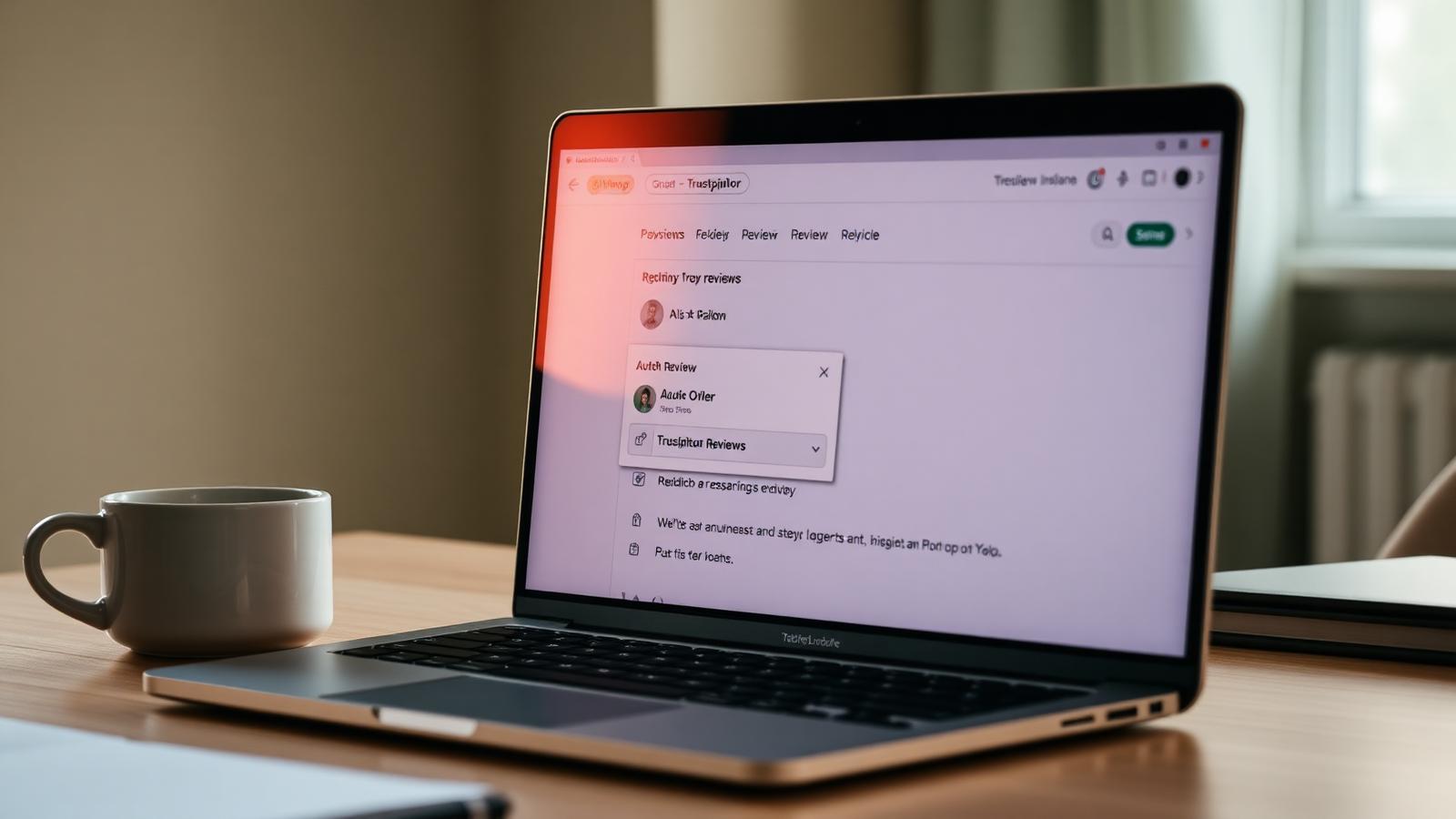
Quick answer: To remove a Trustpilot review, flag it directly on the platform, providing specific evidence that it violates Trustpilot's guidelines (e.g., no proof of purchase, harmful content). If flagging fails, appeal to Trustpilot's content integrity team with stronger documentation or, as a last resort, explore legal avenues for defamation.
Trustpilot reviews shape whether people click your listing or skip it. When a review is unfair, fake, or breaks Trustpilot's rules, you have real options - and most business owners never use them. This guide walks through the exact removal paths that work in 2026, what evidence Trustpilot actually looks at, and what to do when the platform says no.
When Trustpilot Will Remove a Review
Trustpilot moderates on guideline violations, not on whether a review hurts. A one-star complaint about a genuine bad experience stays up. A one-star from someone who was never a customer, or a review that names a staff member with a slur, comes down when you flag it correctly.
The categories Trustpilot enforces most consistently are: no proof of a genuine buying or service experience, harmful or defamatory language, personal information about staff, promotional content from competitors, and reviews written by someone with a conflict of interest such as an ex-employee. Learning to match your complaint to one of these buckets is the difference between a 48-hour removal and a rejection email.
The Fastest Removal Path: The Flag Button
Every review has a small flag icon under it. Clicking it opens a form with a dropdown. Pick the category that matches the violation, add a short written explanation, and submit. That report goes to Trustpilot's Content Integrity team, not to the reviewer.
Two rules make this work. Be specific in the free-text box - "reviewer never purchased, our CRM has no matching email or order" beats "this review is fake" every time. And flag once, not five times from different accounts. Duplicate flags slow the queue down and can get your business account warned.
What Evidence Actually Moves the Case
Trustpilot's team asks for proof of the reviewer relationship. The strongest evidence is a screenshot from your order system, CRM, or booking tool showing that the email address, name, or transaction ID does not exist in your records. If the review references a specific date, product, or staff member, showing that the reference is impossible - the product launched after the review date, the staff member never worked that shift - closes the case quickly.
Weak evidence is anything subjective. "The reviewer sounds like a competitor" is not evidence. "The IP address of this reviewer matches our competitor's office" is - but you rarely have that data. Stick with what your own systems can prove.
Responding Publicly Before Removal
While your flag sits in the queue, post a calm public reply. This does two things. It shows future readers that you took the complaint seriously, which softens the review's impact even if it stays up. And it creates a public record that you asked for proof of purchase, which Trustpilot's moderators can see when they review the flag.
The tone matters. Never accuse the reviewer of being fake in the reply itself - Trustpilot penalises businesses that call reviewers liars in public. Ask clarifying questions instead: "We could not find an order matching this description. Please share your order number so we can investigate." If they never reply, the silence itself becomes evidence.
The Business Verification Route
If you have not verified your Trustpilot business account, do it before your next flag. Verified businesses get faster response times, a dedicated support channel, and their reports carry more weight. Verification takes about ten minutes and requires proof of ownership - usually a DNS record or a business email match.
Once verified, you also unlock the "reply and request evidence" feature that automatically prompts the reviewer to confirm the experience. About 30 percent of low-effort fake reviews vanish at this step because the reviewer never responds.
When the First Flag Gets Rejected
Rejections are common on the first attempt because the wrong category was picked or the explanation was too vague. You can appeal. Reply to the rejection email with new evidence, or open a support ticket through the Business dashboard and reference the case number. Ask for a human review, not another automated pass.
If the second review still upholds the reviewer, one path remains: legal notice. Reviews that are demonstrably false and harmful may qualify for removal under local defamation law. Trustpilot will remove content when a court order arrives, but the bar is high and the process is expensive. Use it only for reviews doing real revenue damage.
Reviews You Should Not Try to Remove
Genuine one-star reviews from real customers are not going anywhere, and trying to flag them wastes goodwill with Trustpilot's team. Reply publicly, fix the root problem, and let recent five-star reviews push the bad one down the page. A single one-star among fifty recent four and five stars barely moves the average rating displayed in search results.
Some businesses try to buy or generate fake positive reviews to bury negatives. Trustpilot's detection has improved every year, and a flagged spike in fake positives usually costs the business its Trust Score badge for months. The safer path is a review request campaign to real customers - two SMS or email prompts sent within 48 hours of the transaction convert at roughly 15 to 25 percent.
Timing Expectations
Simple removals - obvious spam, name-calling, unverifiable claims - usually resolve within 48 to 72 hours. Complex cases that need evidence review or business verification can take one to two weeks. Legal escalations run months. Set expectations internally so nobody assumes silence means rejection.
Preventing the Next One
The pattern most owners miss is that fake reviews cluster around specific triggers: a refund dispute, a public argument on social media, a competitor's product launch. Track when spikes happen and you can often identify the source. A tightened refund policy, a private conflict-resolution channel, or a clearer product description at the point of sale prevents the reviews that become removal cases later.
Removal is a real tool but it is a slow one. The best Trustpilot strategy is a steady flow of recent genuine reviews plus a well-documented flagging process for the ones that break the rules. When you need help escalating a case or building the request flow that generates real reviews at scale, our team handles both sides of the work.
Frequently Asked Questions
Can I delete a Trustpilot review if it's negative but true?
No, Trustpilot will not remove a review simply because it is negative or critical if it reflects a genuine customer experience. The platform's policy protects honest feedback, even if it's unfavorable. Reviews are only removed if they violate specific guidelines, such as being fake, containing offensive language, or spreading misinformation.
What kind of evidence does Trustpilot accept for review removal?
Trustpilot accepts concrete evidence such as screenshots from your CRM or order system proving the reviewer was never a customer or that their claims are factually incorrect. Strong evidence includes transaction IDs, email addresses, or names that do not match your records, or proof that reported events (e.g., product launch dates) contradict the review's claims. Subjective opinions are not considered evidence.
How long does it take for Trustpilot to remove a flagged review?
The time Trustpilot takes to remove a flagged review varies. Simple guideline violations with clear evidence, like spam, might be resolved within a few days. More complex cases, especially those involving dispute resolution between businesses and reviewers, can take several weeks or longer, depending on the evidence submitted and the volume of flags.
What should I do if Trustpilot rejects my removal request?
If Trustpilot rejects your removal request, review their reason for denial carefully. You can often appeal the decision by providing additional, stronger evidence that directly addresses their concerns or clarifies the guideline violation. Ensure your evidence is objective and verifiable. Legal action is a final option for clearly defamatory content.
Can I sue someone for a fake Trustpilot review?
Yes, you can sue someone for a fake or defamatory Trustpilot review, especially if it causes tangible damage to your business or reputation. This usually falls under defamation law. However, legal action is often costly and time-consuming, and you must prove the review is false and was made with malicious intent. It is generally a last resort.