


Quick answer
Healthcare reputation management means improving and protecting how patients see your practice across Google Business Profile, Healthgrades, Vitals and similar sites without exposing protected health information. The HIPAA Privacy Rule sets the line: in a public reply, you cannot confirm treatment, timing, diagnosis or even that the reviewer is a patient. The safest setup uses daily monitoring, a written review response policy, named approvers, and removal requests only when a review breaks a platform rule. If you outsource, check for HIPAA-safe workflows, platform-specific takedown criteria and clear pricing such as pay-after-success removal at $449 per removed link.
This page is written from live reputation operations, including review packages with a 30-day free replacement guarantee and negative review removal handled on a $0 upfront, pay-after-success basis. The practical detail matters because the avoidable risk usually starts in the first 15 minutes: a front-desk manager drafts a polite Google reply, accidentally confirms an appointment, and turns a routine complaint into a privacy issue that no appeal form can undo.
We also know where generic advice breaks down. A basic in-platform flag rarely carries enough evidence on its own, which is why the removal workflow here focuses on triage, approval, evidence packs, platform policy fit and the point where rebuttal stops helping and a takedown attempt becomes the better move.
Where is the HIPAA line between empathy and unlawful disclosure?
A public reply turns risky the moment it confirms the reviewer was a patient or reveals protected health information. The safe line is plain: acknowledge the feedback in general terms, move the conversation offline, and keep care details out of the public thread.
The wrong approach sounds human but fails under the HIPAA Privacy Rule: “We’re sorry your 3 May appointment ran late and that your prescription issue upset you.” That reply confirms treatment, date, and service history in one sentence. Protected health information is broader than a diagnosis; it can include names, appointment references, billing details, test results, and any detail that links a person to care at your practice. In healthcare accounts we review at BGR Review, the breach usually comes from staff trying to sound helpful too quickly.
The right approach keeps empathy separate from confirmation: “We take feedback seriously and would like to speak with you directly. ” That works because it does not admit the reviewer was ever treated, does not discuss care, and still gives a path to resolve the issue.
Your review response policy should lock this down before anyone touches Google, Healthgrades, or Vitals. At BGR Review, the safest setup is approved language, a named approver, and a hard rule that front-desk staff never improvise in public; if a reply needs context from the chart, it should not be posted publicly at all. Train the wording first, then let staff send anything live.
How does healthcare reputation management actually work week to week?
Healthcare reputation management works as a weekly operating system, not a loose replying task. Your team should watch reviews every day, sort them by risk and service line, use approved language, move sensitive complaints offline, and log repeat issues that need a real fix inside the practice.
Ad hoc replying fails because whoever sees the review first usually answers it, and that is where avoidable HIPAA risk starts. A front-desk manager spots a one-star Google Business Profile post, types an apologetic reply from memory, forgets to check Healthgrades, misses a similar complaint in Vitals, and nobody connects the same issue in first-party feedback. A governed workflow works better: one queue, one owner, one approval path, and a clear response time target.
This is the service-level grid we set before anything is published.
| Review type | Owner | Response time | Action |
|---|---|---|---|
| Low-risk service complaint | Marketing or patient experience lead | Within 1 business day | Draft from approved template, publish after light check |
| Clinical allegation or privacy concern | Compliance lead plus practice manager | Same day triage | Hold public reply, move offline, preserve screenshots |
| Abusive, fake or policy-breach review | Reputation owner | Same day flag | Flag, draft neutral holding reply if needed, build evidence log |
Sentiment monitoring belongs in that same queue, because week-to-week work is less about one bad review than a trend across access, billing, wait time, or bedside manner. Log source, star rating, theme, staff owner, reply status, and outcome every week.
What should your review response policy approve, route, and block?
A workable review response policy names who may reply, how quickly, which phrases are banned, and when sign-off is mandatory. Without that routing, your healthcare team either risks disclosing protected health information under the HIPAA Privacy Rule or waits so long that a one-star post shapes map-pack click-through, calls and bookings before anyone answers.
Generic brand voice guides fail because they tell staff to “sound warm” and “show empathy” without defining the line they cannot cross. The line is simple: never confirm someone is a patient, discuss treatment, reference an appointment, mention billing facts, or invite a public back-and-forth that reveals identity. The policy that procurement and compliance can approve does more than set tone; it sets response time by risk, names approvers by role, and forces escalation before publication for allegations about safety, discrimination, prescribing, privacy, fraud or a stated intent to complain to a regulator.
Keep channel rules separate because Google Business Profile, Healthgrades, Vitals and social profiles create different risks, moderation standards and visibility. Google replies can influence local pack clicks within hours, while a loose Facebook comment thread can spread faster than a directory review and trigger extra disclosure risk.
Write the channel rules into a simple matrix your team can actually follow.
| Channel | Default response time | Approval route | Blocked wording |
|---|---|---|---|
| Google Business Profile | Same business day if low risk | Clinic manager; compliance if safety or privacy issue | “We treated you”, appointment dates, billing details |
| Healthgrades | Within 1 business day | Patient relations first for care complaints | Any acknowledgement of provider-patient relationship |
| Vitals | Within 1 business day | Patient relations or legal for factual accusations | Clinical facts, medication, outcome disputes |
| Social profiles | Within hours if viral risk | Comms lead plus compliance for escalations | Threaded debate, DM requests for medical details |
When should you remove a review instead of replying to it?
Remove a review when you can point to a rule breach or a provably false statement, not because the post feels unfair. A weak rebuttal on a Google Business Profile rarely changes anything; a documented policy violation, impersonation issue, conflict of interest or evidence-backed defamation claim has a better chance.
Most teams chase the wrong reviews. They argue with a harsh opinion such as “rude staff” or “long wait”, then accidentally edge toward protected health information in the reply. That fails twice: Google and healthcare directories do not remove content for being unpleasant, and a public back-and-forth can create fresh HIPAA risk. The right move is negative review removal only where the review states false facts, contains harassment, appears to come from a competitor or ex-employee with a conflict of interest, or pretends to be a patient who never existed. Google Business Profile flags work best when you cite the relevant review policy category and attach proof, not when you write a long emotional explanation.
The evidence decides the route. If a reviewer names the wrong clinician, invents a treatment that your practice does not offer, posts threats, or uses an alias tied to a staff member, you build a short evidence pack and push for takedown; if the review is opinion-led and policy-clean, you post a minimal safe reply and move the matter offline. Across 12,000+ negative review cases logged by BGR Review from June 2025 to June 2026, reviews raised within 28 days of posting and backed by an identifiable policy issue resolved successfully in roughly 90% of cases, versus approximately 25–30% for comparable cases raised later. Defamation claims can matter where a review states false facts, but laws vary by country and platform, so treat that point as general information rather than legal advice.
What evidence gives a healthcare review removal request a real chance?
A healthcare review removal request has a real chance when each point maps to a named platform rule and the proof is easy for a moderator to verify in minutes. The useful pack is simple: screenshots, the Google Business Profile review URL, posting date and time, internal notes, and records showing the claimed visit or event likely never happened.
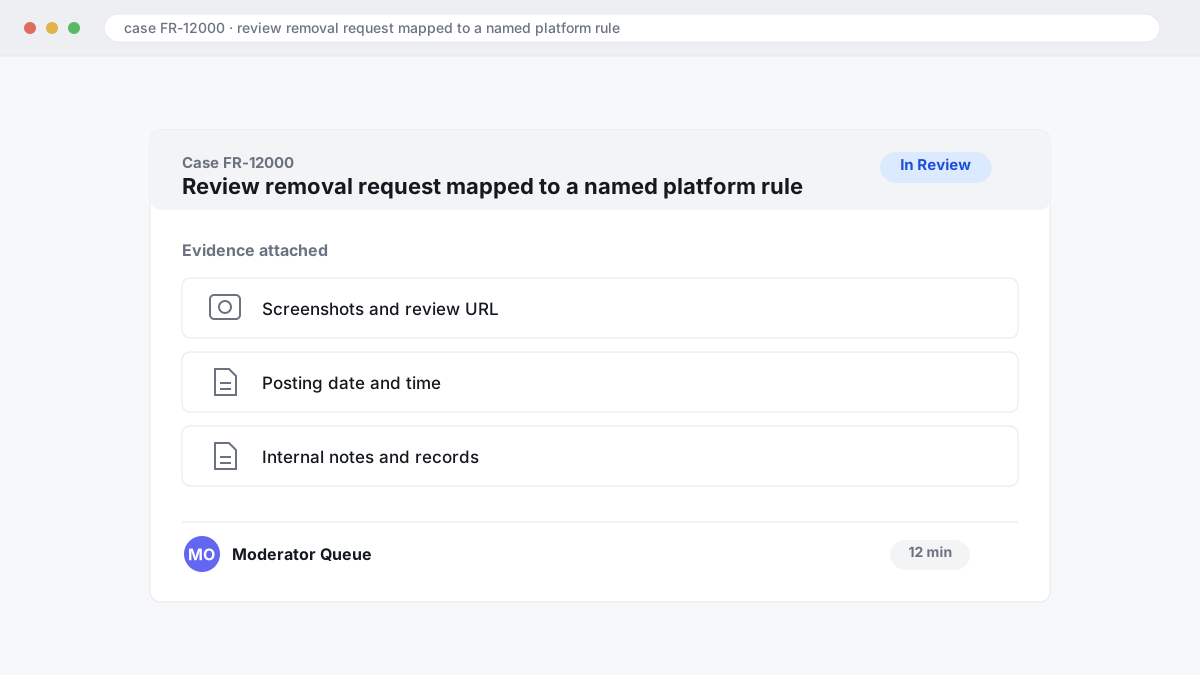
Most failed requests start as a general complaint: “this review is unfair”, “the patient is lying”, “please remove it”. Moderators ignore that because it does not tell them which rule was broken. Across 12,000+ negative review cases logged by BGR Review from June 2025 to June 2026, roughly 90% of businesses that came to us after a failed attempt had used only the basic in-platform report button with no supporting documentation, and 70–80% of those initial requests had been rejected. One clean, rule-matched appeal works better than five weak reports that say the same thing.
For negative review removal on Google Business Profile, the evidence pack should annotate the exact sentence that breaks policy, then attach proof beside it. If the review makes a false factual statement, your records need to show no matching patient, appointment, bill, clinician, or incident exists on that date. That can support a policy report and, in narrower cases, a defamation claim if the review states false facts rather than opinion. Keep the annotation neutral. “No patient record found for the named event on 14 May” gives a moderator something to check; “this person is a liar” does not.
The avoidable mistake is oversharing protected health information while trying to prove the point. Your internal file can include fuller records for legal review, but the platform-facing submission should stay tight and necessary.
Which review platforms deserve your first attention in healthcare?
Most healthcare groups should put Google Business Profile first, then physician directories such as Healthgrades and Vitals. Google usually decides local pack visibility and first-click trust, while directory profiles shape branded search demand and provider comparison after a patient has already shortlisted you.
Treating every platform as equal wastes staff time. A one-star Google review can cut click-through rate from the map pack before a patient even reaches your site, while an outdated Healthgrades or Vitals profile usually hurts later in the journey, when someone searches a doctor’s name, specialty or clinic brand and compares credentials, locations and patient satisfaction signals side by side.
This is the order that usually holds up best:
| Platform | What it influences first | Priority trigger |
|---|---|---|
| Google Business Profile | Local discovery, map pack clicks, calls and bookings | Start here if reviews affect appointment volume or complaint spikes sit on Google |
| Healthgrades | Branded search trust, physician comparison, specialty credibility | Move up if patients search individual providers before booking |
| Vitals | Provider validation during research and second-opinion checks | Prioritise when specialist searches and doctor-name queries are common |
Use patient journey, search volume and complaint concentration to set the order. If most negative feedback sits on Google, fix Google first; if complaints cluster on Healthgrades around bedside manner, wait times or billing confusion, directory cleanup will lift conversions from branded searches faster than posting replies everywhere at once.
What improves patient review ROI first when budgets and staff time are tight?
The fastest return usually comes from three basics: accurate healthcare profiles, recent patient reviews, and timely replies. After that, fix the complaint themes patients mention most, usually wait times, billing confusion, and staff courtesy, before you spend on advanced dashboards or extra review volume.
The wrong move is chasing volume first. More fresh reviews can lift branded click-through and help your Google Business Profile earn more map-pack clicks, but the gain stalls when the same trust blockers keep showing up in public: “long wait”, “rude front desk”, “surprise charge”. Those are patient satisfaction signals in plain sight. If your response time is slow and reply coverage is patchy, prospects read the pattern, then skip the call, form fill or appointment request even if the star average looks fine.
The right order is simpler and cheaper. Correct core profile data on Google Business Profile, Healthgrades and Vitals, get recent legitimate feedback coming in, and answer reviews consistently within an approval path your compliance lead has cleared. Then use basic sentiment monitoring to tag recurring themes by location or provider and send only the top two issues to operations. BGR Review sells review growth and negative review removal, but for a tight budget we usually tell buyers to fix those trust leaks first and measure calls, form fills, appointment requests and branded click-through for 8-12 weeks before buying more software.
Should a healthcare group build this in-house or hire a specialist agency?
Running reputation work in-house gives you the most control. A specialist agency usually wins on response speed, consistency across platforms, and daily monitoring. The better fit turns on your approval chain, clinic count, compliance oversight, and whether your team can execute every weekday without gaps.
The wrong call is choosing in-house because it looks cheaper on paper. That fails once your review response policy needs staff training, manager sign-off, sentiment monitoring, and someone accountable for escalations when a one-star post lands on Google Business Profile at 6pm on a Friday. Under the HIPAA Privacy Rule, the risk sits in the rushed reply: front-desk staff often mean well, then confirm a patient relationship or discuss treatment timing in public.
Use this comparison to judge operational drag, not just line-item cost.
| Factor | In-house team | Specialist agency |
|---|---|---|
| Turnaround time | Depends on manager availability and approval queues | Usually faster if monitoring and drafting run daily across Google, Healthgrades and Vitals |
| Control and compliance | Highest control, but you must build HIPAA-safe scripts, permissions and audit trails | Works if the agency proves HIPAA-safe workflows and limits who can view review context |
| Escalation support | Often weak outside office hours | Stronger when the agency triages, drafts and assembles evidence for removal requests |
| Price model | Lower visible cost, higher internal drag | Higher direct spend, lower management load; BGR Review review packages include a 30-day free replacement guarantee |
The right choice is simple. Keep it in-house if one trained owner can enforce the policy, approve replies quickly, and run monitoring every day. Hire a specialist if your clinics need longer coverage hours, cross-platform reporting, and a cleaner escalation path than “someone from marketing will check tomorrow”.
How do multi-location healthcare groups keep replies consistent without slowing every clinic down?
Multi-location healthcare reputation management works best when head office sets the rules and each clinic handles the safe, routine work. Low-risk reviews can be drafted locally from approved language, while complaints about billing, treatment, staff conduct, or care quality should route to a regional reviewer or one central compliance approver before anything goes live.
The wrong setup is a full central bottleneck where every Google Business Profile reply waits in one queue. That slows response time, leaves location pages looking ignored, and pushes front-desk staff to improvise off-policy replies in DMs or at the desk. A governed local model works better: each clinic answers simple praise and generic service comments under a written review response policy, and anything that could expose protected health information moves up one clear escalation route.
Keep the ownership simple:
- One location owner per clinic for draft replies and same-day triage.
- One regional reviewer for escalations, tone control, and policy exceptions.
- One compliance route for HIPAA-sensitive issues, legal threats, or removal requests.
Audit the system every month. Check three things across locations: response time, tone consistency, and exceptions to the review response policy. If Clinic A replies in hours and Clinic B takes a week, your map-pack click-through and conversions drift by location even when ratings look similar. BGR Review usually tells groups to fix governance before buying any review support, because a messy approval chain wastes budget faster than a thin review profile.
What HIPAA-safe response template can staff use without sounding robotic?
A HIPAA-safe reply thanks the reviewer, stays general, and moves the conversation offline without confirming any treatment relationship. Use wording like: “Thank you for your feedback. We aim to provide a high standard of care. Please contact our Patient Relations team at [phone] or [email], Monday to Friday, 9am–5pm, so we can look into this.”
The risky version sounds warmer because it gets specific: “We’re sorry your appointment with Dr Khan felt rushed after your scan.” That fails because it confirms protected health information by linking a named person to care, timing or a service line. Your review response policy should block any reply that references visits, diagnoses, billing detail, test results, medication, insurance, or “when you came in last week”, even if the reviewer disclosed those facts first. Human and compliant works better: show respect, name the department, give a business-hours window, and stop there.
Use one approved base script across Google Business Profile, Healthgrades and Vitals, then change only the tone:
| Review type | Copy-ready response |
|---|---|
| Positive | “Thank you for your kind feedback. We appreciate you taking the time to share it. If you ever need assistance, our Patient Relations team can help at [phone/email], Monday to Friday, 9am–5pm.” |
| Mixed | “Thank you for your feedback. We are glad to hear some parts of your experience were positive and would like to understand the rest. Please contact Patient Relations at [phone/email], Monday to Friday, 9am–5pm.” |
| Complaint | “Thank you for raising this. We take concerns seriously and would like to review them directly. Please contact Patient Relations at [phone/email], Monday to Friday, 9am–5pm.” |
How should healthcare teams ask for reviews without creating FTC or trust problems?
Healthcare teams can ask for reviews, but the ask should stay neutral, request honest feedback, and avoid incentives that create disclosure or trust problems. Rules differ by country and by platform, including Google Business Profile, and this is general information rather than legal advice.
The wrong approach is offering a gift card, discount, or future-service perk for a positive review, then sending a scripted prompt that nudges a vulnerable patient toward praise. That fails twice: it can trigger FTC endorsement rules in the US if the incentive is not clearly disclosed, and it can breach platform policies that expect authentic, unswayed feedback. A Google Business Profile request should ask for an honest review after a clear service milestone such as discharge, a completed appointment, or a resolved billing issue, not during pain, panic, or an active complaint.
The safer approach is a short, channel-specific message sent to every eligible patient on the same rule, with no star language, no selective filtering, and no reward tied to sentiment. If you use a vendor, keep that rule anyway; BGR Review sells verified review support with a 30-day free replacement guarantee on review packages, but the wording still needs to stay neutral. Honest asks build trust, protect conversions from sceptical readers, and give your profile cleaner long-term value in the map pack than incentivised praise ever will.
What legal and compliance lines should never be crossed while chasing better reviews?
You cross the line when you confirm someone was a patient, post or buy undisclosed testimonials, or use one reply script across every platform and country; safe healthcare review work checks HIPAA, platform policy and local legal standards first.
The wrong approach is a canned reply that says enough to identify treatment, timing or staff involvement. That can expose protected health information and trigger a complaint to the HHS Office for Civil Rights, even when your intent was to help. The right approach is general wording only, then offline follow-up, plus a documented triage from review URL to policy check, draft, escalation or removal request. This is general information, not legal advice.
The same rule applies to review requests and incentives. FTC endorsement rules require clear disclosure when an endorsement or testimonial is compensated, and misleading-practice rules and defamation standards vary by country and platform. If a review is false, you need evidence and a policy fit, not threats.
Where to go from here
Start with a one-week audit. Pull your last 20 reviews across Google Business Profile, Healthgrades, Vitals and any specialist directory you actively send patients to, then check three things: whether your review response policy stops staff from confirming protected health information, whether every location follows the same approval path, and whether you have a documented trigger for rebuttal versus negative review removal.
You should come out of that review with a short split. Keep routine sentiment monitoring, review request timing and approved reply templates in-house if your team can hold response time and stick to the HIPAA Privacy Rule under pressure. Hand off the work that usually breaks process: multi-location governance, evidence-pack assembly, platform escalation and disputed reviews that may involve defamation claims or policy breaches. That decision affects map pack clicks, branded search demand and conversions more than another generic “we value feedback” reply ever will.