

Quick answer
Consumer trust in online reviews comes from a pattern, not a single headline score: recent feedback, enough review volume to look representative, detailed wording that sounds lived-in, and visible owner replies. The practical 2026 question is which of those signals is weak on your profile right now. Since the FTC’s 2024 Rule on the Use of Consumer Reviews and Testimonials took effect, fabricated, suppressed or undisclosed review tactics also carry higher compliance risk. Audit review recency, response rate, star-rating spread and suspicious spikes before you pay for any review or removal service.
This page is written for operators deciding where review budget goes next. In our day-to-day work at BGR Review, the profiles that lose trust usually follow the same sequence: a sudden rating spike, thin one-line reviews, slow or absent replies, then weaker click-through from the map pack even when the average score still looks strong.
That pattern shows up in the mechanics too. Across 12,000+ negative review cases logged from June 2025 to June 2026, we tracked outcomes as removal success, unresolved or unknown, and we see the same avoidable mistake repeatedly: businesses use the basic in-platform report button with no evidence pack, then assume a rejection means the review was valid.
Which review signals raise consumer trust first, and which make a profile look manipulated?
Trust rises first when your profile shows recent, varied reviews with believable language and visible owner replies. It falls fast when the pattern looks staged: a same-day spike, repeated phrasing, or a near-perfect rating spread with no friction at all.
The wrong approach is chasing a spotless 5.0 and treating the average as the whole story. That fails because people read review authenticity signals before they trust the score, especially once they move from casual browsing to the consumer decision stage where they are choosing between two or three names in Google Maps, Yelp or Trustpilot. A believable profile usually carries a natural star-rating distribution, some shorter reviews, some detailed ones, and a reply trail from the owner; BGR Review sells review support across Google, Trustpilot, Yelp, Clutch and TripAdvisor, and this is exactly why we push clients away from “perfect” looking bursts that make click-through weaker even when the average looks high.
Most generic trust guides stop at the star number. The operational problem is the pattern behind it. If ten reviews land on one day after weeks of silence, three use the same adjective stack, and every post is five stars with no mixed detail, the profile starts to look manipulated. That is also where undisclosed incentives create risk under the FTC’s Endorsement Guides in the US, while UK rules under the CMA and DMCC Act take a similar view of misleading review practices; this is general information, not legal advice.
The right approach is believable variation with steady recency. BGR Review’s review packages include a 30-day free replacement guarantee because trust is fragile when early reviews vanish or bunch together, and our removal service works on a separate pay-after-success model at $449 per removed review link with $0 upfront because fixing bad trust signals and faking good ones are two different jobs.
How do people decide which reviews to trust when they are narrowing a shortlist?
People trust reviews on a shortlist by checking three things first: how recent they are, how specific they are, and whether the tone matches the rest of the profile. At this consumer decision stage, buyers test credibility before positivity, so a recent review with concrete detail and a sensible reply to a complaint usually carries more weight than a stack of vague praise.
The wrong approach is to optimise for reads that feel positive. That fails because shortlist buyers are no longer browsing for reassurance; they are stress-testing risk before they call, book or fill in a form. A detailed three-star review about delayed delivery, followed by a calm business response and a later mix of better feedback, often helps conversions more than ten five-stars saying “great service” with no dates, no specifics and no location clues on Google or Trustpilot.
If you are down to a few options, check the review source mix next. For a roofer, buyers often trust Google and Yelp more because that is where map-pack clicks and calls happen; for an agency, they may cross-check Google with Clutch or Trustpilot before a form fill. Because BGR Review sells verified review packages across Google, Trustpilot, Yelp, Clutch and TripAdvisor, this is also where we tell clients to stop chasing only perfect sentiment and fix thin review text, stale dates and weak complaint handling first.
When does star rating matter less than the pattern behind it?
A star average still matters, but the rating pattern matters more once a buyer is comparing you with two or three alternatives. A balanced 4.4 to 4.8 with recent, specific reviews and a few credible negatives usually feels safer than a flawless 5.0 built on thin praise, low review volume, or obvious bursts.
The wrong approach is chasing the highest average and hiding the shape underneath it. That fails because a single number says nothing about star-rating distribution: a 5.0 from 11 short reviews can look weaker than a 4.6 from 180 reviews if the 4.6 shows steady volume, detailed review text, and a normal spread of four-star and five-star feedback. Before BGR Review suggests any review package with its 30-day free replacement guarantee, this is one of the first checks, because the profile that wins click-through in the local pack is often the one that looks believable, not mathematically perfect.
The better approach is to read the outliers. One-star and two-star reviews often show the real service risk: missed deadlines, billing disputes, rude staff, poor handover, or no reply from the business at all. A sharp public response can protect conversions and branded search demand; silence usually does the opposite. That is why a strong profile is rarely spotless. It shows enough review volume to feel established, enough mixed feedback to look real, and responses that prove you handle problems in public instead of filtering for applause.
How recent is recent enough before reviews start feeling stale?
Reviews stay believable only inside the buyer’s freshness window for that category. A restaurant or hotel can look stale after a few quiet weeks, while a law firm or elective medical clinic can still hold trust with feedback that is several months old.
The wrong approach is treating review recency as one fixed rule. That fails because industry sensitivity changes the way people read time: hospitality buyers assume service quality can shift week to week, so a six-month gap can make even a 4.9 profile feel neglected; a solicitor or accountant handling longer, slower buying cycles does not trigger the same alarm from the same gap. Google Business Profile shows the review date in plain view, and that timestamp often shapes map-pack click-through before a prospect ever reaches your site or calls.
The better approach is matching request timing to the category and the buying pace. In BGR Review’s dataset of 1,485 businesses observed from February to July 2026, new trades and local service businesses usually saw first reviews around two weeks after launch, and reaching 20–30 reviews across the first three months aligned with better local visibility while other ranking factors were active too. If you use a review package, this is why spacing matters more than forcing a burst: delivery can start in 24–48 hours, but trust holds better when fresh feedback keeps arriving at a pace that looks normal for your market.
How many reviews are enough before trust feels stable?
Review volume builds trust because the score feels less fragile once it rests on more opinions. At the consumer decision stage where you are comparing two or three options, a larger sample usually reads as more reliable because one unusually good or bad review no longer bends the picture.
The wrong approach is chasing a perfect 5.0 on a thin sample and expecting it to beat a slightly lower average with broader coverage. It often fails because 5 stars from 6 or 10 reviews looks breakable: one new complaint can drag the average down, and the profile can feel unfinished even before anyone reads the text. The steadier route is building review volume until the rating survives normal variation. In BGR Review's dataset of 1,485 businesses observed from February to July 2026, established practices such as dentists, lawyers, accountants and roofers typically needed 30-50 reviews before profiles performed consistently. Ten reviews can still persuade. Fifty usually feels settled. Hundreds suggest durability. That is why a 4.7 from 80 reviews often earns more shortlist clicks, map-pack confidence and form fills than a 5.0 from 8, assuming category, distance and profile completeness are similar.
Which platforms earn more trust for different buying decisions?
Consumers do not trust every review platform in the same way. Google usually carries the most weight for local intent, while Trustpilot and Yelp matter more when someone is checking brand credibility or a higher-risk service decision before they call, book or fill in a form.
In BGR Review's dataset of trades businesses with complete enquiry-source data, observed from February to July 2026, 70-80% of calls and bookings were attributed to a Google Business Profile or Yelp listing rather than a standalone website. That is why Google often shapes map-pack click-through first: the buyer is already in discovery mode and wants proximity, recency and a believable review source mix. Trustpilot shows up later in the journey, especially during branded search, where buyers compare a company name against complaint terms, delivery concerns or refund expectations.
Relying on one platform is the wrong approach because it leaves one trust pattern doing all the work. A perfect-looking Google profile with thin coverage elsewhere can depress conversions once the buyer leaves the map pack and starts checking whether the brand exists consistently beyond one review feed. BGR Review sells review packages across Google, Trustpilot and Yelp, and the practical fix is cross-platform credibility: Google for local discovery, Yelp where its audience still influences service choices, and Trustpilot for brand research where moderation expectations and public verification cues carry more weight.
This is the useful comparison.
| Platform | Usually trusted for | What buyers read into it |
|---|---|---|
| Local intent, map-pack selection, quick shortlist | Can I trust this nearby business enough to click or call now? | |
| Yelp | Service categories where Yelp usage is established | Does this profile look filtered, active and consistent with local reputation? |
| Trustpilot | Brand research, online-first companies, pre-purchase checks | Is this company credible beyond its own site and sales copy? |
Why do healthcare, legal, and hospitality buyers trust reviews differently?
Industry sensitivity changes the proof a buyer needs: a hotel guest may trust a profile after reading a handful of recent stay reports, while a patient or legal client keeps reading until the reviews show detail, empathy, and calm handling of difficult cases.
The wrong approach is to treat all categories like low-risk buying. That works poorly in healthcare and legal because a high average score alone does little for conversions, form fills, or branded search if the review text is thin, generic, or silent on bedside manner, communication, fees, delays, and complaint handling. In BGR Review's dataset of 1,485 businesses observed February to July 2026, dentists, lawyers, accountants and roofers typically needed 30-50 reviews before profiles performed consistently, and that fits what careful buyers do in higher-stakes decisions: they inspect issue handling before they trust the rating.
Hospitality moves faster. Guests often decide from review recency, response speed, and operational consistency across the last few weeks because the risk is shorter-term and the local pack click is often made on a phone, close to booking. A restaurant or hotel with fresh reviews about cleanliness, check-in, noise, and staff replies can lift click-through rate before its average score changes much; a clinic or solicitor with the same review pattern still needs richer proof that your team listens, explains, and resolves problems without defensiveness.
Which review fixes usually improve trust and conversions first?
The quickest gains usually come from fixing stale review recency, unanswered negatives and weak platform coverage. Those changes remove doubt earlier in the buying journey than pushing your average score from, say, 4.7 to 4.8 while the same trust leaks stay visible.
The wrong move is chasing more five-star reviews first. It fails because buyers on the shortlist stage read the pattern before they admire the headline rating: a burst of old praise, thin text and no recent activity looks managed, especially if nearby competitors on Google or Yelp have fresh reviews from the last few weeks. If your latest review is months old, fix that gap first; for local services, recency lifts map-pack click-through before it changes anything deeper, and in BGR Review's dataset of trades businesses with complete enquiry-source data, observed February to July 2026, 70-80% of calls and bookings came through a Google Business Profile or Yelp listing.
The next fix is reply coverage. A public complaint left unanswered for weeks drags conversions harder than a single lower rating, because your business responses show whether you solve problems after the sale. Google Business Profile, Trustpilot and TripAdvisor all leave that exchange in plain view, so a short, specific reply inside a few days does more for trust than adding another generic five-star review through a package that still carries BGR Review's 30-day free replacement guarantee.
Then widen your review source mix. A profile that depends on one platform alone looks fragile at the comparison stage, while Google plus one decision-stage platform such as Trustpilot, Clutch or TripAdvisor gives buyers a second place to verify the same business. That spread also protects branded search clicks if one profile stalls, and it gives you cleaner evidence of authentic demand than a single-channel rating stack.
How do fake reviews and undisclosed incentives damage consumer trust?
Fake reviews damage trust twice: they make your profile look managed, and they create compliance risk when incentives or endorsements were not disclosed. Under the FTC’s Endorsement Guides and the FTC’s 2024 rule targeting fake reviews and deceptive testimonials, review authenticity is a business risk, not a simple PR problem.
The wrong move is chasing a fast rating lift with copied wording, clustered posting times, or rewards that never appear in the review disclosure. It fails before a platform removes anything, because buyers notice the review authenticity signals first: thin text, fresh reviewer accounts, no mixed star-rating distribution, and no real business responses. A 4.9 average can still depress click-through from the map pack if the profile reads like a script.
The better move is to collect genuine feedback at the right moment in your customer journey, keep the review source mix natural, and disclose any incentive where the law and platform rules require it. That works because trust is built from believable patterns, and platform trust differences matter: Yelp’s recommendation software can bury suspicious praise, Trustpilot shows verification cues, and Google exposes reviewer history and response quality in plain view. The result is steadier conversions, more branded search later, and less chance of a sudden visibility drop after moderation.
Rules change by country and by platform. In the US, the FTC focuses on undisclosed paid endorsements and deceptive review practices; in the UK and EU, consumer-protection rules also target misleading commercial practices. This is general information, not legal advice. If you are already dealing with a manipulated or false review problem, BGR Review handles removals on a pay-after-success basis at $0 upfront and $449 per removed review link.
What actually happens when a business flags a suspicious review or replies publicly?
Flagging works when the review matches a platform rule and you can show why. A public reply can steady trust straight away, but the review moderation pipeline usually turns on documents and policy language, not on the fact that the feedback feels unfair.
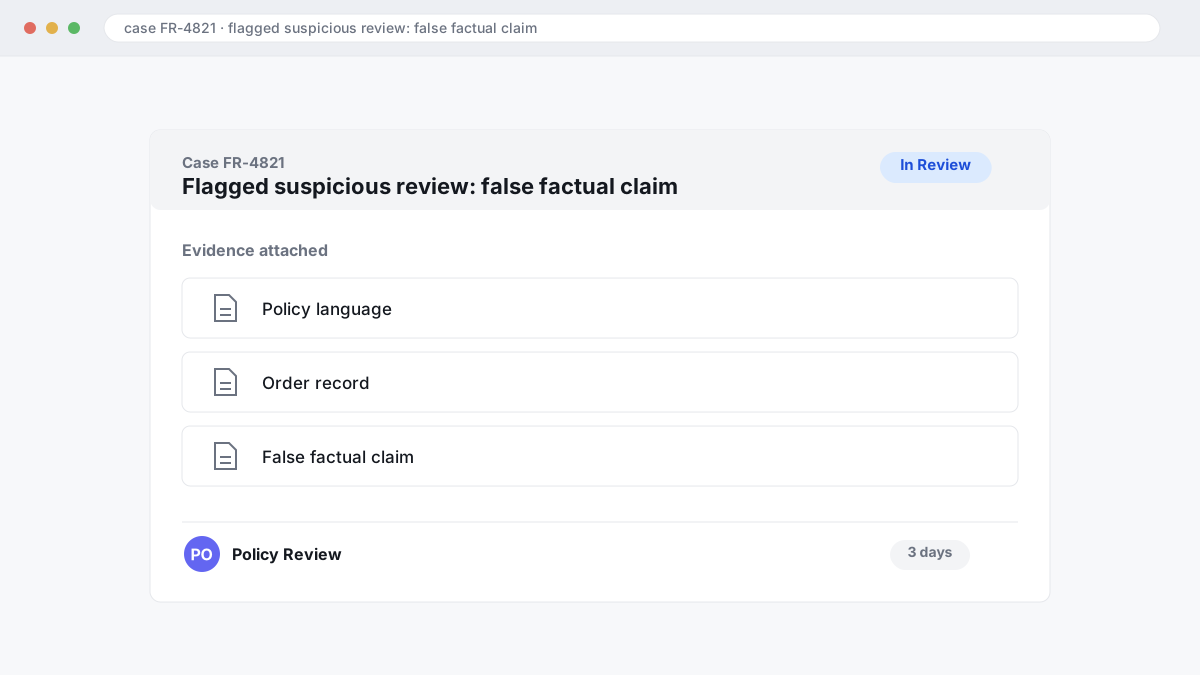
The wrong move is reporting a review because it is negative. That usually fails because Google Business Profile, Trustpilot and Yelp each ask a policy question first: impersonation, conflict of interest, no genuine customer experience, prohibited content, harassment, or a false factual claim. In BGR Review’s dataset of 12,000+ negative review cases logged June 2025 to June 2026, roughly 90% of businesses that came to us after a failed attempt had used only the basic in-platform report button with no supporting documentation, and 70–80% of those initial requests had been rejected. A rejection did not prove the review was legitimate.
The stronger route is negative review handling built around evidence. Dates matter. Transaction records matter. Staff rota, booking logs, invoice numbers, screenshots of prior contact, and conflict details matter because they let a moderator test whether the reviewer had a real interaction and whether the content breaks a named rule. If the review alleges a visit on a day you were closed, or names an employee who never worked there, that gives the platform something concrete to assess.
Business responses do a different job. A calm public reply can protect click-through from the local pack or map pack while the case sits in moderation, which can take days or longer and may still end unresolved.
What should a simple consumer-trust survey template measure each month?
A usable monthly trust scorecard should measure five things on each review source: review recency, sample size, star-rating distribution, authenticity signals in the text, and reply coverage, then pair that with one open question asking which detail increased or reduced trust.
Most teams track vanity metrics such as average rating and total review volume. That fails because a 4.9 built on thin one-line reviews, no owner replies and a lopsided rating spread can look managed rather than credible on Google, Yelp or Trustpilot, even before a buyer reaches your site or the map pack. Use the same monthly sheet across those platforms plus your own first-party feedback form, especially if you are also running a BGR Review package with a 30-day free replacement guarantee and need a clean before-and-after record.
This compact template keeps platform trust differences visible without turning the survey into admin.
| Source | What to log monthly | Question for respondents |
|---|---|---|
| Google, Yelp, Trustpilot | Reviews from last 30-90 days, total review volume, rating spread from 1 to 5 stars, signs of detailed genuine language, and % with business replies | Which review detail made you trust or doubt us? |
| First-party feedback | Same five fields, plus whether the reader called, booked or submitted a form after reading reviews | What felt credible, missing or forced? |
The right approach works because it shows what changed first: fresher reviews lift confidence, broader rating spread looks more natural, and reply coverage often improves conversions before your average score moves.
How should a business improve review trust signals over the next 90 days?
Start with a trust audit, then fix the weakest visible signal before asking for more reviews. Over the next 90 days, most profiles earn trust faster by improving review recency, business responses, and review source mix than by chasing a higher average score.
The wrong move is sending review requests on day one while obvious credibility gaps stay live. 8.
Use this 90-day workflow to fix what people can see first, then measure whether trust changes turn into calls, bookings, and form fills.
| Days | What to fix | What to watch |
|---|---|---|
| 1-30 | Audit review freshness, star-rating distribution, repeated phrasing, same-day spikes, and every unanswered negative. On Google and Yelp, reply publicly to recent criticism first; on Trustpilot and Clutch, check whether your profile leans too heavily on one source. | Profiles with recent replies usually lift click-through from the map pack before rank changes. |
| 31-60 | Request legitimate feedback after real service moments: job completion, delivery, resolved ticket, closed matter. Set a response rule by platform so Google gets the fastest replies, while Trustpilot, Yelp, Clutch, or TripAdvisor stay current enough to support your main buying journey. | Better response coverage improves shortlist confidence and branded search later. |
| 61-90 | Compare conversions after the fixes, not just rating movement. Check call volume, bookings, form fills, and whether more visitors mention reviews on sales calls. | If conversions stay flat, your trust issue may be weak review text or poor platform balance rather than score. |
If you are also buying review support, keep the compliance line clear. Google, Yelp, Trustpilot and the FTC endorsement rules all care about authenticity and disclosure, so visible trust gains come from cleaner signals and steadier coverage, not from trying to manufacture a perfect pattern; if you use BGR Review for review packages, the fixed protection is a 30-day free replacement guarantee, not an inflated promise about rating jumps.
Where to go from here
Start with the profiles and signals a buyer sees before they click: review recency, the spread of your star ratings, the depth of review text, response speed, and whether Google, Trustpilot, Yelp or Clutch tell the same story. In live profile checks, the pattern that usually drags confidence down is obvious once you line platforms up side by side: a sudden rating spike, thin one-line praise, slow or missing replies, then weaker click-through from the map pack even while the average score still looks healthy.
Your next step is an audit of your current profile mix. Pull your last 20-30 reviews on each platform, mark the date gaps, note unanswered negatives, and flag anything that may breach platform policy or the FTC endorsement guides. You should come out with a short priority list: what to fix first, what to request next, and what to report with evidence.