
Quick answer
For a cleaning service, reputation management comes down to three jobs: keep verified reviews coming in on a steady schedule, answer complaints before they sit unanswered for weeks, and challenge reviews that break platform rules. On Google Business Profile, removal depends on Google’s prohibited and restricted content policy, not whether the review feels unfair. The fastest lift usually comes from tightening post-job review request timing and fixing old 1-star to 3-star threads first. If a review clearly breaches policy, BGR Review handles removal on a pay-after-success basis at $449 per removed review link, with $0 upfront.
This page is written from live review operations, not generic marketing advice. We track what actually happens after a flag is filed: the jobs that fail usually rely on the in-platform report button alone, while the ones that move forward are backed by a proper evidence pack with the job record, service address match, timestamps, cleaner notes, and before-and-after message history.
BGR Review has served 15,000+ businesses, with 12,000+ negative review cases logged from June 2025 to June 2026 in our research methodology, and we record outcomes as removed, unresolved, or unknown rather than quietly counting unconfirmed cases as losses or wins. That matters if you are deciding between DIY handling and outside help.
Why do most cleaning companies lose leads before prospects ever read past the stars?
Cleaning companies lose leads before the click because prospects judge your star rating, review count, recency and reply quality directly inside Google Business Profile results. If the profile looks stale, thin or argumentative, many people leave from the local pack or a branded search without ever reaching your quote form.
Most guides fixate on ranking first. That fails because visibility alone does not secure bookings. A cleaning company sitting high in the map pack with a 4.4 average, old reviews and no owner replies often loses the click to a nearby profile showing 4.8, a healthier star rating distribution and fresh feedback from the last few weeks. The choice happens fast, before your website, service list or phone script gets any chance to convert.
Lead conversion from reviews starts on the search results page, not after the visit. In BGR Review's dataset of trades businesses with complete enquiry-source data, observed February to July 2026, 70-80% of calls and bookings were attributed to a Google Business Profile or Yelp listing rather than a standalone website. For a local cleaning brand, that means review count, recent review dates and sensible owner replies do two jobs at once: they improve click-through from the map pack and they make branded searches look safe when someone checks your name before calling.
Which review problems should a cleaning service fix first for the fastest ROI?
The fastest-payback fixes for most cleaning companies are stale review recency, unanswered negative reviews, and a thin Google Business Profile. Those three move map-pack click-through and quote confidence faster than adding another tool or opening a minor directory profile.
Most guides tell you to spread effort across more platforms. That usually fails because local buyers comparing cleaners on mobile often decide from your Google Business Profile before they ever reach Trustpilot or Yelp, so a weak core profile drags lead conversion from reviews even if your brand appears in more places. In BGR Review's dataset of 1,485 businesses observed from February to July 2026, trades businesses typically saw first reviews around two weeks after launch, and reaching 20-30 reviews over the first three months was associated with stronger local visibility while other ranking factors were active at the same time. For a cleaning company, the practical read is simple: if your latest review is months old, fix recency first and you can usually improve trust signals within 2-4 weeks.
Unanswered 1-star reviews come next. Owners often spend time polishing 5-star review request copy while an old complaint sits at the top of the star rating distribution with no reply, which hurts conversions because the prospect reads the criticism and assumes silence means the issue was real. A short owner response that states the booking name was not found, invites the reviewer to share the invoice number, and stays factual does more for booking confidence than another batch of generic happy-customer language.
Then strengthen the location profile itself before chasing a third-party win: service area, categories, opening hours, photos, services, and recent review flow on Google. If you later buy verified review support, BGR Review's packages carry a 30-day free replacement guarantee, but the cheaper move is often to fix the profile you already own before paying for wider coverage.
What does a cleaning-service review flow look like from job completion to published feedback?
A reliable review flow starts the moment the job is marked complete, sends the first request fast, follows up once, and routes complaints before they turn into a public post. Review request timing, the channel you use, and proof that the service actually happened decide whether feedback gets published and whether it helps your map-pack click-through and bookings.
Random asking fails because it depends on whichever cleaner remembers to ask, usually at the wrong moment. A cleaner might ask before the client has seen the finished kitchen, or three days later by email when the job is already forgotten. In BGR Review's own dataset of 1,485 businesses observed from February to July 2026, new trades and local service firms usually got their first reviews around two weeks after launch, and roughly 90% of those early reviews were positive. The useful part is the timing: ask after visible results, usually within 2 hours of job completion, while the outcome is still fresh.
For residential cleaning follow-ups, SMS usually gets opened faster than email, so it should carry the first request and the direct profile link. Email still has a place for invoice records and longer thank-you notes, but it is slower for the first touch. If the customer raises a problem by reply, route it to a manager before sending the follow-up ask; that protects star rating distribution and stops avoidable damage to conversions.
Multi-location cleaning brands need one workflow across every branch. Use the same trigger, the same delay, the same approved message, and the same branch-specific review link, then connect each ask to the job ID so platforms that support verified reviews have a clean service record behind the invitation. Consistency beats occasional enthusiasm because it produces a steadier review flow, cleaner reporting, and fewer branch managers improvising requests that break policy or send reviews to the wrong profile.
How should your team ask for reviews without sounding awkward or triggering review gating risk?
The safest review workflow is straightforward: ask every completed customer, send one direct link, and do not filter by assumed satisfaction. Review gating creates platform risk and can make your cleaning company’s feedback pattern look managed rather than earned.
The awkward version usually comes from overthinking the ask. Train your cleaners or account managers to use one line in person at handover: “Thanks for having us today. You’ll get a text from us shortly with a Google review link if you’d like to share how it went.” Then send one SMS within 2 hours, while the job is still fresh and the before-and-after result is easy to recall. That review request timing matters more than fancy wording, and it keeps the ask natural for both residential cleans and recurring commercial visits.
The wrong approach is asking only the customers you expect to praise you, then steering unhappy ones to a private form. Google Business Profile rules are clear on the principle: selective solicitation that distorts the rating picture can breach policy. It also backfires in practice. A profile with only glowing bursts and no normal star rating distribution looks less trustworthy, which can hurt map-pack click-through and the calls that follow.
The right approach is one workflow for everyone: completed job, one spoken line, one SMS, one review link, no pre-screening. If a customer replies with a problem instead of posting publicly, fix the service issue first, but do not use that as a hidden filter. If you use a managed service like BGR Review for verified review growth, keep the same rule. Compliance first, then volume.
Which review request template actually fits residential and commercial cleaning jobs?
A cleaning company gets better response from two short, channel-specific asks: a sub-320-character residential SMS sent soon after the job with the cleaner's first name, and a manager-facing commercial email sent after the first completed cycle with one direct review link.
One generic script fails because house-cleaning clients reply on mobile, while office and facility managers usually need a cleaner record tied to the contract cycle. Mixing Google Business Profile, Trustpilot and other links in the same message also splits action and weakens verified reviews workflows. BGR Review keeps each ask to one destination for that reason.
Residential SMS: Hi [First Name], thanks for having [Cleaner First Name] over today. If the clean met your standard, would you leave a quick Google review here: [direct link] It helps local customers choose us. Thank you.
Commercial email: Subject: Feedback on your first cleaning cycle
Hi [Manager Name], thanks for completing your first service cycle with us at [Site/Company]. If you can share feedback, please use this review link: [direct link]. It helps us document service quality and future verified reviews. Best, [Name]
What should you do in the first hour after a bad Google review hits your cleaning business?
In the first hour, preserve the record, confirm whether the reviewer matches a real job, and draft a calm public reply for your Google Business Profile. Fast, factual handling protects trust and stops your team posting a defensive answer that costs clicks and bookings.
The wrong approach is to argue in public before you verify anything. That fails because prospects in the map pack read tone before detail, and a combative owner response strategy can hurt click-through rate even when the review is unfair. Screenshot the review immediately, including the reviewer name, star rating, date, text, and any photos, because edits, account changes, or deletion can break the record you need for an evidence pack.
The right approach is to verify privately first and answer publicly within 24 hours, even if you are still checking staff logs and messages. A short reply such as “We are reviewing this job record now. Please contact us on [number] so we can resolve it directly” keeps the service recovery visible, moves the discussion offline, and avoids publishing guesses that later contradict your booking notes. If no matching customer appears, hold the public line, then build the evidence pack from the job record, timestamp, address match, cleaner notes, and before-and-after messages.
Speed matters, but accuracy matters more. In BGR Review’s log of 12,000+ negative review cases from June 2025 to June 2026, reviews raised within 28 days of posting and backed by an identifiable policy issue resolved successfully in roughly 90% of cases, while comparable cases raised later fell to approximately 25–30%; that is our observed outcome profile, not a Google rule. Early screenshots and a measured reply give you both options: recover the customer if the complaint is real, or support a later flag or appeal if it is false.
When can a cleaning company remove a false, fake, or policy-violating review?
A cleaning company usually gets a review removed only when it breaks platform rules or states a provably false fact. A harsh opinion about missed dusting or a late arrival usually stays live, but fake accounts, competitor posts, impersonation, and unsupported factual accusations can be challenged through negative review removal routes.
Most owners argue fairness. That usually fails. Google Business Profile does not remove a review because you think it is exaggerated; it looks for a policy ground under Google’s prohibited and restricted content rules, such as spam, off-topic content, impersonation, deceptive engagement, or a conflict of interest like a rival cleaner posting as a customer. Defamation and false statements can matter, but only if you can point to a concrete claim that is untrue, such as “your staff stole keys from my flat” when your job record shows no booking, no address match, and no staff attendance.
The better approach is to map the review to the platform’s own lane before you file. In BGR Review’s log of 12,000+ negative review cases from June 2025 to June 2026, roughly 90% of businesses that came to us after a failed self-filed attempt had used only the basic in-platform report button with no supporting documentation, and 70–80% of those initial requests had been rejected. A rejection did not prove the review was legitimate. It usually meant the complaint named frustration, not a policy breach.
The platform path changes the outcome, so treat Google and Trustpilot differently.
| Platform | What usually gets traction | What usually fails |
|---|---|---|
| Google Business Profile | Spam, impersonation, off-topic reviews, competitor conflicts, fabricated factual claims supported by records | “This is unfair” with no policy reference or evidence |
| Trustpilot | Disputes tied to service-review eligibility, invitation misuse, fake consumer identity, or content that breaches Trustpilot rules | Asking Trustpilot to remove a negative service experience just because you disagree with it |
Trustpilot is the main exception to the “flag and wait” mindset. Its disputes often turn on whether the reviewer had a real service experience and whether your invitation flow followed its rules, which is a different pathway from Google Business Profile. If you want BGR Review to handle the filing, the removal model is simple: $0 upfront and $449 per removed review link after success; if the review is only unpleasant and policy-compliant, DIY response is the cheaper move.
What belongs in an evidence pack before you flag or appeal a review?
An evidence pack for a disputed cleaning review should prove one simple point in order: whether the claimed job happened, who attended, what was said before and after, and which part of the review is false or policy-violating.
The wrong approach is dumping 20 screenshots into Google Business Profile or a Trustpilot appeal and hoping volume wins. It fails because support teams review fast, often on a single pass, and loose images rarely show a clean proof chain for negative review removal. A statement such as “they never came” is treated very differently from “I hated the smell of the chemicals”: the first can be challenged with records and may edge into defamation or false statements if the factual claim is untrue, while the second is usually opinion and stays up.
The right approach is one PDF evidence pack with labelled sections and a one-page chronology at the front. Put the date of booking, visit window, crew names, invoice number, job record, address record, van or staff schedule, and any timestamped completion note in sequence. Then add customer communications, call logs, SMS or WhatsApp messages, before-and-after messages, and CRM notes in the same file so the reviewer identity, address match, and service history sit together.
” That format gets read. Random screenshots usually do not.
How do Google and Trustpilot differ for cleaning-service reputation building?
Google usually deserves first priority for a cleaning service because buyers meet it in Maps and the local pack. Trustpilot can add trust for branded search and comparison shopping, but it will not make up for a weak Google Business Profile when the job is still in lead-capture mode.
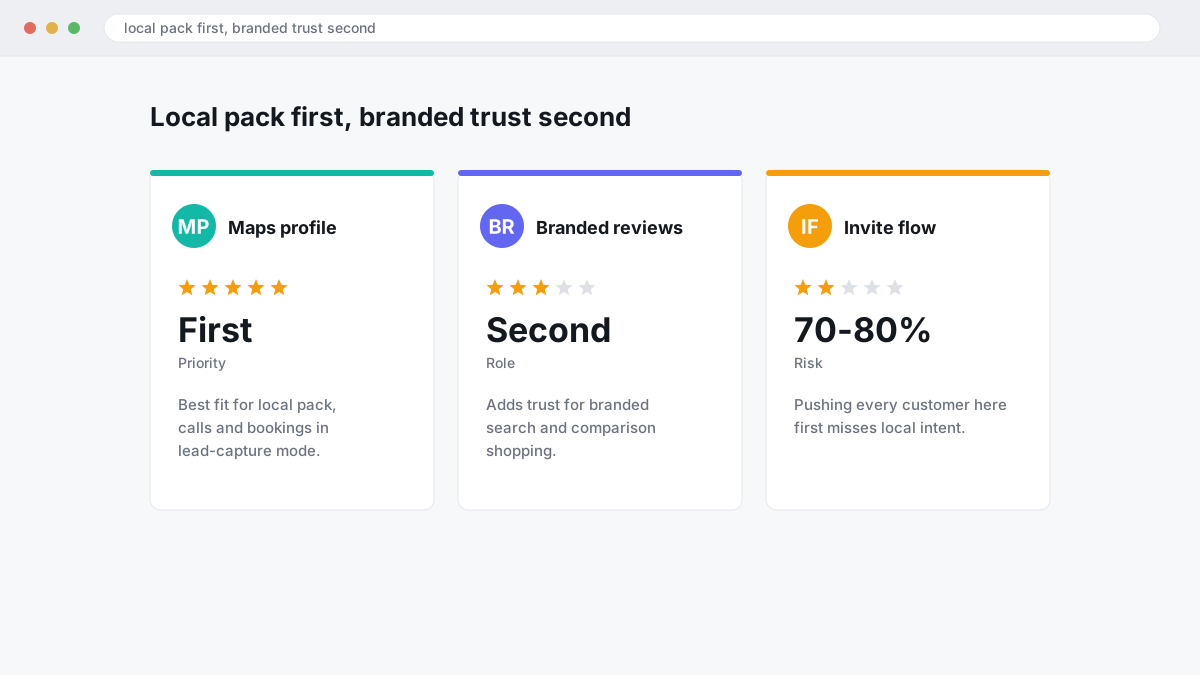
The wrong move is treating both platforms as interchangeable and pushing every customer to Trustpilot first because the invitation flow feels tidier. That fails on local intent: in BGR Review's dataset of 1,485 businesses observed from February to July 2026, trades businesses with complete enquiry-source data attributed 70-80% of calls and bookings to a Google Business Profile or Yelp listing, which tells you where lead conversion from reviews usually starts for service-area operators. Google owner responses also sit beside maps-based discovery, so a sharp reply can steady click-through and calls before a prospect ever visits your site.
This comparison is easier to act on in a side-by-side view.
| Platform | Best job | What you control | Moderation reality |
|---|---|---|---|
| Google Business Profile | Map-pack visibility, local clicks, phone leads | Review request timing, owner responses, profile completeness | Public impact is immediate; removals depend on Google policy and evidence |
| Trustpilot | Broader service-review collection, branded-search trust | Structured invitations, post-job follow-up, verified reviews workflow | Flagging is more process-led, especially when invitation records support the dispute |
The right approach is to use Google for local discovery and Trustpilot as a trust layer. Ask for Google reviews straight after completion when the cleaner has left and the result is visible, then use Trustpilot's structured invitations for residential and commercial jobs where you want a broader spread of service feedback, including verified reviews tied to a job record. That mix works because each platform does a different job: Google catches ready-to-book demand, while Trustpilot strengthens the research phase after someone searches your brand name.
When does DIY reputation management beat hiring an agency for a cleaning brand?
DIY reputation management beats agency help when you run one cleaning location, review volume stays low, one person owns the inbox, and you can answer every review, send every request, and chase every dispute within 24 hours.
The wrong approach is assuming lower cost means lower effort. It does save money, but the control burden lands on you: review request timing, Google Business Profile checks, owner response strategy, and every follow-up after a missed clean or billing complaint. That works for a single branch manager with a simple process. It fails when replies slip, old complaints sit unanswered, or you need consistent reporting across several teams.
This comparison is usually enough to make the call.
| Setup | DIY fits | Agency help fits |
|---|---|---|
| Review flow | One location, low volume, clear staff ownership | Multi-location cleaning brands that need the same request cadence, reply rules and monthly reporting |
| Negative review removal | Minor issues you can document and escalate yourself | Fake, false or policy-violating reviews where evidence packs and appeal handling decide the outcome |
| Managed support | Basic monitoring and manual replies | Fixed price per removed link |
The right approach is to keep DIY until complexity outruns staff time. Once removals, platform differences, or multi-location consistency start affecting calls, bookings, form fills, and map-pack click-through, managed support usually costs less than the operator hours it replaces.
Where do legal and platform rules get crossed when cleaning companies buy or shape reviews?
The line gets crossed when you pay for, filter, script or disguise feedback in a way that misleads readers, because the FTC endorsement guides require disclosure for compensated endorsements and platforms such as Google Business Profile and Trustpilot still ban deceptive review practices even when money changed hands openly.
The wrong approach is common: offer a discount for a 5-star post, send only happy clients to Google, hide unhappy ones in a survey, then call the result “verified reviews”. That fails twice. First, review gating risk is real because Google and Trustpilot prohibit manipulated collection methods, and disclosure does not cure a platform breach. Second, the US FTC endorsement guides treat compensated endorsements as needing clear disclosure, while undisclosed paid praise can create regulatory trouble beyond a ranking drop or profile suspension.
The safer approach is plain: ask every completed job for honest feedback, disclose any incentive clearly, and keep the incentive tied to the review being left, not to the rating. If you buy a review package, the compliance question is whether the review is genuine, properly disclosed where required, and accepted by the platform’s own rules; BGR Review’s 30-day free replacement guarantee does not change those rules.
False factual accusations sit in a different lane. A review that says your cleaner stole keys or never attended a booked address may raise defamation and false statements issues, but thresholds vary by country and this is general information, not legal advice. For platform action, your evidence pack still matters more than legal threats: job record, timestamp, address match, staff notes and message history give Google or Trustpilot something concrete to assess.
What should a cleaning owner fix in the next 30 days to lift trust and lead quality first?
Fix the smallest gaps that change visibility and conversion first: tighten your Google Business Profile, trigger one review ask after every completed job, answer public complaints fast, and document your false-review evidence before the next dispute lands. Random reputation tasks fail because they scatter effort across logos, social posts and one-off replies while your map-pack click-through and booking conversion rate still leak on the profile people actually see.
In BGR Review's dataset of trades businesses with complete enquiry-source data, observed February-July 2026, 70-80% of calls and bookings came through a Google Business Profile or Yelp listing rather than a website. That is why week 1 should be an audit: correct categories, services, booking link, fresh before-and-after photos, and a side-by-side check of your top three local competitors for review recency, photo quality and missing attributes. Week 2 should launch one SMS review request tied to job completion and one reply SLA, ideally same day for complaints.
Weeks 3 and 4 should lock down the process most generic guides skip: a false-review evidence pack with invoices, dispatch logs, photos, staff notes and customer records, plus service-area pages that route each city lead to the right phone number and booking form. That sequence works because it lifts trust first, then lead quality, instead of creating more traffic that still fails to convert.
Where to go from here
Start with the reviews already hurting you. Reply to every unanswered 1-star to 3-star post on Google Business Profile and Trustpilot, fix the request timing after each completed clean, and stop sending the same review ask to every customer regardless of job size or outcome. Cleaning companies usually get the fastest lift in map-pack click-through and lead conversion from those three moves, because they change what a local searcher sees before you earn the next batch of reviews.
Your next step is a review and removal audit. Pull the last 90 days of reviews, mark which ones were answered, which look fake or policy-violating, and build one evidence pack per disputed post: job record, timestamp, address match, staff notes, and before-and-after messages. Then separate DIY fixes from escalation cases. If a review clearly breaches platform rules, file fast; in BGR Review’s logged cases from June 2025 to June 2026, reviews raised within 28 days and backed by an identifiable policy issue resolved successfully in roughly 90% of cases.