

Quick answer
Local SEO is the work that gets your business into Google’s local results, especially the map three-pack for nearby, high-intent searches. In 2026, the practical checklist is clear: fully complete your Google Business Profile, keep categories, services and opening hours accurate, earn recent verified reviews, remove duplicates, match location pages to real service areas, and build local mentions and links that reflect the business offline. The gains usually come from upkeep, not setup alone. Review recency, owner responses, category accuracy, and fast action on fake or policy-violating reviews shape clicks and trust before rankings visibly move.
This page is written from live listing and review operations, not theory. We handle review acquisition across Google, Trustpilot, Yelp, Clutch and TripAdvisor, and we also run negative review removal on a pay-after-success model at $449 per removed link with $0 upfront, which means the workflow has to survive platform scrutiny rather than sales copy.
The practical difference shows up after a bad review lands: the in-platform flag almost never carries enough context on its own, so the result often turns on the evidence pack, the policy category chosen, and how quickly you file it. Across 12,000+ negative review cases logged from June 2025 to June 2026, we recorded outcomes as removal success, unresolved, or unknown rather than forcing every unclear case into a failure bucket.
Start with the ranking surfaces that actually matter locally
Local SEO in 2026 means winning three separate surfaces at the same time: Google Maps visibility through your Google Business Profile, local pack placements on search results pages, and localised organic rankings for your location pages.
Most local guides blur those together, which hides where the loss actually sits. For service-area and storefront businesses, your Google Business Profile usually drives the highest-visibility clicks because it appears before your website in Maps and in the local pack. In BGR Review's own 2026 dataset of 1,485 businesses, trades firms that shared complete enquiry-source data attributed 70–80% of calls and bookings to a Google Business Profile or Yelp listing, and around 60% were operating without relying on a standalone website. That is why profile work comes first.
| Surface | What to track |
|---|---|
| Google Business Profile | Profile views, calls, direction requests, website clicks |
| Local pack | Rank position for priority terms by location |
| Localised organic | Organic traffic and conversions on each location page |
If you lump those into one report, you miss the fix. A profile can gain views while your location page traffic drops, or your page can rank while the pack stays weak because the profile itself is under-optimised.
Fix your Google Business Profile before doing anything else
Your Google Business Profile is the first local asset to fix because Google uses it to decide relevance, prominence and whether your listing deserves clicks at all.
Fill every core field before you touch citations, links or content. That means your primary category, opening hours, services, business description, attributes and opening date inside Google Business Profile Manager. Leave one of those half-done and Google has to guess. In BGR Review's 2026 dataset of 1,485 businesses, trades and local service firms that built early review activity on complete profiles typically saw their first reviews around two weeks after launch, which is useful only if the listing itself already reflects the real service and trading details.
Pick one primary category first and get that right. Extra categories help only when they describe services you actually deliver, on that location, under that brand. A dentist should not add cosmetic dentist, emergency dental service and orthodontist unless those services are genuinely offered there; a roofer should not stack gutter cleaning, solar installer and general contractor to chase reach. Google Business Profile's misrepresentation rules give you enough room to describe real work, not to stuff variants.
Audit the profile monthly and every time something operational changes: a bank-holiday schedule, a move, a merger, a new tracking number, or a switched main line. Phone changes and duplicate profiles create avoidable trust problems fast. If you are paying for reputation support later, BGR Review's review packages start delivering in 24-48 hours, so your listing details need to be correct before any new review activity lands on the profile.
Set category, service and attribute signals with local intent in mind
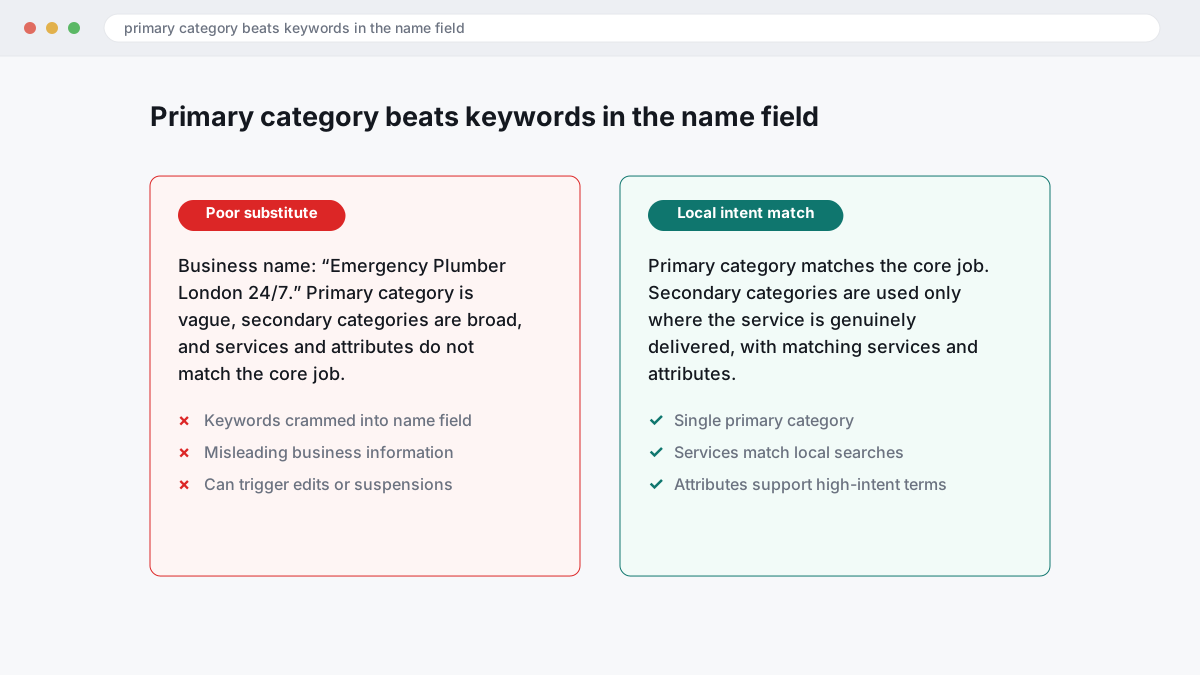
Your category, service and attribute settings tell Google Business Profile which local searches you should appear for, and they carry more weight than cramming keywords into the business name field. Pick the single primary category that matches the core job you want to rank for, then use secondary categories only where the service is genuinely delivered. Google Business Profile Help is clear that misleading business information can trigger edits or suspensions, so “Emergency Plumber London 24/7” in the name field is a poor substitute for the right category.
If you want visibility for high-intent searches, fill in services and products where your profile type allows it. Terms like emergency repair, same-day boiler repair or after-hours locksmith belong in the services area, not scattered across random profile text. This matters in practice: in BGR Review’s 2026 dataset of 1,485 businesses, trades and local service firms that built early review velocity and clear profile relevance were the ones that tended to surface faster in local discovery, though reviews and proximity were active at the same time.
Attributes qualify the click before the visit. Add factual options such as women-owned, wheelchair-accessible entrance or online appointments only when they are true, because these can shape filtered searches and conversion even when rankings hold steady. If BGR Review is helping you strengthen verified reviews on Google or Yelp, we treat attributes as part of the same local conversion setup, because the wrong signal brings the wrong lead.
Build location pages that deserve to rank on their own
A location page deserves to rank when it gives Google and your visitor enough local evidence to treat that page as the best answer for one place, one service set and one action.
Give each branch, clinic or service area its own URL. Put the full NAP, opening hours, an embedded Google map and the services actually delivered from that location on the page, not tucked into a sitewide footer. If your Manchester page and Leeds page share the same copy apart from the city name, Google reads that as thin local intent. In BGR Review's 2026 dataset of 1,485 businesses, trades firms often won enquiries straight from profile listings, but the pages that converted best still matched the exact town-and-service query with specific on-page detail.
City-specific proof is what most local SEO guides leave too vague. Use photos from that location, name the staff people will meet there, add parking notes, mention wheelchair access if relevant, and write simple directions from a nearby landmark such as a station, retail park or hospital. Those details help rankings because they make the page unique, and they help conversion because a visitor can picture the visit before they call.
Pick one conversion goal per page and make it obvious. A locksmith page should usually push a call. A dental page may work better with a booking form. A B2B service page may need a quote request. Three competing buttons split intent, muddy attribution and usually lower page-level conversion even when local rankings hold steady.
Keep your name, address and phone consistent where it counts
Consistent name, address and phone data still matters because Google, Apple Business Connect, Bing Places, Yelp, Facebook and the main data aggregators use it to reconcile whether your listing, reviews and map entity belong to the same business.
Fix duplicates before you touch any long citation list. A duplicate Google Business Profile, Yelp page or Apple listing can split reviews, send calls to the wrong number and surface the wrong pin on Maps. Start with Google first, then Apple, Bing, Yelp and Facebook, because those are the places where a wrong suite number or tracking phone causes visible damage fast. If you are also buying or earning verified reviews through BGR Review, this step comes before delivery, because sending new review activity to a duplicate page creates avoidable cleanup work.
Audit your core citations quarterly. Four checks a year is enough for most single-location firms unless you moved address, changed phone, rebranded or merged listings. Skip the old checklist advice to submit to hundreds of weak directories. Clean the platforms above, check the major aggregators that feed downstream sites, and make sure your website footer and contact page match exactly. One canonical phone number beats a rotating call-tracking setup published everywhere.
Turn review operations into a weekly local SEO system
A weekly review system for local SEO means asking every real customer for honest feedback on a fixed schedule, through the right channel, while the visit is still fresh.
Send the first request within 24 to 72 hours of the job, appointment or delivery. Response rates are usually strongest there because the service is recent and the customer still remembers the staff member, the location and the outcome. In BGR Review's 2026 dataset of 1,485 businesses, new trades and local service firms often received their first reviews around two weeks after launch, and reaching 20 to 30 reviews in the first three months was associated with better local visibility, with other ranking factors active at the same time.
| Channel | Best use | Prompt shape |
|---|---|---|
| SMS | Field services, same-day jobs | Short thanks + direct review link sent the same day or next morning |
| Professional services, longer projects | Brief recap of work + named staff member + single review link | |
| QR card | Reception desks, tills, vans | Scan-to-review card handed over at checkout or sign-off |
| Follow-up link | Invoices, thank-you pages, booking confirmations | One click from the document the customer already opens |
Ask for honest feedback only. Do not filter happy customers to Google and unhappy ones to a private form, because review gating can breach platform rules and consumer-protection law, including the FTC's rule on fake reviews and testimonials in the US and the UK's DMCC Act rules on fake reviews and misleading practices. Google and Trustpilot both expect authentic, non-selective solicitation; if you need volume, improve your follow-up process, not the truth.
Respond to reviews and remove policy-breaking ones fast
Fast review handling protects local conversion first and gives policy-breaking reviews the best chance of removal if you raise them early. For active locations, reply to new Google reviews every week and aim to answer within 7 days, because a fresh unanswered complaint on your Google Business Profile can depress clicks long before rankings move. Across 12,000+ negative review cases logged by BGR Review, reviews raised within 28 days of posting and backed by an identifiable policy issue resolved successfully in roughly 90% of cases; beyond 28 days, the observed success rate fell to approximately 25–30%.
Use the platform’s actual policy buckets when you flag. On Google, that usually means fake engagement, off-topic content, conflict of interest, harassment, profanity, or other prohibited content under the Google Business Profile review policy, rather than a vague “this is unfair” report. If the review names no real visit, mentions a competitor, or describes an event your records do not show, flag it and document the mismatch immediately.
Keep an evidence pack before you escalate: screenshots of the live review, customer records or booking logs, timestamps, order numbers, internal staff notes, and any message trail that proves the account was never a customer or that the claim is false on its face. This is where most DIY attempts fail. In BGR Review’s dataset, roughly 90% of businesses that came to us after a failed attempt had used only the basic in-platform report button with no supporting documentation, and 70–80% of those first requests had been rejected.
Control local spam and listing abuse in your market
Controlling local spam means finding and reporting Google Business Profile listings that break Google's business representation and eligibility rules before they keep outranking legitimate profiles.
Map spam usually falls into four buckets: keyword-stuffed names, fake addresses, duplicate listings, and virtual offices that fail Google's eligibility rules. Save dated screenshots before you touch anything. Capture the profile name, category, address, street view if it helps, the website footer or contact page, and the search result showing the query that triggered the listing. Then use Suggest an edit for obvious corrections, and file Google's Business Redressal Complaint Form when the issue is repeated, deliberate, or tied to duplicates.
- Keyword-stuffed name: compare the listing name with the legal business name on the site, signage, and company records.
- Fake address or virtual office: check whether staff are actually present during stated hours; mailbox services and ineligible co-working setups often fail eligibility.
- Duplicate listing: look for two profiles using the same phone, domain, or category in the same city.
Check the top 3 local competitors every month. That cadence is simple enough to maintain, and it catches fresh edits before they sit in the local pack for a full quarter.
Earn local links and mentions that support real-world authority
Local links help local SEO when they prove you exist in the places you claim to serve. For trades firms in BGR Review’s 2026 dataset that shared full enquiry-source data, 70–80% of calls and bookings came through a Google Business Profile or Yelp listing, so the best links are the ones that strengthen real local prominence around those listings. Sponsor a school event, join your chamber, support a neighbourhood charity, or appear on an organiser’s partner page. Those pages have an audience. Google can read that context.
If you are choosing between one clean mention on a trusted city newspaper site and 50 thin directory submissions, take the newspaper link every time. Generic directory blasts rarely send leads and paid placements with no readership leave a weak footprint, especially when every listing uses the same anchor text and boilerplate description. Local SEO responds better to relevance than volume. A chamber member page, borough association profile, or event sponsor page beats another empty directory entry.
Add the schema and crawl signals that help search engines trust location data
Structured data helps search engines verify that your location page, your Google Business Profile and the rest of the web describe the same place. Use LocalBusiness or a tighter subtype such as Dentist, Attorney or Restaurant, then fill in sameAs, openingHours, geo and full address fields. Keep the schema name, address and phone identical to the visible page and identical to your Google Business Profile. “Suite 4” versus “Ste 4” looks minor to a human and messy to a parser.
If you launch, close or heavily revise location pages, push an updated XML sitemap straight away and resubmit it in Google Search Console. Do the same after large multi-location edits, especially when URLs, canonicals or internal links change. This will not rescue a weak page, and it will not fix a mismatched profile, but it does shorten the lag between your change and Google’s next crawl.
Set governance rules for multi-location businesses
Multi-location governance means every branch follows one operating rulebook for profiles, reviews and location-page changes, with named owners and fixed response times.
| Owner | What they control | Deadline |
|---|---|---|
| Profile governance owner | Google Business Profile naming, primary and secondary categories, UTM format, duplicate checks | Same business day for edits; 48 hours for closures, moves and duplicates |
| Review owner | Response queue, escalation to flag policy-breaking reviews, evidence pack collection for Google, Yelp, Trustpilot or Clutch | Daily monitoring; 48 hours for escalations |
| Location-page owner | Address, practitioner roster, opening hours, embedded map, local services and internal links | 48 hours after any branch change |
If one clinic says “Dental Practice Soho” and another says “Soho Dental Practice Ltd”, you create avoidable drift. Standardise naming, UTM tags and category rules in one shared sheet, then lock the escalation path: who flags a fake review, who approves a move, who requests a merge, who updates the page. Google Business Profile Help treats moves, closures and duplicates differently, so your staff need a written rule instead of guessing in Slack.
Review closures, relocations, practitioner departures and duplicate creation within 48 hours. A departed doctor or lawyer left on a live location page keeps earning branded searches and reviews against the wrong entity, which then creates cleanup work across Google and third-party profiles. If you run branches in several countries, add a legal note to the rulebook because endorsement and review rules differ by platform and market; the FTC and the UK CMA take a harder view of misleading commercial practices than many local teams assume. This is operational guidance, not legal advice.
Work the checklist in priority order instead of doing everything at once
A 90-day local SEO plan works best when you fix the profile and page errors first, then build review and citation routines, then add authority and measurement.
| Window | What to do first | What done looks like |
|---|---|---|
| Days 1-30 | Correct your Google Business Profile, remove duplicates, standardise name, address and phone, tighten primary and secondary categories, and repair weak location-page basics such as missing local copy, title tags, map/embed issues and broken conversion elements. | One clean profile per location, one canonical NAP format, and location pages that can rank and convert on their own. |
| Days 31-60 | Start review requests, assign a response owner, monitor for spam or fake reviews, and clean up the core citation set rather than chasing every directory. If a policy-breaking review lands, file it quickly under the Google Business Profile review policy; if you outsource removal, BGR Review works on a $0 upfront, $449 per removed link basis. | A weekly review system, faster response times, and fewer unmanaged listing conflicts. |
| Days 61-90 | Earn local links from suppliers, chambers, associations or local press, expand service pages tied to real demand, and track calls, rankings and direction requests from your profile and site. | You can see which locations and pages are producing enquiries, not just impressions. |
Keep the sequence strict. BGR Review's own 2026 dataset of 12,000+ negative review cases found that reviews raised within 28 days of posting and backed by a clear policy issue resolved successfully in roughly 90% of cases, while comparable cases raised later fell to approximately 25-30%. Delay costs you options.
Where to go from here
Run a local SEO audit in this order: your Google Business Profile accuracy, your review intake process, then your review risk. Check the basics first: primary category, service areas, opening hours, phone, booking link, duplicate listings, and whether each location page matches the profile. After that, inspect how you ask for reviews, who asks, when they ask, and where the request lands. If the process is ad hoc, rankings usually stall because click-through and conversion stay weak even when visibility improves.
Move fast on suspicious reviews. Across 12,000+ negative review cases logged by BGR Review, reviews raised within 28 days and backed by a clear policy issue resolved successfully in roughly 90% of cases; beyond 28 days, the observed success rate fell to approximately 25-30%. Your next action is simple: list every review from the last month, separate genuine complaints from likely policy breaches, respond to the genuine ones, and build evidence packs for the rest.