
Quick answer
Zero-click search means the searcher gets what they need on the results page and never visits your site. The benchmark most people cite is SparkToro using Datos clickstream data: in 2024, 58.5% of US Google searches and 59.7% of EU Google searches ended without a click. That headline matters, but it misses how local buying works. A search can still produce calls, direction requests, review views, branded follow-up searches and map-pack comparisons through Google Business Profile, the local pack, a knowledge panel or AI Overviews.
We handle the part generic SEO roundups skip: what happens after the impression. In live reputation work, the turning point is often visible inside the SERP itself — a prospect reads two recent Google reviews, taps call from the profile, and never appears in website analytics.
That is also why weak reporting breaks decisions. Search Console can show rising impressions and falling click-through rate while your Google Business Profile shows more calls, more direction requests and more review views, and the right response is different from a traffic-only SEO fix. BGR Review sells review growth and negative review removal, including a 30-day free replacement guarantee on review packages and pay-after-success removals at $449 per removed link with $0 upfront, so the commercial bias is clear and the measurement standard needs to be clear too.
Why are zero-click statistics so high in 2026, and what do they really count?
Zero-click estimates look high because they count searches that end on Google-owned surfaces, not only visits to your site. In 2026, the useful question is which result feature answered the search before a click was needed, because that changes whether you need SEO work, review growth, or a $449 pay-after-success removal case.
Most roundups push one headline percentage. That fails because SparkToro and Similarweb popularised the category with different measurement methods, and many summaries blend mobile, desktop, browsers and apps into one figure without separating market or query intent. If you are deciding whether to buy verified Google reviews, fix a weak brand SERP, or leave the page alone, that blended number tells you almost nothing about what happened to organic impressions.
A useful read of the data splits the surface that satisfied the search, because AI Overviews, featured snippets, the local pack and a branded results page suppress clicks in different ways.
| Surface | What it often counts as | Why the number misleads strategy |
|---|---|---|
| AI Overviews | No site click after an answer is shown | Organic impressions can rise while page clicks fall, even if branded search demand later improves. |
| Featured snippets | No click after a short extracted answer | Good for simple fact queries, weak signal for buyer intent. |
| Local pack / brand SERP | No website click, but calls, directions or review views happen | Traffic reports miss the action that review and reputation work actually drives. |
How does zero-click search actually happen on the results page?
Zero-click search happens when Google or Bing satisfies enough intent on the results page that you do not need a traditional organic click. The page answers, compares, routes, validates, calls, or sends you to a refined search before your site ever loads.
Most guides treat this as a rankings problem. That fails because ranking first does not help if an AI Overview, a featured snippet, a map result, or a knowledge panel has already done the job your page was meant to do. For BGR Review clients focused on Google, Trustpilot, Yelp and Clutch visibility, the useful question is which surface closed the intent, because that is often where trust formed.
A search for opening hours, pricing range, “is this company legit”, or “best roofer near me” can end on the SERP itself. Google can show the answer, a local route, review stars, photos and a phone button in one view; Bing Copilot results do the same compression in a conversational format, pulling comparison and summary behaviour forward.
Then query reformulation kicks in. Instead of clicking, the user tightens the search to your brand name, adds “reviews”, or changes the modifier from “cheap” to “near me”, which is why a rise in impressions can sit beside falling organic click-through rate while branded demand and review views still move in the right direction.
Which zero-click surfaces still generate calls, visits, and branded demand?
The results page can produce calls, direction requests, bookings and later brand-name searches even when no website session is recorded, especially through the local pack and knowledge panel where reviews, photos and contact actions sit in front of the click.
The wrong approach is to treat “no click” as “no lead” and judge visibility only by Search Console sessions. That fails because the local pack sends people straight into tap-to-call, route planning and booking actions inside Google Business Profile, which never look like organic traffic in your analytics. In BGR Review’s dataset of trades businesses with complete enquiry-source data, observed from February to July 2026, 70–80% of calls and bookings were attributed to a Google Business Profile or Yelp listing rather than a website visit. If your clicks dip while pack visibility and review recency improve, your lead flow may be hiding in those profile actions.
The right approach is to read the brand SERP as a trust surface. A knowledge panel with strong review signals, recent owner responses and a clear average rating often settles enough doubt that the searcher comes back later with a branded query, or searches your company name after seeing you in a non-branded local result. That is why review stars matter before the click: they raise confidence first, then lift branded search demand later. BGR Review sells review growth and negative review removal, so this is a commercial point, not a theory exercise; if you only report website sessions, you will miss value created before the visit.
Which queries lose clicks fastest, and which still send traffic?
Informational searches lose clicks first because AI Overviews and featured snippets answer the question on the results page, branded navigational searches often end on the brand SERP, and transactional searches still win visits when the user needs pricing, comparisons, availability, or a booking step.
Most guides lump every query into one zero-click number. That fails because query intent changes what a falling click-through rate actually means. In the Search Console checks we run before changing any page strategy, informational terms usually show rising organic impressions while clicks flatten after Google answers the query directly; the right move is to treat those pages as brand exposure and demand generation, then watch whether branded searches and review views lift afterwards.
Navigational brand terms often stay no-click for a simple reason: the searcher wants your phone number, opening hours, directions, or the right location. A website visit is optional. In BGR Review's own dataset of trades businesses with complete enquiry-source data, observed February to July 2026, 70-80% of calls and bookings were attributed to a Google Business Profile or Yelp listing rather than a website, which is why brand-query CTR can fall without lead volume falling with it.
Transactional intent behaves differently. If the search includes “price”, “cost”, “best”, “near me” plus a service modifier, or a scheduling need, users still click because the results page rarely answers scope, proof, and next-step friction well enough. That is where review count, recent replies, comparison content, and a clear booking path keep traffic flowing after organic impressions rise.
When is a zero-click impression more valuable than an organic click?
A zero-click impression beats an organic click when the results page itself triggers the next buying action, such as a call, direction request, or later branded search. Organic traffic matters more when the visitor still needs pricing, proof, a booking form, or a checkout page before deciding.
Most guides treat click-through rate as the main score. That fails on local intent. In BGR Review’s own dataset of trades businesses with complete enquiry-source data, observed from February to July 2026 within a wider sample of 1,485 businesses, 70–80% of calls and bookings were attributed to a Google Business Profile or Yelp listing rather than a website visit. If your local pack impression produces a phone call from the SERP, a blog click with no enquiry was the weaker outcome even if Search Console reports the click and ignores the call.
The right comparison is traffic volume against commercial intent completed on-SERP. A Google Business Profile impression can convert within minutes because the searcher already has hours, rating, review snippets, photos, and the tap targets for call or directions in one place. That is why CTR by itself misses value: the user can act without landing on your site, then return later on a branded search after reading reviews on your brand SERP.
Organic clicks win when the page carries the next proof step. Pricing pages, service-area pages, finance options, and checkout or quote forms still matter because the local pack cannot explain scope, fees, or contract terms. If you sell something that needs comparison, compliance detail, or a longer form fill, protect those clicks first and treat zero-click visibility as the assist, not the finish.
Why do local pack and Google Business Profile visibility rarely show up in SEO traffic reports?
Local pack exposure and Google Business Profile activity rarely appear in SEO traffic reports because Search Console records clicks to indexed pages, while many high-intent local actions happen on the results page itself as calls, direction requests and profile taps.
The wrong approach is to judge local visibility by organic sessions alone. That fails because Search Console can show flat or falling page clicks while your Google Business Profile drives more phone calls, map opens and website taps from the local pack, none of which explain themselves inside a standard SEO dashboard. In BGR Review's own dataset of trades businesses with complete enquiry-source data, observed from February to July 2026 within a wider sample of 1,485 businesses, 70–80% of calls and bookings were attributed to a Google Business Profile or Yelp listing rather than a website visit.
The right approach is to separate Search Console page-click reporting from GBP conversion actions and read both against each other week by week. If impressions rise, branded search demand holds, and GBP actions climb while organic sessions dip, you usually have reporting leakage rather than a lead problem. That is the point where changing title tags will do less than improving review signals on the profile.
Review volume and star rating shape trust before any analytics tag fires. A searcher in the local pack often decides from the average rating, recency of reviews and owner replies, then taps call or directions without loading enough of your site to trigger clean attribution; that is why BGR Review tracks review views, calls and direction requests before recommending any page-level rewrite or a review package with a 30-day free replacement guarantee.
Does zero-click search reduce leads, or does it mostly hide them from traffic reports?
Zero-click only cuts leads when the search result that answers the query belongs to someone else. If your visibility moves into your own local pack listing, knowledge panel or branded search demand, enquiries can hold or rise while Search Console clicks fall.
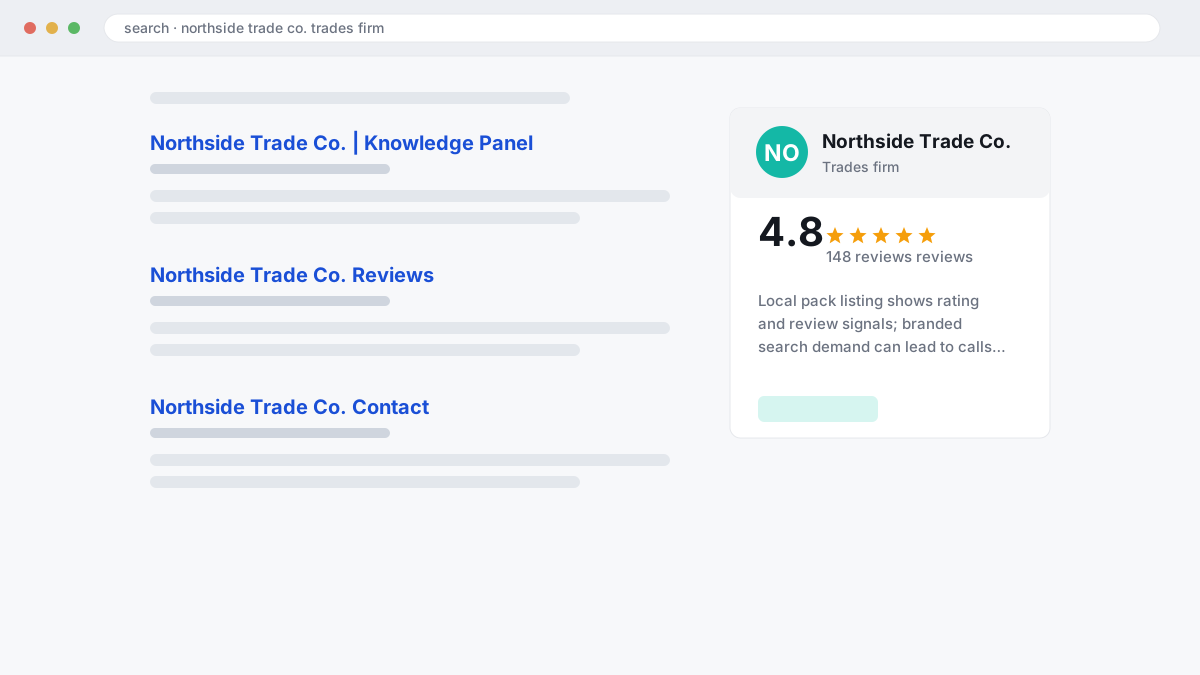
The wrong fix is to treat every click drop as lost demand. That fails because traffic reports miss a lot of owned-SERP behaviour: a searcher sees your brand SERP, reads your rating, checks review signals, then searches your name and calls from your Google Business Profile instead of visiting the site first. In BGR Review’s dataset of 1,485 businesses observed from February to July 2026, trades firms with complete enquiry-source data attributed 70-80% of calls and bookings to a Google Business Profile or Yelp listing rather than a website session. Those leads were real. They were hidden from the usual SEO dashboard.
Lead loss is real when high-intent clicks shift into competitor-controlled surfaces. If a “best plumber near me” search shows a rival with stronger reviews, more recent replies and a cleaner brand SERP, your impressions can rise while their listing takes the call, the direction request and the later branded search. That is lost demand, not just lost traffic.
The right fix order is usually simple. Check whether your brand SERP looks weak first: mixed review profiles, stale ratings, thin business details and third-party pages outranking your own assets. Then fix review signals, because weak recency and low review volume suppress click-through before they damage rankings. Only after that should you rebuild the conversion page.
When does zero-click become a reporting risk instead of a visibility win?
Zero-click turns into a reporting risk when Google or another platform handles discovery, comparison and conversion on the results page, while your reporting still judges performance by website sessions and misses the actions that happened before any click.
The wrong approach is to call the channel weaker because Search Console shows flat average position and lower click-through rate. That fails when AI Overviews, local results and other SERP features answer the query before the visit, because position can look stable while CTR drops anyway. In BGR Review's dataset of trades businesses with complete enquiry-source data, observed from February to July 2026, 70–80% of calls and bookings were attributed to a Google Business Profile or Yelp listing rather than a website session.
The safer approach is to report visibility growth against tracked outcomes: calls, direction requests, form fills, branded search demand and review views. That works because executives can see whether the platform is still producing commercial intent even when the website gets fewer clicks. If you skip that layer, a winning channel gets cut for “traffic decline” and the replacement budget often goes to pages that report cleanly but convert worse.
How do you measure branded searches after zero-click visibility rises?
Measure branded search demand by separating brand and non-brand queries in Search Console every week, then judging any lift against review recency, average rating, local pack ownership and your brand SERP over an 8-to-12-week window rather than chasing same-day click attribution.
The wrong approach is to ask whether an AI Overview, featured snippet or local pack impression produced a direct organic click that day. That fails because zero-click visibility often creates a later search for your business name, your Google Business Profile, or a review platform listing instead of an immediate website visit. If you are running a review campaign with BGR Review, log the exact dates reviews went live and any replacements covered by the 30-day free replacement guarantee, because those dates matter more than the day-by-day click-through rate line.
The right approach is simple: export Search Console query data weekly, bucket it into brand and non-brand, and chart branded query impressions against three variables on the same timeline: recent review signals, your visible average rating, and whether you held a local pack position for the target service term. Use 8-to-12-week windows before making a call. Branded demand usually lags the first visibility gain, especially when the brand SERP starts filling with Google reviews, Trustpilot, Yelp or Clutch pages that validate the search before the person clicks anywhere.
What should you do when clicks fall but impressions keep climbing?
When clicks fall while organic impressions keep rising, treat it as a classification job, not a single SEO problem. Sort the lost queries by query intent first, then identify which results-page feature took the action, and rebuild the asset that belongs to that feature: Google Business Profile, review flow, FAQ content, or a comparison page.
Blind CTR panic fails because it treats every lost click as if the same fix applies. If Search Console shows informational terms rising, and the page now sits under AI Overviews or a featured snippet, adding another title-tag variant usually does nothing; the searcher already got the answer on the SERP. If branded terms lost clicks, check your brand SERP for a knowledge panel, review stars, or third-party profile pages before rewriting copy, because that traffic may have shifted into direct calls, branded search refinement, or review views.
This is the faster diagnosis path we use before changing any page strategy or starting a review campaign on Google, Trustpilot, Yelp, Clutch, or TripAdvisor.
| Query class | Feature taking the click | Best recovery asset |
|---|---|---|
| Informational | AI Overviews or snippet | FAQ blocks, concise definitions, stronger source cues on-page |
| Branded | Knowledge panel or review sites | Brand SERP cleanup, fresh verified reviews, response management |
| Local | Local pack | Google Business Profile updates, photos, services, review acquisition |
| Transactional | Local pack or comparison modules | Service comparison page, pricing clarity, stronger review proof |
If local queries are the ones losing website clicks, check call and direction-request data before calling it a traffic loss. In BGR Review’s dataset of trades businesses with complete enquiry-source data, observed from February to July 2026, 70–80% of calls and bookings were attributed to a Google Business Profile or Yelp listing rather than a website. That is why the right fix often sits in your profile and review velocity, not in another round of page edits.
What should a zero-click audit checklist include first?
A usable zero-click audit starts with five cuts across the same 90-day window: query class, SERP feature, click-through rate, branded demand, and lead action, then it compares Search Console against Google Business Profile insights and your call log before you change any page.
Traffic-only audits fail because they treat every lost click as a loss. That breaks down the moment an AI Overview, local pack result, or brand SERP answers the search and still drives a call, direction request, or later branded search. A lead-linked audit works because it checks whether organic impressions rose while qualified actions stayed flat, then asks where the action moved.
Start with these five cuts.
- Query class: brand, local service, comparison, support, informational.
- SERP feature: AI Overviews, featured snippet, local pack, knowledge panel.
- CTR change: pages or queries where impressions rose 20%+ but click-through rate dropped.
- Branded demand: brand-name searches up, flat, or down after visibility increased.
- Lead action: calls, forms, bookings, direction requests, review views.
Where to go from here
Zero-click shifts the job from chasing visits to proving which search surfaces still move leads. In practice, the first things people see are usually your Google Business Profile, your review profile, your local pack snippet, and your branded SERP. If impressions are rising while Search Console clicks fall, check four numbers before you touch the page copy: calls from GBP, direction requests, branded search demand, and review views. That tells you whether visibility is growing and click-through rate is being redistributed by AI Overviews, featured snippets or map results, or whether trust is breaking down.
Your next step is simple. Pull the last 90 days from Search Console and Google Business Profile, line it up with call tracking or form-fill data, and mark any period where impressions climbed but conversions did not. Then tighten what users still see first: recent verified reviews, complete GBP fields, accurate services, fresh photos, and a clean brand SERP.