


Quick answer
Wedding vendor reputation is the review profile couples see when they compare your Google Business Profile, The Knot and WeddingWire listing before they call, message or book a consultation. It turns on review freshness, star-rating distribution, owner responses, recent photo and video proof, and whether your request flow follows platform rules. Google Business Profile bars review gating and fake engagement, so the safest wins usually come from compliant review requests and faster response handling. If a review is false or breaches policy, each platform has a different dispute path; BGR Review handles removals on a pay-after-success basis at $449 per removed review link with $0 upfront.
This page is written from live review operations, not wedding marketing theory. We handle verified review campaigns and negative review disputes across Google, Trustpilot, Yelp, Clutch and TripAdvisor, with a 30-day free replacement guarantee on review packages and removal work charged only after success.
The practical difference shows up in the details: a weak flag usually dies at the in-platform report button, while a stronger case matches the review to a named policy, attaches booking records, message logs, venue contracts, timeline screenshots and photo or video proof, then manages the public owner response while the platform queue moves. That is the level wedding vendor reputation work needs if you care about enquiries, shortlist conversion and map-pack clicks rather than vanity metrics.
Why do wedding vendors lose bookings when their ratings look fine on paper?
Wedding vendors lose bookings when their trust signals clash across Google Business Profile, The Knot and WeddingWire, even if the average score still looks healthy. Couples usually cross-check all three before they send a shortlist enquiry, then they read the newest negative first and judge recency, response tone, category fit and whether the complaint feels unresolved.
The wrong approach is staring at a 4.8 average and assuming the profile is safe. That fails because booking decisions hinge on cross-platform trust consistency: a planner with calm, recent owner responses on Google but a stale The Knot profile and one unanswered 1-star WeddingWire complaint looks riskier than the average suggests, especially inside tight seasonal booking windows when couples are comparing three vendors in one sitting. Star-rating distribution matters more than most generic guides admit. Fifty older 5-star reviews do less for click-through rate, form fills and lead-to-booking conversion when the latest review says “late, hard to reach, changed terms” and sits unanswered. If that complaint is false or policy-breaching, BGR Review handles removals on a pay-after-success basis at $449 per removed link with $0 upfront, because speed matters most while the complaint is still the first thing a couple sees.
How should venues, planners, and photographers weight reputation signals differently?
Venues, planners and photographers need different reputation priorities because couples fear different failures in each category. A venue has to reduce operational risk, a planner has to prove reliability under pressure, and a photographer or videographer has to show delivery confidence, style fit and clear expectation control.
The wrong approach is pushing the same review mix, the same request timing and the same talking points across every wedding service. That fails because category-specific trust triggers drive enquiries during short seasonal booking windows: a venue prospect reads for logistics, menu accuracy and contract clarity; a planner prospect scans owner responses for speed, calm coordination and problem-solving; a photo or film prospect looks for photo and video proof, gallery consistency and turnaround mentions before they ever ask for pricing.
This is the weighting that usually moves lead-to-booking conversion fastest.
| Vendor type | Signals to push | What couples are trying to rule out |
|---|---|---|
| Venues | Recent reviews on Google Business Profile and wedding directories that mention staffing, timings, food, cleanliness and contract follow-through | Hidden fees, service failure, day-of chaos |
| Planners | Review velocity through peak season, fast owner responses, specifics on communication and supplier coordination | Slow replies, panic, poor vendor management |
| Photographers / videographers | Mentions of delivery dates, editing consistency, shot list execution, album or film quality, backed by visible proof assets | Missed moments, style mismatch, late delivery |
If you are choosing where to invest first, fix the signal that blocks deposits in your category before you chase a higher average star rating.
Which fixes move enquiries and deposits fastest when bookings are on the line?
The quickest lift in wedding enquiries usually comes from closing recency gaps, answering visible complaints within 24 to 72 hours, and improving recent review text around reliability, communication, and value. A tiny move in average rating rarely beats removing doubt from the last ten reviews a couple reads before they enquire.
Most vendors chase vanity metrics first: one more five-star post, a prettier average, a higher review count. That often fails because your star-rating distribution already looks acceptable on paper, while one fresh complaint with no reply sits at the top and drags down map-pack click-through, directory clicks, calls and form fills during active booking consideration. If your latest reviews already mention late replies, hidden extras or timeline stress, lead-to-booking conversion drops before the average score moves at all, because the objection is obvious in the text.
The faster fix is triage. Fill any recency gap with legitimate new feedback from recent weddings, post owner responses to every visible complaint inside 72 hours, and steer fresh review requests toward specifics that remove pricing-confidence objections: whether the quote matched the invoice, whether the planner kept to the timeline, whether the photographer delivered what was promised. Across 12,000+ negative review cases logged by BGR Review from June 2025 to June 2026, reviews raised within 28 days and backed by a clear policy issue resolved successfully in roughly 90% of cases, versus approximately 25-30% for comparable cases raised later.
How do you build a wedding reputation system that keeps reviews coming without risky spikes?
A wedding reputation system works when each review request follows a real service milestone, uses the platform that fits that touchpoint, and is checked every week for pace. Steady monthly growth reads as genuine; campaign bursts after an incentive push or one email blast often look artificial and convert worse.
Most guides push a quarterly campaign. That fails for wedding vendors because review velocity has to match actual job volume during seasonal booking windows. If your planner profile jumps from three reviews a month to twenty in one week while your venue only hosted four weddings, Google Business Profile and wedding directories can read the pattern as low-trust noise, and couples do too when they compare recency in the map pack.
Build the flow around the job, not the calendar. Ask first at delivery or handover, when the result is freshest; ask again when the gallery lands for photographers and videographers; send a separate testimonial request after the honeymoon if you want longer-form copy for your site; use an anniversary check-in for referrals, not a hard review ask. If you use BGR Review review support, keep the same cadence and spread requests across Google, The Knot and WeddingWire instead of forcing one platform to spike.
Track the system weekly in one sheet: platform, source, date sent, review posted, owner response status, and whether the next enquiry mentioned Google, The Knot, WeddingWire or branded search. For multi-location vendor brands, track each studio or venue separately. One location with a fresh stream and another with stale reviews will drag lead-to-booking conversion unevenly, even if the average rating looks fine on paper.
| Milestone | Best ask | Why it works |
|---|---|---|
| Delivery day | Short Google review ask | Fastest route to fresh local proof and better map-pack click-through |
| Gallery sent | The Knot or WeddingWire request | Couples can reference photos, planning process and communication in more detail |
| Testimonial follow-up | On-site testimonial form | Useful for conversions on landing pages and enquiry forms |
| Anniversary check-in | Referral or update request | Keeps branded search demand moving without over-asking for reviews |
What message can you send today that gets more wedding reviews without sounding scripted?
Send a short, honest request within 24 hours of a positive moment: thank the couple, name the moment you delivered, and invite an honest review on one of two platforms. Skip star-rating language, pressure, and any filtering that steers only happy couples.
The wrong approach is nudging satisfied couples to Google while sending unhappy ones to a private form. That is review gating, and platforms such as Google prohibit it. It also backfires when your public rating looks polished but your owner responses reveal you only engage after friction. The better approach is one neutral message to every completed client, with two options such as Google Business Profile and The Knot, because it builds natural review velocity and a believable star-rating distribution. It is the same framing BGR Review uses in managed campaigns covered by a 30-day free replacement guarantee.
Hi [First Name] — thank you again for trusting us with [wedding/date]. We loved being part of [specific moment: your ceremony setup / first look / dance floor]. If you have a minute, could you leave an honest review on either Google or The Knot? Your feedback helps future couples know what working with us is actually like. Google: [link] The Knot: [link] Thank you.
How fast should you reply when a couple complains in public?
Reply within 24 to 72 hours, keep to verified facts, and give the couple one clear offline next step. A fast, calm public reply protects lead-to-booking conversion even if the review stays live for days or longer.
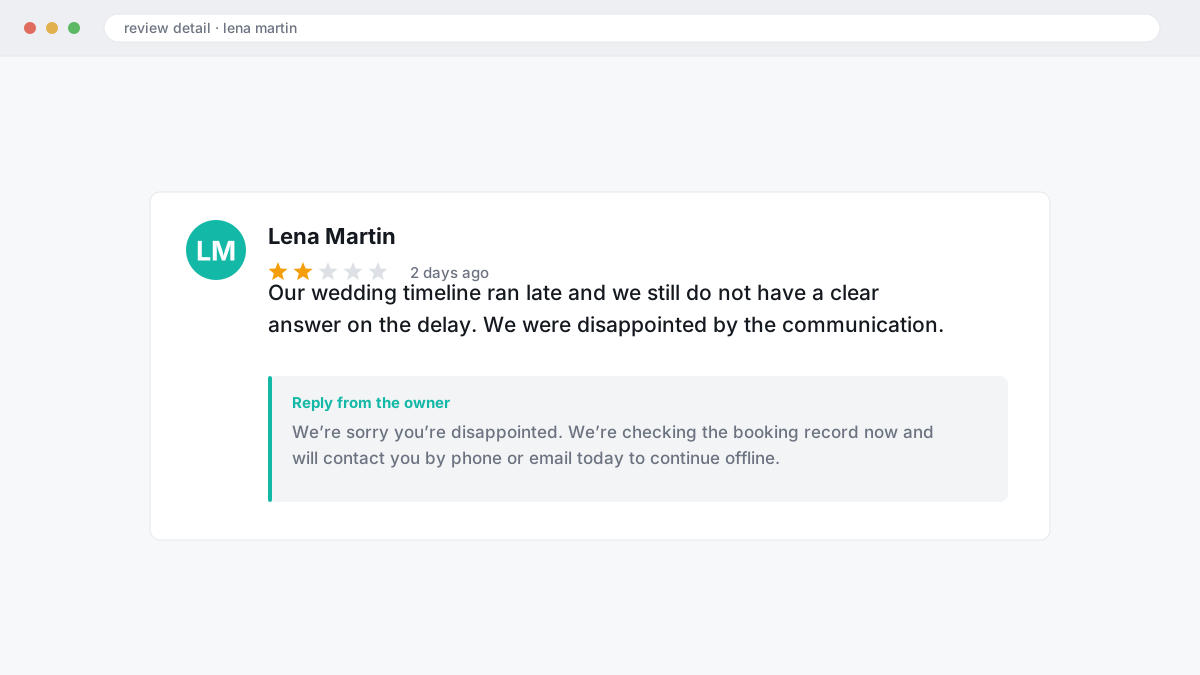
The wrong move is a defensive thread about dates, payments, guest counts, or who caused the delay. That kills trust because new couples read owner responses as a preview of how you handle pressure, and a public fight can depress enquiry clicks even when your average rating still looks healthy. The better move is short: acknowledge the disappointment, say you are checking the booking record, and invite the reviewer to continue by phone or email the same day.
Keep the reply to three parts: impact, next step, offline route. For example: “We’re sorry this left you upset. We’re reviewing the timeline and contract notes now. Please email us at team@bgrreview.com or call +1 561 461 0399 so we can sort this directly.” You are containing the issue, not trying to win the thread. That is what protects conversion.
When should Google Business Profile outrank wedding directories in your review plan?
Google Business Profile should lead your review plan when the local pack, branded search clicks and map actions bring the first visit. For many wedding vendors, Google is the first trust check; The Knot or WeddingWire often confirm fit later, after the couple has already decided to click. The wrong approach is treating wedding directories as the discovery layer for every vendor. That fails for venues, planners and photographers who win nearby searches, because couples often see your Google Business Profile before your site, and a flat-looking profile depresses local pack click-through even if your directory ratings look stronger. The right approach is Maps-first discovery, directory-first validation: keep Google review velocity steady, answer reviews fast, and prioritise recent, photo-backed reviews that show setup quality, timelines and guest experience.
If you need to flag a Google review, disagreement with an opinion rarely moves the case. Google’s review policy works on policy fit, so your evidence needs a clear match: fake engagement, off-topic content, conflict of interest, or a false factual claim supported by photo and video proof, booking records or message logs. Owner responses still matter while the review is live.
How do you make The Knot profile convert better than a basic directory listing?
The Knot converts better when your profile feels complete, current and specific to the service you sell. Couples use this vendor directory like a shortlist filter, so stale reviews, thin package details and mismatched visuals quietly reduce qualified enquiries even when your rating still looks fine.
The wrong approach is treating The Knot like a basic citation: logo, short bio, old gallery, no FAQs, and reviews left to age. That fails because buyers on The Knot expect a polished profile that answers booking-stage questions before they message you. A venue needs layout, capacity and planning support clear on-page; a photographer needs style consistency, turnaround expectations and recent full-wedding proof; a planner needs package scope and coordination detail. If your gallery shows one brand style but your review language describes another, lead-to-booking conversion drops before the enquiry form is opened.
The better approach is profile depth that matches how couples compare vendors during seasonal booking windows. Refresh hero images and package copy before engagement peaks, keep owner answers aligned with your FAQs, and push for recent category-specific reviews after each event rather than in batches. If you need help rebuilding review recency, BGR Review starts delivery on review packages within 24-48 hours and includes a 30-day free replacement guarantee. That matters more on The Knot than on a map listing, because shortlist trust comes from profile completeness plus visible proof that you are active now.
How should WeddingWire be managed differently from The Knot and Google?
WeddingWire needs its own review cadence because couples compare ratings volume, freshness, and responsiveness closely on category pages. A vendor with a strong lifetime average can still lose trust and lose enquiries if the latest WeddingWire reviews look sparse, dated, or unanswered.
The wrong approach is to treat WeddingWire like Google Business Profile or The Knot and lean on the headline star score alone. That fails because WeddingWire shoppers often scan several vendors side by side, then judge recent review flow, ratings volume, and owner responses before they click through, which affects click-through rate on directory pages before it affects deposit-ready leads. A profile sitting on older praise with a quiet recent run can look stalled even if the lifetime average is high.
The right approach is to manage WeddingWire like a live booking board. Keep new reviews arriving steadily across the season, answer publicly within a few days, and write replies that sound like the job you actually delivered: timeline planning for a planner, shot list and gallery turnaround for a photographer, guest flow and rain plan for a venue. Generic brand language wastes the reply. Specific owner responses lift trust because couples can picture their own day, and that usually helps lead-to-booking conversion faster than polishing the bio.
If your latest run is thin, fix cadence first. We usually tell vendors to restart requests in a controlled sequence instead of pushing a batch at once; if you buy a review package from BGR Review, delivery starts in 24-48 hours and includes a 30-day free replacement guarantee, which is safer than chasing a spike that makes the page look unnatural.
What should you do in the first 48 hours after a bad or fake wedding review appears?
In the first 48 hours, lock down evidence, confirm whether the reviewer was an actual couple or guest, write a calm public reply, and only flag on a real policy ground. Speed helps, but weak reports and angry rebuttals make fake review removal harder and can cut your odds before a platform team reads the file.
The wrong move is the one most wedding vendors make under stress: reply line by line, accuse the reviewer of lying, then hit the basic report button with nothing behind it. That fails because Google Business Profile, The Knot, and WeddingWire do not remove a review because you feel it is unfair; they remove it when your report matches a policy issue and your proof supports that match. Before you flag anything, save full screenshots, the review URL, booking contracts, invoice records, message timelines, venue access logs, and any photo and video proof that places your team on site or shows the event ran as agreed. If the review later changes or disappears, you still have a clean evidence pack.
Defamation and false statements need a colder test than most owners apply. “The flowers looked cheap” is opinion. “You never delivered the bouquet” is a factual claim that can be checked against signed delivery notes, WhatsApp messages, gallery timestamps, or ceremony footage. Rules vary by country and platform; US FTC endorsement rules, UK consumer-protection rules, and platform review policies are different, so this is general information, not legal advice. Your job in the first two days is to separate rude opinion from verifiable falsehood.
One clean escalation trail works better than repeated flags from different staff accounts. In BGR Review’s log of 12,000+ negative review cases from June 2025 to June 2026, roughly 90% of businesses that came to us after failing had used only the in-platform report route with no supporting documents, and 70–80% of those initial requests had been rejected. File once, attach policy-matched evidence, keep your owner response short and professional while the case is pending, and escalate only when the first route closes.
When does DIY wedding reputation management stop being worth it?
DIY usually covers review requests, owner responses, and routine profile upkeep. Specialist help starts paying for itself when a false review, a stalled platform dispute, or a multi-location vendor brand issue threatens bookings, because the real comparison is speed, skill, and lead-to-booking conversion rather than fee alone.
The wrong move is to keep pushing the in-platform report button after a serious complaint lands on Google Business Profile, The Knot, or WeddingWire. Across 12,000+ negative review cases logged by BGR Review from June 2025 to June 2026, roughly 90% of businesses that came to us after a failed attempt had filed only the basic platform report, with no evidence pack, and 70-80% of those initial requests had been rejected. That burns time during peak wedding booking windows, and a profile can look “fine” on paper while one visible accusation keeps form fills and deposit calls flat.
The cheaper route still makes sense if you are fixing request timing, standardising owner responses, and keeping photos, FAQs, and service areas current. Agency help matters when fake review removal needs policy matching, when duplicate or misrouted listings split reviews across cities, or when one bad review is hurting enquiry quality across several locations.
The comparison is clearer in practice:
| Task | DIY usually works | Bring in specialist help |
|---|---|---|
| Review asks and replies | Yes, if timing and wording stay consistent | No, unless replies are escalating complaints |
| Fake review removal | Only for simple, well-documented breaches | Yes, when policy route and evidence pack decide the outcome |
| Multi-location routing | Hard to manage once reviews fragment by branch or city | Yes, when brand trust and booking flow depend on one clean path |
Where do review requests cross the line on legality, incentives, and platform rules?
Wedding review requests turn risky when you screen for happy couples, offer undisclosed incentives, or publish praise that hides a material connection. Platform rules and local law vary, so treat this as general information rather than legal advice.
Most vendors cross the line with review gating. They send the review link only after a glowing private message, or they route unhappy couples to an internal form and happy couples to Google Business Profile, The Knot, or WeddingWire. That fails because many platforms ban practices that distort star-rating distribution, and the profile can look manipulated even if your average stays high. The compliant approach is simpler: ask every booked client after the same milestone, use the same request flow, and never tie visibility of the link to whether the feedback sounds positive.
Incentives create the next problem. The FTC Endorsement Guides require clear disclosure when a reviewer gets something of value or has another material connection, and the FTC’s 2024 rule on fake reviews and testimonials sharpened enforcement around deceptive review practices. A thank-you gift after a review can still be risky if it depends on posting, if the disclosure is hidden, or if the platform bans incentivised endorsements outright. If you use a paid service, the safer question is whether the request process stays neutral and disclosed; BGR Review’s own review packages carry a 30-day free replacement guarantee, but the request itself still has to follow platform rules.
False factual accusations sit in a different lane from ordinary opinion. “The DJ arrived drunk” or “the photographer never delivered the gallery” may raise defamation and false statements issues if the claim is untrue, but legal standards differ by country and platform, so you should get legal advice where the stakes justify it.
Where to go from here
Treat your reputation like part of your booking flow, because that is how couples use it. They check your Google Business Profile, then a wedding directory such as The Knot or WeddingWire, then scan owner responses, recent photos and the shape of your star-rating distribution before they call, fill a form or search your brand name again. The fastest gains usually come from fixing the profiles with the most visibility first, tightening review request timing after each event, and using one response standard so a public complaint does not sit unanswered through a key seasonal booking window.
If one false or policy-breaching review is dragging down clicks from the map pack or a directory profile, get the evidence together before you flag it: contract, message thread, event date, payment record, and any photo or video proof that contradicts the claim. Then choose the route that matches the platform’s policy.