

Quick answer
For restaurants, reputation management comes down to four jobs: generate genuine new reviews, answer public complaints quickly, remove reviews that break platform rules where removal is possible, and track rating changes by location rather than as one blended brand average. If you are comparing outside help, measure speed and risk control. At BGR Review, negative review removal is pay after success at $0 upfront and $449 per removed review link, while review packages include a 30-day free replacement guarantee. A single-site restaurant needs a different workflow from a 20-location group.
This page is written from live review operations, not generic hospitality marketing advice. We deal with the points that usually decide the outcome: whether a Google Business Profile review shows a policy issue or just poor service, what a Tripadvisor evidence pack needs to prove, why Yelp moderation often leaves low-quality reviews visible, and when an owner response will do more for map-pack click-through and bookings than a weak flag.
The workflow is practical because the failure points are predictable. Most rejected removals start with the basic report button and no supporting documents, while the stronger cases attach booking records, CCTV timestamps, staff rota data, duplicate-account links, or proof of a false factual claim before platform review starts.
Why do restaurant reputation problems spread faster than generic marketing guides suggest?
Restaurant reputation moves faster because diners choose quickly, compare nearby options in seconds, and weight fresh reviews more heavily than polished branding. The first gains usually come from removal triage, faster owner responses, and restoring review recency inside the next 30 days.
Generic restaurant guides push social posting, content calendars and comment moderation. That fails when your Google profile, Yelp page and Tripadvisor listing all move on different clocks, with daily swings in volume and star-rating distribution driven by weekend service, delivery errors or one table that had a bad experience. A restaurant can feel the damage in calls and bookings the same evening, because local SEO visibility in the map pack and click-through rate shift before slower social metrics tell you anything useful.
The working playbook is operational. In BGR Review's case file of 12,000+ negative review cases logged June 2025 to June 2026, reviews raised within 28 days of posting and backed by an identifiable policy issue resolved successfully in roughly 90% of cases; for comparable cases raised later, the observed success rate fell to approximately 25-30%. That is why the fastest recovery sequence is simple: sort reviews into remove or reply, get owner responses live while the post is still fresh, then rebuild review recency so one bad week does not define the profile diners compare at 6pm.
What should a restaurant do in the first 24 hours after a bad review goes live?
In the first 24 hours, capture the review, confirm whether the diner was real, and decide whether the issue needs an owner response or a policy report. Moving before you check the facts usually hurts both service recovery and any later negative review removal attempt.
The wrong move is replying to everything the minute it lands. That often locks you into a public version of events before you've checked guest logs, POS tickets, reservation notes and the staff roster for that shift, and it can make a false review look more credible than it is. Screenshot the review itself, your overall rating, your recent star rating distribution, and your ranking position in the local pack for your main search term within 24 hours; if a one-star post has pushed your average down or changed click-through from the map pack, you need a clean before-and-after record.
Then pick one route. If the diner was real and the facts broadly match, post a calm owner response after you verify who handled the table and what recovery was offered. If the review appears fake, abusive or policy-violating, flag it under the relevant platform rule and build your evidence pack before writing anything public; most failed self-filed disputes reach us with only the in-platform report button used, and in BGR Review's case file of negative review cases with prior self-filed attempts logged June 2025 to June 2026, roughly 90% had no supporting documentation. If the facts are unclear, monitor for pattern changes across similar complaints before escalating; if you do need outside removal help, BGR Review charges $0 upfront and $449 per removed review link, only after success.
How should a restaurant manage reviews every week without turning it into a full-time job?
A practical restaurant review system runs on a fixed cadence: monitor every day, reply in batches, and send policy breaches into a separate escalation queue. Most teams can keep it moving with one owner, one location manager and one shared dashboard reviewed each week.
The wrong approach is constant manual checking. It burns manager time, produces uneven owner responses, and still misses the reviews that matter because Google Business Profile, Yelp, Tripadvisor reviews and direct feedback sit in different places. A scheduled cadence works better: one queue for every source, a short daily check for anything new, then two reply sessions each week so your tone stays consistent and your review recency improves instead of spiking for two days and going silent for three weeks.
Use one sheet, inbox or dashboard with five columns: platform, date posted, star rating, issue type, and action. Negatives need a response target of 48 hours because unanswered complaints suppress click-through from the map pack before they affect bookings; positives can wait up to 7 days without looking ignored. If a review looks fake or policy-violating, do not bury it inside the response queue. Move it to a dispute line, note the evidence you have, and track the platform status separately.
A simple operating split is enough for most locations. The location manager checks daily, the owner or head office writes batch replies twice weekly, and once a month you report rating movement, unanswered items, and whether fresh review generation is needed.
Which reviews can actually be removed from Google, Yelp, or Tripadvisor?
Restaurants rarely get a review removed just because it feels harsh or damaging. Removal usually works only when a review on a Google Business Profile, Yelp, or Tripadvisor breaks a stated rule: impersonation, extortion, conflict of interest, off-topic posting, or a claimed visit that your records show never happened.
Most owners take the wrong approach first. They argue that the review is unfair, rude, or bad for bookings, and the platform rejects the report because unfair is not the same as removable. The approach that works is narrower: match the review to a named policy, then file it as a fake or policy-violating review with records the platform can check; across 12,000+ negative review cases logged by BGR Review from June 2025 to June 2026, roughly 90% of businesses that came to us after a failed attempt had used only the basic report button with no supporting documentation.
Google removes review content that breaches its Google Business Profile review policy, including spam, impersonation and off-topic material; Yelp moderation weighs whether the post reflects a firsthand consumer experience and whether conflict-of-interest signals suggest staff, competitors or friends; Tripadvisor reviews are more likely to move when you can evidence fraud, blackmail, incentive abuse or another guideline breach rather than simple dissatisfaction.
This is the practical split to use before you flag anything.
| Platform | Usually removable | Usually stays live |
|---|---|---|
| Google Business Profile | Spam, impersonation, off-topic posts, prohibited content | Low-star opinions about service, food or wait time |
| Yelp | Conflicted reviewers, non-firsthand claims, guideline breaches caught by Yelp moderation | Harsh but relevant accounts of a real dining visit |
| Tripadvisor | Fraud, blackmail, review-trade abuse, clear guideline breaches | Negative travel or restaurant experiences stated as opinion |
What evidence gives a false or fake restaurant review the best chance of coming down?
The best evidence pack names the rule first and then proves the facts with records a moderator can verify. A missing booking, an impossible visit time, or a reviewer profile tied to a competitor gives fake or policy-violating reviews a better chance of removal because the platform does not have to guess what went wrong.
The weak approach is the one owners reach for when they are angry: a long complaint about unfairness, bad motives, and lost trade. That usually fails because Google, Yelp, and Tripadvisor review policy issues, not emotion. At BGR Review, the first step in negative review removal is classification: spam, impersonation, conflict of interest, harassment, off-topic content, or a review that makes false factual claims that may raise defamation issues. Across 12,000+ negative review cases logged by BGR Review from June 2025 to June 2026, roughly 90% of businesses who came to us after a failed attempt had used only the basic in-platform report button with no supporting documentation, and 70–80% of those initial requests had been rejected.
The stronger approach is one precise report with a clean evidence pack. For a restaurant, that usually means reservation logs, POS checks, CCTV timestamps, staff schedules, and any message trail showing the diner was never on site or is describing a service window that could not have happened. If a review says “we waited 90 minutes on Tuesday at 11am” and the restaurant does not open until noon, that is a false factual claim; if the account also links to a rival venue, the policy match gets stronger. BGR Review files one policy-matched report, tracks the platform status, and only escalates when the first submission already contains the proof.
How do Google Business Profile, Yelp, and Tripadvisor differ when a restaurant disputes a review?
Google Business Profile, Yelp, and Tripadvisor do not judge disputed restaurant reviews the same way. Google is policy-led, Yelp moderation leans hard on firsthand experience, and Tripadvisor reviews are checked against hospitality fraud signals, so one generic removal script usually gets rejected.
Most guides tell you to paste the same complaint into every report form. That fails because Google Business Profile wants a clear policy match and often leaves you with flagging, a narrow support path and a public owner response while the case sits open; Yelp may keep a harsh opinion live if it reads like real diner experience, but it will act faster on conflicts of interest, staff reviews, competitor posts or other non-firsthand content; Tripadvisor disputes turn on booking details, visit evidence, duplicate stay claims, incentive abuse and other travel-and-hospitality fraud markers. Across 12,000+ negative review cases logged by BGR Review from June 2025 to June 2026, roughly 90% of businesses who came to us after a failed attempt had used only the basic in-platform report button with no supporting documentation, and 70–80% of those initial requests had been rejected.
This is the practical difference in how a restaurant should file each one.
| Platform | What usually matters | What the restaurant should do |
|---|---|---|
| Google Business Profile | Named policy breach, timeline, screenshots, order or booking mismatch | Flag the review, document the policy issue, track support status, and post an owner response if it stays live |
| Yelp | Firsthand experience, reviewer connection to the business, conflict evidence | Report only where the review breaks Yelp rules; do not argue with protected opinion |
| Tripadvisor | Reservation proof, stay or dining records, fraud indicators, duplicate or incentivised activity | Submit hospitality-specific evidence instead of a generic fake-review claim |
If you outsource this, the same rule applies.
How many reviews does a restaurant really need before reputation work starts paying back?
A restaurant needs enough recent, credible reviews to look competitive against the best nearby alternatives, not to hit a national target. In practice, review recency and star rating distribution usually move bookings, map-pack click-through rate and local SEO visibility faster than piling on weak volume.
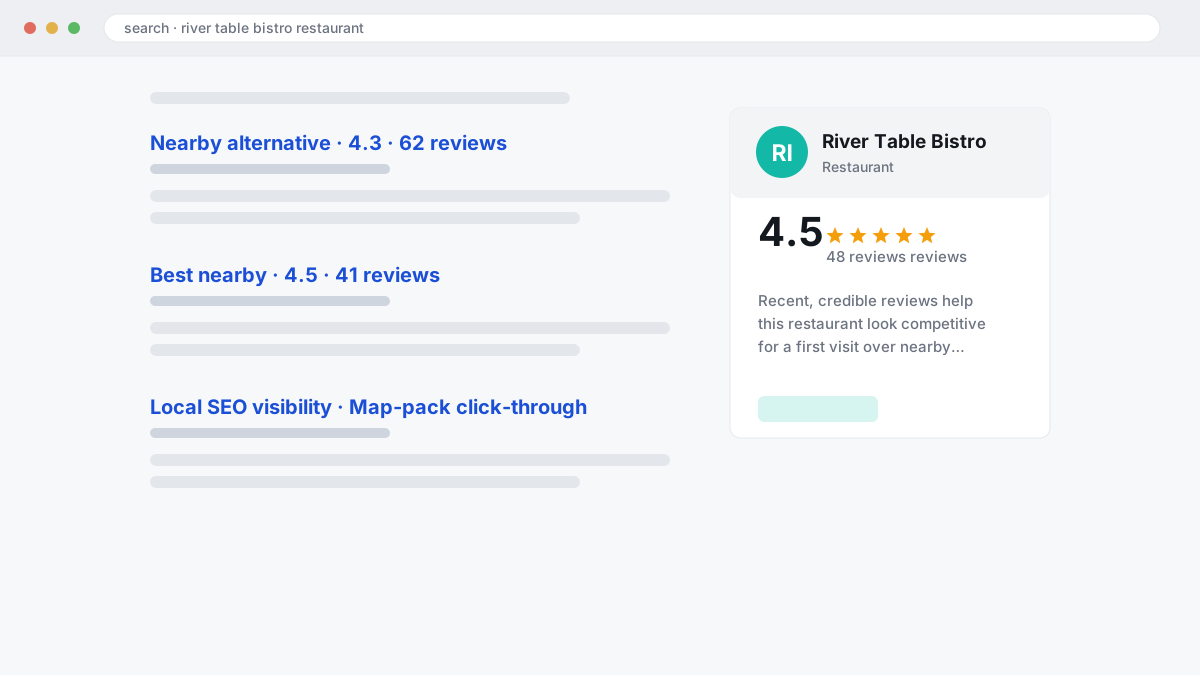
The wrong approach is chasing review count alone. That fails when your profile already looks stale, your last ten reviews are months old, or your visible spread clusters around 1-star and 5-star extremes with very little recent middle ground; diners read that pattern before they read the total. A move from 4.3 to 4.5 often changes how safe the restaurant feels for a first visit, especially on Google Business Profile and Tripadvisor, while 20 low-detail reviews added to an old profile may do very little for conversions.
Your target depends on the search you are trying to win. A takeaway-led shop competing on delivery queries needs enough fresh review generation to stay current beside nearby fast-moving rivals; a reservation-led restaurant in a mature city centre market may need fewer new reviews per month but much tighter recency control because comparison happens side by side in the local pack. In BGR Review's dataset of 1,485 businesses observed from February to July 2026, review momentum and profile completeness were linked with stronger local visibility, although other ranking factors were active at the same time.
Set the first target against the top local alternatives in your cuisine, price point and order channel mix. If three nearby competitors all gained fresh reviews this month and you did not, fix that gap first; if your average sits below the pack, improve the distribution before pushing hard on volume. That is the point where reputation work starts paying back.
How safest way to ask diners for reviews without triggering filters or complaints actually works
The safest review ask for a restaurant goes out after the meal or delivery is complete, uses one neutral route for every diner, and skips incentives and gating. A same-day SMS or email, ideally within 24 hours, usually works better than a vague request sent a week later because review recency helps keep your Google Business Profile active and your recent feedback believable.
Most guides tell staff to ask on the spot or after any positive table comment. That fails when service recovery is still open, a refund is pending, or a manager has promised a callback. You end up prompting a review before the complaint is closed, which creates avoidable one-star posts and owner responses you then have to manage. In BGR Review's review generation setups, the trigger sits after the bill closes or the delivery is marked complete, and any open complaint tag pauses the request.
Selective gating causes bigger problems than most restaurant teams expect. Sending happy diners to Google and unhappy diners to a private form can breach platform rules and, in the US, can raise issues under the FTC endorsement guides if the process distorts what the public sees; rules also vary by country and platform. The safer route is one neutral message to every guest, with no discount, free dessert or prize draw attached. That keeps the request compliant, protects review recency, and gives you a cleaner star rating distribution that supports map-pack click-through and bookings.
What should managers actually say when replying to restaurant reviews?
The best restaurant review replies are brief, specific and owned by a real person. Use one sentence to acknowledge the experience, one to address the issue, one to offer an offline next step, and a named manager sign-off so the reply shows accountability.
The wrong move is a defensive public argument: “You arrived late, your table was held, and your card failed.” That fails on Google Business Profile and Tripadvisor reviews because owner responses are read by future diners, not just the reviewer, and a point-scoring tone cuts click-through from the map pack before it affects bookings. A concise service-recovery reply works better: “I’m sorry service missed the mark on Friday. We’ve retrained the handoff between host and floor team and reviewed the ticket timing the same day. Please contact me directly so I can look at this properly. — Maya, General Manager.”
For negative reviews, name one corrective action you completed or started within 72 hours. Keep it public-safe: do not post reservation details, allergy or health information, payment information, or anything that could identify the guest beyond what they already shared. If the review also looks fake or policy-violating, reply once in a calm tone, then handle the dispute separately rather than turning the thread into evidence.
When does outsourced restaurant reputation management beat a DIY approach?
Outsourced help earns its keep once review volume, dispute work, or location count go beyond what one manager can handle the same way every week. DIY costs less at the start, but slow owner responses, thin evidence on negative review removal, and patchy reporting usually do more damage to local SEO visibility than the retainer you were trying to avoid.
DIY works best when you have one restaurant, a clear owner of the inbox, and a light stream of reviews on Google Business Profile, Yelp and Tripadvisor. In that setup, your manager can reply within a day, log policy breaches properly, and keep star rating distribution and review recency moving in the right direction. The wrong comparison is agency fee versus zero. Your real comparison is agency fee versus internal inconsistency: missed replies, untracked flags, and no single report tying reviews to calls, bookings and map-pack click-through.
This is the practical cost split most operators should use.
| Model | Best fit | Cost shape | Where it breaks |
|---|---|---|---|
| DIY in-house | One location, low volume, one accountable manager | Lower cash spend, higher staff time | Weak evidence packs and delayed owner responses drag on visibility and trust |
| Monthly managed service | Ongoing monitoring across Google, Yelp, Tripadvisor and reporting | Retainer plus lighter internal time | Poor fit if you only need occasional replies |
| Success-based removal | Specific policy-violating reviews | Fixed price per removed link | Does not help if the review is harsh but policy-compliant |
The right approach is mixed. Keep day-to-day service recovery and routine owner responses in-house if one manager can do them properly, then outsource monitoring, disputed-review handling, and reporting once platform work starts spilling across shifts or sites. That works because the specialist side covers the fiddly parts that usually fail first: evidence packs, status tracking, and knowing when a removal request has no policy basis and fresh review generation is the cheaper fix.
How should a franchise or restaurant group run reputation management across multiple locations?
Multi-location restaurant reputation works best when head office writes the rules and each site handles the service detail. Corporate should set reply templates, escalation thresholds and a monthly reporting cadence, while local managers own same-day context, guest recovery and store-specific facts on each review.
Centralising every reply at brand level is the wrong model. It fails because a shared team cannot explain why table 14 waited 40 minutes, why the fryer was down, or whether the duty manager already offered a remake, so owner responses on Google Business Profile read slow and generic; that hurts trust, click-through rate from the map pack, and conversions from diners comparing nearby options. Governed local ownership works better: give each location a reply window, approved language boundaries and a short escalation trigger, then let the store manager answer complaints that only that store can verify.
Use one monthly scorecard for every branch so multi-location governance stays operational rather than cosmetic.
| Metric | What head office checks monthly | Who acts |
|---|---|---|
| Average rating | Location-by-location movement and outliers | Regional lead |
| Review recency | Whether recent reviews are drying up or skewing negative | Store manager |
| Response time | Same-day or next-day owner responses on priority platforms | Store manager |
| Removals | Flagged, pending, removed and rejected cases by location | Central reputation owner |
Legal threats, PR-sensitive complaints and suspected fake or policy-violating reviews should go to one central owner fast. That person keeps the evidence standard consistent, decides whether a case needs platform flagging or a formal removal route, and avoids five branches filing the same weak report; in BGR Review's case file of 12,000+ negative review cases logged June 2025 to June 2026, roughly 90% of businesses that came to us after a failed attempt had used only the basic in-platform report button, with no supporting documentation.
Are paid restaurant reviews legal, and where do policy or legal risks start?
Paid restaurant reviews carry real platform and regulatory risk. Most review platforms treat undisclosed paid or incentivised endorsements as fake or policy-violating reviews, and disclosure failures can create legal exposure; rules vary by country and platform, so this is general information, not legal advice.
The shortcut most owners reach for is simple: pay diners, staff, or freelancers to post five-star feedback and hope the star rating distribution lifts quickly. That fails because the platform problem lands before the marketing gain does. Google’s fake engagement policy for Maps, Yelp’s compensated-review rules, and Tripadvisor’s review guidelines all give the platform a basis to remove content or penalise the profile, which can hurt local SEO visibility, map-pack click-through rate, and bookings.
The safer route is to ask real diners for honest feedback with no hidden incentive, or to use a compliant review generation process that makes any material connection clear where disclosure is required. In the US, the FTC endorsement guides require clear disclosure of paid or incentivised endorsements. In the UK and EU, hidden promotion and other misleading commercial practices can also trigger enforcement risk.
A bad review raises a different issue. If it contains false factual claims, defamation and false factual claims law may become relevant, but the threshold differs by country and platform, and opinion usually gets more protection than a provably false statement about food safety, billing, or events that did not happen.
Where to go from here
Start with a location-by-location audit, then split it by platform: Google Business Profile, Tripadvisor reviews, Yelp, Trustpilot if you use it, and any booking or directory profile that ranks for your brand name. Pull four things into one sheet for each site: current star rating distribution, review recency, unresolved one-star and two-star reviews, and any review that looks fake, off-topic or policy-violating. That gives you a usable queue. You will see which locations have a removal case, which need owner responses first, and which simply need fresh review generation to lift click-through rate, map-pack performance and bookings.
If you want outside help, take that audit to the matching BGR Review restaurant service page rather than asking for a generic marketing plan. Expect a platform-by-platform plan, a realistic view of what will not be removed, and a clear order of fixes by location.