

Quick answer
Plumbers win more work from online reviews because map-pack clicks and calls usually go to the profile that looks safest at a glance when several local firms offer the same fix. Your fastest lift usually comes from tightening Google Business Profile before spreading effort across Trustpilot or Yelp. The workable system is simple: trigger an SMS review request as soon as the job is marked complete, send unhappy customers into a service-recovery step first, and challenge policy-breaking reviews with invoice, message and timeline proof. If a review clearly breaches platform rules, BGR Review handles removal on a pay-after-success basis at $449 per removed link with $0 upfront.
This page is written from live reputation work, not generic marketing theory. We deal with the part most guides skip: the moment a technician closes a job, the office sends the SMS, the owner replies to a bad review, and a weak flag fails because it includes no invoice, no dispatch record and no contact timeline.
BGR Review has served 15,000+ businesses and logged 12,000+ negative review cases between June 2025 and June 2026 under a three-state outcome model of removed, unresolved or unknown. That matters if you are deciding whether to keep review management in-house, because the first fix is usually operational: request timing, technician request scripts, response management and evidence quality before you pay anyone for removals.
Why do similar plumbers get very different clicks from the same map results?
Plumbing firms usually lose map-pack clicks on trust signals, not technical ability. When distance, category and service fit look similar in the local pack, a Google Business Profile with fresh reviews, a believable star-rating distribution and visible owner replies usually gets the call first.
Most guides fixate on ranking position. That fails because emergency buyers rarely read ten pages or compare every listing; they scan two or three profiles, then choose the one that looks active and safe to ring. In BGR Review’s dataset of 1,485 businesses observed from February to July 2026, trades firms that shared complete enquiry-source data attributed 70–80% of calls and bookings to a Google Business Profile or Yelp listing, which makes click-through rate and conversions a profile problem before they become a website problem.
A stale 5.0 can lose to a 4.7 when the 4.7 profile has review recency, job-specific detail and recent replies from the owner. Perfect optics can read thin if the last review landed months ago or every rating is a flat five with no context; a mixed but healthy spread often looks more credible, especially when the reply mentions the actual leak, boiler fault or same-day fix. That is the difference between visibility and click-winning credibility.
How should a plumbing job move from dispatch to review request without manual chasing?
The best review flow for a plumbing company starts when dispatch closes the job, not when the office sends a monthly batch email. Close the work order, confirm the customer mobile number, and trigger one SMS review request automatically the same day so your team is not chasing every completed call by hand.
Monthly bulk asking fails because it breaks the link between the finished job and the customer’s memory of the technician. A leak repair from three weeks ago gets mixed in with six other jobs, response rates drop, and your review velocity turns erratic instead of building into a steady weekly pattern that helps map-pack click-through and conversions. In BGR Review’s dataset of 1,485 businesses observed from February to July 2026, new trades and local service businesses typically saw first reviews around two weeks after launch, which lines up with job-completion workflow far better than end-of-month admin sweeps.
The working sequence is simple: dispatch marks the invoice paid or job complete, the technician has already asked in person using a short technician request script, and the text lands within 2 hours while the visit is still fresh. For an urgent leak, send the SMS review request sooner because the customer judges speed and fix quality immediately; for a scheduled install, a short delay after tidy-up and handover usually reads better. Keep it to one request per job, sent from the branch or Google Business Profile that actually did the work, or you create confusion before the customer even taps the review link.
When should the technician ask, and when should the text arrive, to avoid low response or filters?
The best time to ask for a review is after the repair is confirmed and the customer has seen the result, then send the first SMS review request 30 to 120 minutes later so response stays high without creating an unnatural spike in review velocity.
Most guides tell plumbers to ask on site as soon as the invoice is mentioned. That fails on urgent jobs. If water is still running, a leak test is still in progress, or the customer is waiting to see whether the boiler holds pressure, the request feels premature and often gets ignored. It also produces weaker wording in the review because the customer has not reached the moment where they can say the fix worked. The better sequence is simple: technician finishes the job, confirms the system is working, customer signs off, then the office or CRM sends the text after the van has left.
For plumbing firms, request timing after job completion matters more than generic “same day follow-up”. In BGR Review’s dataset of 1,485 businesses observed from February to July 2026, new trades and local service businesses typically received first reviews around two weeks after launch, which tells you fast follow-up works in this category when the job cycle is short. Keep SMS review requests steady during freezes, storms and burst-pipe surges. A sudden batch of requests from a single chaotic day can distort review velocity on your Google Business Profile, especially for a service area business that normally collects reviews at a slower, more even pace.
Which review fixes usually turn into booked plumbing calls first?
For most plumbing firms, the quickest lift in booked calls comes from fresher reviews, a cleaner star-rating distribution, and fast replies to visible negatives. Those three trust signals change what a buyer sees on your Google Business Profile straight away; a bigger review count usually takes longer to affect click-through from the map pack.
The wrong move is chasing volume first while your profile looks stale or erratic. If your last review is months old, or your page swings between five-star praise and a cluster of recent one-star complaints, buyers read that as operational drift even if you have a high lifetime total. In BGR Review's dataset of 1,485 businesses observed from February to July 2026, trades firms with complete enquiry-source data attributed 70-80% of calls and bookings to a Google Business Profile or Yelp listing, so trust blockers on the profile itself hit conversions before your website gets a chance.
Fix review recency first. A steady flow of recent job-based feedback tells the next homeowner that your dispatch team is active now, your service area is still covered, and the latest technician visits ended well. After that, repair weak star distribution before you push for scale: ten new balanced, legitimate reviews that reflect current jobs do more for map-pack click-through than another fifty buried under an old run of unresolved complaints.
Response management comes next, and the window is short. Reply to visible negatives within 24 to 72 hours with the job date, area, and an invitation to resolve offline; that shows the next reader you are accountable and gives you a paper trail if the review later qualifies for removal. If a review is fake or misattributed, BGR Review handles removals on a pay-after-success basis at $449 per removed link with $0 upfront, but a calm public reply still protects bookings while the appeal runs.
What should plumbers actually send customers so technicians ask consistently every time?
Give every technician one 12-second line to say on site, then send one SMS review request with a single direct Google Business Profile link; save email for bigger plumbing projects where the customer has time to write more than a one-line response.
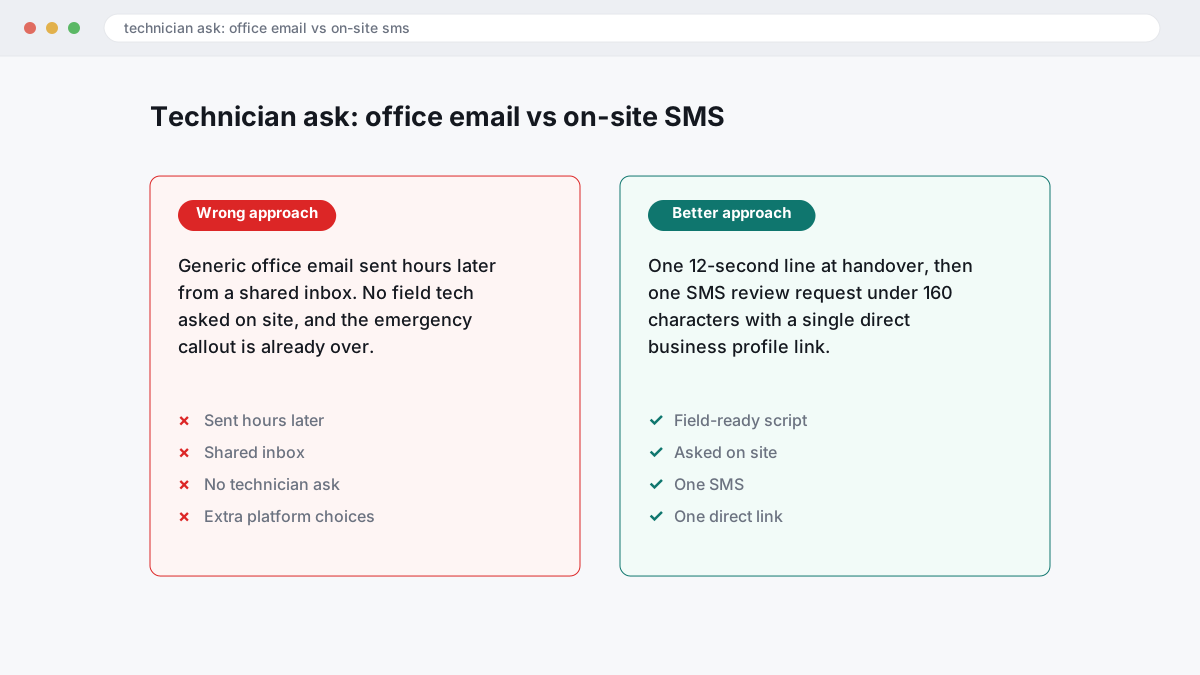
The wrong approach is the generic office email sent hours later from a shared inbox. It fails because emergency callouts end fast, the customer is back to normal life, and no field tech asked for the review while the fix was still fresh. The better approach is a field-ready technician request script delivered at handover, followed by an SMS under 160 characters with one direct link and no extra platform choices.
- Technician request script: “Glad we got that sorted. If you’re happy, could you leave a quick Google review? I’ll send the link now.”
- SMS review request: “Thanks for choosing [Company]. If the job’s sorted, please leave a quick Google review here: [direct link]”
- Email for remodels: use subject “Thanks for the bathroom project” and ask for a fuller review with photos only after final sign-off.
If you want this handled for you, BGR Review builds these assets into managed review campaigns and starts delivery in 24-48 hours, with a 30-day free replacement guarantee on review packages.
Should a plumbing company handle review generation itself or pay for managed help?
DIY usually works if one owner can make sure every completed job triggers a review ask. Managed help starts to make sense once multiple technicians, service areas or patchy follow-up make review volume, timing and compliance hard to control from inside the office.
The wrong setup is an owner saying, “Ask when you remember,” then hoping the Google Business Profile fills up on its own. That fails because urgent plumbing work breaks routine: one tech forgets, another sends SMS review requests two days late, and nobody owns response management when a complaint lands at 7pm. If you have one location, a disciplined dispatcher and fewer than 20 jobs a week, you can often keep it in-house with a job-complete trigger, one approved text template and a daily check of new reviews.
Managed oversight works better when the problem is consistency rather than willingness. A service can enforce request timing after every closed invoice, track which technician asked, and keep replies moving so your map-pack click-through does not get hurt by stale unanswered reviews. Before you sign anything, check the commercial structure and the policy guardrails.
| Option | Best fit | What to check before signing |
|---|---|---|
| Owner-managed | One branch, under 20 weekly jobs, tight dispatch control | Who sends the SMS, who replies on Google, and whether missed asks are tracked |
| Managed service | Multi-tech teams or more than one location | Setup fee, monthly cost, per-location charging, Google policy safeguards, and whether review packages include BGR Review’s 30-day free replacement guarantee |
If a provider promises volume but cannot explain how requests are timed, logged and kept within platform rules, walk away. Cheap systems usually break on the same point: no audit trail, weak technician compliance and slow replies, which means more reviews collected but less control over bookings and conversions.
What should happen in the first hour after a bad plumbing review appears?
The first hour after a bad review should go to fact-checking, a brief public holding reply, and a decision: fix a real service failure offline within 24 hours or start an evidence pack for negative review removal if the post breaks platform rules.
The wrong move is a defensive argument on your Google Business Profile before you have checked the job card, technician notes, dispatch timestamps, call recordings or SMS thread. That fails twice. It can confirm details you should keep private, and it turns one low rating into a visible exchange that drags down click-through from the map pack because people read the fight, not your service promise. Evidence-led triage works better for response management: match the review to an invoice or booking, confirm who attended, note arrival windows, and check whether the complaint reflects a missed appointment, pricing dispute or a reviewer you cannot identify.
Once the facts line up, post a calm reply the same hour: acknowledge the issue, avoid blame, and invite the customer to continue by phone or email. If your records show a genuine miss, assign an owner and try to resolve it within 24 hours; fast recovery protects your star-rating distribution better than a long public thread. If the reviewer cannot be tied to any job, save the invoice gap, message history and timeline before filing.
When can a plumber get a review removed instead of just replying to it?
Removal is realistic when a review breaks platform rules or states provably false facts, not because it is negative. The strongest negative review removal cases tie a clear Google Business Profile policy ground to job records, timestamps and proof that the reviewer does not match any real customer.
The wrong move is flagging a one-star review because you think it is unfair, then waiting. Google may remove reviews involving spam, impersonation or conflicts of interest under its review policies, but a harsh review from a genuine customer usually stays up even if you dislike the wording. The right move is to separate “bad but real” from “fake reviews” or false factual claims, reply once in public, and build evidence for the platform route that actually fits.
For a plumber, that evidence pack is usually simple: invoice, dispatch log, technician notes, call record, service address check and a customer-match check against your CRM or booking sheet. Weak flags fail because they contain only the in-platform report button and no timeline. Across 12,000+ negative review cases logged by BGR Review from June 2025 to June 2026, roughly 90% of businesses who came to us after a failed attempt had filed only the basic report, and 70–80% of those initial requests had been rejected.
If Google rejects the first report, escalation works better when the file shows exactly what breaks policy and when the supposed job should have happened. Rules vary by country and platform: Google, Yelp and Trustpilot each review different evidence, and legal options around false statements, FTC endorsement guides in the US, or UK consumer rules are separate issues. This is general information, not legal advice.
Can plumbers buy reviews without breaking platform rules or legal standards?
Plumbers can ask for real customer feedback, but buying undisclosed reviews or paying for fake reviews puts your Google Business Profile, Yelp visibility and legal compliance at risk because Google prohibits fake engagement, the FTC endorsement guides require disclosure in the US, and Yelp may filter suspicious patterns.
The wrong approach is paying for reviews that pretend to be unsolicited. That fails for two reasons: Google can remove policy-breaking content under its fake engagement rules for Business Profiles, and undisclosed incentivised endorsements can breach the FTC endorsement guides in the US. Rules also vary by country and platform; in the UK, consumer-protection enforcement around misleading commercial practices is separate again, so this is general information, not legal advice.
The safer approach is asking every completed-job customer for honest feedback through the same post-job SMS flow, with no condition that the review must be positive and no invented reviewer identity. If you offer any incentive for a testimonial or endorsement, disclose it clearly where the endorsement appears; if you want platform reviews, check that platform’s rules first, because Yelp actively discourages solicitation and its recommendation software often hides reviews that arrive in unnatural bursts from fresh accounts. BGR Review sells managed review services, but the workable version is verified, policy-aware collection, not undisclosed purchased sentiment.
How do multi-location plumbing firms collect reviews without sending customers to the wrong branch?
Multi-location plumbing firms collect reviews cleanly when each branch has its own Google Business Profile path, its own branch-specific review URL, and its dispatch software sends the request from the invoice location that actually handled the job.
The wrong setup is one brand-wide review link pasted into every SMS template. It fails because a service area business often books jobs centrally while technicians work across overlapping postcodes, so the customer lands on the wrong profile, leaves feedback on the wrong branch, or abandons the request altogether. That muddles star-rating distribution, weakens review recency on the branch that did the work, and costs map pack clicks where the local profile needs fresh proof.
The fix is simple: map each service postcode, depot or invoice branch code to one Google Business Profile review URL inside your dispatch workflow. If job 18427 closes under Croydon, the SMS goes to Croydon's link, not the head-office profile. In BGR Review's dataset of 1,485 businesses observed from February to July 2026, trades firms with complete enquiry-source data attributed 70-80% of calls and bookings to a Google Business Profile or Yelp listing, so routing errors hit conversions fast.
Which platforms matter after Google for plumbers who want extra trust, not busywork?
Google Business Profile stays first for plumbers because hiring decisions usually happen in the map pack, while Trustpilot supports branded comparison searches and Yelp only earns effort in markets where people still use it to choose local trades.
Most firms spread review requests across every platform they can find. That fails because coverage is not the same as influence: in BGR Review’s dataset of trades businesses with complete enquiry-source data, observed from February to July 2026, 70–80% of calls and bookings came through a Google Business Profile or Yelp listing, not a standalone website. If your Google profile is thin, adding four minor platforms will not lift click-through rate or conversions from local search.
The better setup is narrower. Keep Google Business Profile as the main destination for completed-job review requests, add Trustpilot when prospects search your company name and compare service reputation before calling, and use Yelp selectively where local usage is still strong. That mix supports branded search demand without creating busywork, and if you need managed help, BGR Review handles Google, Trustpilot and Yelp packages with a 30-day free replacement guarantee.
What should a plumber do in the next 30 days to turn reviews into more booked jobs?
Start with one branch or one technician pod, connect review requests to completed jobs, and track send rate, review rate, and negative-response time for 30 days. That gives you a clean test before you roll anything across the full plumbing operation.
The wrong approach is asking whenever someone remembers. It fails because dispatch closes the job, the technician leaves, the customer cools off, and review recency starts thinning out on your Google Business Profile. In week 1, fix every review link, set branch routing for each service area, and lock one technician request script so every completed boiler repair, leak fix or drain call gets the same ask.
In week 2, train technicians to ask on site, then check same-day SMS send rates against closed jobs every afternoon. Weeks 3 and 4 are for response management: reply to every negative, look for recency gaps by branch, and find the conversion blockers that kill booked jobs, usually weak recent feedback, unanswered complaints, or customers landing on the wrong location.
Where to go from here
Audit the gaps that are costing you calls first: too few recent reviews on your Google Business Profile, a weak star-rating distribution, slow review velocity after completed jobs, or one unresolved negative sitting near the top of your profile. For most plumbers, that matters most in the map pack, where two similar service area businesses get judged in seconds and the click-through difference shows up in calls, bookings and branded search later.
Start with a 30-day check. Count how many new reviews came in, how quickly you asked after job completion, which technician actually asked, and whether your replies dealt with the complaint or just thanked the reviewer. If a suspicious review is blocking conversions, stop using the basic flag button on its own. Build a documented file with the invoice, dispatch record, customer messages, date timeline and the exact policy issue.
That review usually tells you what to fix next.