
Quick answer
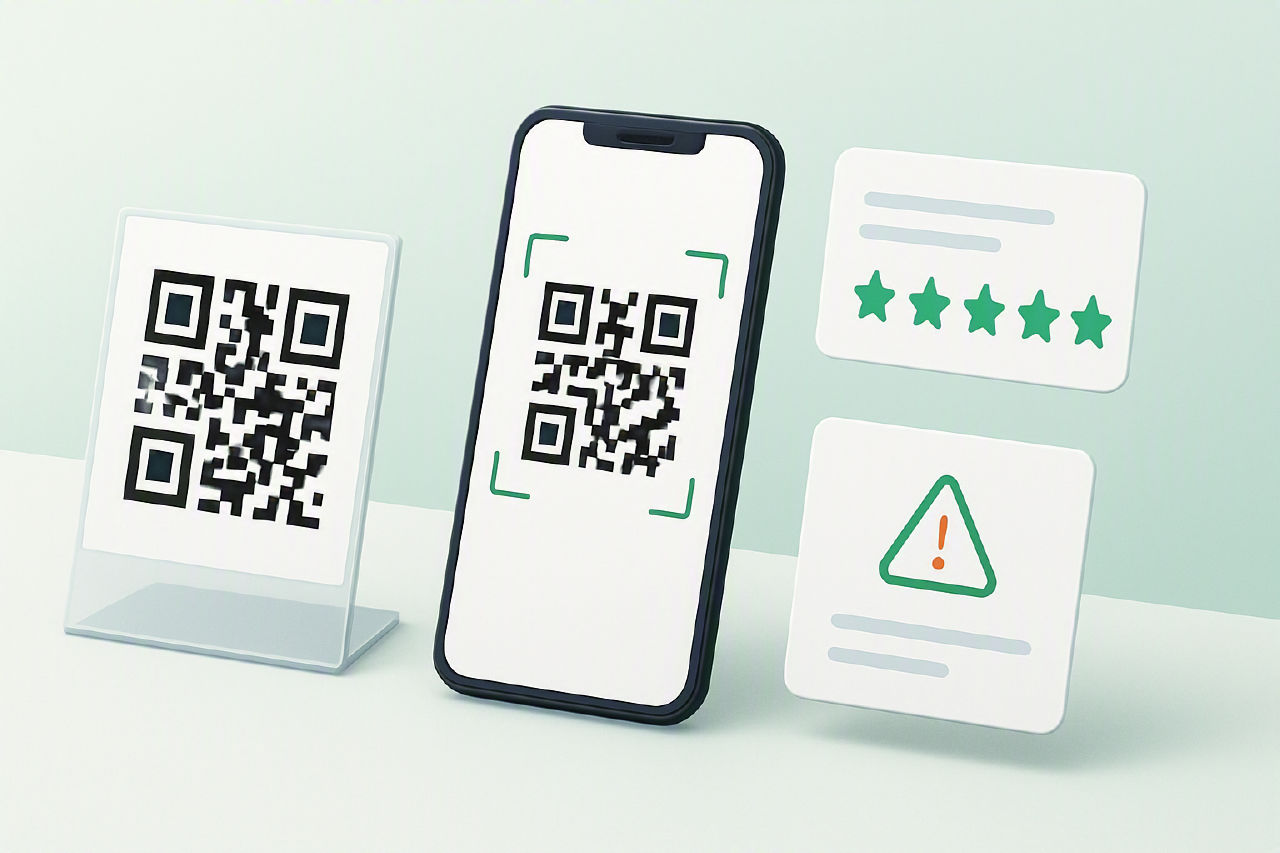
QR code reviews work when the scan opens a direct review form or a neutral landing page that lets the customer choose where to leave feedback. Google Business Profile allows asking for reviews, but review gating, star-rating prompts that route unhappy customers away, and undisclosed incentives can breach platform rules and FTC endorsement guides. The fastest clean setup is usually a Google Business Profile review link with UTM tracking turned into a QR code and tested at one high-intent touchpoint first. If results are weak, the usual cause is login friction, poor staff ask timing, or bad placement, not the code itself.
We handle review acquisition and negative review removal across Google, Trustpilot, Yelp, Clutch and TripAdvisor, so this page is built from the points where campaigns actually stall. The drop-off usually happens after the scan: the customer reaches a neutral page, taps Google, hits a login wall, then abandons unless the ask happened at the right moment and the destination was set up cleanly.
That same operational view matters on the risk side as well. A basic in-platform report often fails because it carries no evidence; in BGR Review's log of 12,000+ negative review cases from June 2025 to June 2026, roughly 90% of businesses who came to us after a failed attempt had only used the standard report button with no supporting documentation.
Why do most QR review campaigns underperform after the code is printed?
Most QR review campaigns fail because the code sends people to the wrong place, adds extra taps, or gives you no way to see where the drop-off starts. The gain comes from the QR code destination, a low-friction mobile path, and policy-safe routing before you print a single stand card.
The common mistake is a neat-looking code that opens the wrong page: a homepage, a contact page, a bloated “leave feedback” form, or a star-rating prompt that edges into review gating. That fails because scan friction starts the second the phone opens a page that asks the customer to choose again, pinch-zoom, wait for a menu, or log in before they even know which platform you want. Google Business Profile review links work because they remove choices; generic guides stop after showing you how to generate the code and miss the harder part, which is where that code should send people and whether the route stays compliant with platform rules and the FTC endorsement guides.
The better setup is a measured route to one clear action. Put UTM tracking on the destination URL, test the mobile page on 4G, and separate scans from clicks from submitted reviews so you can tell whether the problem is visibility, routing, or login friction. If you buy printed cards or NFC review cards before that, you are paying for artwork, not results. The same applies if you buy review packages from us: BGR Review gives a 30-day free replacement guarantee on review packages, but a replacement cannot rescue a broken scan path.
How should a QR code take someone from scan to posted review with the fewest drop-offs?
The shortest path is simple: scan, open the mobile browser, load that location’s direct review form, then post. For Google, that means a Google Business Profile review link built from the branch’s Place ID and resolved to the review form URL, not your homepage and not a generic search for your brand.
Most QR review campaigns underperform because the printed code sends people to the wrong destination. A homepage makes the customer hunt for your business profile, and a link hub adds a platform-choice decision before they have even reached the form; on mobile, that extra click is where review submission drop-off starts. In the checkout flow BGR Review typically sets up, the customer scans a counter card, lands on the exact Google review form for that branch, hits the Google sign-in wall if they are logged out, and either posts or abandons there. That login step is hard to remove. The click before it is not.
A direct review-form link works because it removes one navigation step compared with a generic profile link. With the right Place ID, Google opens the write-a-review interface tied to the exact location, which matters even more for multi-location businesses where a wrong branch review weakens local pack relevance and muddies branded search demand. If your goal is more posted Google reviews, the QR code should point straight to that review form URL.
A homepage or broad link hub still has a place, but only when you need a neutral destination for platform choice or tracking across Google, Trustpilot and Yelp. If Google is the priority touchpoint for map-pack click-through and calls, send the scan straight to the location’s review form first and track the QR separately with tagged links in the next step of your setup.
When should the code send people straight to the review form instead of a landing page?
Send people straight to the review form when one platform matters most and speed is the priority. Use a review landing page only when you need platform choice, disclosures, or branch routing, because every extra step in the QR code destination gives people another place to drop.
The common mistake is printing one code and sending every scan to a generic page because it feels safer. That fails when your real goal is a Google Business Profile review link for a single-location business, because the customer scans, waits for the page to load, chooses a platform, then hits login friction before they have typed a word. A direct review form usually wins there. The right approach is to match the destination to the job: one platform, one branch, one ask means fewer taps and more completed reviews; several branches or several platforms means a review landing page earns its keep by routing people correctly and showing any disclosure text you need under platform rules and the FTC endorsement guides.
This is the trade-off in plain terms.
| QR code destination | Best use | Main drawback |
|---|---|---|
| Direct review form | Single platform priority, single location, fast counter ask | Harder to switch platforms or branches after print |
| Review landing page | Google plus Trustpilot mix, disclaimers, multi-location review flows | More drop-off before review starts |
| Redirects | Edit destination later without reprinting cards | Extra hop adds friction and can break tracking if set up badly |
If you want control after print, use redirects carefully. They help when a branch moves, a Trustpilot profile changes, or you need to swap from a landing page to a direct review form, but the extra hop is still a cost. For clients ordering printed assets alongside review delivery that starts in 24-48 hours, BGR Review usually keeps the live path as short as possible: one scan, one page, one clear action. That setup gives you the best chance of lifting review volume quickly, which then feeds map-pack click-through and the calls or bookings that follow.
Are QR review cards allowed, or do they cross the line into gating and incentives?
QR review cards are usually allowed. Gating, selective routing, and undisclosed incentives are where you get into trouble. The safe setup asks every eligible customer the same way, avoids star-rating prompts before the review link, and never changes the destination based on whether someone sounds happy or annoyed.
Most failed rollouts start with the wrong idea: pre-screen people on a landing page, send 4- and 5-star responses to Google, and push everyone else into a private feedback form. Google classifies that as review gating, and its Business Profile review policy also bars discouraging or prohibiting negative reviews. A counter card that says “Scan to leave us a review” is fine; a card or QR code destination that asks “How was your visit?” and routes by sentiment crosses the line because you are filtering who gets to publish.
The same boundary applies to rewards. In the US, the FTC endorsement guides require clear disclosure when a consumer review is incentivised, and undisclosed rewards can create a deceptive endorsement problem. Rules also vary by country and platform, including US FTC guidance, UK consumer-protection enforcement against misleading review practices, and platform terms themselves, so treat this as general information rather than legal advice. If you use any paid review programme, including BGR Review’s review packages with a 30-day free replacement guarantee, the compliant part is the ask: equal access, no hidden screening, no cash-for-5-stars wording.
Platform mix matters because Trustpilot and Yelp do not treat solicitation the same way.
| Platform | What usually causes risk | Safer QR approach |
|---|---|---|
| Review gating, star pre-screens, selective routing by satisfaction | Ask every eligible customer equally and link directly or via a neutral choice page | |
| Trustpilot | Inviting only happy customers instead of using a fair invitation method | Invite a broad, representative customer base through the same workflow |
| Yelp | Actively asking for Yelp reviews can conflict with Yelp’s solicitation stance | Use the QR card for Google or Trustpilot and let Yelp grow more organically |
The practical rule is simple. Ask every customer at the same stage of the journey, with the same wording, and send them either to one approved platform or to a neutral page where they choose for themselves. That protects you from policy trouble and gives cleaner review growth, which matters more for map-pack click-through rate, calls, and bookings than a short-lived spike from filtered or flagged requests.
Which touchpoints actually earn scans and submitted reviews, not just glances?
The best review-request touchpoint is the moment with the highest intent and the lowest friction, usually checkout or service handoff. Window decals and door stickers get seen, but an assisted ask in person and a follow-up SMS usually produce more posted reviews.
Most guides push the most visible print placement first: front door, till area, table tent, shop window. That fails because visibility is not the same as conversion rate by touchpoint. A customer walking in has not experienced your service yet, and a customer walking out often sees the code without a prompt, hits login friction on Google or Trustpilot, and abandons before the review form loads. If you are paying for nicer NFC review cards or acrylic stands before fixing staff ask timing, you are optimising for glances.
The stronger move is the handoff moment. Ask when the job is complete, the item is bagged, or the bill is settled, then point to one code on the counter or invoice wallet while the experience is still fresh. That short nudge beats passive signage because intent is highest there, and it drives more downstream conversions such as calls, bookings and form fills once fresh reviews start lifting click-through from your profile in the map pack.
Use this order when you are deciding where to spend first.
| Touchpoint | What usually happens | Best use |
|---|---|---|
| Counter card at checkout | Highest submission intent if staff ask at the right moment | Retail, salons, clinics, hospitality |
| Receipt insert | Catches intent later; scan friction rises once the customer leaves | Trades, takeaway, repair, one-off purchases |
| Follow-up SMS | Often recovers drop-off after login or app-switch friction | Any category with delayed completion |
| Window decal | High visibility, weak submission rate | Branding, not primary review capture |
Receipt inserts still have a place because they catch people after they have left and have a minute to think. Category matters. A diner may review the same evening; a roofing customer may only act after the invoice lands. If scans happen but posts do not, move budget from more print to SMS. That is usually cheaper than forcing a bigger print run, and if you later buy a review package from BGR Review, the 30-day free replacement guarantee helps with delivery, not with a weak touchpoint strategy.
How do QR review cards compare with email requests when you care about volume and speed?
QR review cards win on speed because they catch intent at the counter, in the van, or at handover. Email wins on reach because you can follow up later, but it lands in a crowded inbox; if the service moment was strong, a scan usually gets you faster submissions, while delayed follow-up recovers people who needed time.
The wrong approach is choosing one channel before you test the touchpoint. A counter card or NFC review card can lift conversion rate by touchpoint when staff ask at the exact moment the customer says thanks, but review submission drop-off rises fast once the customer hits login friction or leaves the premises. Email has the opposite profile: slower response, broader coverage, more chances to resend, and more competition from receipts, promotions and internal approvals.
This comparison is easier to judge side by side.
| Channel | What it does well | Where it loses people |
|---|---|---|
| QR or NFC card | Captures immediate intent while the experience is fresh; faster path to a posted review | Scan friction, account sign-in, poor placement, weak staff ask timing |
| Email request | Reaches more customers later; useful after jobs, paperwork or delayed fulfilment | Inbox clutter, lower urgency, more ignored reminders |
The better setup uses both, with the same neutral ask and no star-rating prompt that turns into review gating under Google Business Profile policy. Ask in person first, then send one clean follow-up email if no review appears. If you later outsource review growth, BGR Review's managed packages start delivery in 24-48 hours and include a 30-day free replacement guarantee, but the channel mix still decides whether you get speed, volume, or both.
Where do clinics, restaurants, retail stores, and trades get the best results from QR asks?
The best QR review results come from the service moment that closes the transaction: table-present or checkout in restaurants, aftercare or reception checkout in clinics, counter handoff in retail, and completed-job handoff plus SMS in trades.
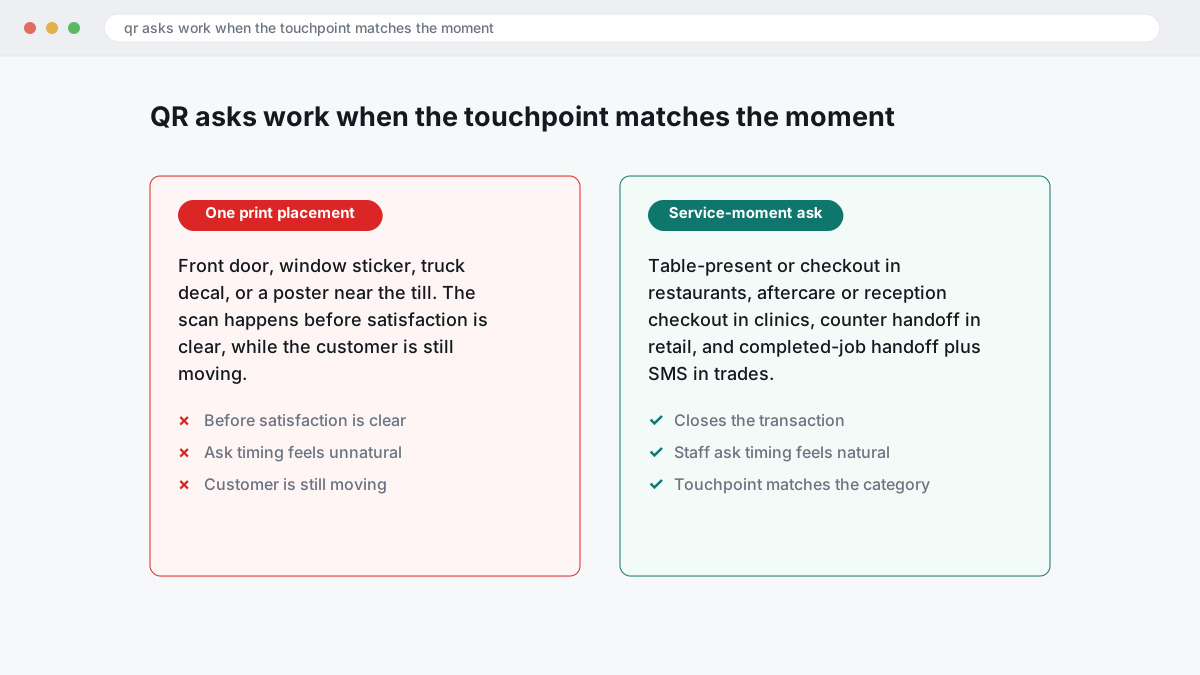
Most underperforming campaigns use one print placement everywhere: front door, window sticker, truck decal, or a poster near the till. That fails because the scan happens before satisfaction is clear, before staff ask timing feels natural, or while the customer is still moving. A code only works when the touchpoint matches the conversion rate by touchpoint for that category, which is why the same stand card can work in a café and flop in a dental practice.
This placement split is the one worth using first.
| Business type | Weak placement | Better ask and placement |
|---|---|---|
| Restaurants | Front-door sign or menu footer | Bill presenter, table caddy after the meal, or checkout counter while the experience is still fresh |
| Clinics | Waiting room or pre-consultation form desk | Reception checkout or follow-up card after treatment, with privacy-safe wording and no star prompt |
| Retail stores | Window vinyl or shelf wobblers | Bagging area or receipt insert after the purchase is completed |
| Trades | Truck decals alone | Job completion handoff, then SMS with the same link if the customer does not scan on site |
Trades are the clearest example. In BGR Review's dataset of trades businesses with complete enquiry-source data, observed February-July 2026, 70-80% of calls and bookings were attributed to a Google Business Profile or Yelp listing. That makes the review ask valuable, but truck graphics rarely catch people at the moment they want to leave feedback; the handover chat does. If you need help building that flow, BGR Review sells review packages with a 30-day free replacement guarantee, but the cheaper route is often simple: fix the ask timing before you print more cards.
What wording and layout should your Google review card use so people actually scan?
A review card works best when it gives one instruction, one QR code, and no visual noise. “Review your visit on Google” plus your branch name usually beats vague copy, mixed platforms, or busy layouts that hide the next step.
Most underperform after print because the card tries to do three jobs at once: reviews, Instagram follows, loyalty sign-ups, maybe a discount. That clutter kills scan intent. On a small counter card, keep the line above the code under 20 words and send the scan straight to your Google Business Profile review link if Google is the platform you want.
Use the card where the ask already happens. A till stand, reception desk sign, table presenter, or invoice sleeve works because the print placement matches the staff prompt and the customer still remembers the visit. If you run multi-location review flows, add the exact location name on the card itself so a scan in Chelsea does not end up posting to Soho.
These layouts keep the path clear without crossing into gating or incentives, which BGR Review avoids in every Google review package and backs with a 30-day free replacement guarantee.
| Use | Copy above QR |
|---|---|
| Single location | Review your visit on Google |
| Multi-location | Review BGR Review London on Google |
| Benefit line below | Your feedback helps other local customers choose us |
How should franchises and multi-location brands route scans without sending reviews to the wrong branch?
Franchise QR review campaigns work when every branch has its own destination, QR asset and campaign tag, and when any central routing page sends the visitor to the correct location only if the match is certain.
The wrong setup is one brand-wide code printed everywhere. It fails for a simple reason: scans from Leeds, Miami and Toronto all collapse into one stream, staff rotate between sites, and reviews land on the wrong Google Business Profile review link or a generic destination that forces the customer to search again. That breaks branch attribution, muddies UTM tracking, and leaves head office unable to tell which location actually lifted map-pack click-through, calls or bookings.
The right setup is a multi-location review flow with location-specific links from the start: one QR per branch, one review URL per branch, and one campaign tag per asset. If you use a central landing page, auto-route only when the scan source is unambiguous, such as a branch-specific poster, table card or receipt code; if the match is shaky, show a simple location selector instead of guessing. Guessing sends reviews to the wrong branch, and you rarely recover that conversion once the customer hits the wrong profile.
This matters much more once you pass 10-plus locations. At BGR Review, when brands ask us to scale review collection across branches, we set assets up per location because reporting, replacements under our 30-day free replacement guarantee, and any later ROI check all depend on clean branch-level attribution rather than a blended brand total.
What should you check first when scans happen but reviews still do not get posted?
If scans are happening and reviews still are not showing up, the blockage usually sits after the scan: Google account login prompts, extra taps, wrong routing, or poor ask timing. Test the full mobile path yourself on iPhone and Android in under 30 seconds before you blame staff, redesign the card, or order new print.
Most owners treat this as a low-scan problem. That fails because the code may already be doing its job, while the real loss sits in review submission drop-off between the scan, the Google sign-in screen, and the final post. Check your scan-to-submit gap first with UTM tracking on the QR code destination: if the tagged link gets visits but your Google Business Profile review link produces few new reviews, placement is a secondary issue and post-scan friction is the main one.
Google account prompts are the usual culprit on mobile. A customer scans at the counter, lands on the review form, then hits a login wall, password reset, or account switch; that is where conversions stall, even when the staff ask was fine. If you run review collection through BGR Review, this is the point where we usually strip out extra redirects, confirm the code opens the correct location link, and decide whether a direct-to-review URL will outperform a neutral landing page for that branch.
The fastest check is simple: scan the live code on one iPhone and one Android phone, on mobile data, and count taps from camera to posted review. If either journey breaks, opens the wrong branch, loses the UTM tag, or asks for too many choices, fix that before touching the counter card copy or staff script.
How do you track whether a QR review campaign is paying off before you roll it out everywhere?
Track QR review ROI by separating each touchpoint, branch, and month, then compare scans, clicks, posted reviews, and cost per review across at least 4–8 weeks. Expand only after one pilot shows that intent, timing, and routing are producing completed reviews rather than empty scans.
Most underperforming campaigns fail before the first result is measured. The usual mistake is printing the same code on every counter card, flyer, package insert, and NFC review card, then wondering why source attribution is useless. If every asset points to one URL, you cannot tell whether checkout beats a receipt sleeve, whether branch A converts better than branch B, or whether a staff ask on Tuesday outperforms a passive table stand on Saturday.
Use one destination per touchpoint with clear campaign naming in your UTM tracking, such as utm_source=qr, utm_medium=counter-card, utm_campaign=soho-may-2026. That gives you clean source attribution inside analytics and in your CRM if you log review requests there. Then compare conversion rate by touchpoint in sequence: scan to page load, page load to click, click to posted review, and final cost per review once print spend, design time, and any service spend are included.
This is the comparison that decides rollout.
| Test unit | What to separate | What to compare after 4–8 weeks |
|---|---|---|
| Touchpoint | Counter card vs receipt vs package insert | Scans, clicks, posted reviews, cost per review |
| Branch | One code and campaign per location | Routing accuracy, review volume, review quality |
| Month | Fresh asset name each month | Trend changes after wording or placement edits |
Start with one high-intent moment, usually checkout or job completion, before you print every package or counter card. That works because you can fix the weak point cheaply: the ask, the placement, the destination, or the branch routing. If you later add a paid review service, keep that pilot baseline separate; BGR Review sells verified review packages with a 30-day free replacement guarantee, but you still need to know whether the offline QR asset itself earns efficient reviews before scaling it across all locations.
Where to go from here
Start with one live test. Pick your busiest location, send the QR code to one neutral review page, add UTM tracking, and place it at one touchpoint where staff already finish the interaction cleanly, usually checkout or handover. That gives you a baseline for scan friction, login drop-off and completed reviews without muddying the result across five stands, three platforms and mixed staff timing. If scans are high but published reviews stay low, the problem is usually the destination or account sign-in, not the print card.
Your next move is simple: run that setup for a few weeks, compare scans with live reviews on the chosen profile, then decide whether to keep it single-platform or route by location. If you need more volume, build the process around the way your customers actually pay, leave and follow up. That is where managed review generation helps. BGR Review sets these flows up around real customer journeys, with tracked review requests, platform-safe wording and a 30-day free replacement guarantee on review packages. You should expect cleaner attribution, fewer wasted scans and fewer policy mistakes.