
Quick answer
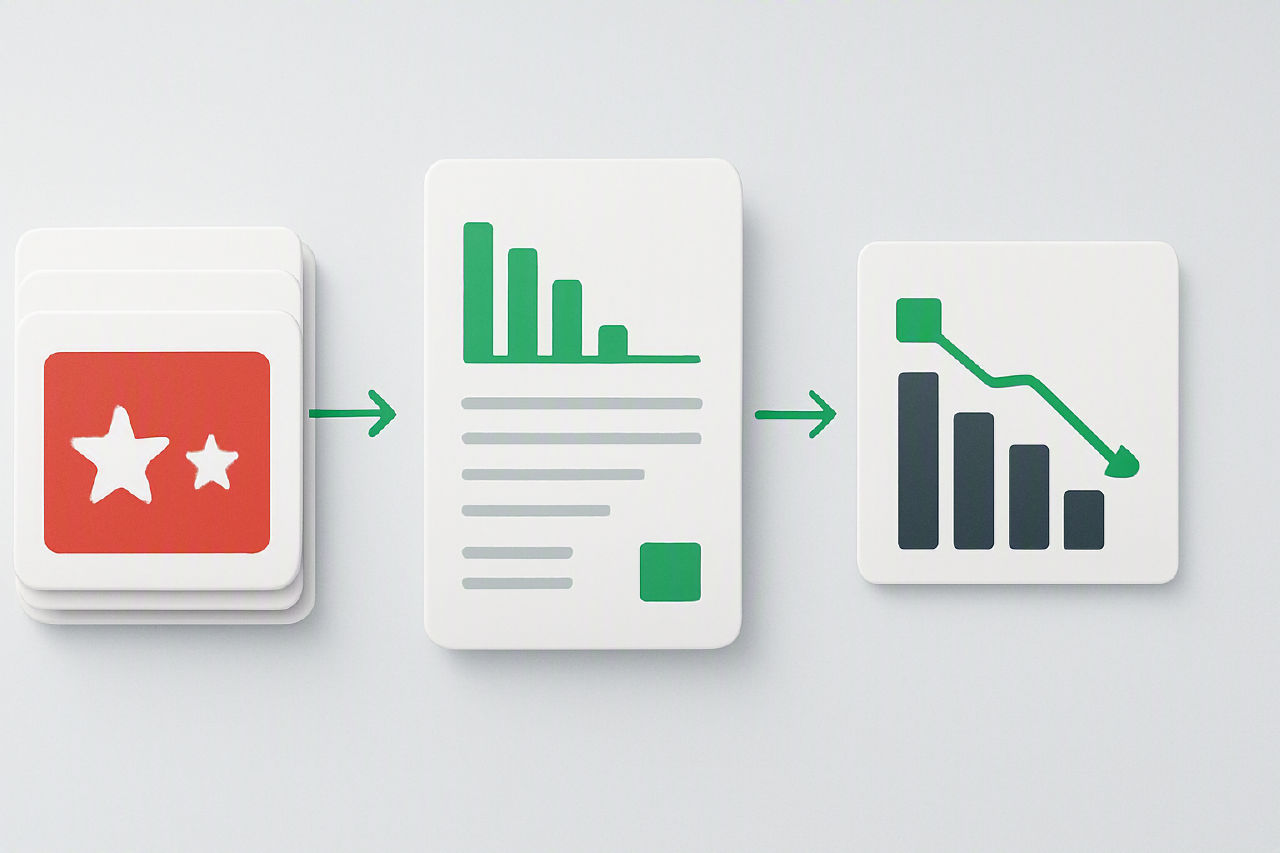
Reputation changes revenue through two mechanisms: how often people click your listing and how often those clicks turn into calls, bookings or orders. Harvard Business School found a one-star Yelp increase was linked to a 5-9% revenue lift for independent restaurants, which is why rating damage cannot be treated as a branding issue. The practical fix is usually clear: remove reviews that breach a platform’s policy, answer genuine complaints, then rebuild recent verified review volume on the platform that already drives your enquiries, usually Google, Yelp, Trustpilot or Clutch.
This page is built from the way review damage actually gets handled, not from brand-positioning theory. We work across Google, Trustpilot, Yelp, Clutch and TripAdvisor, and the pattern is consistent: businesses lose leads first through lower click-through in the map pack or branded search, then lose conversions when recent review sentiment and star-rating distribution turn against them.
Our own research combines 1,485 businesses observed from February to July 2026 with 12,000+ negative review cases logged from June 2025 to June 2026, and we record outcomes as removal success, unresolved or unknown rather than forcing every disputed case into a win/loss bucket. That matters because a rejected flag often fails for procedural reasons, such as using only the basic report button with no evidence pack, no policy match and no appeal trail.
How does a single bad review turn into a lost click, lost lead, and lost sale?
A negative review cuts revenue in sequence: it weakens click confidence, trims lead volume from the traffic you already have, and then drags down close rate when buyers keep seeing the complaint unresolved. The first fix is to identify the complaint type correctly and choose the right path: response, removal attempt, or an internal service fix.
Generic brand-image advice fails here because buyers do not start with your website. They start with online reviews, a star snapshot and a few lines of review sentiment on Google, Yelp or Trustpilot. On mobile, one fresh 1-star post can sit near the top of a profile view for weeks if newer reviews do not push it down, so the damage happens before any landing page, sales call or form fill has a chance to recover the click.
Lower click confidence raises customer acquisition cost fast. Your rankings and ad spend can stay flat while fewer people tap through, which means the same budget produces fewer calls, fewer bookings and weaker conversion rate downstream because the people who do click arrive already sceptical. In BGR Review's dataset of trades businesses with complete enquiry-source data, observed February-July 2026, 70-80% of calls and bookings were attributed to a Google Business Profile or Yelp listing rather than a standalone website, which is why review damage often shows up as a lead problem before it shows up anywhere else.
The practical move is narrower than most guides suggest. If the review appears to breach a platform rule, build the evidence pack and file for removal; BGR Review handles removals on a pay-after-success basis at $0 upfront and $449 per removed review link. If it does not breach policy, answer it quickly, fix the service issue, and then close the rating gap with fresh verified reviews so the bad post stops dominating profile views and scaring off the next click.
Where does reputation hurt more: search visibility or conversion after the click?
Reputation damage hits two systems at different speeds: local search visibility and conversion after the click. A weak review profile can soften map-pack engagement over time, but it usually hurts faster when a searcher already finds you, lands on your Google Business Profile or branded search results, and then decides not to call, book or fill in a form.
Most owners fixate on rankings first. That misses the earlier loss. In BGR Review's dataset of trades businesses with complete enquiry-source data, observed February to July 2026, 70–80% of calls and bookings were attributed to a Google Business Profile or Yelp listing, and around 60% operated without relying on a standalone website. If your profile visit turns into hesitation because the newest review looks unresolved, your conversion rate drops before your map-pack position visibly moves.
The better read is this: check whether impressions are down, then check whether profile views, calls and branded-search clicks are converting worse than they were before the review landed. Google does not publish a simple rule saying one bad review lowers rankings, but Google Business Profile engagement can influence map-pack performance over time because searchers click, call, request directions and bounce. That is why the first repair priority is often conversion-focused: respond, remove any policy-breaking review if possible, and close the rating gap with fresh verified reviews under BGR Review's 30-day free replacement guarantee.
When do star patterns start depressing clicks even before your average rating looks 'fine'?
Buyers judge a profile by the review mix, not the average alone. A business can lose clicks while still showing a respectable score if recent 1-star and 2-star reviews cluster around the same complaint, because searchers open the online reviews, scan the negatives first, and decide whether to click at all.
The wrong approach is to watch only the displayed average. Google usually shows ratings rounded to one decimal place, so a 4.3 can hide a messy star-rating distribution: ten older 5-star reviews, then three fresh low-star posts about missed appointments, rude staff or billing disputes. That fails because click-through drops before your average looks broken; a searcher comparing two local pack results often trusts the steadier 4.2 profile if its last twenty reviews look consistent and the low-star comments are old, isolated and answered.
The right approach is to audit the shape and timing of the low end, then fix the gap in that order. In BGR Review cleanup work, the first screen is simple: are the negative themes recent, repeated and visible in the first review page, or are they buried under newer verified feedback that comes with our 30-day free replacement guarantee on review packages. Consumer trust research reaches the same practical conclusion: people read for pattern and recency, not headline score alone.
How much do fresh reviews and visible replies change buyer confidence after a bad month?
Fresh reviews and prompt owner replies change the story a buyer sees first. Recent credible positives improve review recency, and a public reply that explains what you fixed can contain the damage from an earlier complaint before it costs another click or enquiry.
After a bad month, the first job is simple: publish newer, verified feedback so older complaints drop below the initial viewport on Google, Trustpilot or Yelp. That matters because buyer confidence is shaped by what appears on screen without extra scrolling, and consumer trust research such as BrightLocal’s Local Consumer Review Survey 2025 keeps pointing back to recency and response behaviour as trust signals. If you are using BGR Review to rebuild volume, review delivery starts in 24-48 hours on eligible packages and carries a 30-day free replacement guarantee.
The weak approach is replying for optics alone: “Sorry you feel that way, please contact us.” It fails because the review response rate may improve while the conversion rate does not; the buyer still sees no accountability, no service recovery, and no reason to trust your branded search result or map-pack listing. The better approach is a visible recovery reply posted within 24 to 72 hours: acknowledge the issue, state the corrective step, and close the loop if it was resolved. That works because the reply becomes part of the evidence a new buyer uses to decide whether your business fixes problems or ignores them.
Can bad reviews drag down Google Maps exposure, or do they mostly scare customers away?
Bad reviews can hit both Maps exposure and conversion, but the damage rarely lands at the same speed. On a Google Business Profile, weak review sentiment usually cuts clicks, calls and direction requests first; weaker local search visibility tends to show up later if poor engagement persists over the next 8-12 weeks.
The wrong approach is to treat online reviews as a pure ranking switch and panic every time a one-star post appears. Google Business Profile Help states that local ranking is shaped by relevance, distance and prominence, so reviews influence prominence but do not overrule a closer competitor, a better-matched category, or stronger profile completeness. The better approach is to separate visibility loss from conversion loss: check whether your map-pack position actually moved, then check whether click-through, call taps and route requests fell while position stayed similar.
That distinction matters because a profile can hold roughly the same Maps exposure and still lose revenue. In BGR Review's dataset of trades businesses with complete enquiry-source data, observed from February to July 2026, 70-80% of calls and bookings were attributed to a Google Business Profile or Yelp listing rather than a standalone website. If the star pattern turns patchy, fewer searchers click, fewer call, and those missing actions remove the engagement signals that help keep a listing healthy.
If your profile has had a bad review month, track Google Business Profile performance for 8-12 weeks before you decide the problem is ranking alone. Watch branded search clicks, map-pack impressions, calls, website visits and direction requests together, then fix the rating gap with fresh verified reviews or pursue removal where a review breaches policy; BGR Review handles removals on a pay-after-success model at $449 per removed link with $0 upfront, but a clean response and new verified review flow is often the cheaper first move when no policy breach exists.
Which review platforms move reputation fastest for local brands, SaaS firms, and service businesses?
Platform impact follows the place where the buying journey starts. Google usually drives local discovery, Trustpilot often shapes branded research for online-first firms, and Yelp still changes buying decisions in service and dining categories where people actively compare review profiles.
The wrong approach is a one-platform reputation strategy. It fails because damage on Google hurts the map pack and branded trust checks, while damage on Trustpilot can sit on page one for your brand name, and Yelp still affects clicks in categories with heavy app usage and legacy review behaviour. In BGR Review's dataset of trades businesses with complete enquiry-source data, observed from February to July 2026 within the wider 1,485-business sample, 70-80% of calls and bookings were attributed to a Google Business Profile or Yelp listing rather than a website.
A platform-by-platform impact map works better because it matches the review profile to the source of the click, the lead, and the sale. If your lost conversions start in local search, fix Google first; if branded search results show Trustpilot before your pricing or demo page, that profile needs the first repair; if your category still lives inside Yelp's app and recommendation software, treat Yelp as a live acquisition channel rather than a legacy listing.
This comparison is the practical version.
| Platform | Moves fastest for | Main revenue effect |
|---|---|---|
| Local brands, trades, clinics, multi-location services | Map-pack click-through rate, calls, direction requests, branded trust checks | |
| Trustpilot | SaaS, ecommerce, online-first service brands | Branded SERP confidence, comparison-stage conversions, lower friction on demo or checkout |
| Yelp | Restaurants, home services, personal care, local categories with strong app usage | App discovery, category comparisons, call and booking intent from high-trust profiles |
Which fixes usually produce the fastest ROI when reputation is already costing leads?
Fast payback usually comes from triage, not a full reputation rebuild. Remove reviews that appear to break platform rules, answer the complaints buyers keep seeing, and fix the service issue behind repeated negatives before you buy more traffic.
The expensive mistake is launching a broad awareness campaign while the page doing the converting still shows unresolved damage. You pay higher customer acquisition cost for the same clicks, then lose them on contact pages, map listings and platform profiles where the review sentiment looks unstable. A cleaner sequence works better: start with negative review removal where there is a real policy angle, because that can change the first-screen impression faster than a new landing page or a six-week content project.
Across 12,000+ negative review cases logged by BGR Review from June 2025 to June 2026, reviews raised within 28 days of posting and backed by an identifiable policy issue resolved successfully in roughly 90% of cases; for comparable cases raised beyond 28 days, the observed success rate fell to approximately 25–30%. That is why disputed reviews go first. If a review appears to breach Google Business Profile’s prohibited and restricted content policy, a fast evidence pack and a correct appeal route can improve conversion rate sooner than almost any top-of-funnel spend. If there is no policy breach, removal is the wrong bet.
The next fastest gains usually come from visible replies, review recency and profile cleanup. A fresh cluster of verified reviews, delivered with natural spacing and backed by BGR Review’s 30-day free replacement guarantee, helps dilute stale negatives; a clear owner reply can stop one complaint theme from poisoning every new visit. Fix the repeated operational issue first, then add fresh proof.
What should a reputation audit checklist include before you spend a dollar on cleanup?
A useful reputation audit scores each problem by reach, revenue risk, and ease of repair.
The wrong checklist tracks reputation like a dashboard: average rating, review count, maybe a monthly alert. That fails because a flat-looking score can still hide conversion loss — a recent run of 1-star reviews, repeated review sentiment around “no callback” or “bait pricing”, unanswered complaints, and forum threads or old directory pages sitting under your brand name can all depress branded click-through and enquiry quality even when the average still looks acceptable.
Use one action list and score each item before spending anything.
| Audit item | What to check | 30-day score |
|---|---|---|
| Reviews | Average rating, low-star themes, recency, star-rating distribution, reply gaps | High if recent and visible on Google or Trustpilot |
| Search results | Review snippets, Reddit/forum threads, outdated listings, duplicate profiles | High if they rank for your brand name |
| Fixability | Can you remove, reply, update, merge, or offset with fresh verified reviews? | Prioritise what you can shift inside 30 days; BGR Review’s review packages carry a 30-day free replacement guarantee |
When does DIY reputation management make sense, and when does a service earn its fee?
DIY reputation work fits small, simple review problems. A managed service earns its fee when speed, appeal accuracy, cross-platform coordination, or board-level reporting matters more than keeping every task in-house.
The cheap mistake is trying to handle a messy cleanup with the same light process you use for one stray complaint. DIY works when review volume is low, one person owns the profiles, and the job is mainly response writing, review request timing, and fixing obvious profile gaps that hurt click-through rate and conversions. It starts to fail when negative review removal depends on policy language, evidence packs, rejected appeals, or review platform differences such as Google Business Profile policy flags, Trustpilot's dispute flow, Yelp's recommendation software, and Clutch verification checks.
In BGR Review's dataset of 12,000+ negative review cases logged June 2025 to June 2026, roughly 90% of businesses that came to us after a failed attempt had used only the basic in-platform report button, and 70-80% of those initial requests had been rejected. That is where a service earns its fee: less guesswork, faster escalation, and one owner across Google, Trustpilot, Yelp, or TripAdvisor while your team protects lead flow and branded search demand.
This is the practical cost split readers usually need:
| Route | Best fit | Cost model |
|---|---|---|
| DIY | Low complaint volume, central ownership, single platform, no disputed facts | Staff time only |
| Monthly agency retainer | Ongoing response management and reporting across several profiles | Fixed monthly fee |
| Disputed-review specialist | Appeals, evidence-based removals, urgent cleanup | Fixed price per removed link |
How should a multi-location brand triage review damage without treating every branch the same?
Run multi-location reputation at two levels: one set of brand rules, separate branch triage. Your head office needs common reply standards, but each location needs its own review trend, response backlog, and escalation path because service failures, staffing issues, and fake-review attacks rarely hit every branch equally.
The wrong approach is to watch one brand-wide rating and call the account healthy. That hides branch-level risk. A chain can sit on a respectable average while one location has a weak star-rating distribution, stale review recency, and a low review response rate that cuts map-pack click-through and conversions in that postcode. Multi-location businesses need multi-location consistency in tone, timing, and compliance, but the intervention threshold should follow local performance: a branch with falling sentiment and unanswered 1-star reviews needs action before the rest of the estate does.
Franchises usually work best with central oversight and local evidence. Head office should set the reply playbook, approval rules, and escalation triggers; the branch then supplies job records, CCTV timestamps, booking logs, or staff names if a disputed review may breach Google Business Profile or Trustpilot policy. In BGR Review’s dataset of 12,000+ negative review cases logged June 2025 to June 2026, reviews raised within 28 days and backed by an identifiable policy issue resolved successfully in roughly 90% of cases; beyond 28 days, observed success fell to approximately 25–30%. That is why branch managers should escalate fast, even when the wider brand score still looks fine.
How does a practical removal workflow work when a review may break platform rules?
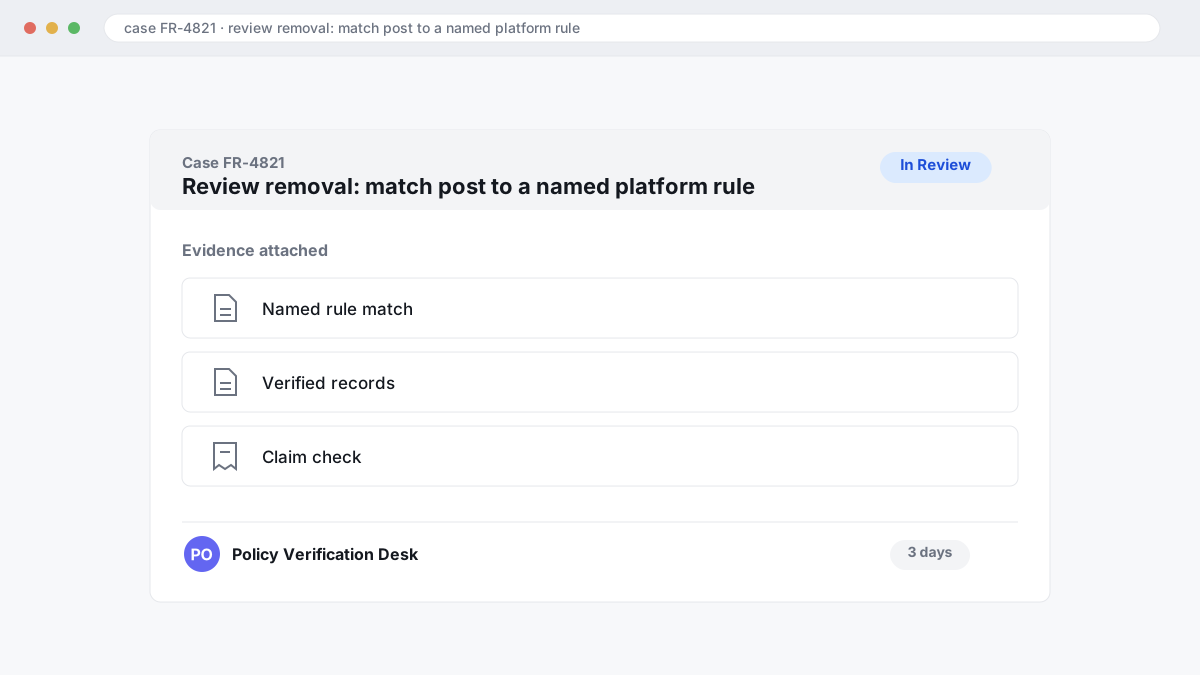
Effective review removal starts with evidence, not emotion. Match the post to a named platform rule, attach records you can verify, and escalate only when the reviewer, event or claim can be disproved on paper.
The wrong approach is flagging a review because it feels unfair. That usually fails because platforms judge policy violations, not frustration. Google Business Profile reviews are assessed against Google’s prohibited and restricted content policy, Trustpilot uses its flagging and verification workflow, and Yelp applies its own content rules and recommendation software, so review platform differences matter from the first click. Across 12,000+ negative review cases logged by BGR Review from June 2025 to June 2026, roughly 90% of businesses who came to us after a failed attempt had used only the basic in-platform report button, with no supporting documentation, and 70–80% of those initial requests had been rejected.
The right approach is building an evidence pack before you flag. That means timestamps, CRM records, invoices, booking logs, call records, staff rota notes, delivery confirmations and location logs that show the reviewer was never a customer, posted about the wrong branch, or made a factual claim you can disprove. For negative review removal, the field that usually decides the appeal is the one tying the review text to a specific breach: impersonation, conflict of interest, off-topic political content, harassment, or a false factual allegation.
This is where the workflow splits by platform.
| Platform | What to match | What usually helps |
|---|---|---|
| Prohibited and restricted content | Invoice gap, appointment history, branch mismatch, dated screenshots | |
| Trustpilot | Lack of genuine buying or service experience | Order lookup failure, customer database check, verification challenge |
| Yelp | Content rule breach or reviewer conflict | Identity conflict records, staff logs, documentary contradiction |
Rules also vary by country and platform. Undisclosed paid endorsements can trigger FTC issues in the US, fake-review enforcement now sits under UK consumer law including the DMCC Act, and defamation turns on local law and proof, so this is general information rather than legal advice. If a review is lawful opinion and does not break platform rules, removal usually fails; the practical next move is a documented reply and fresh verified reviews to repair the rating gap.
What should happen in the first 30 days after a review crisis to rebuild momentum?
After a review crisis, your first 30 days should be about triage, repair and measurement. Stop sending paid or email traffic to damaged profiles, fix the visible complaint trail, and watch whether clicks, leads and branded search results start to recover.
Most teams default to PR messaging. That fails because a polished statement does nothing when a buyer sees a one-star review, no reply, and the same complaint repeated three times on Google or Trustpilot. In days 1-3, pause avoidable promotion, screenshot every high-visibility review issue, log the review URL, date, platform, star-rating distribution shift and whether the complaint appears in your branded search results. If the review may breach policy, move fast: across 12,000+ negative review cases logged by BGR Review from June 2025 to June 2026, reviews raised within 28 days and backed by a clear policy issue resolved successfully in roughly 90% of cases.
Days 4-14 are for visible repair. Reply in plain English, dispute reviews that fit the platform rule, and fix the repeat service failure behind legitimate complaints.
Days 15-30 are about rebuilding review recency and measuring whether trust is returning. Ask recent real customers for fresh verified reviews, close the response gap, and track conversion rate by calls, bookings or form fills rather than by rating alone. Then check whether your branded search results still show complaint pages first, or whether fresher reviews and replies are pushing buyers back into the map pack and onto your site.
Where to go from here
Start with a triage pass on the reviews that are costing you clicks, calls and bookings. Split the problem into two lists: reviews that may breach platform policy, and reviews that are legitimate but dragging down your recent rating mix, response rate and conversion rate. That gives you the right order of work. Remove what can be removed first, because one false or abusive review can suppress map-pack click-through and branded search trust long before you feel it in revenue.
If the issue is active negative reviews, your next step is a removal assessment with the review links, dates, platform and any proof that the content is fake, off-topic, duplicated or otherwise policy-breaching. Expect a yes-or-no answer on removability, then evidence collection, correct flagging and appeal if needed. If the reviews are staying live, move straight to a review growth plan that rebuilds recency with fresh verified reviews and closes the rating gap.
The useful outcome is clarity: what can realistically come down, what must be answered, and how to rebuild trust in the places buyers actually check.