


Quick answer
Fake reviews are posts that misrepresent a real customer experience, including spam, competitor attacks, undisclosed incentivised reviews, and comments from people who never bought from you. You can get some removed, but platforms delete reviews for policy breaches, not because you insist they are untrue. Google reviews, for example, usually come down to the Google Business Profile prohibited and restricted content policy. Your best chance is to document the breach, submit the flag, save the case ID, and resubmit or escalate if the first decision is a rejection.
We handle fake reviews disputes across Google, Trustpilot, Yelp, Clutch and TripAdvisor, so this page is built from live removal work rather than recycled platform help text. The pattern after a flag is predictable: weak reports that only say “this is false” often get rejected, while submissions that attach order records, booking logs, staff rosters or a clear no-customer match have a real chance on a second pass.
BGR Review also runs pay-after-success removals at $449 per removed review link with $0 upfront, which forces a simple standard internally: if the evidence would not survive a platform check, we tell you to keep it DIY or reply publicly instead of wasting time.
Rejected flags are common. A first report often fails if you only say “this customer never existed”. The evidence that moves a case is concrete: screenshots of profile changes, order or booking records, message logs, and reviewer-pattern evidence such as the same account posting across unrelated local listings. If the DIY route stalls, BGR Review handles removals on a pay-after-success basis at $449 per removed review link with $0 upfront.
Why trust this removal guide
This guide is trustworthy because it comes from live review-dispute workflows, not recycled ORM advice. It is written around the exact steps used to challenge reviews on Google Business Profile, Yelp, Trustpilot and other major platforms your team is likely to face in a normal week, with the same evidence standards BGR Review uses in its pay-after-success removal work at $0 upfront and $449 per removed link.
The practical edge is timing. Documentation gathered in the first 7 days usually decides whether a flag has a real chance, because platform teams respond better to account-level clues, transaction records and profile mismatches captured before edits, deletions or reviewer changes muddy the trail.
What counts as a fake review
A fake review is any review that misrepresents either a real customer experience or the reviewer’s identity. That covers three common buckets: a competitor posting a one-star attack, a seller paying for five-star praise, and a person reviewing a business they never used. The core problem is false representation. Google’s Business Profile review policy, Yelp’s conflict-of-interest rules and Trustpilot’s guidance on incentivised reviews all ban versions of this, even when the wording sounds believable.
The detail that usually decides a dispute is whether the reviewer can be tied to a genuine transaction, booking or service record. A real customer can leave a harsh review. A fake reviewer usually cannot be matched to any order, appointment, invoice or support thread. That is why BGR Review’s removal work, billed only after success at $449 per removed review link with $0 upfront, starts by checking identity and transaction evidence before anything gets flagged.
One caveat matters: “fake” does not mean “unfair” or “wrong”. If the person exists and the experience happened, platforms often leave the review live unless it also breaks a published content rule such as harassment, impersonation or undisclosed incentives.
How to spot likely fake reviews without overclaiming
A review looks likely to be fake when the account behaviour, posting timing and factual claims do not match any real customer trace you can verify. Start with timing: if 5 to 20 near-identical posts land within a few hours, treat that as a signal, not proof. Then open the reviewer profile and check for city jumps, generic names, copied wording across listings, or an account with just one review. Google Business Profile and Trustpilot both look at account behaviour, so your notes should do the same.
If you are weighing a report, compare each claim against order logs, appointment records, delivery notes and known service dates before you accuse anyone of fraud. A review saying “late technician on Tuesday” falls apart fast if you had no booking that day. At BGR Review, we tell clients to label these cases “likely fake” in the dispute file until the records rule the reviewer out, because paid removal at $449 per removed link only makes sense when the evidence is tight.
Why fake reviews matter beyond star ratings
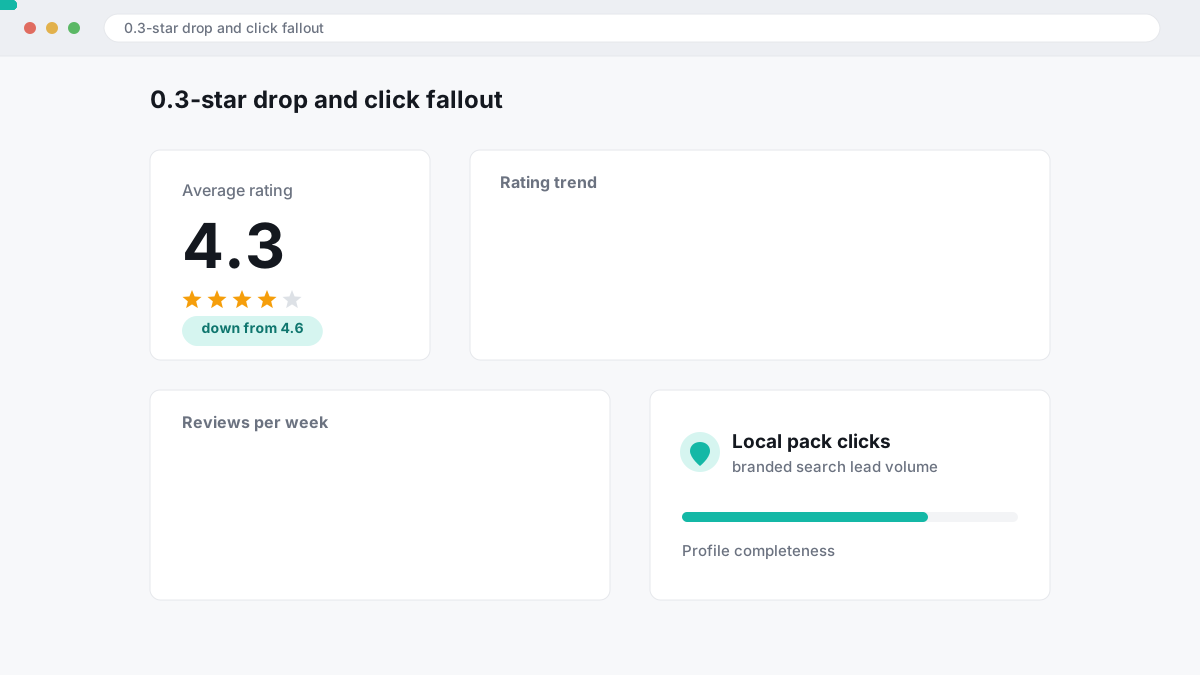
Fake reviews damage more than your average rating because they change click behaviour, trigger expensive service fallout, and weaken later moderation requests. On Google Business Profile, a 0.3-star drop can be the difference between a 4.6 and a 4.3 listing in the local pack, which is enough to reduce clicks and lead volume before you even test paid removal at BGR Review’s $449-per-link, pay-after-success model.
False claims create work fast. A review alleging rudeness, overcharging or unsafe service can trigger refund demands, chargeback threats, staff stress and lower conversion on branded search, even if the post is fabricated. Weak, speculative flags make this worse: if your first report to Google, Yelp or Trustpilot reads like guesswork instead of evidence, later submissions carry less weight, and the stronger route is to document properly before escalating or using BGR Review’s $0-upfront removal process.
When fake reviews break the law or platform rules
Fake reviews break platform rules when they breach a site’s review policy, and they break the law when they cross into unlawful endorsements, fraud or defamation under the rules in your country.
Platform removal usually turns on a named policy first. Google Business Profile review policy and Trustpilot’s fake-review rules look for spam, conflicts of interest, impersonation and incentivised content, not whether the post feels harsh or unfair. That is why a weak one-star review can stay live, while a paid five-star review can come down fast if you can show the incentive, duplicate accounts or reviewer links.
In the US, the FTC’s Endorsement Guides and its 2024 rule on fake reviews target undisclosed paid endorsements. In the UK, the CMA and the DMCC Act 2024 put the same issue in scope. Defamation is harder. A platform flag may need screenshots and account links; a defamation claim usually needs proof that the statement is false, factual and damaging. If a case needs formal removal work after policy routes fail, BGR Review handles review removals on a pay-after-success basis at $449 per removed link, with $0 upfront.
What evidence to gather before you report anything
The strongest fake-review report starts with a dated evidence pack that shows the exact review, the exact profile and the exact reason you believe the reviewer was never a real customer.
Take screenshots before you flag anything. Capture the review text in full, the star rating, the reviewer name, the business profile URL, and the date shown on the platform. If the review sits behind a “read more” fold, expand it first. Save the live link as well. On Google Business Profile and Trustpilot, missing the review URL slows the second submission because support often asks you to identify the exact post again.
Match the reviewer against your records from the claimed date. Check your CRM, booking system, POS, support inbox and call logs for the reviewer name, email, phone number or any order that fits the allegation. At BGR Review, that missing transaction match is often the first thing we test before deciding whether a DIY report has a real chance or whether the platform will likely reject it as “insufficient evidence”.
Pattern evidence matters when one review alone looks borderline. Document repeated phrases, identical allegations across different listings, reviewer accounts created close together, or the same wording posted against your competitors and your profile. Put those comparisons in one dated file. A clean side-by-side screenshot set usually carries more weight than a long written complaint.
How to report fake reviews on Google
To report a fake Google review, flag it inside your Google Business Profile first, then submit the same review through Google’s Reviews Management Tool appeal flow if the first flag does not resolve it.
Start in your Business Profile on Search or Maps, open the review, and choose the reporting option that matches the issue under Google’s prohibited and restricted content policy. Keep your explanation tight. The strongest submissions quote the exact review wording, name the policy section you believe it breaks, and show a customer-record mismatch such as no order, no booking, no support ticket, or no account under the reviewer’s claimed name or date.
Google usually processes standard review flags within several days, but complex cases can run longer when the content sits near a grey area like opinion versus impersonation. The second step matters: after the in-profile flag, use Google’s Reviews Management Tool to appeal and attach a cleaner evidence summary than you used the first time. Weak Google reports say “this is fake” and stop there. Strong ones point to a named policy, paste the exact sentence at issue, and match it against your records without padding or emotion.
How to report fake reviews on Yelp
Yelp removes reviews for guideline breaches, not because you cannot identify the reviewer from your booking list or till receipts.
Start on the review itself and use Report Review. Pick the closest policy reason under Yelp’s Content Guidelines, then write a short factual note that points to the breach: no record of the transaction on the stated date, staff member named in the post does not exist, or the review offers a discount-for-removal angle that suggests extortion. Yelp looks harder at content-specific violations than at a bare claim that the reviewer is “fake”.
If the post describes an impossible transaction, escalate through Yelp Support after the initial report. The strongest escalations attach evidence that can be checked quickly: order logs showing no job at that address, appointment records proving you were closed, screenshots linking the reviewer to a competitor, or public posts showing a conflict of interest. Yelp also weighs account behaviour, including review bursts, location mismatch and profiles built only to attack one business, but that signal alone rarely gets a removal.
A weak first flag often gets no action. If that happens and the review clearly breaches policy, tighten the evidence and resubmit, or use paid help only when the loss justifies it; BGR Review’s removal work runs on a pay-after-success model at $0 upfront and $449 per removed review link.
How to report fake reviews on Trustpilot
To report fake reviews on Trustpilot, flag the review through your business account and ask Trustpilot to verify that the reviewer had a genuine buying or service experience.
Trustpilot lets you dispute a review under its Usefulness, appropriateness, and Trustpilot’s role and reviewer verification flow, but vague complaints rarely move a case. Your flag is stronger when you point to a specific order gap, a date conflict, or a policy breach in Trustpilot’s guidelines. If the reviewer says they bought on 12 March and you had no order, booking, lead, support ticket, or invoice under that name, email, or reference, say that plainly.
The deadline matters. Once Trustpilot asks the reviewer for documentation, unsupported reviewers can fail verification if they do not respond within the platform’s evidence window. That is often the hinge point. A short note saying “this is fake” usually gets nowhere; a submission that says “no customer record exists for the claimed date range, location, or service line” gives Trustpilot something testable.
Use the comments field carefully. Quote the timeline problem, attach the missing-order check you ran, and cite the relevant Trustpilot rule rather than arguing about motive. If you sell review help as we do at BGR Review, this is the point where a second pair of hands can help package the evidence, but DIY works if your records are clean and the mismatch is obvious.
Removal options on Amazon, Tripadvisor, Facebook and app stores
Amazon, Tripadvisor, Facebook and the app stores all allow review reporting, but each one uses different labels, menus and evidence thresholds, so the same complaint rarely works across all four.
Amazon usually acts on content that breaches its Community Guidelines or abuse signals tied to incentivised, irrelevant or manipulated reviews. Tripadvisor routes most disputes through the review page or Management Centre and looks closely at conflict-of-interest claims. Facebook review complaints sit inside the recommendation itself, while Apple App Store and Google Play lean heavily on spam, off-topic text and coordinated manipulation signals rather than weak “this feels fake” arguments. On these platforms, a screenshot alone rarely decides the case; the strongest submissions match the exact policy label and explain why that review breaks it.
| Platform | Common policy trigger | Report path | Typical review timeline |
|---|---|---|---|
| Amazon | Incentivised, abusive, irrelevant content | Review menu to report abuse | Often a few days to 2 weeks |
| Tripadvisor | Conflict of interest, hearsay, wrong location | Management Centre or review flag | Usually several days to 2 weeks |
| Harassment, spam, policy breach | Three-dot menu on recommendation | Often a few days, sometimes longer | |
| App Store / Google Play | Spam, off-topic, coordinated manipulation | Developer console or store support route | Usually several days to 2 weeks |
What to do when your flag is rejected
A rejected flag means your first report did not give the platform a clear policy match or enough evidence to act.
Do not send the same accusation again with the same screenshots. On Google Business Profile, Yelp and Trustpilot, duplicate reports usually die in the same queue unless you add new material: a booking log, order lookup, staff rota, delivery record, or a clearer link to the platform rule you believe the review breaks. “This is fake” is weak. “Review posted on 14 May, no booking under that name, no transaction at that time, and the reviewer reused the same wording across three local profiles” gives moderation something concrete.
Build a short chronology before you try again: review date, claimed visit or purchase date, records checked, and the contradiction you found. Keep it factual and tidy. If removal still fails, post a calm public reply within 24 to 72 hours. A simple response works best: you cannot match the reviewer to any customer record, you take genuine feedback seriously, and you invite them to contact your team directly to verify the experience.
What actually happens after you flag a fake review
After you flag a fake review, most platforms give you a binary outcome: removed or no action, with little or no reasoning beyond a policy label.
Google Business Profile usually sends the thinnest response. You report the review, wait, and then see either removal or a notice that it does not breach policy; the message rarely explains which signal failed. Trustpilot may reference its flagging categories more clearly, and Yelp can be equally brief, but across all three the operational reality is the same: you seldom get a useful written justification to work from.
The submissions that move tend to hinge on one contradiction. A reviewer says they visited on 14 June, but you were closed that day. They describe a product you have never sold. They name a staff member who does not exist. Long emotional explanations usually fail because moderation teams and automated review systems look for a clean mismatch against the platform's policy, not a persuasive story.
If your first flag is rejected, the second round has a better chance when you compress everything into a one-page timeline. Put the review date, the claimed event, your records, and the exact contradiction in chronological order, then attach only the proof that supports that sequence. That is the same structure we use when BGR Review takes removal cases on a pay-after-success basis at $449 per removed review link with $0 upfront, because scattered screenshots get ignored and a tight timeline gets read.
When paid review-removal help is worth considering
Paid review-removal help is worth considering when fake reviews arrive in clusters, target your highest-visibility profiles, or start cutting lead flow faster than your team can document and escalate them.
If you are dealing with one weak review on a low-traffic listing, use the platform route first. Outside help starts to make sense when the problem is coordinated across Google, Trustpilot, Yelp or TripAdvisor, when the same claims appear from multiple accounts, or when sales staff can point to lost calls, demo requests or bookings after the attack landed. That is the point where evidence gathering, duplicate submission control and escalation timing matter more than a basic flag.
Good providers tell you the likely outcome before they ask for money. They should explain which platform policy applies, whether the review looks removable or merely suspicious, how long the first pass usually takes, and what happens if the platform rejects the flag. If they promise guaranteed deletion on every review, walk away.
BGR Review is direct about the commercial side: we sell review removal, but only on a pay-after-success model. You pay $0 upfront and $449 per removed review link, which matters when a platform refuses to act on half the URLs in a batch. That structure forces an honest conversation about odds, timeline and platform limits before any work starts.
Contact is simple if you want a second view on a difficult case: team@bgrreview.com, +1 561 461 0399 in the US, or +44 7761 248539 in the UK.
Where to go from here
Start with the review URL, the business profile link, screenshots, and one short note that matches the platform rule you believe was breached. Generic complaints get rejected. A second submission only has a real chance when you add something new: a conflict of interest you can document, copied text across profiles, proof the reviewer was never a customer, or a pattern of accounts posting the same claim on the same day.
What usually happens next is slower than most owners expect. The first flag may be closed with no detail, or with a broad line about the content not breaking policy. That does not mean the review is genuine. It usually means the evidence did not tie the review to a named policy strongly enough for the moderation team to act.
If the review is still live after your first proper report, get a removal assessment before you keep resubmitting the same file. BGR Review handles fake-review removals on a pay-after-success basis at $449 per removed review link with $0 upfront, and if the case is weak, you should be told that before anything is filed.