
Quick answer
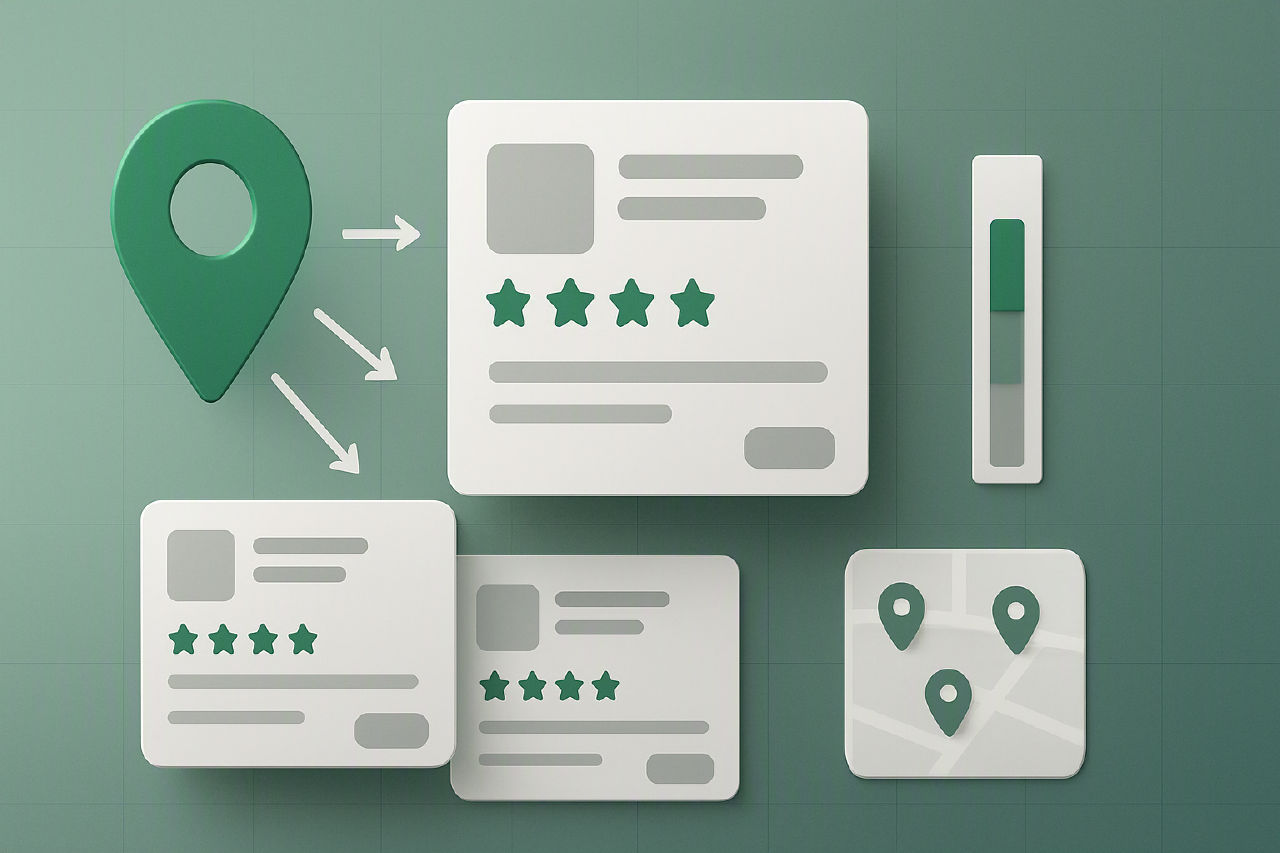
To appear in the Google Local Pack, your listing has to satisfy Google’s local ranking factors: relevance, distance and prominence, as set out in Google Business Profile Help. You can improve relevance and prominence by fixing your primary category, completing your profile, keeping your name, address and phone consistent, strengthening your location page, and earning genuine reviews on a steady cadence. Distance has a hard limit: if the searcher is far from you, you cannot optimise your way around it. The quickest gains usually come from category corrections, duplicate suppression, review growth and weak-page fixes.
This page comes from the same operational work BGR Review handles every day: review acquisition, duplicate cleanup and review removal cases that change map visibility. We have served 15,000+ businesses, and the pattern is clear when a profile ranks in Google Maps but misses the pack: the blocker is usually category mismatch, duplicate interference, weak location-page signals, or a review profile that looks thin against nearby competitors.
There is also a practical reason to separate those issues. A basic flag through Google’s in-platform report button often goes nowhere on its own; in our negative review case file, roughly 90% of businesses who came to us after a failed attempt had filed with minimal evidence only, and 70–80% of those first requests had been rejected. That is why this guide treats the google local pack as a diagnosis problem first, not a checklist problem.
How Google decides who appears in the Local Pack
Google decides Local Pack visibility with three stated factors: relevance, distance and prominence, as set out in Google Business Profile Help. Relevance measures how closely your profile matches the search intent, distance measures how close you are to the location implied or stated in the query, and prominence measures how established Google believes your business is online and offline. That last part gets simplified badly in most guides.
Distance is the hard limit. If someone searches “emergency plumber” from one side of a city, a stronger profile across town can still lose to a nearer competitor because Google calculates proximity from the searcher’s location or the place name in the query. Reviews help, but they do not let you brute-force your way past geography, which matters when owners expect a 5.0 profile to rank everywhere inside a metro area.
Prominence is broader than star rating. Google folds in review quantity and quality, links to your site, citation consistency across directories, press or brand mentions, and offline reputation signals that Google can associate with the entity. In BGR Review’s own dataset of 1,485 businesses observed from February to July 2026, reaching 20–30 reviews over the first three months was associated with improved local visibility for new trades and local service businesses, but other ranking factors were active at the same time, so reviews alone did not explain the lift.
Check whether your absence is a ranking issue or a listing issue
Your first job is to separate a broken listing from a weak-ranking listing, because a suspended, unverified or filtered Google Business Profile will not compete normally in the Google Local Pack.
If you came to BGR Review for visibility help, this is the first split we make before talking about reviews, website edits or any paid package. Check the profile status inside Google Business Profile Manager and compare it with what you see in live search. Google Business Profile Help is clear on suspension and verification: a suspended profile can lose visibility entirely, and an unverified one has limited control and weaker trust signals. A filtered profile is trickier. It may still open on a direct link or branded search, then disappear on generic local terms.
If your listing shows in Google Maps but misses the 3-pack, you are usually dealing with a ranking issue instead of an eligibility issue. That usually means weak relevance for the query, stronger nearby competitors, or a hard distance limit you cannot fully engineer around. Test three search types from the business area you actually serve, not from your office Wi-Fi alone.
| Query type | Example | What the result tells you |
|---|---|---|
| Branded | BGR Review London | If you do not appear here, check suspension, verification, duplicates or a naming mismatch first. |
| Category | roofer | If Maps shows you but the pack does not, relevance and distance are the likely blockers. |
| Service plus city | emergency plumber Bristol | If visibility drops only here, your category and service-location signals are usually too thin. |
Set up your Google Business Profile for eligibility first
Your Google Business Profile has to be eligible before Google can weigh most local ranking signals properly.
Start with verification. An unverified profile can exist in Search and Maps, but it is a weak candidate for the Local Pack until Google confirms that the business is real and under your control through its verification flow in Google Business Profile Help. In our intake work, this is one of the first checks we make before any review package goes live with a 30-day free replacement guarantee, because reviews and profile edits are far less useful on a listing that still lacks full verification.
Use your real-world business name exactly as you trade offline. Google’s business representation policy bars adding service keywords, towns, or slogans to the name field, so “Smith Plumbing Emergency Boiler Repair London” creates risk even if you do offer those jobs. If the profile gets suspended or edited back by Google, your ranking problem becomes a listing problem.
If you run a service-area business, hide the address unless customers can visit a staffed location during stated hours. A home address shown on a profile for a mobile business is a common eligibility failure, and Google’s guidelines are clear on that point. We tell clients this before any paid removal work at $449 per removed review link with $0 upfront, because a clean review profile will not fix a setup that breaks the rules.
Choose primary and secondary categories with ranking intent
Your primary Google Business Profile category tells Google which searches your listing should be relevant for, and it is one of the strongest Local Pack signals you can still control directly.
Start with the service that brings the highest-value local search, not the broadest label you can live with. A dental clinic that mainly wants smile-makeover traffic may surface differently with Cosmetic Dentist as the primary category than with Dentist, because Google reads those as different intents. The trade-off matters: if general check-up searches drive more calls, Dentist may still be the better primary. In the diagnosis workflow we use before any review campaign or duplicate cleanup, category choice is checked first because a well-reviewed profile in the wrong category can rank in Maps for branded searches and still miss the 3-pack for money terms.
Secondary categories should map to real, deliverable services only. Add Emergency Dentist, Dental Implants Provider or Pediatric Dentist if those services genuinely exist on-site and on the website; do not stack every adjacent keyword you want to rank for. Google Business Profile Help is clear that your business information should reflect your real-world offering. If you sell review support through BGR Review, this is also where we draw the line for clients: reviews can strengthen prominence, but they will not fix a relevance mismatch caused by loose category stuffing.
Complete the profile fields that strengthen local relevance
A complete Google Business Profile gives Google clearer local relevance signals and gives searchers fewer reasons to skip your listing.
Fill every field you can verify: services, opening hours, main phone number, website URL, business attributes, and your real opening date. Accuracy matters more than stuffing. If your hours change seasonally, update them; if your phone routes to a call centre in another city, use the local number you actually want tied to the listing. Google Business Profile Help treats misleading business information as a policy issue, so invented services, keyword-stuffed names, or fake “open now” signals can create ranking and suspension problems.
Your business description can improve clicks and calls, but categories usually affect pack rankings more directly. Write the description for a human in plain English, then spend more care on the fields Google can classify cleanly. For products or services, add 5 to 10 core entries that match what you sell most often. More than that usually turns into duplicates, weak variants, or filler. In BGR Review’s 2026 dataset of 1,485 businesses, trades firms often relied heavily on profile-led enquiries, with 70–80% of calls and bookings attributed to a Google Business Profile or Yelp listing where complete data was visible.
Build location signals on your website, not only in the profile
Your website needs to confirm the same service-and-location intent as your Google Business Profile, or the profile has weaker support for Local Pack rankings.
If your primary category is “plumber” and your profile sends people to a page about “home services” across five counties, you are giving Google mixed signals. Match the destination page to the profile’s main job and place: the service in the title, the town or service area in the copy, and the same business name, address and phone number shown exactly as they appear on the profile. Add an embedded Google map, your opening details, and local proof that belongs on that page such as reviews, job photos, case examples, or service notes tied to that area.
One strong location page usually beats a stack of thin suburb pages with the same text swapped out. In BGR Review’s dataset of 1,485 businesses observed from February to July 2026, trades businesses often got most enquiries from profile listings rather than websites, which makes the landing page quality more important, not less: Google still uses the site to verify relevance. If you serve one real base plus nearby towns, build one page around the main location first, then add separate pages only where you have distinct staff, proof, or service coverage.
Reviews help prominence, but the workflow matters more than volume
Reviews influence Local Pack prominence most when they arrive steadily after real jobs, mention the service and place in plain language, and give searchers a reason to click your profile instead of the two listings beside it.
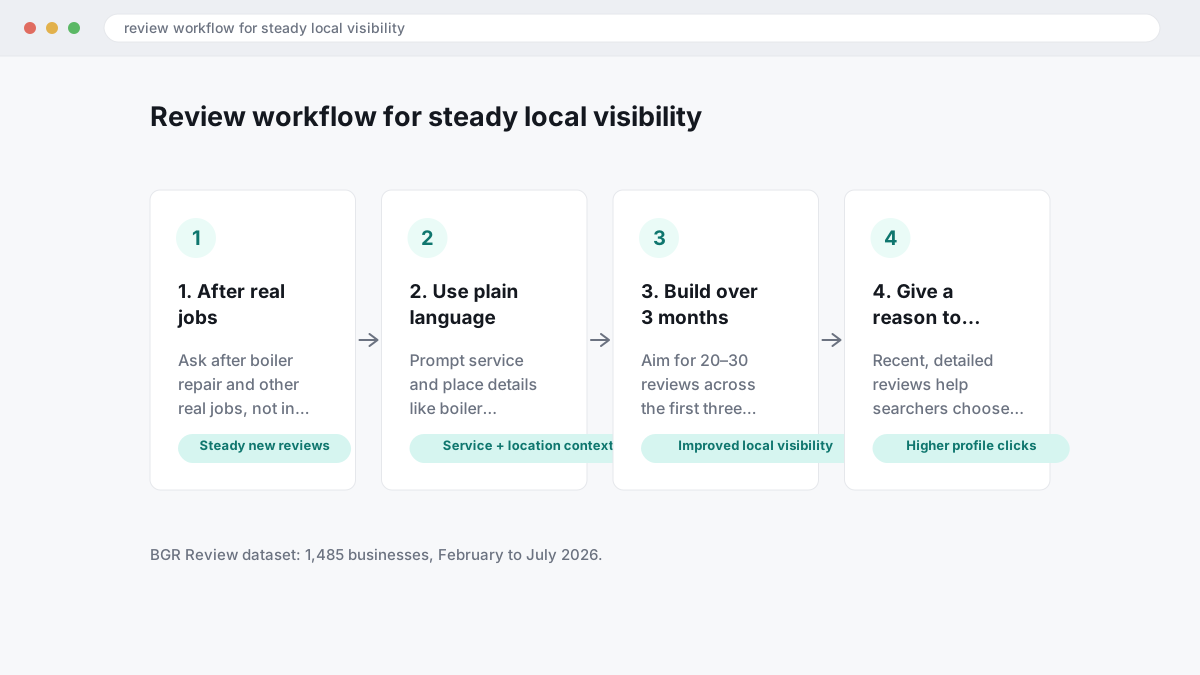
Recent, detailed reviews help in two ways. Google can read service terms and location context over time, and human searchers respond to specifics such as “boiler repair in Camden” more than a blank 5-star line. In BGR Review’s own dataset of 1,485 businesses observed from February to July 2026, new trades and local service firms that reached 20–30 reviews over the first three months were associated with improved local visibility, though other ranking factors were active at the same time. Treat reviews as a reinforcement signal, not a switch.
Ask after a completed transaction, visit or booked service. Google’s fake engagement policy and the FTC’s 2024 rule on fake reviews both cut against review gating, selective asks and undisclosed incentives, so do not send happy customers to Google and unhappy ones to a private form first. If you use a managed service such as BGR Review’s review packages, the fixed promise is a 30-day free replacement guarantee on delivery terms, not a ranking guarantee.
Reply within 7 days where you can, especially when the review names the job, staff member or outcome. A useful reply adds service keywords naturally, shows recency, and lifts click-through from branded and non-branded local searches. Keep it specific. “Thanks for trusting us with your emergency lock change in Soho” does more for visibility than “Thanks for your feedback.”
Citations and mentions still matter when core data is inconsistent
Citations help the Google local pack when they confirm your core business data across trusted platforms, and they do very little when that data conflicts. Google can handle minor formatting differences, but a wrong suite number, tracking phone number, or old trading name creates trust-conflicting signals between your Google Business Profile, website, and external listings. In BGR Review's Local Pack audits, this check sits before any review campaign with our 30-day free replacement guarantee, because adding fresh reviews on top of broken business data rarely fixes map visibility.
Four platforms deserve attention before you submit your business to dozens of weak directories: Apple Maps, Bing Places, Yelp, and Facebook. Those sources get reused by cars, voice assistants, local apps, and aggregators, so one duplicate or stale address can spread further than 100 low-value citations. Fix the major records first, make the name, address, and phone match your website exactly, then remove duplicates where the platform allows it. If your profile ranks in Google Maps but misses the 3-pack, citations are usually a support task, not the main blocker.
| Fix first | Why it matters |
|---|---|
| Apple Maps | Feeds iPhone, Siri and many local discovery paths |
| Bing Places | Supports Microsoft search and data reuse |
| Yelp | Strong brand trust and duplicate issues can persist |
| Old page variants often keep outdated contact data |
Duplicate listings and spam competitors can block Local Pack visibility
Duplicate and spam Google Business Profiles can keep you out of the Local Pack by splitting ranking signals, confusing entity matching, and letting policy-breaking competitors hold positions that should be contested.
A duplicate listing often looks harmless because both profiles represent the same business, but Google can split reviews, photos and engagement across two CIDs, then filter one or both from tighter local queries. The result is a profile that still appears in Maps on a name search yet struggles to surface in the 3-pack. If you also changed address, phone or practitioner setup recently, check for an old live profile before you change categories or chase more reviews.
Keyword-stuffed business names still rank more often than they should. Google’s Business Profile rules require your real-world business name, yet “service + city” naming abuses can sit live until someone files a spam edit or uses Google’s Business Redressal Complaint Form. The report goes further when you document the violation properly instead of only clicking Suggest an edit.
- Your storefront signage or legal business name, shown in a dated photo or official record.
- The live profile URL, map pin and current displayed name, so Google can match the exact listing.
- A comparison showing the mismatch, such as Companies House, state records, your website footer, or invoices that use the real trading name.
If the spam listing ranks and yours does not, file the public edit first, wait for the result, then escalate through redressal with the same evidence pack. That sequence is slower than buying more reviews, but it fixes a blocker reviews will not solve.
Distance limits are real, so widen relevance where you actually can
Distance is the part of Local Pack ranking you cannot control, so the practical move is to strengthen relevance in the places you actually serve.
You cannot choose where a searcher is standing, where Google places their query, or whether Google thinks your address is close enough for that search. That is why a profile can rank well in Google Maps when you search from your office and disappear from the 3-pack a few postcodes away. Changing the service-area setting in Google Business Profile does not turn one address into city-wide coverage. It mainly tells users where you work. It does not override distance.
If you want more visibility outside your immediate radius, add proof tied to those areas on your site and in your review mix. Build pages with real job photos, short case examples, and place names you can evidence. Ask for reviews that mention the served town naturally, then support that with local links from chambers, trade bodies, sponsorship pages, or supplier directories in that area.
That workflow is more realistic than chasing map tricks. In BGR Review’s dataset of 1,485 businesses observed from February to July 2026, trades and local service firms that reached 20–30 reviews over the first three months were associated with improved local visibility, but other factors were active at the same time. Reviews help prominence. They do not erase distance.
A practical Local Pack diagnosis workflow
A practical Local Pack diagnosis workflow is a 30-day triage plan that separates fixable profile issues from limits Google will not bend, especially distance.
| Window | What you check | What you change |
|---|---|---|
| Week 1 | GBP verification status, primary category, secondary categories, duplicate profiles, landing page match, review pace | Correct the main category, suppress duplicates, point the profile to the strongest location page, confirm NAP consistency |
| Weeks 2-4 | Conflicting citations, weak location proof, thin service-area signals, stalled review flow | Fix directory conflicts, add missing address or service evidence, strengthen the page, ask for fresh compliant reviews |
| After 30 days | Maps visibility versus 3-pack visibility on target queries | Reassess keyword choice, city modifiers and proximity limits before changing categories again |
If your listing appears in Google Maps but misses the 3-pack, start with Week 1. The usual blockers are a category mismatch, an auto-generated duplicate splitting signals, or a profile landing on a generic homepage instead of the exact city or service page. In BGR Review's dataset of 1,485 businesses observed from February to July 2026, trades and local service firms that built early review momentum usually saw first reviews around two weeks after launch, and reaching 20-30 reviews over the first three months was associated with better local visibility.
Weeks 2 to 4 are for evidence and consistency. Google Business Profile support will usually accept stronger edits when the website, directory listings and profile all say the same thing, down to suite format and service wording; loose data creates re-verification loops and edits that do not stick. Ask for new reviews during this window, but stay inside Google's review policy and the FTC's endorsement rules if you operate in the US. If rankings are still flat after 30 days, stop chasing volume and check the query itself: a business can rank well for branded and nearby searches yet stay absent on broad city terms because the searcher is simply too far away.
What to track after the fixes go live
Track Local Pack improvement with a before-and-after scorecard that measures leads, not rank alone. Pull a baseline, then compare it again after 4 to 8 weeks using Google Business Profile performance data for calls, direction requests and website clicks, plus a zip-level grid tracker that shows where your map position improved and where it did not. One-day checks mislead. If you are also adding fresh reviews, remember the timing mismatch: review delivery can start in 24-48 hours with BGR Review, but pack visibility usually moves slower than the review count.
Check whether better visibility actually converts. A profile that moves from position 6 in Maps to the 3-pack can still perform worse if your calls drop, direction requests fall or website clicks weaken after the changes. That usually points to a listing problem inside the profile itself, such as weaker photos, a poor category match or reviews that increased volume but diluted relevance. Keep weekly snapshots, by ZIP area and by action type, so you can spot real gains instead of celebrating a prettier ranking report.
Where to go from here
Your next move is a Local Pack audit, not another round of random edits. Check the primary category first, then look for duplicate or merged listings, then review quality and recency, then location-page signals on your site. After that, compare where you rank in Google Maps against where you appear, or fail to appear, in the 3-pack. That comparison usually tells you whether the problem is relevance, prominence, duplicate suppression, or simple distance from the searcher.
Expect the audit to separate fixes from limits. If your profile is clean but you only disappear for searches made across town, proximity is probably the constraint and no citation blast will change it. If you rank in Maps but miss the pack near your address, weak review signals, the wrong category, spam nearby, or a duplicate can still be blocking visibility. In our review and removal work, the businesses that move fastest usually fix duplicates and profile accuracy before chasing more reviews.
If you want a second pair of eyes, BGR Review handles this diagnosis in the same order: category choice, duplicate suppression, review profile, and on-page local signals. The useful outcome is clarity. You leave knowing what to fix now, what to monitor, and what Google is unlikely to reward no matter how much you spend.