


Quick answer
Chiropractor reputation management is the work of improving how your clinic appears in Google search, the local pack, reviews and public replies so more searchers trust you enough to call or book. The biggest gains usually come from four fixes: tighten your Google Business Profile, collect recent patient reviews on a steady workflow, use HIPAA-safe responses, and dispute reviews that break Google’s prohibited and restricted content policy for spam, impersonation or conflicts of interest. If a removal case needs external help, BGR Review handles it on a pay-after-success basis at $449 per removed review link with $0 upfront.
This page is written from the operator side, where a bad review is rarely “just flag it and wait”. The outcome usually turns on the evidence pack: timestamped screenshots, booking records, staff rota checks, reviewer-name mismatches, and whether the complaint fits a policy route or a service-recovery route.
BGR Review has logged 12,000+ negative review cases from June 2025 to June 2026, and the pattern is clear: most failed DIY removals were filed through the basic report button with no supporting documentation. We sell review generation and negative review removal, so the commercial interest is obvious, but the cheaper route is often in-house if your clinic only needs request timing, response control and tighter multi-location review governance.
Why does chiropractor reputation management break when clinics treat it like branding?
For chiropractors, reputation management starts with operations, not brand messaging. The fastest gains usually come from fixing review request timing, HIPAA-safe replies, fake-review escalation, and the booking gap on your Google Business Profile that blocks calls and appointment requests.
Brand-first plans usually send you into logo tweaks, tone-of-voice documents and broad “awareness” work. That fails because patient reviews are created at checkout, at the front desk and in the follow-up text, while local SEO moves when your profile earns fresh, believable feedback and gives searchers fewer reasons to hesitate. A clinic with weak request timing, no staff handoff and no evidence saved for disputed reviews can look polished and still lose map-pack click-through, calls and form fills.
The better approach is a review workflow tied to bookings: ask after the visit, route complaints offline before they harden into public posts, and keep timestamped proof ready if a review breaches Google review policy. That is the difference between branding activity and operational reputation work. It is also why BGR Review handles removals on a pay-after-success model at $0 upfront and $449 per removed review link: the evidence pack decides the outcome more often than the wording does.
What should a chiropractor fix first to lift bookings fastest?
Start with the smallest gap that changes booking behaviour fast: weak review recency, unanswered negatives, thin patient reviews, or poor category alignment on your Google Business Profile. For most clinics, fresher reviews and clearer review themes lift calls and bookings faster than rewriting bios, changing logos, or swapping profile photos.
The wrong move is treating reputation like branding work. A cleaner headshot and sharper clinic description rarely change map-pack click-through if the nearby competitor has a 4.7 rating with reviews from last week and your 4.8 profile has gone quiet for two months; in local SEO, freshness and visible trust signals often beat cosmetic edits. Check four levers first: star average, review recency, what patients keep mentioning in review text, and response coverage on recent negatives.
Open your Google Business Profile beside the top 3 map-pack rivals for your main treatment query and compare like for like. Count how many new patient reviews each profile earned in the last 30-60 days, whether reviewers mention pain relief, staff manner, wait times, insurance or rebooking, and whether the owner replied to the latest complaints. That tells you where bookings are leaking before you touch software, staffing or agency spend.
If your gap is recency or thin review text, fix the request workflow first.
How should a clinic triage a negative review before anyone replies or reports it?
A clinic should classify every bad review into one of three buckets before anyone touches the keyboard: a real service complaint, a likely fake review, or an identity and privacy risk that could expose patient information if answered carelessly.
Most guides push clinics to reply instantly to every complaint. That fails because negative review triage gets skipped, staff answer from memory, and a public reply can accidentally confirm someone was treated at the practice. Put a 24-hour internal review window in place first: pause the response, check the EHR or booking log, verify the visit date, and ask one manager to decide whether the post is a care issue, a false patient review, or a privacy-sensitive conflict.
If the name, phone, email, appointment time, or payment record does not match anything in your system, move it to fake review removal review before posting a reply. Do the same for duplicate posts across profiles, ex-employee or competitor conflict cases, and reviews that copy wording from another listing. In BGR Review’s case file of 12,000+ negative review cases logged June 2025 to June 2026, roughly 90% of businesses that came to us after a failed attempt had used only the basic in-platform report button with no supporting documentation, and 70–80% of those initial requests had been rejected.
The better workflow is simple. Gather timestamped screenshots, profile URLs, booking-record checks, and any duplicate-review links first, then choose the platform route: Google Business Profile policy report, Yelp conflict documentation, or Trustpilot’s verification challenge where it fits. If the review turns out to be genuine, you can reply after the 24-hour hold with a calm, privacy-safe service recovery response instead of creating a bigger problem in the map pack.
How do HIPAA-safe responses protect trust without sounding evasive?
HIPAA-safe responses protect trust by showing you take a complaint seriously without confirming whether the reviewer is a patient, what they were treated for, or when they visited, which is where chiropractic clinics create public privacy problems.
The wrong reply sounds helpful but fails fast: “We adjusted your L4-L5 on Tuesday and advised three follow-up visits.” That confirms treatment, appointment timing and a health issue in public. On Google Business Profile, those details sit beside patient reviews where prospects judge your clinic before they call, and one over-detailed reply can do more damage to trust and map-pack click-through than the original complaint.
The safer structure has two parts. First, acknowledge the concern in plain English: “We’re sorry to read this and we take feedback seriously.” Second, move specifics offline: “Please contact our clinic manager at [phone/email] so we can review this directly.” That wording avoids sounding robotic if your response templates allow only light personalisation such as the clinic name and sign-off, never clinical detail.
Staff discipline matters more than clever writing. Give front-desk and practice managers one approved template set, ban ad-lib replies, and run monthly spot checks on live responses.
How can a chiropractor build a review request workflow that staff will actually follow?
A chiropractor review workflow works when the ask happens once in person, then once more by SMS or email within 24 hours, with the front desk owning the trigger. Consistency beats bursts, and timing beats clever wording every time.
The weak version is the occasional verbal ask from a clinician who remembers at the end of a busy adjustment. It fails because the request lands before the patient feels relief, before the care plan makes sense, or after they have already left and forgotten your clinic name, which hurts review recency and leaves your Google Business Profile looking stale in the map pack. Front-desk staff should trigger the review generation workflow at checkout or after a confirmed follow-up, because they already control the handoff, the contact details and the next-step script.
Use the request timing that matches the visit outcome, then keep the channel count simple.
| Visit moment | Who asks | Follow-up within 24 hours |
|---|---|---|
| Patient reports clear relief | Front desk at checkout | SMS with direct Google review link |
| Care plan explained and accepted | Front desk before payment receipt | Email with review link and clinic name |
| Successful follow-up visit | Front desk after rebooking | SMS or email, whichever the patient used last |
That system works because it ties patient reviews to a real outcome the patient can describe in plain language, and it removes the memory burden from clinicians. Keep the copy short, never offer incentives, and make sure any paid review support follows the FTC endorsement guides and platform rules. If you need outside help building the request flow, BGR Review sells review packages with delivery starting in 24-48 hours and a 30-day free replacement guarantee, but many clinics can set up this part in-house if the front desk actually owns it.
When should you report a review instead of answering it publicly?
Report a review when the post likely breaks platform rules such as spam, impersonation, a conflict of interest, or no real patient relationship. Answer publicly when the review appears genuine and your evidence for removal under Google review policy is weak.
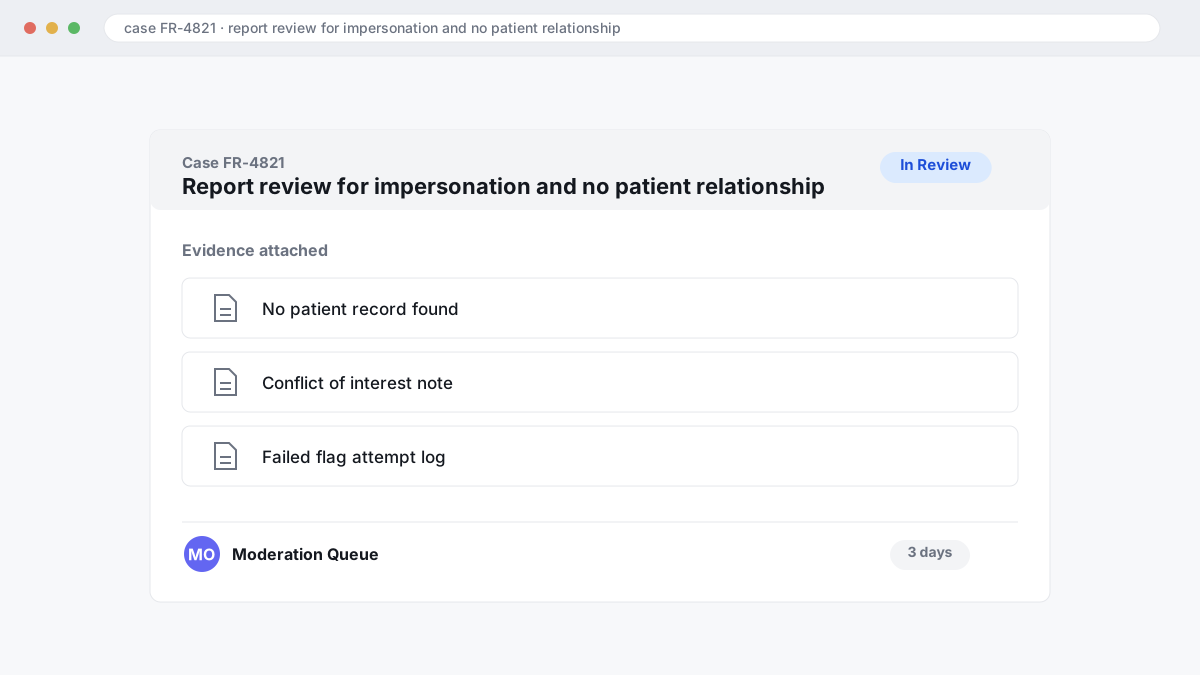
The wrong approach is flagging a review because it feels unfair, harsh, or incomplete. Google Business Profile does not remove ordinary dissatisfaction for being one-sided, and repeated weak flags usually burn time without improving the odds of fake review removal. In BGR Review's case file of 12,000+ negative review cases logged June 2025 to June 2026, roughly 90% of businesses that came to us after a failed attempt had used only the basic in-platform report button with no supporting documentation, and 70-80% of those initial requests had been rejected.
The right approach is filing once with a tight evidence pack that matches the policy issue. For a chiropractor, that usually means a CRM or practice-management check showing no patient record under the reviewer name, appointment timestamps for the day claimed, staff notes from reception or the treating clinician, and screenshots of the reviewer's profile and the live Google Business Profile review page. If the post names a staff member who was not working that shift, include the rota or calendar export. If it copies wording from another listing, include side-by-side screenshots.
Track the submission for 2 to 6 weeks before deciding the route failed. Google sometimes leaves the review live while the case is being assessed, and a first rejection does not prove the review is legitimate.
Agency or software: which reputation model fits a chiropractic clinic best?
Use software when your clinic can run daily review requests, replies, and reporting in-house. Use an agency when staff time is thin, removal disputes keep appearing, or several locations need approvals, governance, and cross-platform coordination.
The wrong buy for many chiropractors is a low-cost tool with a nice dashboard and no owner inside the clinic. It sends review invites, stores response templates, and shows star averages, but the review generation workflow stalls when the front desk misses the trigger after a visit, and negative review triage gets reduced to “reply or flag” with no evidence pack behind it. Across BGR Review’s negative review cases with prior self-filed attempts, logged June 2025 to June 2026, roughly 90% had used only the basic in-platform report button, and 70-80% of those initial requests were rejected; a rejection did not prove the review was legitimate.
Single-location clinics often start fine with automation under $300 monthly if one staff member owns the send timing, another approves HIPAA-safe replies, and your templates are short enough to edit rather than paste blindly. That works when Google is the main battleground and your issue is consistency, not policy handling. It breaks once Yelp, Trustpilot, or repeated fake-review removal enters the picture, because the software does not gather timestamps, screenshots, booking records, or escalation notes for you.
This comparison is easier to judge side by side.
| Model | Best fit | Where it fails or works |
|---|---|---|
| Software only | One clinic, one manager, steady patient flow | Cheaper monthly. Good for request automation and basic response templates. Weak when staff skip follow-up, approvals are messy, or a review needs platform-specific escalation. |
| Managed agency support | Multi-provider groups or clinics with regular disputes | Costs more, but adds staffing, reporting, and policy handling. |
The right model depends on who will do the work on Tuesday afternoon, not which demo looked cleaner. Multi-provider clinics usually need approval chains, location-level reporting, and someone who can move from drafting replies to filing evidence-backed disputes without dropping the ball; that is where managed execution earns its keep.
What changes when your chiropractic brand has multiple locations?
A chiropractic group with more than one clinic needs location-level control, because each branch has its own Google Business Profile, its own local SEO signals, and its own service issues even when the brand name, logo and scripts are shared.
The wrong approach is one shared reputation process run from head office with one person answering everything. It fails because a review about parking, wait time or a named chiropractor belongs to one clinic, while the public reply can affect map-pack click-through and bookings for that address only. Give each location owner access to its own Google Business Profile, set reply rules centrally, and keep one approved voice guide so responses sound consistent without pretending every clinic is the same.
Multi-location governance works when central marketing tracks three things by branch every week: average rating, review recency, and unresolved negatives. Add owner access status and the local manager responsible for service recovery. If one location slows down on fresh patient reviews, its local SEO usually softens before the brand as a whole does, and branded search demand will not fix that gap.
Route service recovery locally and oversight centrally.
Can buying chiropractor reviews create legal or platform risk?
Yes — paying for glowing chiropractor reviews without clear disclosure creates platform and legal risk, because the FTC endorsement guides treat undisclosed paid endorsements as deceptive, and Google review policy bars fake engagement, impersonation, and reviews posted under conflicts of interest.
The wrong approach is to buy praise as marketing: scripted patient reviews, staff-written testimonials, or incentivised posts that never say compensation changed hands. That fails twice. Google can remove reviews or suspend review functionality on a Google Business Profile if the activity looks deceptive, and a review that states false facts about treatment, billing, or clinical outcomes can also raise defamation issues depending on your country and the wording used. Rules differ by platform and jurisdiction — the US FTC takes one route, UK and EU consumer-protection rules take another — so treat this as general information, not legal advice.
The safer approach is to request genuine feedback from real patients after care, keep the ask neutral, and disclose any incentive where the platform and local law allow it. That works because authentic patient reviews survive policy checks better, support local SEO and map-pack click-through more reliably, and do not leave you rebuilding trust after a purge. If you need help, keep the line clear: BGR Review sells review and removal services, but the policy-safe route is always real feedback, proper disclosure, and platform-specific handling.
Where should Google, Yelp, and Trustpilot each sit in a chiropractor reputation stack?
Google should sit at the centre of a chiropractor’s reputation stack because it drives local discovery through the Google Business Profile and map-pack clicks, while Yelp and Trustpilot do different jobs later in the decision: Yelp for local trust checks, Trustpilot for branded searches.
Treating every review site equally is the wrong approach. It spreads staff effort across three platforms as if they influence bookings in the same way, and that weakens local SEO where chiropractors usually win or lose first-page visibility. Google reviews affect how your profile looks in the local pack most directly; Yelp often appears when a patient searches your clinic name plus “reviews”; Trustpilot works better as broader brand proof when someone is comparing your clinic across tabs.
Use this split when you assign workflow and budget, including any external provider. BGR Review sells platform-specific review packages with a 30-day free replacement guarantee, which matters because Google, Yelp and Trustpilot do not reward the same request method.
| Platform | Main job | Rule difference that changes your workflow |
|---|---|---|
| Google Business Profile | Local discovery, map-pack click-through, calls and booking intent | Build steady review recency and reply fast within policy; this is the profile tied most closely to local SEO |
| Yelp | Local trust check on branded and category searches | Yelp is more sensitive to active solicitation in many local categories and its recommendation software can hide reviews it does not trust |
| Trustpilot | Broader brand proof beyond maps | Works best with structured invitations and verification, but it usually influences branded trust more than map-pack visibility |
The right setup gives each platform one job. Push Google hardest for fresh patient reviews and conversion-focused visibility, keep Yelp compliant and low-pressure, and use Trustpilot where your clinic needs extra reassurance after the click. That stack works because it matches how patients actually search, compare and book.
What should the team do after a review is removed?
After a review comes down, record the result the same day, confirm that the star rating and visible snippets have refreshed on the profile, and restart legitimate review collection. Your next job is to stop the same issue happening again while replacing lost social proof with fresh, policy-safe patient feedback.
The wrong move is to treat fake review removal as the finish line. That fails because the profile can sit with a recency gap, fewer recent patient reviews, and stale screenshots or notes when the same reviewer account pattern appears again. Update your tracking log, save before-and-after screenshots, note the platform action in the profile record, and check whether Google Business Profile cached text still shows in branded search.
The right move is to rebuild trust signals over the next 14 to 30 days through your existing review generation workflow. Ask real patients at the point your front desk already gets verbal thanks, watch review recency rather than chasing volume, and tighten request timing, staff scripts, or escalation rules if the same complaint type or suspicious review pattern repeats.
Where to go from here
Your next step is a clinic-by-clinic audit, not another generic ORM checklist. Check your Google Business Profile first: name, primary category, address, phone, booking link, treatment pages, and whether your latest patient reviews are recent enough to support map-pack click-through and actual bookings. Then split every low-star review into two buckets: genuine care complaints that need a HIPAA-safe response and service fix, and reviews that may breach platform rules because they are fake, abusive, duplicated, or posted by someone with no real patient relationship.
If a review looks removable, gather the evidence before you flag it: timestamps, call logs, appointment records, screenshots, profile history, and the exact policy route for Google, Yelp, or Trustpilot. That order matters. Across 12,000+ negative review cases logged by BGR Review from June 2025 to June 2026, reviews raised within 28 days and backed by a clear policy issue resolved successfully in roughly 90% of cases; comparable cases raised later fell to approximately 25–30%.
If fake or abusive reviews are the blocker, move straight to a removal assessment.