


Quick answer
Veterinary reputation management is the work of improving how your clinic appears on Google Business Profile, Yelp, Trustpilot and similar review surfaces so more pet owners click, call and book. The fastest gains usually come from three actions: request reviews consistently after visits, reply to negative feedback fast, and challenge reviews that breach platform rules with evidence. Google Business Profile does not allow review gating, and Yelp discourages direct review solicitation. If a review clearly violates policy, BGR Review handles removal on a pay-after-success basis at $449 per removed link with $0 upfront.
This page is written for people comparing DIY, software and managed help, and it stays close to the real workflow we use: decide whether a review needs a public reply, a private service recovery, or a policy-based removal attempt. The evidence pack is where most clinics fail. A bare in-platform flag rarely does much on its own; false-fact and impersonation cases usually need dated records, proof the reviewer was never a client, screenshots, and a clean timeline that matches the platform form.
BGR Review sells review growth and negative review removal, so the commercial angle is clear, but the useful part is the operational detail. Across 12,000+ negative review cases logged June 2025 to June 2026, cases raised within 28 days and backed by an identifiable policy issue resolved successfully in roughly 90% of cases in our records, while older comparable cases dropped sharply.
Why do veterinary clinics need a different reputation playbook than other local businesses?
Veterinary reputation management needs a different operating model because pet-care reviews combine healthcare sensitivity, grief, urgent-service expectations and local search competition. Your clinic needs privacy-safe replies on Google Business Profile, request timing that matches real client journey touchpoints, and location-level scripts that still hold up when reception staff leave.
Generic local-business advice tells you to answer every complaint with specifics and ask every happy customer for a review the same way. That fails in a vet setting. A boarding kennel can usually discuss a missed pickup or booking mix-up in public; a clinic dealing with an emergency visit, euthanasia complaint or pricing dispute usually should not confirm treatment details, patient history or even whether someone is a client in a public thread. The right approach is triage first: decide whether the review needs a brief public reply, a private recovery call, or a policy check for removal. That works because your public response protects trust and map-pack click-through rate without turning a sensitive complaint into a longer, more damaging exchange.
Sentiment themes also run hotter in veterinary reviews than in most local categories. Reviews often cluster around wait time, compassion at end of life, surprise costs, and whether the front desk explained next steps clearly. In BGR Review’s dataset of 12,000+ negative review cases logged June 2025 to June 2026, reviews raised within 28 days of posting and supported by an identifiable policy issue resolved successfully in roughly 90% of cases; beyond 28 days, the observed success rate fell to approximately 25–30%. That matters because staff turnover breaks generic review systems fast. If your request timing, owner response path and escalation script live only in one receptionist’s head, review recency slips, reply quality drops, and appointment conversion usually follows.
Which reputation fixes move bookings fastest for a veterinary clinic?
The fastest booking gains for most vet clinics come from fresher Google reviews, faster owner replies, and cleaning up unanswered low-star complaints. Those three fixes usually lift map-pack click-through and booking confidence before any slower local-pack ranking movement shows up.
The wrong approach is chasing lifetime review count first. A clinic can add more reviews over time and still lose bookings if the last visible feedback is old, mixed, or unanswered. Review recency changes what a pet owner sees in the search result right now: a recent five-star post about clear treatment advice and a calm reply to a complaint do more for click confidence than a large total built months ago. If you buy review support, BGR Review starts delivery in 24-48 hours and gives a 30-day free replacement on review packages, which matters because momentum is the point.
The next fix is owner response time. For service complaints, replying within 24-48 hours usually reduces public fallout because the reader sees that the clinic is present, specific and willing to move the issue offline. Leave a one-star review hanging for a week and it starts to define the profile, which can hurt appointment conversion before rankings change at all. A short reply that acknowledges the concern, avoids medical detail, and offers a direct contact route is enough.
Weak star-rating distribution often depresses conversions before visibility drops. A profile with too many recent one- and two-star reviews, even alongside plenty of older five-star feedback, makes cautious owners hesitate at the booking step. Fix the distribution first by recovering unhappy clients, replacing the silence with recent legitimate positives, and answering every low-star post that should stay live. If the review is false, that moves into BGR Review's removal track: $0 upfront, $449 only after a review link is removed.
Where should a vet clinic ask for reviews without breaking platform rules?
Ask for feedback at natural post-visit points, and ask every client the same way. For most vet clinics, the safest review flow is a brief mention at checkout, a neutral SMS 2-6 hours later, and a follow-up email around 24 hours later, while avoiding review gating and handling Yelp differently from Google.
The wrong setup is a selective ask flow: reception staff only text happy pet owners, or your form asks “Were you satisfied?” and sends only positive responses to Google Business Profile. That fails because Google Business Profile allows you to ask for reviews, but its review policy bars discouraging or blocking unhappy clients from leaving one. Review gating also creates a lopsided star-rating distribution that looks less trustworthy to readers comparing clinics in the map pack, which can hurt click-through rate before it hurts ranking.
The right setup uses the same process at each client journey touchpoint. At checkout, staff make a short verbal ask while the visit is still fresh. A neutral SMS a few hours later catches the moment when the owner has got home and the pet has settled. The 24-hour email works well for longer comments and for Trustpilot invitations, where a structured invite flow is normal if you send it consistently rather than selectively. That consistency improves review recency without putting your team in the position of judging who is “safe” to ask.
Yelp needs different handling. Yelp solicitation rules discourage asking for reviews, and aggressive campaigns can trigger a consumer alert on the business page, so do not send “Review us on Yelp” blasts after every appointment. If you use BGR Review to manage review collection, the useful part is the same-process discipline, not a shortcut around platform rules; our review packages carry a 30-day free replacement guarantee, but no service should tell you to gate or cherry-pick reviewers.
How should your Google Business Profile turn review interest into booked appointments?
Google Business Profile is where most veterinary searches turn into action. Reviews do their best work when your clinic categories, visible replies, opening hours and profile details make you look current, credible and easy to contact straight from the local pack.
The wrong approach is chasing review count while leaving the profile itself loose. If your primary category is broad or mismatched, and your service labels do not reflect what people actually book for, Google Business Profile can rank for the wrong searches or attract clicks that never turn into appointment conversion. A clinic showing weak hours, thin photo coverage and no owner replies often loses the call or website click even with a strong star average, because the searcher still cannot judge wait time, bedside manner or whether you handle their pet’s issue.
The better approach is to treat ranking and conversion as one job. Set the main clinic categories accurately, tighten service labels around real treatments, then make recent review text work for you by prompting clients to mention compassion, communication and waiting experience in their own words without scripting them. Those themes shape click decisions inside the local pack before a prospect ever reaches your site.
Profile completeness closes the gap. Fresh photos, correct holiday hours, a monitored call button and reply coverage on new reviews tell a worried pet owner that someone will answer today. In BGR Review’s audit workflow, we check category accuracy, review recency and reply visibility before any growth campaign, because booked appointments usually rise faster from a cleaner profile than from extra review volume alone.
How fast should a veterinary clinic reply, and what should each response try to achieve?
A workable clinic standard is to answer negative reviews within 24 hours and positive reviews within 72 hours. The job of that reply is simple: show empathy, protect privacy, and move the case offline before public perception hardens around one side of the story.
The wrong move is a defensive rebuttal that argues facts in public, names the pet, mentions treatment details, or tries to prove the client wrong line by line. That fails twice. It can expose PHI or other sensitive information, and it signals poor owner response time to every future reader comparing clinics in the map pack. The better move is a privacy-safe service recovery reply: acknowledge the concern, apologise for the experience, avoid medical detail, and offer a direct next step such as a call with the practice manager.
A veterinary review response template helps, but only as a time-saver. Each complaint still needs one clinic-specific detail so it reads like a real intervention, not a copied script: “our lead nurse will review the discharge handover” works; “please contact us” does not. At BGR Review, the strongest reply workflows separate public response from private follow-up, because a good reply protects public perception while the real fix happens off-platform.
Which response templates work for praise, complaints, and mixed veterinary feedback?
The best veterinary review response template sounds human, protects client privacy, and ends with a clear next step. Use one structure for praise, one for complaints, and one for mixed feedback, then personalise a single line so your replies do not read like copied clinic boilerplate.
Copy-paste replies fail because they flatten very different sentiment themes into the same bland message, and that hurts trust more than silence after a while. A structured template works because your owner response time stays consistent and each reply carries one real detail: the pet’s name for praise if the reviewer already used it, a neutral service recovery line for complaints, or one fixable point for mixed feedback. At BGR Review, this is the response framework we pair with review management before any paid review package with a 30-day free replacement guarantee goes live.
Use wording like this:
- Positive: “Thank you, Sarah. We loved seeing Bella today. We work hard to keep visits calm, clear, and kind, so your feedback means a lot.”
- Complaint: “We’re sorry you left frustrated. For privacy reasons we won’t discuss treatment details here, but please email or call the clinic manager so we can review what happened.”
- Mixed: “Thank you for the honest feedback. We’re glad the care felt thorough, and we agree the wait time should have been shorter. We’re reviewing appointment flow this week.”
What should you do first after a false veterinary review goes live?
Start with evidence before you start arguing. Save the review text, the reviewer name, the star rating, the profile URL and the date the post appeared, then check your records before you flag anything. False factual claims need a tighter evidence pack than an ordinary hostile opinion, because negative review removal turns on the policy ground you can prove, not on how unfair the review feels.
The wrong move is to jump into a public fight, deny everything, and then try a platform report with no file behind it. That fails twice: the reply can lock you into facts you cannot verify yet, and the flag often goes nowhere because you have not shown whether the reviewer matches any client, patient, invoice, payment record, appointment slot or call-log entry. In BGR Review’s log of 12,000+ negative review cases recorded June 2025 to June 2026, roughly 90% of businesses that came to us after a failed self-filed attempt had used only the in-platform report button with no supporting documentation, and 70–80% of those initial requests had been rejected.
The right move is to build the evidence pack first. Match the reviewer against your PMS, front-desk diary, chip registration notes, SMS reminders, voicemail records and card receipts; if nothing matches, note that clearly and preserve screenshots before edits or deletions change the record. Post a measured public reply only when it will not weaken the removal request, such as a neutral line inviting offline contact without disputing details in public.
When is a veterinary review actually removable, and when is it just damaging?
A veterinary review is removable only when it breaks a platform rule or crosses a legal line such as a false factual claim. Harsh opinions, emotional complaints, and low-star ratings often stay live, so your Google Business Profile needs a response plan as well as any negative review removal attempt.
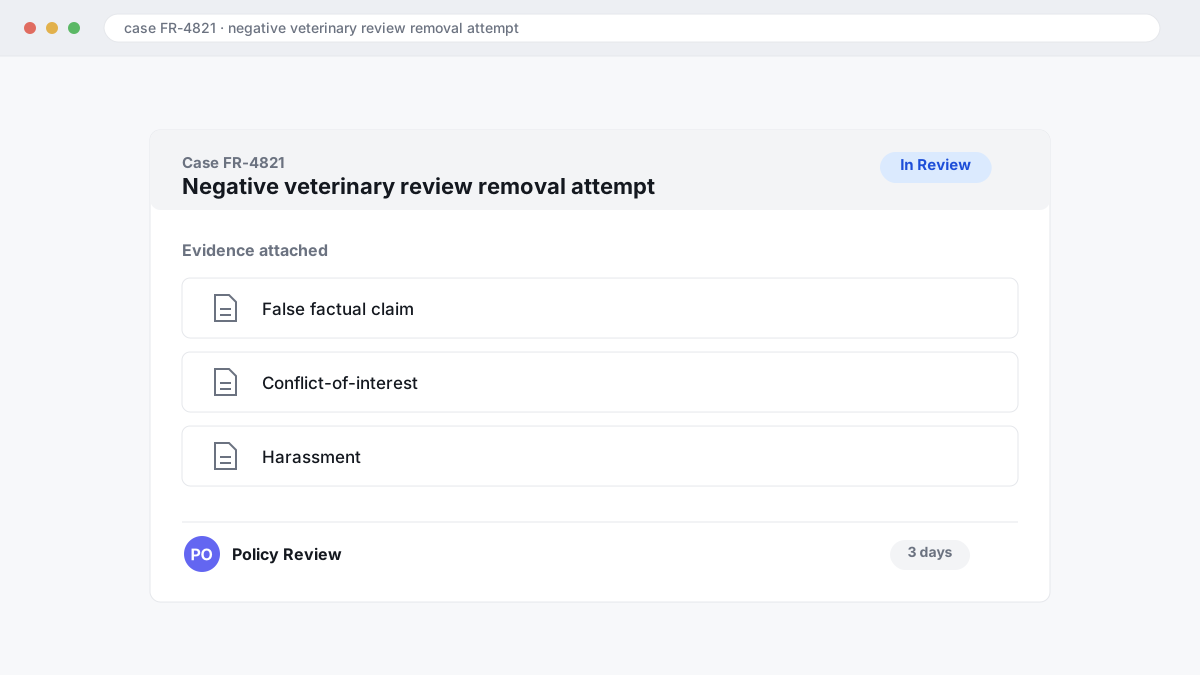
The wrong approach is to treat every bad review as “fake” and hit the report button without evidence. That usually fails, especially on Google Business Profile, because Google looks for a policy breach such as spam, impersonation, harassment, or a conflict-of-interest review from a competitor, ex-staffer, or someone tied to the clinic. In BGR Review’s log of 12,000+ negative review cases from June 2025 to June 2026, roughly 90% of businesses who came to us after a failed attempt had used only the basic in-platform report route with no supporting documentation, and 70–80% of those initial requests had been rejected.
The right approach is to separate false factual claims from protected opinion before you file anything. “This clinic killed my dog during surgery on 14 March” is a factual assertion that can be checked against records, consent forms, and attendance logs; “the vet was cold and rushed” is usually opinion, even if it hurts appointment conversion and map-pack click-through. Rules vary by country and platform, so this is general information, not legal advice: in the US you also need to think about FTC endorsement rules, and in the UK consumer-protection rules can apply to misleading commercial practices. If a review is damaging but not removable, answer it publicly and fix the client recovery privately; if it is removable, build the evidence pack first.
How do Google, Yelp, and Trustpilot differ when vets collect and challenge reviews?
Google, Yelp, and Trustpilot reward different collection behaviour. For most vet clinics, Google Business Profile drives the main local pack click-through and phone demand, Yelp is the strictest on asking, and Trustpilot gives you the cleanest invitation controls, so one review request workflow should never be copied across all three.
The wrong approach is a single SMS or front-desk script pushed to every owner after every visit. It fails because Google allows broad review requests but bars review gating and incentive-linked filtering under its review policy, Yelp solicitation rules actively discourage directly asking for reviews, and Trustpilot invitations work best when they are sent through a documented invite flow that can mark feedback as invited or verified. A "leave us a 5-star review" prompt creates risk on Google, can trigger Yelp suspicion around solicitation patterns, and wastes Trustpilot's audit trail.
This is the practical split that works better for vet groups handling both collection and disputes.
| Platform | How vets should collect | How challenges usually differ |
|---|---|---|
| Google Business Profile | Ask broadly after real client journey touchpoints such as discharge or follow-up. Do not filter by sentiment before sending. | Use policy-based reporting and evidence. False factual claims or impersonation need documents, not a short flag. |
| Yelp | Do not run direct ask campaigns. Let Yelp discover reviews naturally from profile traffic and existing clients. | Challenges face a higher bar because Yelp weighs its own recommendation and trust systems heavily. |
| Trustpilot | Use Trustpilot invitations from your PMS or CRM so the send list is complete and defensible. | Disputes are cleaner when the invitation record shows a real transaction and reviewer trace. |
The right approach is platform-specific governance: Google for volume and review recency, Yelp for passive presence, Trustpilot for controlled post-visit outreach. That works because each profile builds trust differently, and your dispute file is stronger when the collection method already matches the platform's own rules.
Should a veterinary group use software, a managed service, or both?
Software works best when one person owns the process, staff follow the same review workflows, and approvals are already clear. Managed help fits better when false reviews, overdue replies, and escalation decisions are already eating staff time; larger veterinary groups usually need both, with software handling collection and routing while specialists take on removals and edge cases.
The wrong purchase is buying a tool because it gives every clinic access, then assuming access equals execution. That fails when reception teams skip requests after busy shifts, no one signs off sensitive complaint replies, and multi-location governance turns into ten different standards across ten profiles.
Software is the cheaper route when your group already has disciplined staff, a single internal owner, and clear approval rules for public replies. It keeps review request timing consistent, routes low-risk feedback, and gives head office a clean view of response queues and review recency.
Managed service is the better call when your team is already buried in backlog responses or stuck on policy disputes.
A hybrid model usually gives the best control. Use software for collection and queue management, then hand off escalations, policy-led disputes, and response governance to a managed team so clinic staff stay focused on patients.
How do multi-location vet practices keep standards consistent without slowing every reply?
Multi-location governance works when each clinic handles routine reviews and one central team controls escalation rules, reporting, and approved response bands. You do not need identical wording on every profile; you need consistent standards, fast owner response time, and a clean route for legal, HR, and medical-sensitive complaints.
Centralised perfectionism slows everything down. If head office insists on approving every reply, your Saturday clinic waits until Monday, review recency slips, and the profile with the slowest responses usually looks neglected first in the map pack and on its location pages. The better model is governed local execution: assign one owner at each clinic for day-to-day praise and low-risk complaints, then force escalation for any post that mentions misdiagnosis, staff misconduct, billing disputes, controlled medication, or threats of regulatory action.
Track each clinic separately. A five-location group with one strong flagship can hide two weak profiles if you only watch the group average, so review recency, average rating, and owner response time need their own line for every Google Business Profile and every clinic page on your site. Routine posts should sit inside approved bands such as thank-you, resolved-service issue, and invite-offline-follow-up, while anything sensitive goes to a central queue for review removal, legal sign-off, or private recovery.
That split keeps replies fast without losing control. Head office should write the rules once, audit monthly, and let clinics sound human inside the guardrails.
Where to go from here
Start with a 30-minute audit of three things: where your reviews actually land, how long unanswered complaints sit, and which negative posts might qualify for removal under a named platform policy. Pull your Google Business Profile, Yelp and any Trustpilot profile into one sheet, mark review recency, star-rating distribution and owner response time, then separate issues into three buckets: public reply, private recovery and removal attempt. That gives you a real workload number instead of a vague sense that reputation needs attention.
If the gaps are mostly slow replies and missed review request timing, software or a tighter in-house process will usually fix it. If you have staff turnover, more than one location, or false factual claims and impersonation reviews mixed into the queue, managed support is often cheaper than letting the backlog drag down map-pack click-through rate, bookings and branded search over the next few months. The honest limit: some bad reviews stay live because they are opinion, not a policy breach.
Expect the first outcome from any proper audit to be prioritisation, not magic.