

Quick answer
To get cited in Perplexity in 2026, give it sources it can verify across multiple places: a complete Google Business Profile, matching name-address-phone details across listings, recent reviews on trusted third-party platforms, and service or location pages that state exactly what you offer and where. Perplexity shows inline answer citations, so vague homepage copy rarely wins attribution. Fix entity consistency first, then strengthen review recency and authenticity, then align on-site claims with external mentions. If a false or policy-breaching review damages trust signals, BGR Review handles eligible removals at $0 upfront and $449 per removed link.
We work on the inputs that AI search actually cites: Google Business Profile data, review-platform profiles, brand mentions, and the evidence on your own pages. In practice, the first failure point is usually simple: a merged listing keeps an old phone number, the review profile uses a shortened brand name, and the service page names cities the citations do not support.
That mismatch is where generic guides stop and operator work starts. BGR Review has served 15,000+ businesses, maintains a 30-day free replacement guarantee on review packages, and handles negative review removal on a pay-after-success model because the useful question here is not what Perplexity is, but what it can quote about you with confidence.
Why does Perplexity cite some businesses and ignore others?
Perplexity usually cites businesses that line up across trusted web sources, rather than businesses with the glossiest site. The strongest candidates pair an accurate official website with matching directory listings, recent reviews and third-party brand mentions that agree on the basics.
Generic Perplexity guides explain the tool. They miss the source-selection reality. Perplexity answer citations are pulled from knowledge sources it can parse and cross-check, so an official site, a Google Business Profile, major directories and publisher mentions usually beat a thin service page built only to sell. A page with no external corroboration often gets treated as a claim; the same page backed by consistent references is easier for an AI system to attribute.
Entity consistency decides whether those sources reinforce each other or compete. If your address appears in three different forms across your site, your Google Business Profile and a third-party directory, you weaken confidence that all mentions refer to one business entity. The result is familiar in reputation work: Perplexity may cite a directory page, an old location page or a publisher mention, while your main site gets reduced to a plain business mention with no recommendation value.
If you are fixing this, start with the facts that repeat everywhere: name, address, phone, opening hours and service area. BGR Review’s review packages start delivering in 24-48 hours, but fresh reviews alone will not fix AI search attribution if the underlying listings disagree. The right order is simpler: clean the official data first, then strengthen corroboration with authentic recent reviews and external mentions that point back to the same business details.
How do you become a cited source instead of just another business mention?
To earn Perplexity answer citations, your business has to be easy to verify across several trusted pages that repeat the same facts. Perplexity is more likely to cite you when your site, listings, review profiles and third-party mentions all support one canonical business identity.
The wrong approach is chasing indexation, PR mentions and AI-search hacks while your name, address and phone vary between pages. That gets you discovered, but it does not make you citation-worthy. Perplexity pulls from multiple knowledge sources, and weak entity consistency gives it no reason to trust one version of your details over another. In BGR Review’s workflow, this is the first fix before we push review-source strength or build evidence-rich location pages: one business name, one address format, one local phone number, used everywhere.
Your official site then has to carry those facts on crawlable pages, not buried in images, PDFs or a JavaScript widget. Put service details, location details and contact details on indexed pages with internal links, then reinforce them with schema markup that matches the visible page copy. Schema will not rescue bad content, but it helps machines connect your business entity, service area and contact points when the on-page facts already line up.
Get these five corroboration sources aligned before you spend on PR or brand mentions. That order saves time, and it is the same order we use before any wider reputation campaign with BGR Review’s 30-day free replacement review coverage.
- Google Business Profile
- Bing Places
- Apple Business Connect
- Your strongest sector-fit review platform such as Trustpilot, Yelp, Clutch or TripAdvisor
- One authoritative local or trade directory
PR helps later. Citation systems trust repeated, matching facts more than a single flattering article that links to an outdated contact page.
Which business assets move Perplexity visibility first for a local company?
For most local companies, the first assets to clean up are your Google Business Profile, the matching location page on your site, and one or two major review profiles. Schema markup helps Perplexity read those pages, but cross-source consistency and recent reviews usually move visibility before technical polish does.
Google Business Profile usually deserves first attention because it holds the facts Perplexity is most likely to echo for a local query: business name, primary category, address, hours, phone and service area. If your profile says one thing and your location page says another, AI search attribution gets messy fast, and the same inconsistency drags down map pack click-through before it affects rankings. In BGR Review's dataset of 1,485 businesses observed February-July 2026, trades businesses with complete enquiry-source data attributed 70-80% of calls and bookings to a Google Business Profile or Yelp listing rather than a website, which is why listing accuracy usually beats cosmetic site work for near-term conversions.
Most guides push schema markup first. That fails when weak listings and thin trust signals leave Perplexity choosing third-party review platforms instead of your own pages. The better order is simple: fix the profile facts, strengthen one or two review sources that already rank for your brand, then make the location page prove the same details with matching services, photos, staff names and contact data.
Schema markup still matters, especially LocalBusiness and location-specific details on each page, because it reduces ambiguity around addresses and services. It does less than people think when your Google Business Profile, Trustpilot, Yelp, Clutch or TripAdvisor profile shows stale information or no review recency at all. Perplexity can parse perfect markup and still cite the stronger trust source.
How should a multi-location brand build pages that Perplexity can trust?
Perplexity trusts a multi-location brand when each staffed office has its own page with a unique URL, matching Google Business Profile details, and enough local proof on-page to confirm that the address, services and contacts belong to that specific place.
The wrong approach is one national brand page with a city dropdown. It fails because Perplexity answer citations and other knowledge sources need location pages that stand on their own, with entity consistency across the site, the Google Business Profile, and third-party mentions. The right approach is one URL per office, each with its own local services, opening hours, phone number, address, and booking path. BGR Review’s own offices in New York, London and Thornhill are the clean model: three locations, three distinct entities, not one page trying to cover all of them.
Service-area pages help where you travel to the customer, but they should not replace a real office page when staff are actually based there. Add location-specific reviews, original photos, and nearby landmarks such as a station, junction or known building, because that gives Perplexity location-level proof instead of brand-level claims. That structure also lifts map pack click-through and conversions more reliably than sending every city query to the same generic page.
How much do reviews influence whether Perplexity recommends a local business?
Reviews influence recommendations because they give Perplexity current, third-party evidence rather than a star badge on its own. Its answers read as more credible when they can lean on recent sentiment from major review platforms and an up-to-date Google Business Profile.
The wrong approach is chasing a 4.8 average and then leaving the profile untouched for six months. That fails because review recency affects trust: a high score with stale comments can look weaker than a 4.6 with fresh, specific feedback about pricing, staff response, booking speed or job quality, especially in fast-moving service categories like plumbing, removals or urgent dental care. Perplexity can reflect summaries from third-party review platforms such as Google, Yelp, Trustpilot or TripAdvisor, so your own website testimonials carry less weight than many owners expect.
The better approach is steady, authentic review flow on the platforms Perplexity is likely to cite, with the Google Business Profile kept consistent with the same service and location details. In BGR Review's dataset of 1,485 businesses observed February-July 2026, trades businesses that shared complete enquiry-source data attributed 70-80% of calls and bookings to a Google Business Profile or Yelp listing. Fresh third-party proof tends to lift click-through from AI answers and the local pack, and those clicks usually convert better because the reader has already seen corroborated sentiment before they call or book.
Can paid reviews or shady incentives reduce your chances of being recommended?
Yes. Paid, undisclosed, or fabricated reviews can lower your chances of being recommended because they create moderation risk, weaken source trust, and make your profile a poorer citation candidate for AI answers. A short-term rating lift on your Google Business Profile or other third-party review platforms often costs you long-term citation trust once review authenticity looks doubtful.
The wrong approach is paying for endorsements without disclosure, or offering incentives that push people to leave a positive review rather than an honest one. In the US, the FTC’s Endorsement Guides and its 2024 rule on fake reviews and testimonials both target undisclosed paid endorsements and fabricated feedback. Google’s fake engagement policy for Business Profiles prohibits content that misrepresents genuine experience, and Yelp bars compensated or solicited reviews that mislead users. If those signals look manipulated, Perplexity has less reason to rely on the profile, which can drag down click-through from AI answers and weaken map pack trust as well. Rules vary by country and platform, so this is general information, not legal advice.
The safer approach is boring: earn reviews from real customers, disclose any material connection where disclosure is required, and spread proof across sources that can stand up to scrutiny. BGR Review sells verified review packages with a 30-day free replacement guarantee, and that still does not override platform policy. If your review base is clean, recent, and consistent across your Google Business Profile, service pages, and reputable review platforms, you give Perplexity stronger evidence to cite and your conversions hold up better after the click.
How does Perplexity compare with Google AI Overviews for local visibility?
Google AI Overviews and Perplexity both reward trustworthy business data, but they lean on different inputs for local visibility. Google usually deserves your first fix when map-pack clicks, calls and bookings drive revenue, while Perplexity answer citations tend to reward corroboration across your site, review profiles, directories and other knowledge sources.
The wrong approach is treating both systems as the same job and splitting effort evenly from day one. That fails because Google AI Overviews lean harder on Google-owned local data and search behaviour, so a weak Google Business Profile, inconsistent hours or thin review recency will cap visibility where high-intent users actually call; in BGR Review's dataset of 1,485 businesses observed February to July 2026, trades firms with complete enquiry-source data attributed 70-80% of calls and bookings to a Google Business Profile or Yelp listing rather than a website. If Maps demand pays your wages, fix the profile first: primary category, service areas, opening hours, photos, review replies and landing-page alignment.
Perplexity behaves differently. It often shows clearer inline citations from mixed knowledge sources, which means you can win citation-first discovery even before you dominate the local pack, but only if your official page, review platforms and third-party mentions say the same thing in the same language. A brand with strong publisher mentions and evidence-rich service pages can appear well cited in Perplexity while still underperforming on Google calls, and the reverse is common too.
This is the practical split.
| Platform | What usually matters first | Best first investment |
|---|---|---|
| Google AI Overviews | Google Business Profile quality, local pack behaviour, review recency, on-page local relevance | Clean up GBP and the page it links to |
| Perplexity | Perplexity answer citations from mixed web sources, entity consistency, corroborating reviews and mentions | Strengthen source alignment across site, directories and review platforms |
If your revenue comes mainly from maps-first demand, Google comes first. If you already convert branded search well and want more citation-led discovery, Perplexity becomes the next layer rather than the first repair.
Does traffic from Perplexity actually convert for local businesses?
Perplexity visits can convert well when the search sits close to choice, such as “best emergency plumber near me” or “top accountant in Soho”. For many local firms, it belongs after core Google Business Profile work and before broad awareness spend, because the volume is usually smaller but the visitor often arrives pre-qualified by the AI answer.
The wrong way to judge it is by sessions alone. That fails because AI search attribution is messy: a user can read a cited answer, search your brand name later, then call from your Google Business Profile or map pack listing, which makes Perplexity look invisible in analytics even when it started the journey. The right way is to track calls, bookings and form fills tied to brand mentions, assisted conversions and branded search demand, then review a 30 to 90 day window before deciding whether the channel earns budget for a smaller location.
The commercial test is simple. If Perplexity sends fewer visits than generic informational traffic but those visits produce cleaner enquiries, it is doing its job. In BGR Review’s dataset of 1,485 businesses observed February to July 2026, trades firms with complete enquiry-source data attributed 70–80% of calls and bookings to a Google Business Profile or Yelp listing, which is why we tell clients to fix listings and reviews first; Perplexity usually adds value after that baseline is already converting.
What should you do when Perplexity cites the wrong address, hours, or business page?
When Perplexity shows the wrong address, opening hours, or landing page, fix the cited source and every conflicting source before you expect the answer to change. Changing only your homepage rarely works when Google Business Profile, directory entries, old location pages, or other knowledge sources still disagree.
Your first move in a citation correction workflow is to find the exact source Perplexity used. Open the citation, check whether it came from your Google Business Profile, a third-party review platform, a stale directory, a marketplace profile, or an old service page, and save the URL before you edit anything. If you skip that step, you end up rewriting pages that were never the source of the error, which is the same kind of wasted effort we see before businesses come to BGR Review after trying the basic report route alone.
Most guides tell you to update the website first. That fails because Perplexity leans on source consensus, and entity consistency across listings usually beats a single corrected page. The better order is upstream listings first, then your official location or service pages, then schema markup so the business name, address, phone, hours, and page purpose match what the wider web already says.
Start with the highest-trust records: Google Business Profile, major review profiles, key directories, and any page that still carries an old suite number, old opening hours, or a retired city URL. After that, update the matching page on your own site and its LocalBusiness or Organisation schema so the canonical page, contact details, and openingHours data line up. If a bad citation sits on a duplicate page you cannot remove quickly, add a clear internal link to the current page and stop sending mixed signals.
Recrawls take time. In live reputation clean-up work, the change sometimes appears within a few days, but stale citations can linger for weeks if the original source updates slowly or keeps syndicated copies. If the wrong business page is still being cited after the upstream records match, check whether an old page is still indexable, whether the schema points to the wrong URL, and whether brand mentions on external profiles still reference the outdated location.
What does a practical citation correction workflow look like from first error to refresh?
A practical citation correction workflow starts with one dated evidence log, then fixes the source stack in order of authority, and re-tests the exact same prompt after 7, 14 and 30 days to see whether Perplexity answer citations actually refresh.
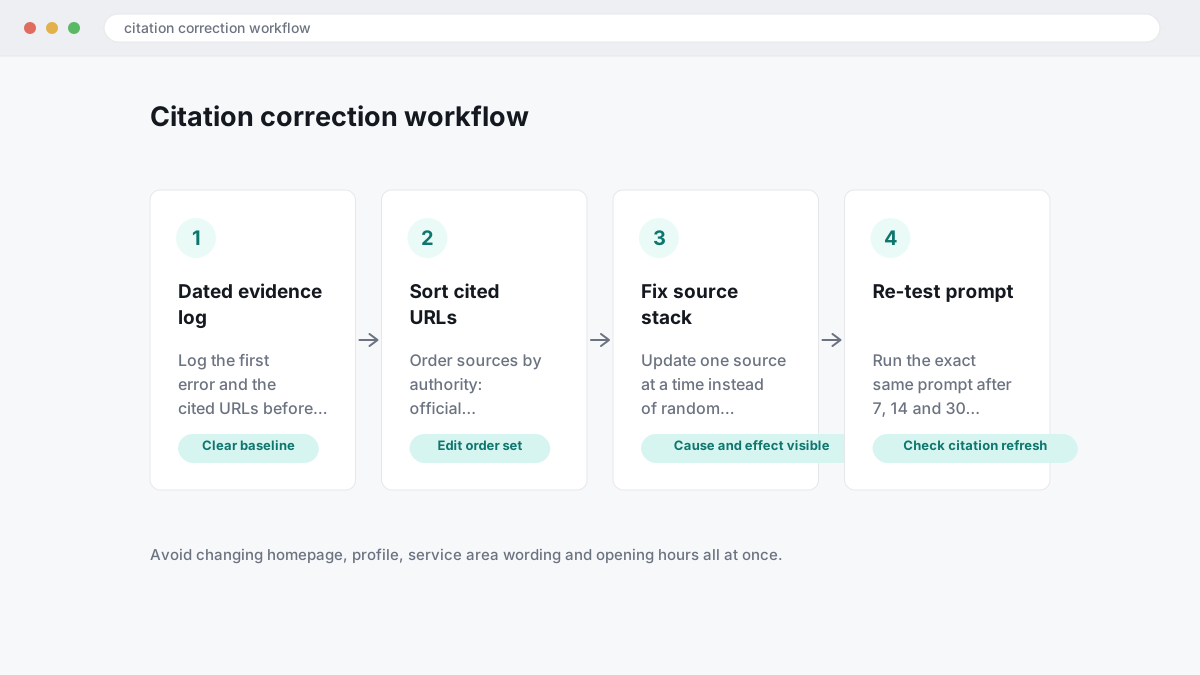
Random edits fail because they blur cause and effect. If you change your homepage, Google Business Profile, Yelp page, service area wording and opening hours on the same day, you cannot tell which knowledge sources Perplexity pulled from, or whether it is still citing a cached publisher page you never touched.
Sort the cited URLs before you edit anything: official sources first, then directory pages, then review platforms, then publishers. That order matters. If the official page and Google Business Profile agree but a directory still shows an old address, fix the directory next; if review pages carry the wrong brand variant, correct the entity consistency there before rewriting your location page again.
Use the same prompt each time. Re-test on day 7, day 14 and day 30, because source refresh is uneven and Perplexity answer citations do not update on a clean daily cycle.
How should you track leads that start with an AI citation or recommendation?
Track AI-search leads with tagged URLs, call tracking that keeps core listings unchanged, and assisted-conversion reporting. Last-click analytics misses visits that begin with a Perplexity citation, then return later through branded search, direct traffic or your Google Business Profile.
The wrong setup is to look only at the final session and conclude AI search attribution does nothing because the conversion landed as “direct” or “organic”. That fails because recommendation journeys split across touchpoints: a reader sees a Perplexity answer citation, visits a PR mention or service page, leaves, searches your brand name two days later, then calls from your map pack or fills a form. Use UTM-tagged landing pages on profile links you control, PR placements, newsletter mentions and campaign URLs, including any links BGR Review builds into review-source or brand-mention work, so you can separate citation-driven visits from ordinary referral traffic.
The right setup checks three reports together: referral patterns, branded-search lift in Search Console, and assisted conversions in GA4. Keep entity consistency intact while you do it. If you add call tracking, use dynamic number insertion on your website and leave the core NAP on your Google Business Profile, Apple Business Connect and major directories unchanged; swapping the main listing number creates citation drift, weakens trust signals, and muddies which calls came from the local pack versus a later branded search.
Which actions belong on a Perplexity citation checklist this quarter?
A sensible quarterly plan is small: correct your core business facts, strengthen one location page, refresh review freshness, and add a few credible mentions. Most local companies do not need a full-site rebuild before Perplexity trusts them more.
The wrong approach is a big-bang overhaul across every page, every directory and every social profile at once. It fails because entity consistency usually breaks in the same few places, then Perplexity keeps citing the source that still looks clearest. The right approach is a quarterly fix order: one page, one Google profile, two review profiles, then a handful of relevant brand mentions that match the same business details.
Use this checklist first:
- Audit NAP consistency across your 10 most visible sources: website, Google Business Profile, Apple Maps, Bing Places, Facebook, LinkedIn and your strongest review or trade listings.
- Refresh one location page so its services, hours, service area and proof points match those external profiles exactly.
- Update your Google profile and two review profiles first, because review recency changes faster than most site edits.
- Win 2 to 3 fresh brand mentions from relevant local news, chambers, trade bodies or niche publishers that cite the same address, phone and service wording.
If you need help on the review side, keep it compliant and evidence-led; BGR Review only works with verified review packages backed by a 30-day free replacement guarantee.
Where to go from here
Start with a three-part audit: check your business name, address, phone, categories and opening hours across Google Business Profile, your main third-party review platforms and your own location pages. Then look at review strength: recency, platform mix, authenticity and whether your best proof sits on sources Perplexity already cites. After that, tighten the page evidence with service-specific copy, clear location signals, schema markup and claims you can verify.
If false reviews are dragging down trust, fix that before you push for more mentions. A weak profile with obvious review disputes tends to lose click-through from the map pack and convert fewer calls or form fills even when it does get cited. The next step is a removal assessment based on the review text, the platform policy involved and the evidence you can supply, because the wrong report route usually gets ignored.
Expect a clearer priority list, a cleaner citation footprint and a better shot at branded search demand rising for the right reasons.