
Quick answer
Verified reviews are reviews a platform can connect to a real purchase, booking or invited customer interaction. There is no universal standard: Google Business Profile may show no public verification badge at all, Trustpilot can mark a review as “verified” through its invitation method, and Yelp relies more on its recommendation filter than on a visible verified purchaser label. The safe route is simple: ask after a genuine transaction, use the platform’s approved invite flow, keep proof of the transaction, and avoid review gating or undisclosed incentives. If you need removal help, BGR Review charges $449 per removed review link with $0 upfront.
This page is written from live review collection and removal work, not from policy pages copied into softer language. We separate what each platform actually checks, what gets filtered, and why a valid complaint often dies after the basic report button because the evidence pack lacks an invoice, booking record, message thread, location match or the exact policy ground the moderator needs.
BGR Review has served 15,000+ businesses and logged 12,000+ negative review cases between June 2025 and June 2026, with outcomes tracked as removed, unresolved or unknown rather than padded into a win rate. That matters if you are buying verified reviews support, because the collection method that lifts map-pack click-through and conversions on Google can be the wrong method for Trustpilot, Yelp or Clutch.
Why does “verified” mean different things on Google, Trustpilot, and retail review platforms?
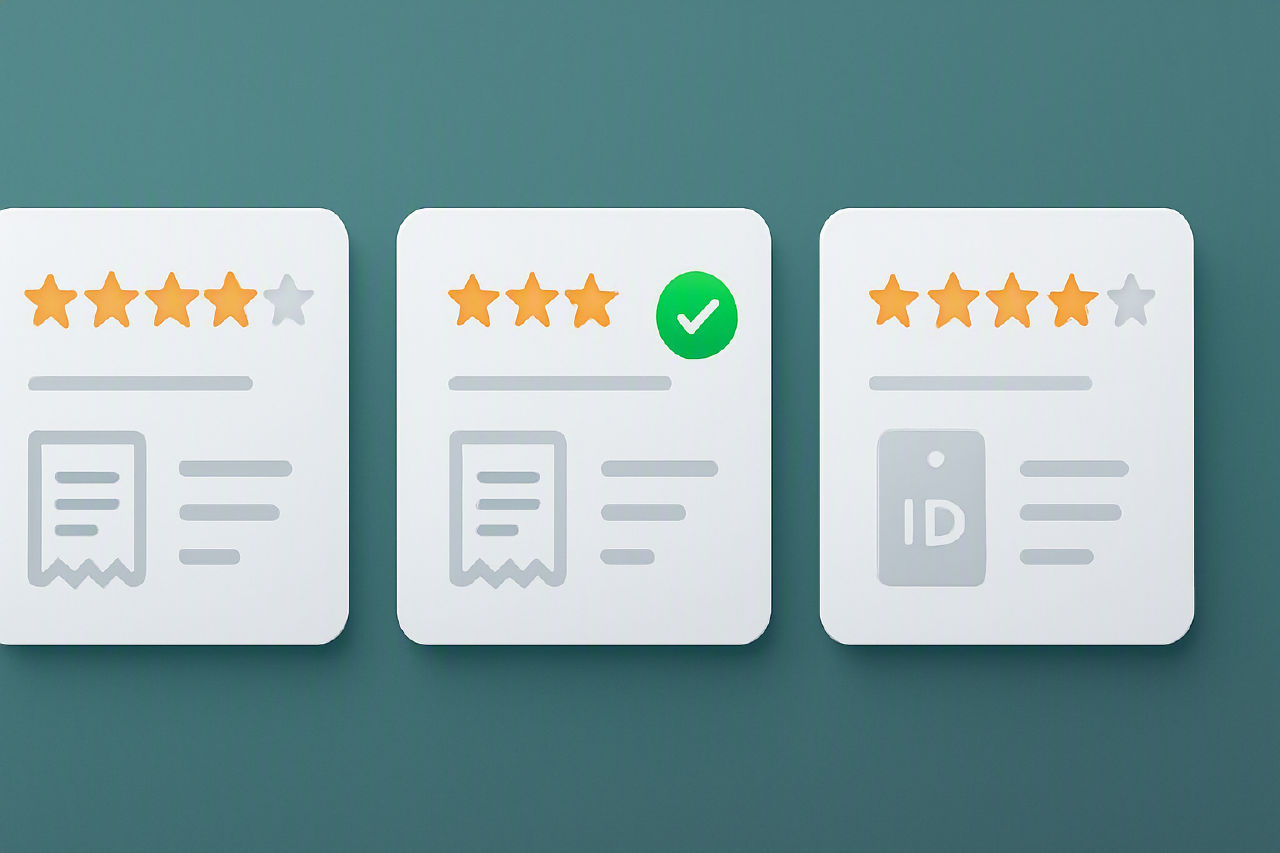
“Verified review” is not one universal label. Google Business Profile, Trustpilot, and retail review systems apply different proof standards, display rules, and dispute routes, so the collection method that works on one platform can create risk or wasted effort on another.
Most guides flatten this into one idea: get a review from a real customer and it becomes a platform verification badge. That fails fast. On Google Business Profile, standard local reviews do not carry a universal verified purchaser label tied to a receipt or order ID, so asking for “purchase proof” does nothing for visibility in the map pack by itself. If you are buying review support from BGR Review, this is why the target platform matters before delivery starts in 24-48 hours.
The comparison is easier to see side by side.
| Platform | What “verified” usually means | Collection implication |
|---|---|---|
| Google Business Profile | No universal verified-purchase badge on standard business reviews | Focus on real customer eligibility, clean account behaviour, and policy-safe requesting |
| Trustpilot | Verification depends heavily on invitation method and review traceability | Use an attributable invite flow, because a random public link gives you weaker proof if a review is challenged |
| Retail review platforms | Often tied to order ID, transaction record, or post-purchase email match | Connect review requests to actual sales data if you want the review marked as coming from a purchaser |
The right approach is to match the workflow to the platform. Trustpilot cares about how the invitation was sent and whether you can trace it back to a service or transaction; retail platforms often want transaction proof first; Google cares more about authenticity signals and policy compliance than a receipt badge. That is why BGR Review treats review collection and negative review removal as separate jobs, and why our 30-day free replacement guarantee on review packages never overrides the platform’s own verification rules.
Which verified reviews should you prioritise first if you want more trust and better conversion?
Verified reviews lift conversion fastest where buyers already size you up: your Google Business Profile, the category site that actually sends you leads, and the pages where a buyer hesitates before calling or booking. Start where your traffic is already high and your review coverage is thin, not where your software makes requests easiest.
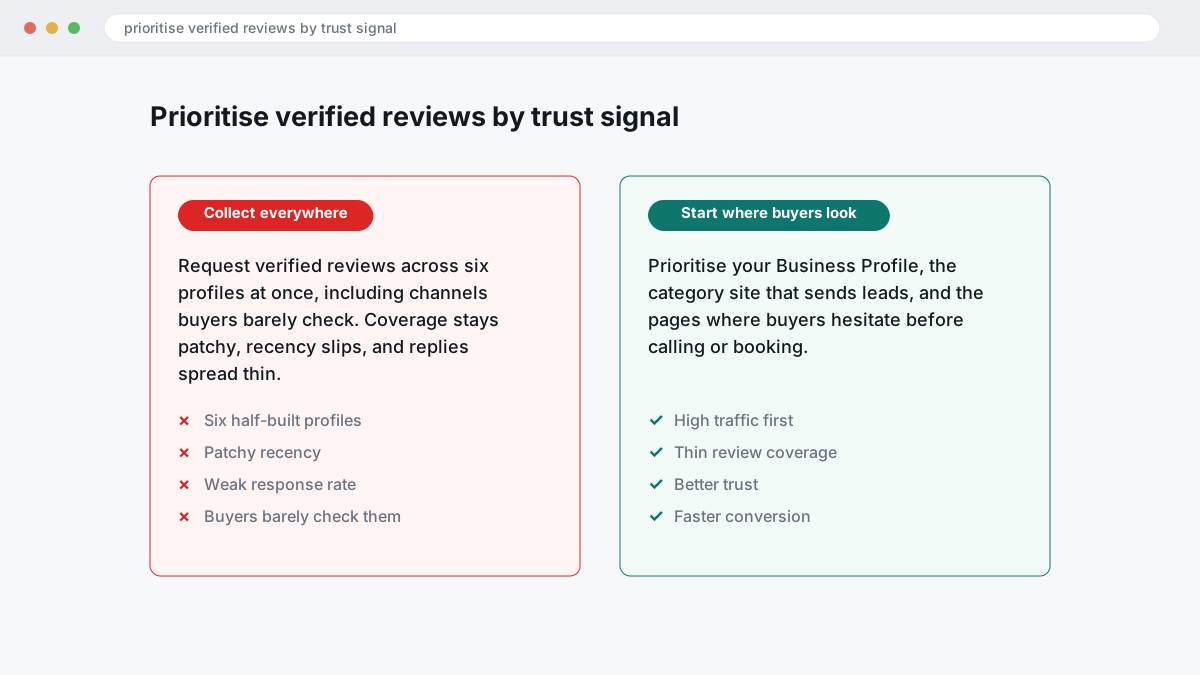
The wrong approach is collecting everywhere at once. You end up with six half-built profiles, patchy recency, and a weak response rate because your team is spreading requests and replies across channels buyers barely check. In BGR Review's dataset of 1,485 businesses observed from February to July 2026, trades firms with complete enquiry-source data attributed 70-80% of calls and bookings to a Google Business Profile or Yelp listing, which tells you where review trust affects conversions first. If your Google profile shows old reviews, unanswered complaints, or big service gaps by branch, fix that before adding Trustpilot, Clutch, or another tool.
Multi-location businesses should rank locations before platforms. A weak branch with stale reviews drags map pack clicks and branded search demand in its own area even if head office looks strong, so putting a new review channel on top usually hides the real problem. The better order is simple: tighten review recency on Google, improve review coverage on the category site buyers use in your niche, then add onsite proof on checkout or service pages where objections stop form fills.
How do you build a verified-review workflow that actually produces reviews consistently?
A workable system starts with real customer events, sends one clear request through the correct platform link, follows up once, and records the source, send time, and result. Consistency beats volume spikes, broad mailing, and random asking at the till or in a sales call.
Occasional manual asking fails because it depends on memory, staff confidence, and whoever had the best day with a customer. The result is uneven review request timing, weak tracking, and a poor response rate because half your asks go out too late and the other half never go out at all. The better invitation method is simple: trigger the request from a finished milestone you can prove later if needed, such as delivery confirmed, job marked complete, or support ticket closed in your CRM or help desk.
Set one primary ask to send as soon as that milestone lands, then one reminder only, and stop after 7 to 14 days. That window keeps the experience fresh enough for the customer to write something specific, and it gives you a clean audit trail if a platform later checks whether the review came from a real transaction. In BGR Review’s dataset of 1,485 businesses observed from February to July 2026, new trades and local service businesses typically saw first reviews around two weeks after launch, which matches what you get when requests are tied to completed work rather than ad-hoc chasing.
Track four fields every time: platform link used, trigger event, send date, and posted outcome. That record is what lets a multi-location business see which branch actually asks on time, which platform link converts to calls or form fills, and whether Google Business Profile or Trustpilot is pulling more branded search demand and map-pack clicks from the same completed jobs. If you want consistency, automate the trigger; if you want excuses, leave it to staff memory.
When should you ask for a review so it feels real and still qualifies for verification?
Ask once the customer can judge what you delivered, while the experience is still clear in their mind. For most services, that means 24 to 72 hours after completion; for physical goods, a post-delivery request usually works better than asking at checkout or straight after payment.
Most guides push the immediate post-sale ask. That fails because the customer has nothing real to review yet, so the message feels automated, thin replies get ignored, and the verification trail can be weaker on retail platforms that tie a review to a fulfilled order or a verified purchaser event. The better review request timing is tied to a usable moment: delivered and opened for e-commerce, installed for home services, first session completed for agencies or clinics.
Trustpilot gives you more control than most platforms here. Its automatic invitations can be triggered from the order date, shipment date, or a service event, and the invitation method you choose changes how natural the request feels. In BGR Review-managed flows, we usually set Trustpilot to shipment for physical products and to marked-complete for services, then hold Google requests for 24 to 72 hours after completion so the review reads like lived experience rather than prompted praise.
Which invitation method gets more verified reviews without creating policy risk?
The safest invitation method is the one you can evidence later: ad-hoc staff requests get some reviews, but automated or platform-native invitations usually produce steadier volume, cleaner timing, and fewer disputes about whether the request was legitimate.
This comparison matters because the collection method changes what you can prove if a review is questioned, filtered, or left unverified.
| Method | What usually fails | What works better |
|---|---|---|
| Manual staff ask | Useful after a successful job or purchase, but staff memory slips, timing varies, and there is rarely an audit trail beyond a text or verbal prompt. | Use it for high-touch accounts where context matters, then log the send in your CRM the same day. |
| Automated email or SMS | Poorly timed blasts look generic and can hit the wrong contact after a refund or complaint. | Trigger invites from a completed order, closed ticket, or paid invoice so the send time is consistent and documented. |
| Platform-native flow | Less flexible branding. | Trustpilot invitation tools and other native flows reduce arguments over invitation method because the platform can see how the request was issued. |
Most guides push staff outreach because it feels personal. The failure point is scale. Once you have multiple locations or rotating front-desk staff, one branch asks everyone, another asks nobody, and your review velocity becomes uneven enough to hurt conversions and map-pack click-through even when your service quality is stable.
If Google Business Profile is your main lead source, keep the process simple: send every eligible customer the same compliant request after the real transaction, not only the happy ones. If you use a provider, ask for invite logs, send timestamps, and replacement terms; BGR Review's review packages include a 30-day free replacement guarantee, but the bigger risk control is documented outreach that matches platform rules.
What should a verified review request email actually say?
A strong review request email points to the completed purchase or service, asks for honest feedback, uses one direct link, and avoids steering the customer toward a positive outcome. That transaction detail makes the request feel legitimate, gives the reader enough context to act, and fits how platforms such as Google, Trustpilot and retail sites look for a real verified purchaser signal rather than a generic marketing blast.
Generic blast emails fail because they read like promotion: “How did we do? Leave us a review on these four sites.” That hurts response rate, sends mixed signals to filters, and gives the customer no clear action. A better request names the product, service date or branch location, then asks for honest feedback through one link only. If you cleaned a carpet on 12 August at your Bristol location, say that. If you sold a laptop sleeve, name the item. Keep the timing tight as well; review request timing works best when the service is still fresh, not months later after the invoice trail has gone cold.
This is the version we use in managed review campaigns at BGR Review when a client wants a clean, policy-safe request:
Subject: Quick feedback on your service from 12 August
Hi [Name], thanks for choosing [Business] for your boiler service at [location] on 12 August. If you have a minute, please leave an honest review here: [one link]. Your feedback helps other customers understand what was delivered. We do not offer rewards for reviews. Thank you, [Name]
Keep it under 120 words. Do not add discounts, gift cards or prize draws unless the platform's rules and local disclosure law clearly allow it; on US campaigns, the FTC endorsement guides require clear disclosure of any incentive, and some platforms prohibit incentivised reviews outright. One action beats four choices every time.
How do managed review services compare with doing it yourself?
Managed help usually improves workflow, automation and reporting; it does not override Google, Trustpilot or Yelp rules. DIY works well when you have one profile, one clear invitation method and someone in-house who will send, track and follow up every week, while multi-location businesses usually need outside coordination, compliance checks and recovery support.
The wrong approach is buying “guaranteed verified reviews” as if a provider can force a platform verification badge. That fails because verification depends on the platform’s own signals, such as a confirmed order on a retail site or an invited review flow on Trustpilot, and any seller claiming certainty deserves extra scrutiny. A serious service can guarantee its own delivery terms, support and replacements; for example, BGR Review’s review packages carry a 30-day free replacement guarantee, but no provider can honestly promise that every review will survive a platform filter or carry a verified purchaser label.
DIY gives you control and the lowest direct cost, but your response rate usually depends on whether someone actually runs the process after the job closes, checks bounced emails and fixes weak request timing. Managed support earns its keep when you need location-level consistency: the same invitation method, the same follow-up window and one reporting view across ten or fifty branches, so weak locations do not drag down map-pack click-through rate, calls and bookings while stronger locations carry the brand.
The right use of a managed service is process support within platform rules. That means building the trigger, monitoring who was invited, spotting filtered or unverified posts early, and stepping in when a review disappears; if removal is the issue, BGR Review uses a pay-after-success model at $449 per removed review link with $0 upfront, which is a cleaner proposition than vague promises that “verified” status can simply be bought.
Can you pay for verified reviews without breaking platform rules or the law?
Buying or disguising verified reviews is high risk. Paying for review software or managed outreach can be legitimate, but paying for fabricated, undisclosed or selectively filtered reviews can breach platform rules, create disclosure problems and expose you to consumer-law risk.
The wrong approach is paying for the review itself and then trying to make it look organic on a Google Business Profile or Yelp page. That fails because platform enforcement focuses on authenticity signals and solicitation behaviour, not just whether a review sounds positive: Google prohibits fake engagement and biased collection, Yelp bars compensated reviews and its Yelp recommendation filter can bury content that looks unnatural even when it stays live. In the United States, the FTC endorsement guides also require clear disclosure when someone receives money, gifts, discounts or another benefit for an endorsement; hiding that compensation is where the legal problem starts. Rules vary by country and platform, including UK and EU consumer-protection rules on misleading commercial practices, so treat this as general information, not legal advice.
The safer route is paying for the tool, the outreach work or the follow-up process, while leaving the opinion and the star rating entirely to the customer. That means no review gating, no “send happy customers to Google and unhappy ones to support” flow, and no selective suppression based on likely sentiment. If you use a managed service such as BGR Review, the compliance line is simple: you can pay for collection infrastructure and support, and our review packages carry a 30-day free replacement guarantee, but you should not pay for fabricated accounts, undisclosed incentives or filtered-only publishing.
If you want a practical test, ask one question before you send any invitation: would you be comfortable showing the platform the exact message, the incentive terms and the recipient list. If the answer is no, stop there. That check prevents the two failures that cause most damage first: lost trust in the map pack and weaker conversions after a shopper reads a profile that looks manipulated.
How do real brands collect more reviews without slipping into review gating?
Real brands increase review volume by sending the same public review request to every eligible customer, because review gating means screening dissatisfied people into a private lane while only happy people get the review link, and platforms such as Trustpilot prohibit that selective solicitation.
The wrong setup looks tidy: a post-service survey asks “How did we do?” and anyone scoring low gets routed to support, while high scorers get pushed to Google or Trustpilot. That fails on two fronts. It distorts review authenticity signals, and it creates compliance risk under platform rules and the FTC endorsement guides, which require honest, non-misleading endorsement practices. If you use a managed service, the rule does not change; at BGR Review, even packages with a 30-day free replacement guarantee still have to use one equal-opportunity flow.
The compliant version is simpler. Trigger the same request after the same event for positive, neutral and negative customers, then handle quality control separately through support follow-up, not by withholding the review invitation. You will collect fewer flattering reviews per send, but the profile holds up better when prospects compare your rating in the map pack, branded search results and conversion path.
Why do genuine reviews get filtered, stay unverified, or disappear after posting?
Genuine reviews get filtered when the platform distrusts the posting pattern rather than the customer. Thin reviewer history, repeated wording, shared devices and sudden bursts can suppress visibility or stop a review getting any platform verification badge even when the transaction behind it was real.
The wrong approach is to assume a real customer guarantees publication. It does not. Google, Trustpilot and retail review systems look for review authenticity signals around the text and the account: account age, prior contribution history, IP and device overlap, whether five reviews landed inside one rushed posting window, and whether the wording looks copied from the same template. That is why a buyer can be genuine but still stay unverified on a retailer, or vanish from view on Google after posting. If you are using a managed campaign, this is exactly why BGR Review starts delivery in 24-48 hours and staggers requests instead of pushing everyone on one day.
Yelp is the clearest example. Its Yelp recommendation filter often hides reviews from low-activity accounts, especially when the reviewer opened the account just to post one review and never returned. The review still exists on the profile, but it sits in the “not currently recommended” area where it does little for click-through rate, conversions or map-pack trust.
The fix is operational, not cosmetic. Ask at the right moment after the service is complete, avoid duplicate wording in your request, do not hand staff one script to paste into every SMS, and spread invites across normal business flow. Real customer plus trusted posting signals is the combination that keeps reviews visible.
What can you do when a legitimate review is filtered, not marked verified, or wrongly removed?
Recovery starts with proof, not persuasion. Match the issue to the platform rule, gather transaction records and invitation logs first, then use the correct appeal path; repeat complaints with no evidence rarely move a filtered, unverified or removed review back into view.
The wrong approach is to keep hitting the report button on Google Business Profile, Trustpilot or a retail platform and arguing that the review is “real”. That usually fails because the platform verification badge is tied to specific authenticity signals, not to how strongly you object. For a missing Google review, you need the booking or appointment record, invoice, date of service, reviewer name variation and the request trail if you invited them after completion. For a missing verified purchaser label on a retail review, the deciding proof is usually the order ID tied to the same email or account that posted the review.
Build the evidence pack before you flag anything: invoice or order confirmation, appointment log, delivery or completion record, screenshot of the invitation method, timestamp, reviewer identifier, and the exact policy section you think applies. In BGR Review’s case file of 12,000+ negative review cases logged June 2025 to June 2026, roughly 90% of businesses who came to us after a failed attempt had used only the basic in-platform report button, and 70–80% of those initial requests had been rejected. That is why policy-matched appeals work better than repeated complaints.
If the issue is negative review removal, disagreement alone usually goes nowhere. A review that simply feels unfair will often stay live; a review that contains false factual claims, impersonation, off-platform extortion or a clear policy breach gives you something a moderator can act on.
How should you roll this out across one location or fifty without losing consistency?
Start with one platform, one invitation trigger, and one owner, then track sends, responses, published reviews, and filtering issues every week for the first 30 days. When one location can follow that workflow without drift, copy the same controls to the rest.
The wrong rollout is buying software for every branch on day one and letting each manager improvise. That fails because your Google Business Profile links get mixed up, scripts change by location, response rate drops for reasons you cannot isolate, and filtered-review incidents look random when they are really process errors. The cleaner approach is one controlled workflow: for example, one post-job SMS trigger tied to one branch profile, one approved script, and one person who checks the weekly numbers and escalates missing reviews or verification issues.
Multi-location businesses need branch-level discipline. Give each location its own review link, its own request script with only the branch details swapped, and one reporting standard across all sites: send count, response rate, published reviews, and filtered-review incidents, reviewed every week. If you later hand this to a managed provider such as BGR Review, that branch-by-branch record also protects your 30-day free replacement claim on review packages and shows where a location has a collection problem versus a platform problem.
Where to go from here
Start with an audit you can finish this week: list every profile that matters to your sales path, who asks for reviews there, how the invite is sent, and what proof of transaction you keep. Google Business Profile usually drives the map pack and branded search lift first; Trustpilot, Yelp, Clutch and TripAdvisor each need a different invitation method and a different expectation around filtering, badges and public visibility. If your request flow is weak, more volume will only create more waste.
Fix the request method before you chase removals. Send asks at the point of completed service or confirmed delivery, keep the wording neutral so you avoid review gating and FTC endorsement problems, and store the invoice, booking record or job sheet where your team can find it fast. That improves response rate, supports review authenticity signals, and gives you a cleaner path when a valid review gets filtered or a false one needs reporting.
If removal is part of the problem, move to the relevant BGR Review service page and compare the process against your own. Expect a clearer platform mix, a cleaner request workflow, and fewer wasted reports that never match policy.