

Quick answer
A defamation lawsuit is worth filing only when you can prove more than a harmful post: you need a false statement of fact, publication to a third party, measurable reputational harm, and evidence that will hold up under scrutiny in your jurisdiction. Online reviews built on opinion usually do not qualify; false factual allegations do. In many US states, filing windows are short, often 1-3 years. Before paying a lawyer, preserve the live URL, screenshots, timestamps, reviewer profile details, transaction records, and any lost-business evidence, then compare litigation against platform removal and a pre-suit demand.
This page comes from the review-dispute side of the work, where the gap between a bad review and a viable claim is usually obvious once you line the post up against customer records and the platform’s own reporting flow. In BGR Review’s case file of 12,000+ negative review cases logged June 2025 to June 2026, the first failure point was often basic evidence: a business had pressed the in-platform report button but had not saved the live URL, captured the reviewer account details, or matched the allegation against invoices, call logs, or booking history.
BGR Review sells review growth and negative review removal, including pay-after-success removals at $449 per removed link with $0 upfront, so the commercial interest is clear. That also gives this guide a practical angle: if Google Business Profile, Trustpilot, Yelp or Clutch will remove a false factual claim faster than court, you should know that before you spend on defamation counsel.
Should you file a defamation lawsuit or solve the review another way first?
A defamation claim is usually worth exploring only when the review says something false, you can prove it, the harm is real, and the post is unlikely to come down through platform or pre-suit channels. If your main goal is fast removal of an online review, a documented platform complaint or a demand letter usually beats court as a first move.
The wrong reflex is to sue the moment a one-star post appears. That fails because court action often runs for months, while Google, Trustpilot or Yelp complaints can move faster when you attach the live URL, screenshots, account details and the missing transaction record that shows the reviewer was never a customer. In BGR Review's log of 12,000+ negative review cases recorded June 2025 to June 2026, reviews raised within 28 days of posting and backed by an identifiable policy issue resolved successfully in roughly 90% of cases; comparable cases raised later fell to approximately 25-30%, which is our observed outcome profile, not a platform rule.
Use a decision tree instead. Start with the most reversible option: removal request, correction request, settlement or a cease and desist letter, then litigation if the post stays live and the damages justify the spend. A false review that stings but does not affect calls, bookings, form fills, branded search demand or map-pack click-through rarely justifies £5,000+ in legal fees just to chase a court-ordered content removal.
This comparison is the practical test before you pay a lawyer.
| Route | Best use | Trade-off |
|---|---|---|
| Platform complaint | Clear policy breach in an online review | Fastest route, but weak evidence gets rejected |
| Demand or settlement | Reviewer can correct or delete voluntarily | Works only if the writer can be reached |
| Lawsuit | Provable falsehood, ongoing harm, meaningful damages | Slowest route; court-ordered content removal comes later, not first |
| BGR Review removal service | Policy-based removal work where speed matters | $0 upfront, $449 per removed review link, but no promise where no policy ground exists |
Which statements can actually support a defamation claim instead of just sounding unfair?
Actionable defamation usually starts with a false, verifiable factual claim that other people can read and treat as true, and that can damage your reputation. Pure opinion, rhetorical hyperbole, and statements that are substantially true are much harder to sue over, even when they hurt trust, map-pack click-through rate, and conversions.
The wrong approach is chasing every nasty review because it sounds unfair. “Worst service ever”, “total joke”, or “I’d never use them again” usually sit on the opinion versus fact side of the line, so a lawyer will struggle to turn them into a viable claim and Google Business Profile is unlikely to remove them for defamation alone. The right approach is isolating the sentence that can be checked against records: “scammer who forged my signature”, “they billed me twice”, or “they never delivered”.
Truth as a defence changes the risk fast. If the reviewer really was charged twice, or you really did miss the booking, harsh wording does not rescue your case; truth is a complete defence in most jurisdictions, even if the phrasing crushes branded search demand and local pack response. At BGR Review, the practical split is simple before any demand goes out: preserve the live URL, screenshot the account name and date, then match each factual accusation to transaction records. If the statement is opinion, reply and move on. If it is factual and false, you have something a solicitor can assess properly.
How do you prove defamation well enough to survive a lawyer’s first review?
To prove defamation well enough for a lawyer to take seriously, you need to tie each disputed sentence to records that contradict it and preserve where, when and to whom it was published. A usable evidence pack includes full-page screenshots, the live review URL, timestamps, profile names, business records, witness statements where available, and a dated timeline showing what happened after publication.
The weak approach is a folder of cropped screenshots and an angry summary. That fails because a lawyer cannot test publication to a third party from a private complaint alone, and a platform can change the page later. Save the whole page immediately: the review in context, the reviewer profile name, the star rating, the business profile it appears on, the visible date, and the URL itself. In BGR Review's negative review cases where a business had already tried on its own, roughly 90% had used only the in-platform report button with little or no supporting documentation, and 70–80% of those initial requests were rejected; that came from cases logged June 2025 to June 2026, and a rejection did not prove the review was legitimate.
The right approach is claim by claim. If the review says "never delivered", pull the invoice, delivery note, CRM notes, call log and receipt. If it says "the technician threatened me", check job notes, route logs, CCTV if you have it, and any same-day messages. Your lawyer is looking for a false statement of fact matched to a record, not a general sense that the review is unfair.
Save proof that other people could see it. That means screenshots showing the review on your public profile, search results or platform listing, not just the email alert that told you it had been posted. At BGR Review, our first intake step on a disputed review is to preserve the live URL, capture the account details while they are still visible, and build a single chronology before anyone sends a demand. That works because evidence gathered early is harder to challenge later, especially if the review is edited, the account disappears, or the platform removes profile details after a flag.
How do you show reputational harm without guessing at lost business?
Reputational harm carries more weight when you tie the statement to measurable business effects after the publication date, such as cancelled appointments, lost leads, or a conversion drop. A lawyer or court will usually treat that evidence more seriously than a general claim that the review damaged your brand.
The weak approach is emotional: screenshots of an angry post, a note that staff morale dropped, and a broad statement that your reputation suffered. That often fails because harm to reputation and damages are separate questions, and defamation per se rules vary by state, so many business claims still need proof of actual loss. Build a date-led file instead: the review URL, posting date, booking cancellations, enquiry logs, refund requests, sales dip, and any call notes where a prospect mentions the review before walking away.
The useful comparison is before and after. Pull Google Business Profile Performance data, branded search clicks in Search Console, form fills in your CRM, call volume, and close rate for the 14 to 30 days before publication and the same period after. In BGR Review’s dataset of 1,485 businesses observed February to July 2026, trades businesses with complete enquiry-source data attributed 70–80% of calls and bookings to a Google Business Profile or Yelp listing, which is why a review-driven conversion drop in the map pack can matter before your website numbers move. Sentiment matters too: if review text turns branded search traffic into lower inquiry volume, that is closer to provable damages than “people think less of us.”
What belongs in a pre-suit demand so it pressures the writer without weakening your case?
A pre-suit demand works best when it reads like a case file, not a rant: identify each exact sentence, explain why it is false as a statement of fact, state the correction requested, and give a short response window of 5 to 10 business days.
The wrong approach is the angry cease and desist letter that accuses the writer of crimes, demands huge damages with no proof, and threatens platform takedowns or court orders you are nowhere near getting. That often fails twice. It gives the reviewer room to recast the post as opinion, and it weakens your position if later emails or settlement talks show you overstated the claim.
The right pre-suit demand is narrow and evidential. Quote the review line by line, match each line against your invoices, booking records, call logs or customer list, then make a specific correction request: remove the post, amend a named sentence, or confirm in writing that no transaction occurred. Keep the remedy realistic.
Can you sue over a Google review when Google itself did not write it?
Yes, you can sue the reviewer over a Google review if it contains an actionable false statement of fact, but suing Google usually fails because Section 230 generally gives the platform immunity for user-posted content. The workable route is to separate the targets: pursue the reviewer for defamation, and use Google’s own review-reporting and legal-removal channels against the content.
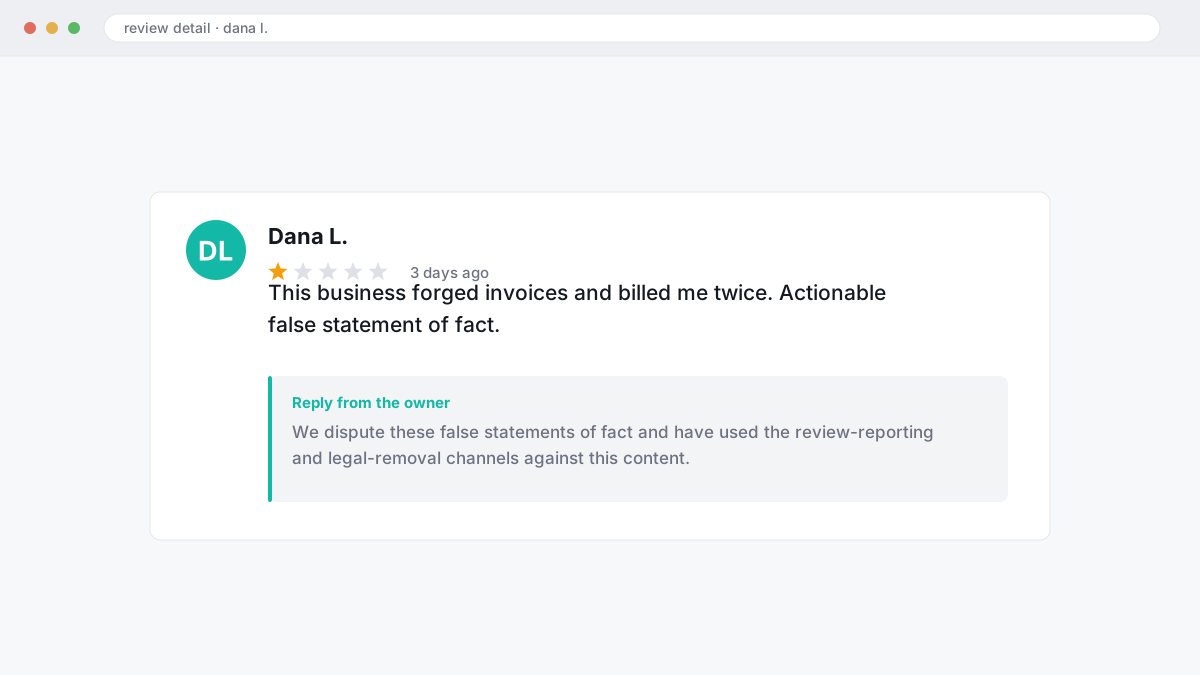
The wrong move is treating Google as the publisher you need to beat in court. That usually runs into Section 230, which in the US shields online services from liability for content another user wrote, so a claim aimed at Google itself often burns time while the review keeps affecting map-pack click-through rate, calls and branded search demand. Google reviews also sit inside a policy system that does not ask whether your pleading sounds strong; it asks whether the post breaches Google Business Profile review rules or whether a valid court order clearly identifies the URL and content.
The better move is to preserve the live review link, reviewer name, date, screenshots and transaction records, then run two tracks. First, report the review through Google’s policy process. Second, if the facts support it, pursue the reviewer and use any judgment or court-ordered content removal request to support legal escalation. Even then, scope matters: an order that says “remove defamatory content” is weaker than one that names the exact review URL, text and account.
What changes when you believe the false review came from a competitor?
A suspected rival attack changes the job from proving a false statement of fact alone to proving a link between the review and a business competitor, because undisclosed endorsements and conflict of interest can give you a faster policy route than a lawsuit.
The wrong approach is accusing the nearest rival because the wording feels hostile or the timing looks convenient. That fails fast. Google Business Profile Help, Yelp’s conflict-of-interest rules and Trustpilot’s guidance all expect evidence, not a theory, and a weak accusation can undermine your later cease and desist letter. Start by preserving the live URL, the reviewer name, screenshots of the profile, and the posting date, then check whether the account appears on a rival’s followers list, staff pages, LinkedIn connections or review history.
The right approach is to build a link file. Look for overlap in names, employee connections, posting times around a lost pitch or tender, repeated language across rival profiles, or a reviewer who praises one firm while attacking yours in the same week. In BGR Review’s case log of 12,000+ negative review cases recorded June 2025 to June 2026, cases raised within 28 days and backed by an identifiable policy issue resolved successfully in roughly 90% of cases; beyond 28 days, comparable cases fell to approximately 25–30%. If the evidence points to a competitor review, lead with the platform’s conflict-of-interest or undisclosed endorsements angle first, then save defamation and unfair-competition claims for counsel if the platform refuses.
How do you identify an anonymous reviewer before you spend money chasing the wrong person?
Identifying an anonymous reviewer usually means filing first and then asking the court for permission to unmask the poster. Judges often want a prima facie showing that your defamation claim is viable before they approve discovery aimed at a speaker’s identity.
The wrong approach is emailing Google, Yelp or another intermediary and asking for the name behind the account. That usually fails because platforms do not hand over identity data on request, and support staff cannot override privacy rules because your business says the review is fake. The route that works is court-supervised discovery: you file against a John Doe defendant, preserve the live URL, capture the profile name, review date and any linked account details, then ask for a subpoena to identify anonymous reviewer through a court order.
That subpoena may seek registration records, login history and IP data from the platform or another intermediary such as an email provider. Timing matters. The statute of limitations for defamation can run a year in some US states, but IP logs and account records may expire much earlier, so waiting can leave you with a live claim and no trail. Laws and platform rules vary by country and service; this is general information, not legal advice.
How does a defamation lawyer compare with a review removal service when speed matters most?
A defamation lawyer is the right route when you need subpoenas, damages, or a court order. A review removal service is the faster route when your immediate goal is to get the content reviewed under platform policy and taken down without waiting for discovery.
Most businesses make the wrong first move here: they hire a defamation lawyer for a review that could have been challenged inside the platform in days, then lose time while the post keeps pulling down map pack click-through rate, branded search trust, and conversions from calls or form fills. That fails because a lawyer’s process is built for proof, identification, and compensation, not for fast moderation. A review removal service works differently. It builds the evidence pack around the live URL, account details, transaction records, policy breach, and escalation path, then pushes the case through the platform workflow.
This matters most when the review is still live and harming local pack performance. Across 12,000+ negative review cases logged by BGR Review from June 2025 to June 2026, reviews raised within 28 days of posting and backed by an identifiable policy issue resolved successfully in roughly 90% of cases; for comparable cases raised after 28 days, the observed success rate fell to approximately 25–30%. That is an operational timing point, not a published Google rule.
The comparison is simplest in table form.
| Route | Best use | Limit |
|---|---|---|
| Defamation lawyer | Identify an anonymous reviewer, pursue damages, seek court-ordered content removal or an injunction | Slower, costlier upfront, and still may not get the platform to act before litigation moves |
| Review removal service | Fast platform reporting, evidence-led escalation, and practical removal attempts while the review is affecting clicks and bookings | Cannot award damages, compel discovery, or force disclosure of identity |
Use court when compensation, identity, or enforceable orders matter. Use removal help when speed matters most.
What should your complaint draft include before a lawyer turns it into a filing?
Build the draft as a fact grid, not a narrative. List every proposed defendant, the court and jurisdiction you believe fits, each publication date, the live URL, the platform page, and the exact words you say are false statements of fact. Quote the review exactly as posted on Google, Trustpilot or Yelp, because a lawyer cannot plead around missing wording, edited screenshots or a dead link.
Attach exhibits in the same order. Include full-page screenshots, the review URL, account details visible on the page, transaction records that disprove the claim, reply history, platform case IDs, and harm documents such as cancelled bookings, lost tender notes, branded-search decline, map-pack click loss, or sales staff logs showing prospects cited the review.
Add the statute of limitations date for your state or country, then state the relief you want: damages, an injunction, court-ordered removal, or both. If you only need the review gone fast, note that too, because a lawyer may tell you platform escalation is cheaper than filing.
What if Google rejects removal and the reviewer ignores your demand?
If Google rejects removal, stop sending the same weak report again and again. Recheck whether the review contains a false statement of fact, whether your evidence ties to the live URL, and whether the wording is actually opinion versus fact; then escalate through a tighter demand, a filing, discovery, and, where justified, a specific order that supports Google legal removals.
The wrong move is repetitive flagging with no new proof. That usually fails for the same reason the first report failed: Google Business Profile review policy review teams do not remove a post because it feels unfair, and a line like “terrible service” reads as opinion, while “they billed me twice on 14 May and never did the work” is a factual claim you can test against invoices, job logs and messages. In BGR Review’s case file of 12,000+ negative review cases logged June 2025 to June 2026, roughly 90% of businesses that came to us after a failed attempt had used only the basic in-platform report button, with no supporting documentation.
If the damage is serious — lost map-pack clicks, falling branded search demand, calls drying up after a prominent one-star post — ask counsel about filing, expedited discovery if the reviewer is anonymous, and injunctive relief where your court allows it. A narrow order works better than a vague demand: identify the exact review URL, the exact statement alleged to be false, and the exact relief sought. That is far more usable for court-ordered content removal than “remove all defamatory content about my company”, and it gives Google’s legal removals process something concrete to act on.
What if the review stays up while the lawsuit moves slowly?
If the post stays live, move into damage control without dropping the legal track. Keep using platform reporting routes, post a measured owner response where that helps, and document the commercial harm as it develops because court action and visibility recovery usually move on separate timelines.
Waiting for the court alone is the wrong approach because a defamation claim can run for months, and the review can keep depressing map-pack click-through, branded search trust and conversions while nothing changes on the profile. The better approach is parallel action: keep reporting anything that fits Google prohibited content, answer the review in plain facts if the platform allows owner responses, and publish fresh reputation content so one disputed post does not dominate the search result. In BGR Review's log of 12,000+ negative review cases from June 2025 to June 2026, roughly 90% of businesses that came to us after a failed DIY attempt had used only the basic in-platform report button, and 70-80% of those initial requests had been rejected.
Your review-dispute file needs more than screenshots. Pair the review text, profile URL and posting date with business records that test the story: booking logs, invoices, call records, chat transcripts, CCTV retention notices, staff rota data, delivery records, refund history and CRM notes showing whether the reviewer can be identified or whether the event described did not happen. That pack helps on both tracks: it gives the platform reviewer something beyond assertion, and it gives your solicitor material to plead falsity, publication and loss with more than a screenshot.
Where to go from here
Proof beats anger. Save the live URL, full-page screenshots, the reviewer name, profile details, dates, and the transaction record that shows the statement is false. Then test the review as a false statement of fact, not an opinion, and move through the options in order: platform removal first, a cease and desist or pre-suit demand next, and litigation only if the damage is ongoing and you need disclosure, damages or a court-ordered takedown.
Your next step is simple: build the evidence pack before the post changes or disappears. A proper pack lets you file a cleaner platform report, gives a lawyer something usable for a demand letter, and shortens the path to a subpoena if an anonymous reviewer has to be identified. In our work at BGR Review, the weak cases usually fail at the first step because the business only clicked the report button and kept no proof.