

Quick answer
Bad reviews are recoverable, but you need the right fix for the right type. A genuine complaint needs a public response, an offline resolution attempt, and fresh verified reviews to improve review recency and your star rating average. A fake, defamatory or policy-violating post needs evidence and a report under the platform's rules, such as Google's Prohibited and Restricted Content policy. If the first report is rejected, repeated flagging usually goes nowhere; an evidence-led appeal is the next step. BGR Review handles removals on a pay-after-success basis: $0 upfront and $449 per removed review link.
This page comes from the workflow we use when a profile takes a hit: classify the review first, pull screenshots, order records, call logs and account details into one evidence pack, then decide whether the realistic route is reply, removal or review rebuilding. The detail that changes outcomes is usually small — the review URL, posting date, policy match and proof the reviewer was never a customer.
That matters because most failed DIY reports are thin. Across 12,000+ negative review cases logged by BGR Review from June 2025 to June 2026, outcomes were tracked as removal success, unresolved or unknown, and a rejected first pass was often just a sign that the report button was used without supporting documentation.
What should you fix first after a bad review hits your profile?
Classify the review problem before you draft a reply. A real service complaint, a policy breach, and a profile with too few recent positives need different fixes, different evidence, and different timing.
The wrong move is treating every bad review as a PR issue. That fails because one angry but genuine customer can often be contained with a fast public response, while a fake or defamatory review usually lives or dies on evidence documentation, and a weak sentiment mix often comes from a credibility gap rather than one post. Start with three checks: your star rating average after the hit, your review recency over the last few weeks, and your response backlog. If your profile already had a long recency gap and no owner responses, one new one-star review usually hurts click-through rate from the map pack more than it hurts rank on day one.
Speed matters most when you suspect a policy issue. In BGR Review's case file of 12,000+ negative review cases logged June 2025 to June 2026, reviews raised within 28 days of posting and backed by an identifiable policy breach resolved successfully in roughly 90% of cases; for comparable cases raised after 28 days, observed success fell to approximately 25-30%. That is our outcome data, not a platform rule. A poor-service review without a policy breach will usually stay live, so your first fix is response quality and review rebuilding, not repeated flagging.
The next step changes by platform, so sort it before you act.
| Platform | First check | Best first move |
|---|---|---|
| Google review policy and whether the reviewer appears tied to a real transaction | Reply if it is a complaint; flag quickly if it is fake, off-topic, or defamatory | |
| Yelp | Whether recommendation software is already filtering part of your sentiment mix | Answer genuine complaints briefly; report content issues, but do not expect easy removals |
| Trustpilot | Whether you can verify the reviewer and order history through its dispute flow | Use the formal flagging reason and supply transaction evidence early |
If you want outside help, keep the split clear: review rebuilding and removals are different jobs. BGR Review sells both, but the cheaper route is often DIY when the issue is one valid complaint and your profile still has fresh review recency, a healthy star average, and no response backlog.
How do bad reviews actually hurt rankings, clicks, and booked revenue?
Bad reviews usually cut clicks and conversions before they move rankings. Rankings can still slip when a lower star rating average sits alongside weak review recency and thin review volume, so your first job is to fix the trust signals people see in the map pack and on your profile.
The wrong approach is to stare at local SEO impact alone and wait for position loss. That fails because booked revenue usually drops earlier: people compare three profiles, see a fresh one-star post, a weaker sentiment mix, and choose the cleaner listing even if your ranking holds. In BGR Review’s dataset of 1,485 businesses observed from February to July 2026, trades firms with complete enquiry-source data attributed 70–80% of calls and bookings to a Google Business Profile or Yelp listing, which means fewer profile clicks can hit form fills, calls and bookings before any obvious visibility decline shows up in reports.
The right approach is conversion-first recovery. A 0.1-star difference can sway click preference when two nearby listings have similar relevance, distance and profile completeness, and fresh negatives can suppress branded clicks because searchers who already know your name still check the review panel before they call. Fix the visible damage first: answer legitimate complaints fast, challenge reviews that breach Google review policy, and rebuild review recency with compliant verified review acquisition that follows the FTC endorsement guides and each platform’s own rules.
When should you reply, remove, or rebuild review volume instead of doing all three?
Use a public response for a real service complaint, push for removal when the content breaches platform rules, and rebuild review volume when too few recent positives let one or two negatives distort the picture. Treating every bad review the same burns time, weakens your star rating average in the reader’s eyes, and can drag down click-through rate from the map pack before your ranking position changes.
Most guides tell you to reply to everything. That fails when the review is fake, defamatory, or clearly blocked by the Google review policy, because a polished reply leaves the damaging text live, indexed, and visible to anyone comparing providers. If the post alleges facts that did not happen, uses hate speech, impersonates a customer, or promotes another business, the first move is removal, not debate. In BGR Review’s log of 12,000+ negative review cases from June 2025 to June 2026, reviews raised within 28 days of posting and backed by an identifiable policy issue resolved successfully in roughly 90% of cases; for comparable cases raised beyond 28 days, the observed success rate fell to approximately 25–30%.
If the complaint looks genuine, reply fast and keep it public. Public review responses work because they change what the next prospect sees: owner response time, tone, and whether you offer a clear next step all affect conversions from profile views into calls, bookings, and form fills. If the deeper problem is thin sentiment mix rather than one harsh review, removal will not fix perception. You need verified review acquisition instead — recent, legitimate requests sent after completed work, with no incentives and no filtering — so fresh positives restore review recency, steady branded search demand, and stop one old negative from defining the profile.
How do you recover from bad reviews in the first 30 days?
A workable 30-day recovery plan starts with documentation, then splits into public response, policy reporting and compliant review rebuilding. Week one contains the damage; days 8-30 repair the signals your profile sends through rating, review recency and owner response time.
The wrong move is a one-off reaction: post an emotional reply, hit the report button once, then wait. That usually fails because the platform sees little evidence documentation, the review stays visible, and your public review responses stop before prospects in the map pack have seen any sign that you are active. In BGR Review's log of 12,000+ negative review cases from June 2025 to June 2026, reviews raised within 28 days and backed by an identifiable policy issue resolved successfully in roughly 90% of cases; for comparable cases raised after 28 days, observed success fell to approximately 25-30%.
Use this sequence instead.
| Window | What to do | Why it works |
|---|---|---|
| Day 1 | Capture screenshots of the review, reviewer profile, order logs, call records, booking timestamps, staff notes and your current profile metrics: star rating average, newest review date, reply status and any drop in calls or form fills. | You preserve proof before edits, deletions or account changes wipe the trail. |
| Days 2-7 | Post a calm public reply within 24-72 hours, file a report under the relevant Google review policy or platform rule, and ask the reviewer for factual clarifications such as date, invoice number or staff member. | Fast owner response time protects click-through rate while the report and clarification request test whether the complaint is real, removable or unresolved service failure. |
| Days 8-30 | Start verified review acquisition from real customers only, with no incentives and clear disclosure that feedback is voluntary under the FTC endorsement guides. Track rating, recency and unanswered reviews each week. | Fresh legitimate reviews rebuild sentiment mix, lift conversions from branded search and reduce the weight of one damaging post without breaking platform rules. |
If the review describes poor service and does not breach policy, skip the removal obsession and fix the operational issue first. If it is fake or defamatory, keep escalating with a full evidence pack; if you want managed help, BGR Review handles removals on a pay-after-success basis at $449 per removed review link with $0 upfront, and review packages carry a 30-day free replacement guarantee.
What kind of response calms the situation without making the review more damaging?
Your best public review response is short, specific and focused on fixing the issue. Acknowledge the concern, give one clear next step, and move the details offline. Defensive public review responses usually stretch the dispute, add fresh keywords around the complaint, and cut trust with future readers.
Speed matters because owner response time affects what can still be checked. Reply within 24-72 hours, while staff notes, call logs, booking records or till data are still easy to verify and before the thread starts shaping click-through from the map pack. The wrong move is a public argument: “That never happened, prove it, you were rude.” It fails because readers treat it as a second bad experience. The better reply names the issue without admitting facts you cannot confirm, offers one route to resolve it, and stops there. On Google, keep it under 100 words so it stays readable on mobile.
“We’re sorry this left you frustrated. We’re checking the details now and want to review this properly. Please email team@bgrreview.com with your visit date, name and best contact number so we can investigate and respond directly.”
If the review may be fake or defamatory, stay neutral in public and save the evidence for the report.
What evidence actually helps remove a fake or defamatory review?
Strong removal evidence ties your records to a named platform rule or a false statement of fact. A useful pack usually combines order records, CRM logs, staff rosters, visit timestamps, screenshots, and a short timeline that shows exactly what the reviewer claimed and why it fails under Google review policy or a defamation standard.
Most rejected reports are thin. In BGR Review's dataset of negative review cases with prior self-filed attempts, logged June 2025 to June 2026, roughly 90% of businesses came in after using only the basic in-platform report button, and 70-80% of those initial requests had been rejected. Screenshots alone rarely prove non-customer status, impersonation, or a fake or defamatory review, because a screenshot shows what was posted, not whether the person ever had a real transaction, booking, site visit, or contact with your staff.
This is the pack that usually gives a reviewer or escalation team something they can actually verify.
| Evidence documentation | What it supports | Why it helps |
|---|---|---|
| Order record or invoice search | Non-customer claim under platform policy | Shows no matching transaction for the name, date, service, or amount mentioned |
| CRM logs and call history | False factual claim | Tests whether any enquiry, complaint, refund request, or booking exists |
| Staff roster and shift record | Impersonation or invented interaction | Shows the named employee was off-site or not working when the review says the event happened |
| Visit timestamps, check-in data, CCTV still reference | Fake visit allegation | Places the claimed incident against a real time window |
The key is matching each document to the exact breach. If the review says “your technician came on Tuesday at 3pm and damaged my gate”, that is a factual allegation, so your pack should answer Tuesday, 3pm, technician identity, job route, and completion notes. If the post is pure opinion, removal often fails; defamation standards usually turn on false factual assertions, not “rude service” or “would not use again”. This is general information, not legal advice, and platform rules and country-level defamation law differ.
What can you do if Google rejects your review report?
If Google rejects your review report, do not send the same complaint again. Reclassify the issue under the right part of the Google review policy, add stronger evidence documentation, and move to the next escalation route that fits the problem, whether that is Google Business Profile support, a support thread, or a legal removal request.
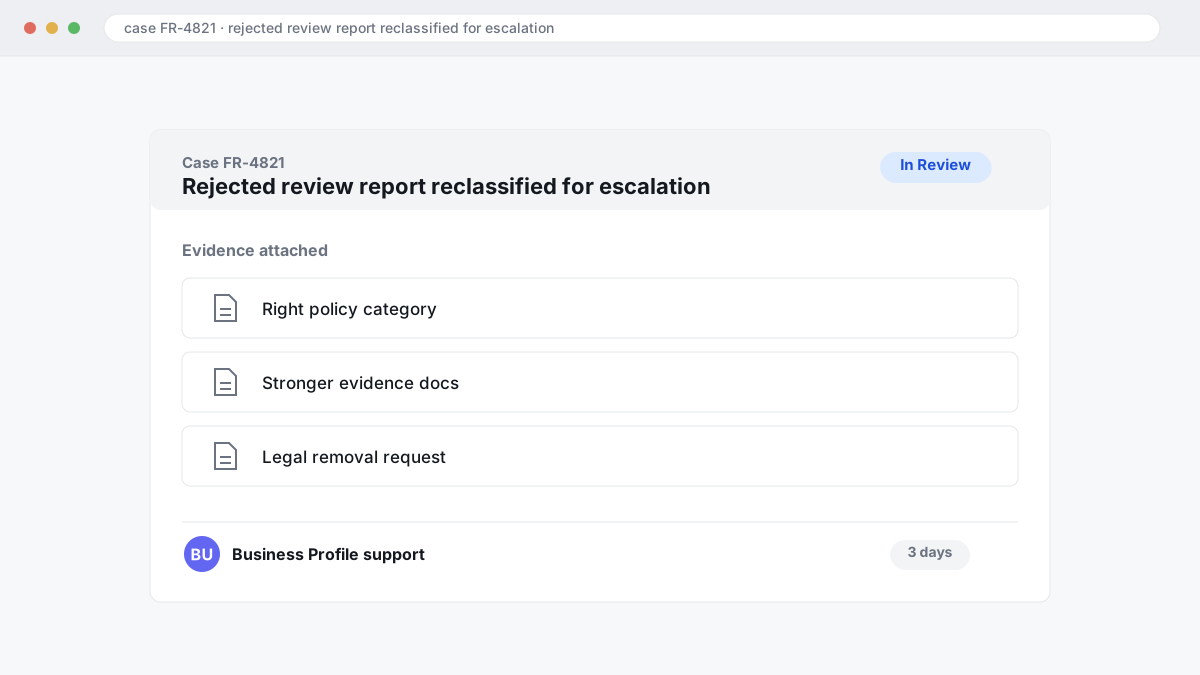
The wrong approach is repeating the same report button submission with the same wording. That usually fails because rejection often means weak categorisation, not a finding that the review is genuine. In BGR Review's dataset of negative review cases with prior self-filed attempts, logged June 2025 to June 2026, roughly 90% came to us after using only the basic in-platform report flow, and 70-80% of those initial requests had been rejected. A review marked as "spam" can still be removable if the stronger ground is conflict of interest, impersonation, harassment, or a false factual claim that sits closer to defamation standards.
The better route is to refile only when you have new evidence or a clearer prohibited-content ground. That means matching screenshots, order records, staff rosters, call logs, location proof, or account inconsistencies to the exact policy breach, then using the right appeal and escalation routes instead of duplicating the first report. Profile support works when the listing context matters. A public support thread can help when the timeline and evidence need review by a product expert. A legal removal request fits alleged defamation, doxxing, or other unlawful content, but laws vary by country and this is general information, not legal advice.
That structure only makes sense when the review has a real policy angle. If the post is a real service complaint, Google usually leaves it up, and your recovery comes from a public response and fresh verified reviews, not escalation.
How do Google, Yelp, and Trustpilot differ when a bad review looks removable?
Platform differences decide whether a review is realistically removable. The same post can breach the Google review policy, survive on Yelp because the proof is thin, and face a more document-heavy dispute on Trustpilot because invitation, verification and reporter history all affect the route.
One universal removal script fails because each site tests a different thing. Across BGR Review's negative review cases with prior self-filed attempts, logged June 2025 to June 2026, roughly 90% of businesses that came to us after a failed attempt had used only the basic in-platform report button, and 70–80% of those first requests had been rejected; that usually means the report ignored the review platform differences rather than proving the review was genuine.
This comparison is easier to judge side by side.
| Platform | What usually matters | Appeal and escalation routes |
|---|---|---|
| Match the text to a named prohibited-content category such as spam, impersonation, off-topic content, conflict of interest or harassment. Google gives limited direct dialogue after the first report. | Report in profile, then use the Business Profile review appeals flow and add evidence documentation that ties the wording to policy. | |
| Yelp | Clear non-customer proof, staff conflict, competitor link, or factual mismatch. Yelp often leaves harsh opinion alone if it looks like a real consumer experience. | Flag the review, then use support contact with transaction records, booking logs or identity conflicts. Weak suspicion rarely moves. |
| Trustpilot | Who invited the reviewer, whether the experience can be verified, and the account's reporting history. The dispute can turn on invitation logs as much as the review text. | Use Trustpilot's flagging categories, respond to verification prompts, and supply order or contact records that show no customer relationship or misuse. |
The right approach is platform-specific: on Google, write to policy language; on Yelp, prove the reviewer should not qualify as a customer; on Trustpilot, show why the review fails verification or invitation context. That works because each appeal and escalation route asks a different question, and your star rating average, map-pack click-through, and form-fill conversions recover faster when you stop filing generic reports that get nowhere.
Is a bad review removal service worth it, or should you handle it yourself?
DIY works when the policy breach is clear and your evidence is organised. Managed help becomes worth considering after a rejection, when several locations or platforms are involved, or when a fake or defamatory review raises legal or compliance risk.
The cheap-for-every-case approach fails because the in-platform report button only works well when the fit is obvious. In BGR Review's case file of 12,000+ negative review cases logged June 2025 to June 2026, reviews raised within 28 days of posting and backed by an identifiable policy issue resolved successfully in roughly 90% of cases; comparable cases raised after 28 days fell to approximately 25-30%. If your first report is weak, owner response time slows recovery, map-pack click-through rate stays depressed, and the same low star rating keeps hurting calls and form fills.
This is the practical split:
| Route | Best fit | Limits |
|---|---|---|
| DIY | One review, one platform, obvious breach of Google review policy or clear impersonation | Slower after rejection; weak on appeal and escalation routes |
| Managed removal | Rejected reports, multi-location review issues, review platform differences, possible defamation standards questions | Pay for expertise, not certainty; no honest provider can guarantee removal in 24 hours |
The right use of specialist help starts after complexity appears. Google, Yelp and Trustpilot take different views on evidence documentation and escalation, so one rejected Google report does not tell you how a Trustpilot flag or Yelp complaint will land. That structure makes more sense than a prepaid promise if the review may be legitimate poor service rather than removable abuse.
Can you get in trouble for fake reviews, incentives, or heavy-handed takedown tactics?
Yes. Fake reviews, undisclosed incentives, and unsupported accusations can trigger platform penalties and legal exposure. The exact risk turns on the platform's rules and your local law, especially around endorsements, false statements of fact, and deceptive practices.
The risky move is trying to clean up your profile by posting purchased praise without disclosure, offering discounts for five-star feedback, threatening reviewers with legal language you cannot support, or filing takedowns that misstate the facts. That fails for two reasons: the FTC endorsement guides require clear disclosure when an endorsement is paid for or incentivised, and Google review policy bars fake engagement, conflicts of interest, and content meant to mislead. A review supplier that ignores disclosure rules can leave you with removed reviews, profile trust damage, weaker map pack click-through, and a mess that is harder to fix than the original complaint.
The safer route is narrower. Remove policy-breach reviews with evidence documentation, answer genuine service complaints in public, and rebuild sentiment mix with compliant verified review acquisition. If a review states a false fact such as “they billed me twice” when your records show no transaction, that can raise defamation standards questions, but those standards vary by country and platform and usually hinge on provably false factual claims rather than harsh opinion. This is general information, not legal advice.
How many good reviews does it take to offset a bad one?
There is no universal number of positive reviews that cancels out one negative one. The effect depends on your current review count, your displayed star rating average, review recency, and whether the bad review points to a repeated issue that shifts the sentiment mix on the profile.
The wrong approach is chasing a magic ratio like “get 10 good ones for every bad one”. That fails because rating math changes with scale: ten new 5-star reviews can move a 20-review profile a lot, while the same ten barely shift a 500-review profile. Google users also read the last few reviews first, so a fresh run of verified review acquisition usually improves click-through from the map pack and conversions faster than raw volume alone, provided those reviews are genuine and compliant with the FTC endorsement guides and the platform’s own rules.
The right approach is profile-specific rebuilding: fix the service issue if it is real, then add fresh verified reviews steadily so the recent sentiment mix reflects how you operate now. In BGR Review’s dataset of 1,485 businesses observed from February to July 2026, established practices such as dentists, lawyers, accountants and roofers typically needed 30–50 reviews before profiles performed consistently, which is a better benchmark than any one-for-one offset formula. If you need help with the rebuild itself, BGR Review’s review packages carry a 30-day free replacement guarantee, but no package will erase a recurring complaint showing up in every third recent review.
How do you rebuild trust after bad reviews without breaking review rules?
Rebuild trust with steady, compliant review collection from all recent customers, not a fast burst from hand-picked promoters. Recovery works when fresh verified feedback keeps arriving often enough to restore recency, widen the rating distribution, and push one or two bad reviews further down the page.
The wrong move is a 50-review spike after a negative event, especially if you only ask people you know will leave five stars. That creates review gating risks, looks unnatural in review velocity, and can trigger extra scrutiny under platform rules such as Google Business Profile's fake engagement policy. It also reads badly to buyers: a profile with one angry review followed by a wall of same-week praise can depress click-through from the map pack and hurt conversions because the pattern looks managed rather than earned.
The better route is simple. Ask every recent customer on the same trigger, usually job completion or delivery, and keep the cadence weekly instead of forcing a burst. Fresh verified reviews help sentiment recovery because they change what the next prospect sees first, and the conversion impact is usually stronger when those reviews arrive over several weeks, not one weekend. If you use outside help, keep it compliant: BGR Review's review packages start in 24-48 hours and carry a 30-day free replacement guarantee, but the request flow still has to go to all customers, not only your happiest ones.
Where to go from here
Start with a 30-minute triage on the reviews that changed your average, map-pack click-through and lead quality. Split them into three piles: genuine service complaints that need a public reply and an internal fix, reviews that may breach platform rules, and profiles that now look thin because recent positive feedback has dried up. That sort matters because a poor-service review rarely gets removed, while a fake, defamatory or clearly ineligible review can move through a policy route if your evidence documentation is tight and filed fast.
Your next action is simple: pull the review links, screenshots, order records, staff notes, call logs and any proof that the reviewer was never a customer, then match each case to the platform's own policy before you flag it. Expect some first-pass rejections; the basic report button often fails without context, and appeals work differently on Google, Trustpilot and Yelp. If the review stays, move straight to verified review acquisition so recency and sentiment mix start helping conversions again.