


Quick answer
Executive reputation is the trust signal people read from page-one search results for a leader’s name: owned profiles, third-party coverage, business reviews, LinkedIn, speaker bios, knowledge panel details and any negative press already ranking. Generic guides treat this as personal branding. The real job is search-result control and risk triage. Start with a name-search audit, split results into owned and third-party assets, isolate removable items, then fix the highest-click risks first. If content breaks platform rules, removal routes differ by platform, and legal standards vary by country, including FTC endorsement guides in the US.
We handle this as an operations problem, not a visibility slogan. The first check is whether page one is dominated by assets you control, whether Google Business Profile reviews are dragging brand sentiment, and whether a false statement or policy breach gives you a real removal path instead of a weak report-button submission.
That workflow comes from day-to-day dispute handling: most failed self-filed review removals arrive with no evidence pack, just an in-platform flag, and the missing piece is usually the exact policy hook, dated screenshots, URL history and account context. BGR Review sells review and removal services, so this guide stays practical about what you can fix yourself, what needs evidence, and where paying $449 per removed review link on a $0 upfront basis is the sensible route.
Why is executive reputation really a search-control problem, not a branding exercise?
Executive reputation is a search-result and trust problem before it is a branding problem. People judge what ranks in Google results, what review platforms and media coverage say, and whether third-party sources support your claims; if page one is thin, mixed or negative, a polished LinkedIn banner or founder photo does not reduce decision risk.
The wrong approach starts with personal-brand aesthetics: new headshots, a rewritten bio, a thought-leadership post, then hope. That fails because stakeholders form a view from branded search results before they read your company messaging, and those results are usually led by third-party pages you do not fully control. Search result ownership matters more than visual consistency. If page one shows an old interview, a hostile article, weak profile pages and no strong owned assets beyond LinkedIn, stakeholder trust drops before your sales team gets a reply.
The right approach is a 10-result branded SERP audit. In BGR Review’s workflow, you search the executive’s full name, common name variants and company-attached searches, then classify each page-one result as owned, influenced or third-party, because that exposes risk faster than any brand workshop. The gaps usually cluster in four places: Google results that you do not control, autocomplete suggestions that steer clicks, review-platform mentions tied to the executive or firm, and media coverage that outranks your own assets. Fixing those visibility gaps first gives you something branding alone cannot: clearer search paths, stronger stakeholder confidence and fewer high-click surprises.
Which signals shape stakeholder trust fastest when someone searches an executive?
Trust shifts fastest when a searcher finds strong third-party proof, accurate identity signals and no live negatives sitting in plain view. Recent press coverage, visible review sentiment on platforms such as Google Business Profile, and a complete LinkedIn executive profile usually change stakeholder trust faster than a rewritten bio.
The wrong approach is to judge reputation from the inside: the board knows the executive, staff know the backstory, and the website says the right things. External searchers do not carry that context. Investors scan for leadership visibility, recent negative press and whether the identity trail looks clean; customers read review sentiment and connect it to the person fronting the company; employees look for stability signals, public criticism and whether the executive appears credible outside owned channels.
Older thought-leadership articles lose fast when a newer negative result ranks above them. A clean podcast appearance from last year rarely beats a fresh article about a dispute, a complaint thread, or poor Google Business Profile reviews tied to the brand the executive represents. If the executive is the public face, brand-level review sentiment spills over into personal trust, which can cut click-through from branded search results before you feel it in calls, bookings or form fills.
The right approach is to compare what your team believes with what page-one searchers actually see, then fix the visible trust breaks first. That works because searchers make a judgement from ranking order, source type and recency, not from your internal view of who the executive is.
How do you audit an executive reputation without missing the risks that actually rank?
A useful executive reputation audit puts page-one results, knowledge panel accuracy, major profiles, review platforms, recent press, and monitoring gaps into one worksheet. Score every result for visibility, sentiment, source authority, and urgency so the real risks in branded search results stand out fast.
The wrong approach is a one-off vanity search on your own name, then a few edits to a bio. That fails because page one is mixed: an old article can rank above your site, a weak LinkedIn executive profile can outrank your company page, and a wrong knowledge panel fact can keep getting copied into deal research. Before any publishing work or any BGR Review removal decision at $449 per removed link with $0 upfront, we classify what ranks now, what you control, and what a stakeholder is most likely to click.
Use one worksheet and score each page-one result from 1-3 on four lines: ownership, sentiment, recency, and source authority. Check Google autocomplete separately, then verify knowledge panel facts, the LinkedIn executive profile headline and featured links, recent press mentions, and review platforms where an executive name appears next to Google Business Profile reviews, Trustpilot, Clutch, or Yelp content.
This matrix makes the next 180 days measurable.
| Window | Green | Amber | Red |
|---|---|---|---|
| 30 days | Owned assets dominate top results | Mixed page one, outdated profiles | Negative or false third-party result in high-click position |
| 90 days | Knowledge panel accurate, LinkedIn updated, alerts running | Press gaps or thin owned assets | Autocomplete risk, review-platform visibility, repeated negative mentions |
| 180 days | Stable branded search results with recent owned signals | One weak source still ranking | Unchallenged high-authority page still shaping trust and click-through rate |
How should you rank what to fix first after the audit is complete?
Fix the results that are both visible and believed first: false knowledge panel basics, ranking negative press, a thin LinkedIn executive profile, and unmanaged review-platform mentions usually do more damage than low-traffic profile clean-up. Use a simple impact, effort, and reversibility check so you do not spend a week polishing assets nobody clicks.
The wrong approach starts with easy cosmetic edits: swapping headshots, rewriting bios, or posting fresh thought-leadership pieces before you check search result ownership on page one. That fails because a false job title, wrong company association, or outdated location in the knowledge panel poisons every later click, and a weak LinkedIn executive profile often ranks above assets you fully control. If the basics are wrong, fix identity first. Then move to third-party results with high credibility and obvious click appeal, because those shape stakeholder trust faster than a polished medium-post nobody sees.
Rank each finding on three questions: how many searchers will see it, how much they will trust it, and whether you can reverse it within 30 days. That last point matters. Keep sentiment monitoring running while you do this, because a new review-platform thread or fresh article can reshuffle priorities before your first fixes land.
| Issue | Fix first? | Why |
|---|---|---|
| False knowledge panel data | Yes | High visibility, high trust, directly affects identity accuracy |
| Ranking negative press or false statements | Yes | Third-party credibility and strong click risk |
| Weak LinkedIn executive profile | Usually yes | Owned asset that often ranks high and supports search result ownership |
| Minor bio edits on low-ranking profiles | No | Low visibility and easy to reverse later |
How is executive reputation management different from corporate reputation management when budgets are tight?
Executive reputation management protects the named leader across search results, media mentions and profile pages such as LinkedIn, while corporate reputation management protects the company across customer reviews, products, service delivery and wider public sentiment. The overlap is real, but the risks, assets and owners are different.
The wrong approach on a tight budget is to treat both as one brand job and spend first on company messaging. That fails when stakeholder trust depends on a named-person search showing a hostile article, an inaccurate bio or a weak leadership visibility footprint, even while your review platforms look healthy. The better split is simple: fund executive work where a person-led risk ranks for the leader's name, and fund corporate work where buyers are comparing your company through Google Business Profile reviews, Trustpilot, Yelp or Clutch.
Ownership usually splits as well. Marketing can improve search result ownership with stronger profiles and controlled assets, PR handles media response, and legal checks defamation and false statements before anyone sends threats that go nowhere.
| Area | Executive focus | Corporate focus |
|---|---|---|
| Search trigger | Named-person searches and media checks | Brand searches, map pack, product and service comparisons |
| Trust signal | Leadership credibility and visibility | Reviews, service quality and employer reputation |
| Typical owner | PR, legal, founder office, marketing | Marketing, operations, support, HR |
Does executive reputation measurably affect leads, sales, and deal confidence?
Yes. Executive reputation changes commercial outcomes when a buyer, investor or partner searches the leader before a demo, pitch or partnership call. Strong branded search results, a credible LinkedIn executive profile and clean third-party mentions support stakeholder trust; weak leadership visibility, negative coverage or thin profiles create friction, slow replies and make a good offer feel riskier.
The wrong approach treats this as vanity spend and starts with polished content. That fails because shortlist confidence usually drops before anyone reads the new article — they see page one, notice weak search result ownership, and start asking harder questions about judgment, stability or credibility. The right approach treats executive reputation as deal-risk reduction: fix high-click risks first, then build proof around the executive so branded search demand converts into calls, form fills and meetings instead of hesitation.
Track it for 8-12 weeks. Compare branded-search click patterns, lead quality, close rate and sales-cycle objections before and after the fixes, and separate demo requests from partnership or investor enquiries because the trust threshold is different. If search clicks improve but close rate does not, the problem usually sits deeper in the page-one mix or the executive profile, not in awareness.
What makes thought leadership improve executive reputation instead of looking self-promotional?
Executive thought leadership improves your reputation when it creates searchable proof of expertise on credible platforms, not when you keep publishing opinions on channels you control. Third-party interviews, bylined commentary and a complete LinkedIn executive profile usually build more trust than repetitive personal-brand posting because they give Google stronger evidence to rank and give searchers a reason to click.
The wrong approach is a stream of self-promotional posts about wins, culture and "lessons learned" published only on LinkedIn. That rarely displaces strong publisher pages, negative articles or other third-party results because your leadership visibility stays trapped on a domain you control, and the signals look thin if there are no supporting media mentions, no quoted expertise and no evidence. A polished profile photo and weekly posting cadence help your LinkedIn executive profile convert clicks once someone lands there. They do very little for page-one search result ownership on their own.
The right approach is a monthly mix: one byline on a credible industry site, one interview or quoted expert comment on a third-party publication, and one evidence-led LinkedIn post that expands on the same subject with a chart, policy reference or operating takeaway. That structure gives you executive thought leadership assets that can rank, earn branded search clicks and improve stakeholder trust because the expertise has external validation first and self-publishing second. If you are choosing where to spend budget, this usually beats paying for more content on your own site before you have enough third-party proof; BGR Review handles review growth and removal, so we tell clients plainly when a PR-style placement is the cheaper fix.
| Monthly asset | What it does |
|---|---|
| 1 byline | Creates a searchable expert page on a domain you do not control |
| 1 interview | Adds media mentions and third-party validation |
| 1 evidence-led LinkedIn post | Converts profile visits into trust instead of looking promotional |
How do you recover when negative press or damaging search results are already ranking?
Recovery starts by separating false, removable claims from true but harmful coverage. Then you match the fix to the result: correction, platform request, publisher outreach, or stronger replacement assets. Trying to bury everything at once usually burns budget, leaves the top branded search results unchanged, and gives the worst page more time to earn clicks.
Map page-one damage result by result. For each URL, record truth status, ranking position, authority, and search result ownership: your site, a controlled profile such as a LinkedIn executive profile, or a third-party page you do not control. Negative press from a national publisher with accurate facts needs a different treatment from a copied blog post repeating false statements, and a review-platform profile needs a different route again.
The wrong approach is blanket suppression. It fails because publishing ten weak assets does nothing if position one or two still belongs to a high-authority article, and because branded search results usually reward relevance and authority before volume. The right approach is triage: answer what deserves a response, seek corrections where facts are wrong, use publisher outreach when an editor can amend a headline or add context, and only then build assets that you fully control so search result ownership improves over time.
Use a phased recovery plan so the work matches how rankings actually move.
| Phase | Primary action | Goal |
|---|---|---|
| First 72 hours | Freeze screenshots, log URLs, contact publishers, file platform requests, correct controlled profiles | Stop false claims spreading and protect click-through from the worst result |
| First 30 days | Secure amendments, publish rebuttal or statement pages, strengthen LinkedIn and owned media | Shift what ranks for name searches and steady stakeholder trust |
| 90+ days | Build durable replacement assets and monitor recurring mentions | Improve search control so future bad coverage has less room to dominate |
When do removal requests beat publishing new content to push negatives down?
Start with removal when a result contains false facts, impersonation, or a clear policy breach. Start with publication, response, and suppression when the material is lawful and likely to stay live; the wrong move burns time and can drive extra clicks to the very result you need to demote.
The common mistake is trying to remove everything, from negative press to harsh review-platform posts. That fails because Google will not de-index a lawful article just because it hurts an executive's name search, and a weak complaint can give the publisher a fresh reason to update the page. Match the action to removability instead: challenge false statements, fake profiles, and misattributed reviews first; answer accurate criticism with context, then build stronger owned assets to win search-result control and protect stakeholder trust.
The workflow changes by platform, so the evidence pack has to match the system you are using.
| Platform | Removal-first cases | What usually happens instead |
|---|---|---|
| Impersonation, off-topic content, prohibited content, false factual claims in a review | Fixed price per removed link | |
| Trustpilot | Reviewer identity issues, harmful or unlawful content, experience not genuine under platform rules | Accurate but negative feedback usually needs a public response and profile strengthening |
| Yelp | Conflicts of interest, promotional content, clear policy breaches | Yelp often leaves ordinary negative opinions in place, so suppression beats arguing over taste |
What legal and platform rules matter before you challenge reviews, posts, or articles?
Before you challenge content, check the platform's rules, any disclosure duties, and the law that applies where you and the publisher operate. Undisclosed paid endorsements can breach the FTC endorsement guides, while defamation usually turns on false statements of fact backed by evidence; lawful criticism often stays live even when it damages stakeholder trust. This is general information, not legal advice.
The wrong move is to treat every harsh review, post, or article as removable because it hurts your executive reputation or drags down click-through from branded search results. That fails on most review platforms because opinion, fair comment, and accurately reported events usually do not breach policy. Google Business Profile reviews, Trustpilot posts, LinkedIn comments, and news articles each use different standards, so your first check is whether the content alleges a verifiable false fact, uses fake identity signals, or hides a commercial relationship.
The better route is to match the issue to the rule. If an influencer praised an executive or company without disclosure, the FTC's endorsement guides create a compliance problem. If a post says your executive was convicted, fired, or sanctioned when records show otherwise, that moves into defamation and false statements territory, where screenshots, timestamps, source records, and jurisdiction matter.
What does an evidence pack look like when an executive reputation issue needs escalation?
A usable evidence pack gives a moderator, publisher, or legal reviewer one place to verify the problem fast: live URLs, dated screenshots, archive copies, timeline notes, and a short factual explanation of the false or policy-breaching claim. The pack is built for speed under pressure, not for persuasion.
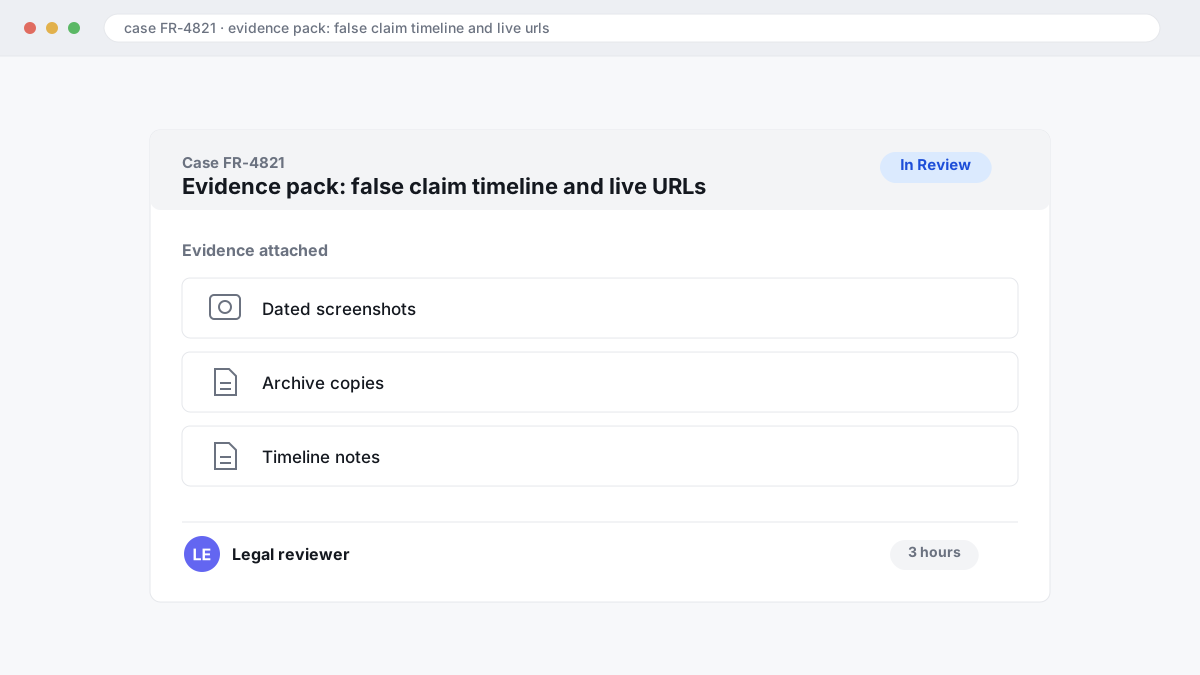
Long emotional complaints fail because they ask a reviewer to infer what happened. What works is a moderator-ready folder with file names that match the crisis response timeline: the first alert, the first screenshot, the publication time, every edit, and every outreach attempt. For defamation and false statements, include the exact sentence, why it is false as a matter of fact, and a rebuttal document with attachments such as Companies House or SEC filings, board biographies, press statements, or dated correspondence that proves the record.
The folder should also hold identity proof, contact history, and platform-policy mapping. That means passport or company-authorised ID where a publisher asks for it, the executive's verified contact details, copies of emails sent to editors or platform support, and a one-page note tying each issue to a named rule such as Google Business Profile's prohibited and restricted content policy, a publisher correction policy, or a knowledge panel accuracy problem in Google Search. At BGR Review, a first-pass evidence pack for active escalation is usually assembled within 24 hours, because delay makes archive gaps, dead links, and ranking screenshots harder to prove.
How should you monitor and act in the first 24 hours after a new executive reputation hit?
In the first 24 hours, verify what happened, save the evidence, switch on monitoring, and decide whether you need response, removal, or containment. Speed matters here, but control matters more; rushed public posting usually creates a second problem before you have fixed the first.
The wrong move is to publish an emotional reply across every channel as soon as a hit appears. That fails because search engines, journalists, staff, and prospects may all be seeing different versions at once: a news result in Google, a changed LinkedIn executive profile, a fresh thread on review platforms, or a copied post on another domain. Start with sentiment monitoring instead. Save URLs, screenshots, timestamps, and cached copies, then set alerts for the executive name, common misspellings, company name, Google News, LinkedIn mentions, and the main review platforms that matter in your market.
Your crisis response timeline should be fixed within the same day. In the first few hours, route the issue to legal if there may be defamation or false statements, to PR if attention is rising faster than facts are being confirmed, and to internal stakeholders so sales, support, and leadership are using the same line. Issue a holding statement only when facts are incomplete but enquiries, comments, or branded search demand are clearly increasing; a short statement buys time, while a speculative one gets quoted back at you later.
If the hit is a review that appears removable, do not rely on the basic report button alone. BGR Review's own case file of 12,000+ negative review cases logged June 2025 to June 2026 found that reviews raised within 28 days and backed by an identifiable policy issue resolved successfully in roughly 90% of cases, while comparable cases raised later fell to approximately 25-30%; that is our observed outcome profile, not a platform rule.
What should you measure to know whether executive reputation work is paying off?
Measure executive reputation work by whether branded search results win more clicks and produce better enquiries: track branded click-through rate, positive-result share on page one, lead quality, conversion rate, review sentiment, response time, and the share of page-one owned assets, then report monthly against an 8-12 week baseline.
Vanity mention counts fail because they tell you that a name appeared, not whether a buyer, investor, recruit, or journalist trusted what they saw enough to call, book, or fill a form. The right reputation KPIs tie search visibility to commercial movement: did branded CTR improve after a harmful review link dropped, did your owned media assets take more of page one, and did conversions from branded traffic or profile visits rise.
Sentiment monitoring should separate review platforms, press coverage, and social profiles, because a warmer average sentiment can still hide a slow response time on Google Business Profile or Trustpilot that depresses trust. In BGR Review's dataset of trades businesses with complete enquiry-source data, observed February-July 2026 within a wider sample of 1,485 businesses, 70-80% of calls and bookings were attributed to a Google Business Profile or Yelp listing, which is why lead quality and conversion rate belong beside sentiment in your monthly report.
Where to go from here
Start with a page-one audit of the executive's name in an incognito browser, then repeat it on mobile. Mark every result by type: owned asset, neutral third-party, hostile third-party, review platform profile, social profile, news result, video, image result and knowledge panel entry. Your first pass should answer four questions fast: what ranks, what you control, what appears removable under a named platform rule or defamation and false-statements standard, and which result would damage stakeholder trust first if a prospect, investor or journalist clicked it.
Then act in order. Remove what clearly breaches policy or contains false factual claims. Suppress what cannot be removed by improving search result ownership with stronger LinkedIn executive profile pages, accurate knowledge panel signals and credible thought-leadership assets. Repair trust signals last by fixing weak review-platform profiles, Google Business Profile reviews and stale bios that depress click-through rate, branded search demand and conversions.