


Quick answer
Real estate reputation management is the work of controlling how your agency or brokerage appears on Google Business Profile, Zillow, Realtor.com and review sites that prospects check before they call. In 2026, the fastest wins usually come from three steps: secure profile ownership, trigger review requests right after a closing or completed viewing cycle, and challenge only reviews that break platform rules. Google will not remove a review because it hurts. If a post is fake, impersonating, irrelevant or otherwise policy-violating, removal depends on evidence, escalation and timing. BGR Review handles removals on a pay-after-success basis at $449 per removed review link.
This page is written from live platform work, not recycled ORM advice. We handle review generation, response management and negative review removal across Google, Trustpilot, Yelp, Clutch and TripAdvisor, and the failure pattern is usually the same: the first request gets rejected because the business used the in-platform report button with no evidence pack behind it.
Our process starts with the review URL, the public profile link, a dated timeline, screenshots, transaction records, the exact policy match and the escalation order after the first denial. Across 12,000+ negative review cases logged June 2025 to June 2026, we recorded outcomes as removal success, unresolved or unknown rather than forcing every unconfirmed case into a win or loss bucket, which is how real estate reputation management should be judged if you want an honest playbook.
Which review platforms move real estate leads first, and why shouldn’t you treat them the same?
Google, Zillow, Realtor.com and Trustpilot do different jobs in real estate. Google usually moves local discovery first through the map pack, Zillow often shapes agent-level trust during comparison, and each platform applies different review rules, evidence standards and escalation routes.
The wrong approach is pushing the same review request, the same follow-up and the same response style across every profile. That fails because a Google Business Profile influences click-through rate from local intent searches like “estate agent near me”, while Zillow reviews are read later, when a seller or buyer is comparing named agents and deciding who feels credible enough to call or message.
This is the priority order we use when a brokerage wants faster inquiries without wasting effort on the wrong profile first.
| Platform | Lead impact | What matters most |
|---|---|---|
| Google Business Profile | Local pack clicks and map visibility | Review recency, response management, complete business data |
| Zillow | Agent comparison and conversions | Named-agent reputation, review quality, profile activity |
| Realtor.com profiles | Trust screening after discovery | Profile completeness, brokerage data, syndicated credibility signals |
| Trustpilot | Brand-level reassurance, especially for brokerages | Invitation controls, compliant collection, public response handling |
The right approach is platform-specific priorities by lead stage. Start with Google if you need branded search demand and map-pack traffic, strengthen Zillow if individual agents need more conversions from profile views, and treat Realtor.com profiles as a completeness problem before a review-volume problem because thin profiles rarely convert well even with decent ratings.
Rules are where generic advice breaks down. Google relies heavily on in-product flagging and policy matching through Google Business Profile support, Zillow moderates against its own review standards, and Trustpilot puts far more weight on invitation method and account controls, so a request flow built for Google can trigger friction or rejection elsewhere. That is why BGR Review splits collection, response and negative review removal into separate workflows instead of running one template everywhere.
What should a real estate agent fix first if the goal is more inquiries within 90 days?
For faster inquiry growth, fix star-rating distribution, review recency and visible replies before you chase maximum volume. A profile with fresh 4.6-plus reviews and prompt responses usually drives more calls, form fills and map-pack clicks than a stale 5.0 built on old feedback.
Most agents start by asking everyone for more reviews. That fails when your last six weeks are dominated by 1-star posts, because prospects read the recent cluster first and your click-through rate drops before your average score has time to recover. If recent negatives are pulling the profile down, correct the distribution first: stabilise the next wave with genuine 4- and 5-star feedback from completed deals, and if a review is fake or defamatory, prepare the evidence for removal rather than hoping volume will bury it. BGR Review handles removals on a pay-after-success basis at $449 per removed link with $0 upfront, which is usually cheaper than months of lost inquiries from a damaged profile.
Freshness moves faster than archive-building. Adding old testimonials to a website can help branded search later, but review recency on Google Business Profile, Zillow reviews and Realtor.com profiles changes visible trust cues now, especially when the last review is only days or weeks old rather than months old. The faster sequence is simple: ask after a clear milestone such as closing or a successful viewing cycle, then keep new feedback arriving steadily enough that prospects never hit a dead profile.
Replying to every 3-star-and-below review within 72 hours is the third fix, because review response management is public sales work, not admin. A short, calm reply shows accountability, lifts conversion confidence and can soften the damage even when the star count does not change. Prospects rarely read every review; they scan the bad ones, then judge whether your response sounds like a professional they can trust with a listing.
How do you run a review-management workflow that busy agents will actually follow?
A workable agent workflow asks at the transaction high point, sends one SMS within 24 hours, one email within 72 hours, and stops after one final reminder at day 7. It only gets followed when ownership, timing and routing are fixed before the deal closes, not left to whichever agent remembers on Friday evening.
Ad hoc asking fails because agents wait for a “good moment”, mix channels, and send the same link to every client. That produces patchy review request timing, weak review recency, and a messy star-rating distribution on the profiles that actually drive calls. For most estate agencies, the first route is your Google Business Profile, because that is where map-pack clicks and phone enquiries usually move first; Zillow comes second when you already have an active profile strategy there and enough completed transactions to keep new reviews coming naturally.
Keep the workflow simple enough to survive a busy week. Assign one owner per transaction, usually the agent or transaction coordinator, and use the same three-touch sequence every time.
| Stage | Timing | Action |
|---|---|---|
| Close | Day 0 | Mark eligible, assign owner, confirm client mobile and email |
| Key handover | Within 24 hours | Send SMS with Google link first; use Zillow only if that office is actively building the profile |
| Follow-up | Day 7 | Send one email reminder, then stop |
Review management gets useful when you track four fields every week: request sent, response status, rating, and the main sentiment theme. Those sentiment themes tell you what to fix in operations and what to echo in replies: speed, negotiation, communication, local knowledge, or after-sale support. If you hire a managed provider instead of relying on software prompts alone, ask whether they can run this exact sequence, route by office, and replace missing reviews under a 30-day free replacement guarantee rather than promising vague “campaign support”.
When should you ask for a review in the property journey, and what message gets replies?
Ask while the deal is still fresh: usually within 24 hours of closing, keys handover or a successful offer acceptance. A short note about the property journey, your communication or the negotiation result gets better replies than a generic “please review us” message.
Generic blast messages fail because they arrive days later, sound automated and give the client no cue about what to write. That costs you response rate and review quality. A milestone-based ask works better: send SMS first for speed, then email the same day for detail, platform instructions and the direct link to your Google Business Profile or Zillow reviews page.
Property-specific wording matters. “Thanks for trusting us with your flat purchase on Queen’s Road. If our updates during conveyancing and the final price negotiation helped, could you share that in a short review here?” gives the seller or buyer something real to mention. “Please review us if you were satisfied” usually produces thin copy, and thin copy does less for map-pack click-through, conversions and branded search demand because it reads like filler.
Use this split if you want a request sequence an agent will actually send.
| Channel | When to send | Best use |
|---|---|---|
| SMS | Within a few hours | Fast reply, simple ask, direct review link |
| Same day | More context, platform steps, Google or Zillow review guidance |
What should you do after a false property review lands on your profile?
Save the evidence first, match the review to a platform rule, then file the strongest report you can. False-review complaints usually fail because the agent posts an angry denial on the Google Business Profile and never documents non-customer status, factual errors or a conflict of interest.
The wrong move is immediate public combat. It weakens your position on fake or defamatory reviews because you often end up confirming details you did not need to reveal, and a heated reply can make a later negative review removal request look like a customer dispute rather than a policy breach. Before you flag anything, capture the review URL, your profile URL, the date and time shown on the post, screenshots of the review and reviewer account, and the transaction record that proves whether this person ever bought, sold, viewed or instructed through you.
The right move is evidence-first triage. Match the complaint to one clear policy ground: impersonation, conflict of interest, off-topic content, or a false factual claim that can be disproved with a timeline, viewing log, CRM note or signed instruction record. In BGR Review’s case file of 12,000+ negative review cases logged June 2025 to June 2026, roughly 90% of businesses who came to us after a failed attempt had used only the basic in-platform report button, and 70–80% of those initial requests had been rejected. That is why the first report should read like evidence, not outrage.
Post a neutral reply only if silence would cost you calls or valuation requests in the map pack. Keep it short: state that you cannot verify the reviewer as a client, invite them to contact the office directly, and stop there.
How does review removal actually differ on Google, Zillow and third-party sites?
Removal rules are platform-specific. Google Business Profile usually turns on a clear policy breach and the right reporting route, Zillow reviews are judged on transaction relevance and content standards, and third-party sites such as Trustpilot may ask for invitation logs, identity checks or support-ticket escalation before a dispute moves.
The wrong approach is treating every bad review the same and hitting the basic report button once. Across 12,000+ negative review cases logged by BGR Review from June 2025 to June 2026, roughly 90% of businesses who came to us after a failed self-filed attempt had used only the in-platform flag, and 70–80% of those initial requests had been rejected. That fails because a rejection usually means the platform did not get enough policy-linked evidence, not that the review was valid.
The comparison below shows where the removal path actually changes.
| Platform | What usually decides the case | What usually fails |
|---|---|---|
| Google Business Profile | A named breach of Google’s review policy, the review URL, profile link, screenshots and account-level reporting or appeal after the first rejection | Flagging “spam” with no policy match or timeline |
| Zillow reviews | Whether the reviewer had a real transaction connection and whether the content breaks Zillow’s moderation standards | Arguing “unfair” without disproving the transaction or the factual claim |
| Trustpilot and other third-party sites | Invitation records, order or client logs, identity verification and a support-ticket trail if the first flag stalls | Saying the reviewer is fake without account or contact evidence |
The right approach is platform-matched negative review removal. On Google, you build the case around the exact policy language and escalate after the first denial; on Zillow, you prove the reviewer was not part of the sale, listing or let; on Trustpilot, you often need the invitation trail or transaction record before support will act.
What belongs in an evidence pack before you flag or appeal a real estate review?
A usable evidence pack ties the review to records you can verify: transaction history, message logs, address data, profile screenshots and a named policy ground. Moderation teams on Google Business Profile, Zillow and third-party sites move faster when the file lets them check facts directly instead of decoding an angry narrative.
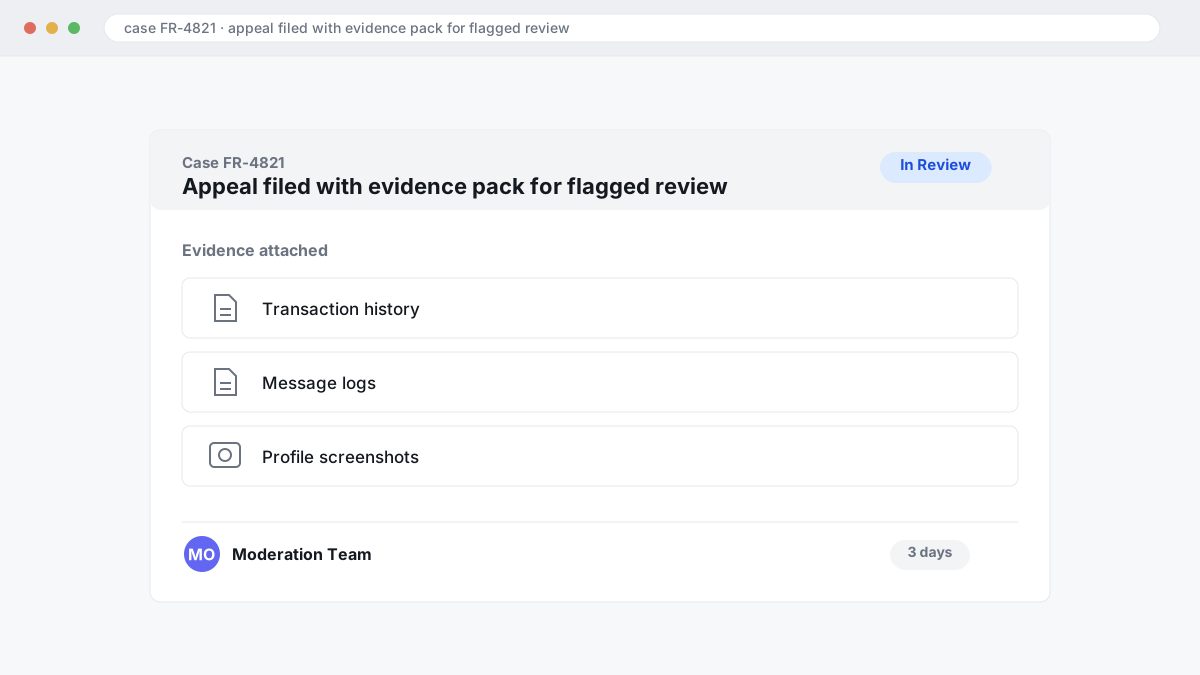
The weak approach is a long complaint saying the review is fake or defamatory. That usually fails because the moderator sees opinion, not proof. Across 12,000+ negative review cases logged by BGR Review from June 2025 to June 2026, roughly 90% of businesses who came to us after a failed attempt had used only the basic in-platform report button, and 70–80% of those initial requests had been rejected. The stronger approach is a pack built around matching records.
For real estate profiles, these are the items worth attaching or logging before you file.
- Review URL, profile link and screenshots of the live review, reviewer name, star rating and posting date.
- CRM logs, call notes, viewing records, closing records or tenancy records showing whether that person ever transacted with you.
- Property-address matching evidence: the address named in the review, the address in your CRM, and any mismatch.
- Reviewer non-customer indicators, duplicate text used on other profiles, or competitor affiliation if you can document it.
- Policy match: impersonation, conflict of interest, off-topic content, or false factual claims rather than “unfair”.
- Filing date, ticket number and follow-up window, usually 3 to 7 days after the first submission.
If you need negative review removal after the first rejection, the escalation order matters: file in-platform, save the ticket, then add the missing records rather than resubmitting the same complaint. If a review is only harsh opinion, removal often stalls; if the reviewer cannot be linked to a deal, call, viewing or address, your odds improve because the platform has something concrete to test.
Should a brokerage buy software or hire a managed service for reputation work?
Software is the cheaper choice when your brokerage already has one accountable owner, a weekly review-governance slot, and agents who follow process. Managed service makes more sense when branches, agent profiles, review response management, and dispute escalations keep slipping because nobody owns the work end to end.
The wrong way to buy is by feature checklist alone: inbox, templates, sentiment, widgets, Trustpilot connection, maybe a dashboard for star-rating distribution. That fails because features do nothing if no one sends the requests, approves replies, tracks review recency, or escalates a false review after the first platform rejection. The better comparison is capability plus ownership: who writes responses, who checks compliance, who handles negative review removal, and how fast that work gets done when a bad review starts hurting map-pack click-through and listing enquiries.
Use this short buying grid before you sign anything.
| Check | Software | Managed service |
|---|---|---|
| Monthly fee and seats | Often lower cost, but seat limits can block branch managers and agents | Higher monthly spend, but labour is included |
| Response SLA | Depends on your team’s discipline | Should be defined before purchase |
| Removal support | Usually limited to flagging tools | Fixed price per removed link |
| Platform handling | Your team learns Google, Zillow and Trustpilot differences | Provider should already run those workflows |
If one ops lead can review replies every week, software is enough. If agents miss response windows, legal-risk wording worries you, or false reviews need evidence beyond the report button, buy execution rather than another login.
How should multi-office brokerages govern reviews without losing local relevance?
Multi-office brokerages keep local relevance when branch managers handle day-to-day review responses on each office’s Google Business Profile, while head office controls the policy, approval templates, and escalation rules that decide what gets answered locally and what gets escalated.
Centralised control only looks tidy and usually fails on local SEO. Replies become slow, generic, and detached from the office that handled the viewing, valuation, or tenancy issue, which hurts click-through rate from the map pack and lowers conversions from calls and form fills. Give each branch response rights, but lock the rules centrally: response tone, complaint routing, fake-review escalation, and who can request evidence if a reviewer names an address or agent incorrectly.
Separate office-level profiles from agent-level visibility where platform rules allow. Your office Google Business Profile should collect location reviews tied to the branch, while agent branding sits on compliant profiles, bio pages, and other channels rather than cannibalising the branch listing. Audit owner and manager permissions every quarter across every office, especially after staff departures, mergers, or rebrands. Lost owner access is a common governance failure, and it slows review response management just when branded search demand and local pack visibility depend on fresh, office-specific activity.
Are paid reviews legal for estate agents, and where do the rules get dangerous?
Undisclosed paid reviews create real risk under platform rules and advertising law. Under the FTC endorsement guides, a material connection has to be disclosed, and UK or EU misleading-commercial-practice rules can add exposure; this is general information, not legal advice.
The wrong approach is paying for five-star praise and posting it as if it came naturally from buyers or sellers. That fails because undisclosed paid endorsements can trigger review takedowns, profile penalties and regulator scrutiny, and it also leaves you exposed if the review makes claims about a transaction that never happened. A thank-you gift offered after a genuine closing sits in a different bucket only if you disclose the incentive where required, avoid conditioning it on a positive rating, and follow the platform’s own rules.
The safer approach is simple: ask every completed client for honest feedback, keep the request neutral, and disclose any material incentive. If you are buying help, be clear what you are buying. BGR Review sells verified review packages with a 30-day free replacement guarantee, and that does not remove your duty to comply with the FTC endorsement guides or local rules. Fake or defamatory reviews are a separate issue: false factual allegations can raise defamation questions, but the threshold and remedy differ by country, so removal and legal advice are not the same thing.
What should your next 30 days look like if your reputation is costing listings now?
Start with a cross-platform audit, then fix review recency, response gaps and profile errors before you launch anything bigger. If false reviews or multi-location governance issues are suppressing trust, clear those blockers first so new reviews strengthen conversions, branded search demand and map-pack click-through instead of covering defects.
Running Google Business Profile, Zillow, Realtor.com profiles, email requests and removals all at once usually fails because agents skip permissions, duplicate outreach and leave old complaints unanswered. A tighter sequence works because each step removes friction for the next.
- Week 1: audit Google, Zillow and Realtor.com by office, check owner access, count unanswered reviews, and sort review response management by oldest high-intent complaint first.
- Week 2: fix incomplete profiles, categories, phone numbers and permissions, then launch one request sequence tied to closing or key handover so recency improves without spamming.
- Weeks 3-4: file removal cases for false reviews, publish replies on every live complaint, and compare lead-source shifts from map-pack calls, form fills and branded search.
Where to go from here
Start with the bottleneck. If your Google Business Profile, Zillow page, Realtor.com profile or Trustpilot listing is incomplete, fix that first. If the profiles are live but review recency is weak, set a request sequence tied to real milestones such as viewing completion, signed lease, closing or maintenance resolution. Then tighten review response management so new readers see calm, specific replies before they click to call, book a valuation or fill a form.
If one or two fake or defamatory reviews are suppressing map-pack click-through rate, conversions or branded search demand, move to a rule check instead of another generic flag. Pull the review URL, profile link, posting timeline, screenshots, transaction record, the exact policy match and the escalation order after a first rejection. That is the evidence pack that gives a dispute a chance.
If removals are the blocker, the next step is a case review against the platform’s own rules.