

Quick answer
A business rarely needs the highest review count in its market. You need enough recent, believable reviews to remove buyer hesitation, match the stronger profiles in your category and area, and keep pace month by month. That target moves with local competitors, platform mix and search intent. On Google Business Profile, count alone is weak because Google’s fake engagement policy can remove inflated or inauthentic activity. A better target combines review volume, recency, star-rating spread and steady review velocity, especially if you want stronger map-pack clicks and more calls or bookings.
We wrote this from the operator side, not the SaaS-blog side. In live review cleanup work, the first thing that usually changes a weak profile is clearing the empty-or-stale threshold; after that, gains flatten unless the business also fixes request timing, response rate and the monthly flow of new reviews.
You also see the same pattern in removal cases: a business taps the basic in-platform report button, gets rejected, and assumes the review must stay. Across 12,000+ negative review cases logged June 2025 to June 2026, we recorded outcomes as success, unresolved or unknown, and cases raised within 28 days with a clear policy issue resolved successfully in roughly 90% of cases in our file.
How do you set a review target that actually matches your market?
Your review target should come from the gap between your profile and the top local competitors on the platform that wins the click, not from one universal number. On Google Business Profile, the right target is your nearest competitive gap in your service area, adjusted for review recency, star-rating distribution and category.
Most guides tell you to chase a big round review count like 100 or 500. That fails because local SEO is comparative: you are competing against the three profiles a buyer sees in the map pack for your town, postcode or suburb, not against a national chain with 200 reviews two counties away. In BGR Review's dataset of 1,485 businesses observed from February to July 2026, trades and local service firms that reached 20–30 reviews in the first three months were associated with better local visibility, but that did not mean every market needed the same number.
Start with a competitor review benchmark on Google Business Profile. Search your main service plus your town, open the top three local rivals, and note four things: review count, average rating, how recent the last five reviews are, and whether the owner responds. A 25-review gap in one suburb can suppress click-through rate and calls more than a 200-review national gap, because buyers compare the profiles in front of them.
This is the target-setting model we use before anyone pays for a review package with BGR Review's 30-day free replacement guarantee.
| Market view | What to compare | Useful target |
|---|---|---|
| Local roofer in one suburb | Your Google Business Profile vs top 3 map-pack rivals | Close the smallest gap first, such as 18 to 25 reviews |
| Agency selling nationally | Google plus the review platform buyers actually check | Match the nearest competitor cluster, not the largest profile in the category |
Set the first target where the buying decision happens. Once your profile no longer looks empty or stale beside nearby rivals, map-pack clicks and form fills usually move before any vanity milestone does.
When does review volume stop being the main thing holding you back?
Review volume stops being the main constraint when your review count is broadly competitive nearby and buyers start judging freshness, rating mix and profile completeness instead. Once you are no longer the thin profile in the map pack, another 20 reviews often moves less than getting a recent run of believable ones.
The wrong approach is chasing a bigger total forever. That fails because low counts hurt buyer trust early, then stale profiles start to look abandoned even with a high average. In BGR Review's dataset of 1,485 businesses observed February to July 2026, established practices such as dentists, lawyers, accountants and roofers typically needed 30-50 reviews before profiles performed consistently; after that point, consistency depended less on raw count and more on whether new reviews kept appearing. A 4.9 average built on old feedback can lose clicks, calls and form fills to a 4.7 profile that has current reviews and a more natural star-rating distribution.
Most guides say more reviews always wins. What actually works is getting to parity first, then fixing review recency. When two nearby profiles are close on count, the one with fresh reviews and a believable spread of 4-star and 5-star feedback usually earns more click-through from the local pack because buyers trust it more than a perfect-looking profile that has gone quiet. If your Google Business Profile has enough proof but no recent proof, count has stopped being the main bottleneck.
Which platform should you build volume on first: Google or somewhere else?
Most local businesses should build review volume on Google first. Your Google Business Profile affects Maps visibility, branded search impressions, and the calls, bookings or form fills that happen straight from the profile; add Trustpilot earlier if buyers compare brands online before they contact you or if you sell beyond one local area.
The wrong approach is splitting effort evenly across every review site from day one. That usually leaves you with thin review count, weak review recency and no clear lift in the map pack, because the buyer never sees half those profiles before making a decision. For a plumber, dentist or local agency, Google often wins the first click through Maps and branded search; for a software firm, ecommerce brand or national service, Trustpilot can matter earlier because people research reputation before they enquire.
Platform priority changes your target because audience behaviour and platform policy are different. Google Business Profile rewards a steady flow of genuine local reviews tied to real service moments, while Trustpilot sits in a more comparison-led journey where prospects read deeper and weigh star-rating distribution before converting. That is why BGR Review usually tells clients to fix the platform closest to purchase first, then expand: Google first for local intent, Trustpilot next when non-local trust affects click-through rate and branded search, with a 30-day free replacement guarantee on review packages if you use managed delivery.
How many reviews are enough on Google Business Profile versus Trustpilot?
Google and Trustpilot need different targets because they do different jobs. Google Business Profile volume helps you win local discovery in the map pack and earn fast trust, while Trustpilot volume usually helps during brand comparison, ad clicks and slower conversion paths.
Most guides push one review count across every platform. That fails because the competitor review benchmark on Google is local and category-specific, whereas Trustpilot behaves more like a market-wide proof layer. For Google Business Profile, your target is simple: get into the range of the top three map-pack profiles in your city for your service, then stay fresh. In BGR Review's dataset of 1,485 businesses observed February-July 2026, established practices such as dentists, lawyers, accountants and roofers usually needed 30-50 reviews before profile performance became consistent.
Trustpilot needs a different target because buyers read it later in the journey and expect a steadier verified invitation flow. In BGR Review's dataset of 1,485 businesses observed February-July 2026, website, digital marketing and creative agencies often took four to eight weeks to get a first review, and only about half reached 20-30 reviews within six months across Google, Clutch, Yelp and Trustpilot combined. That is why a thinner Trustpilot profile can still work if invitations are verified, recent and clearly part of an ongoing process.
This comparison works best if you are choosing where to push next.
| Platform | Visibility impact | Trust cues | Workload |
|---|---|---|---|
| Google Business Profile | Direct effect on local pack clicks and map-pack discovery against nearby competitors | Star rating, review count, recency, owner replies | High request cadence; best tied to job completion or visit completion |
| Trustpilot | Stronger on branded search, ad click-through rate and site conversion during comparison | Verified invitation flow, review history, profile completeness | More process-heavy; you need a consistent post-purchase invite system |
If your Google profile already sits near local leaders, extra review count alone usually stops being the main constraint and response process or recency becomes the next fix. If your Trustpilot page is nearly empty, volume still matters because low count makes the profile look untested, even when your Google Business Profile is strong. BGR Review sells review growth on both platforms, but the better starting point is usually the one closest to revenue: calls and bookings from Google, or comparison-stage conversions from Trustpilot.
What review count usually pays back fastest?
The fastest payoff usually comes from moving from visibly thin review count to a level that looks locally credible, then tightening review recency and star-rating mix. Buyers notice that first jump quickly; after that, extra value usually comes from staying current rather than chasing the biggest total in your market.
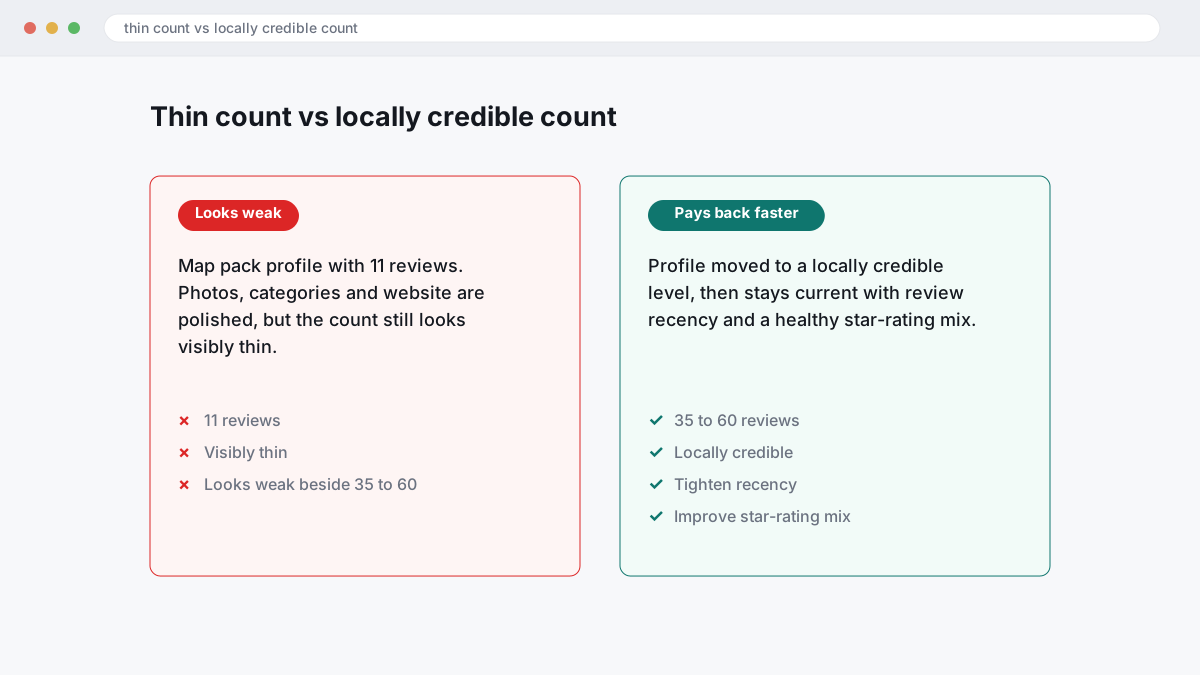
Most guides push the highest possible total. That fails because a profile with 11 reviews beside competitors sitting around 35 to 60 looks weak in the map pack even if your photos, categories and website are polished. In BGR Review's dataset of 1,485 businesses observed February to July 2026, established practices such as dentists, lawyers, accountants and roofers typically needed 30-50 reviews before their profiles performed consistently; below that, local SEO gains were less reliable and click-through often lagged.
The better order is simpler: close the visible count gap first, then push recency. Once your Google Business Profile has enough reviews to clear the credibility check in your area, another 20 old reviews usually matter less than fresh ones landing every month, because recent reviews change what searchers see before they call, request directions or fill in a form. That is also where managed review work can beat endless tweaking; if a package starts delivering in 24-48 hours and carries BGR Review's 30-day free replacement guarantee, you can test the lift without pretending volume alone will fix a stale profile.
Track business payoff for 8-12 weeks, not three days. Watch calls, direction requests and lead rate together, because a higher review count can lift visibility while better review recency improves conversion from the same traffic.
How do you build review volume without creating a suspicious spike?
Build your review flow by asking every eligible customer on a fixed schedule, with the request sent soon after the job or purchase. A steady weekly rhythm beats a one-off blast to six months of old customers because it keeps review velocity natural and keeps review recency moving.
One big campaign is the wrong approach. It dumps a pile of requests onto a cold list, drags down response rate, and can create a visible spike that looks odd to readers and unhelpful to platform filters, especially on Google Business Profile where review patterns matter as much as raw count. The safer route is always-on acquisition: trigger the ask in the post-purchase window, usually within 24-72 hours, while the experience is still fresh and the customer still remembers the staff member, job result or delivery.
Channel choice changes the outcome. SMS usually wins on speed for low-friction jobs like plumbing, cleaning or a takeaway order, because the customer can tap through and leave a short Google rating before the moment passes; email usually works better when you need detail, such as Trustpilot or Clutch reviews where the customer may write a fuller account. If you use a managed service, ask for drip-fed delivery starting in 24-48 hours rather than a batch drop, and make sure the flow excludes refunded, disputed or clearly unhappy customers.
Keep the cadence boring on purpose. A profile with three to five fresh reviews each week often looks healthier than one with 40 reviews in a weekend and nothing for the next month, because conversions come from visible recency and trust, not from a single burst that ages fast. BGR Review sells managed review packages, but if your team can wire an SMS or CRM trigger to job completion and send one reminder after 48 hours, the DIY route is often enough.
What message gets more customers to leave a review right now?
The review request that gets the best response is short, specific and sent straight after the job, delivery or visit. Mention what you completed, send one direct review link, and ask for honest feedback instead of asking for five stars.
The weak version is the generic five-star ask: “Please rate us 5 stars if you were happy.” It feels scripted, it lowers response rate, and it can push unhappy customers to stay silent instead of giving you useful first-party feedback you can fix before it turns into a public complaint. The better approach is tied to review request timing: send it while the service is still fresh, usually the same day or the next business day, and reference the actual work completed.
Hi [Name], thanks again for choosing us for your [service/order]. If you have 30 seconds, could you leave an honest review here: [single review link]. Your feedback helps other local customers decide whether to call us. Thank you.
Keep it under 60 words. One link only. If there is no response, send one reminder after 3-5 days and stop there; daily nudges hurt trust and produce weaker review velocity. In BGR Review campaigns, the message that wins usually reads like a real post-service note, not a ratings script, and that helps clicks from the map pack convert later because the profile looks current rather than pushed.
Should you collect private feedback before sending everyone to public reviews?
Collect first-party feedback before a public review ask if you need issue recovery, but do it as a fair service check for every customer, then send the public invitation only where the platform policy allows that sequence.
The wrong approach is review gating: asking everyone for a private survey, then blocking unhappy customers from any public route while pushing only happy ones to Google or Trustpilot. That fails because it distorts your star-rating distribution, depresses your true response rate over time, and can breach rules such as Google’s fake engagement policy, which prohibits discouraging or prohibiting negative reviews, alongside the FTC’s 2024 rule on fake reviews and testimonials. A filtered profile can lift click-through rate for a month, then lose trust when public complaints pile up elsewhere.
The right approach is simple. Use first-party feedback right after the job, appointment or delivery to catch service issues early, recover them privately, and improve the process that caused them; then invite the same customer set to leave a public review where that workflow is permitted. If you use BGR Review to build review volume, keep the survey and review request as separate steps, because issue recovery helps conversions and branded search only when customers still have a clean, voluntary path to the map pack listing or review profile.
Is managed review generation worth it, or can you do this yourself?
DIY review generation works if one person owns review request timing, follow-up and a weekly scorecard. Managed help earns its keep when your staff miss asks, your branches drift apart, or your multi-location reputation already depends on tighter routing and benchmark tracking.
The cheapest option often fails because nobody owns the boring parts. Staff ask at the wrong moment, Google Business Profile requests go out days after the job, Trustpilot invites are sent without a clean trigger, and weekly reporting stops as soon as the desk gets busy. You save cash, then lose click-through rate in the map pack because newer competitors stay fresher, reply faster and keep a steadier review velocity.
This comparison matters most when you are choosing between lower spend and lower total effort.
| Factor | DIY | Managed |
|---|---|---|
| Setup time | Fast if you already have a CRM trigger and one owner | BGR Review campaigns typically start delivery in 24-48 hours once routing is agreed |
| Control | Maximum internal control, but staff discipline decides output | You keep approval while the process is standardised across locations |
| Compliance oversight | You must police platform policy yourself across Google, Trustpilot, Yelp and Clutch | Useful where invite wording, timing and platform differences need checking before rollout |
| Reporting depth | Usually basic counts | Better for competitor benchmark tracking, branch-by-branch gaps and missed follow-ups |
The right choice is simpler than most guides make it. If you have one site, one receptionist and the discipline to check review count, recency and response rate every week, DIY is often enough. If you run several locations, need cleaner routing by platform, or want consistency without chasing staff, managed support usually gives you the lower-effort path; BGR Review sells that service, so weigh it against your internal labour, not just the invoice.
How many reviews does each location need when you have multiple branches?
Multi-location brands need branch-level review targets because customers and Google Business Profile judge each location on its own. A chain can have a strong corporate total and still lose the local pack in one city because that branch has stale activity or sits well behind the nearby competitor review benchmark.
The wrong approach is setting one enterprise target, then spreading requests evenly across every branch. That fails because your multi-location reputation is built in separate map-pack contests: Manchester plumbing is judged against Manchester plumbers, not your Birmingham branch or head-office total. In BGR Review's dataset of 1,485 businesses observed February to July 2026, established practices such as lawyers, accountants and roofers typically needed 30-50 reviews before profiles performed consistently; that is a useful branch-level reference point, not a chain-wide quota.
The right approach is to set targets by city, category and branch maturity. A new branch usually needs recency first — enough fresh reviews over the next few weeks to stop looking empty or stale — while an older branch with a decent rating often needs catch-up volume to close a visible local gap. If your Google Business Profile already matches nearby rivals on count and freshness, review volume stops being the main constraint; response rate, listing completeness and duplicate-profile issues usually matter more. If you need help pushing lagging branches, BGR Review's managed review delivery starts in 24-48 hours and includes a 30-day free replacement guarantee on review packages.
Is buying reviews worth the risk if you need volume fast?
Buying reviews is rarely worth the risk because the upside is brittle and the downside can include removals, filtering, consumer distrust and account penalties. Rules vary by platform and country, so this is general information rather than legal advice.
The shortcut is simple: push volume onto a profile fast and hope the number lifts map-pack click-through and conversions before anyone notices. That fails because major platform policy sets the line against fake, incentivised or undisclosed review manipulation, and the enforcement differs by site. Google Business Profile can remove reviews or restrict profile actions under its fake engagement policy, Trustpilot can flag suspicious review activity and display consumer-facing warnings, and Yelp's recommendation software may filter content so the review count you paid for never becomes a durable reputation asset.
The durable route is slower but it compounds: ask real customers at the right moment, keep review velocity steady, and fix your response rate so fresh reviews keep supporting branded search demand a month later. If you need help doing that at scale, be clear-eyed about what you are buying. BGR Review sells review growth services and negative-review removal, but its removal model is pay after success at $449 per removed link with $0 upfront, and review packages carry a 30-day free replacement guarantee rather than a promise that any platform will ignore manipulation signals.
This is the practical risk picture by platform.
| Platform | Typical exposure | Why the shortcut breaks |
|---|---|---|
| Google Business Profile | Review removal, missing reviews, profile restrictions | Artificial spikes and low-trust reviewer patterns can damage local pack visibility before they help it |
| Trustpilot | Flagging, investigation, public warning labels | Undisclosed manipulation cuts trust and lowers click-through even if the star rating looks strong |
| US compliance | FTC scrutiny on undisclosed paid endorsements | A paid review that reads organic creates legal exposure as well as platform exposure |
What should you track every week so review volume turns into revenue?
Track four numbers every week by platform: review count, review recency, rating mix and the gap against your nearest competitors. When those move together, review volume becomes a working growth lever instead of a vanity number you notice after map-pack clicks, calls or bookings have already dropped.
Watching star average alone is the wrong approach because a 4.8 can still underperform when the last review is old, the profile has thin reply coverage, or the star-rating distribution looks top-heavy and then suddenly mixed. The better approach is a simple weekly scorecard for Google Business Profile, Trustpilot and any platform you actively sell from, with your average rating beside your review count, days since last review, and percentage of reviews answered. If you use a managed package from BGR Review, keep the same sheet even with the 30-day free replacement guarantee; replacements protect delivery, not your response process or conversion rate.
This is the scorecard to review every Monday, with a competitor check added once a month.
| Metric | Track weekly | Why it affects revenue |
|---|---|---|
| Review count | By platform, plus new reviews this week | Shows whether your profile is still closing the local competitor review benchmark gap |
| Review recency | Days since last review | Stale profiles lose click-through in the map pack before rank loss is obvious |
| Average rating and rating mix | Overall score plus 1-5 star spread | Explains trust and conversion rate better than the headline average alone |
| Reply coverage | % answered, by platform | Strong responses lift lead quality because buyers read them before calling |
Check your top three local competitors monthly, not once a year, because the target moves. In BGR Review's dataset of trades businesses with complete enquiry-source data, observed February-July 2026, 70-80% of calls and bookings were attributed to a Google Business Profile or Yelp listing, which is why your scorecard has to sit next to lead, call, booking or form-fill data. If reviews improve but conversions stay flat, volume stopped being the constraint; your offer, response handling or landing page is now the leak.
Where to go from here
Set your target from the gap in front of you, not from a vanity number. Pull the top 3-5 competitors in your town or service area on Google Business Profile, Trustpilot or the platform that actually drives enquiries, then note four things: review count, review recency, star-rating distribution and response rate. That gives you a usable benchmark for map-pack click-through, conversions from profile views, and whether review volume is still the main constraint or whether stale reviews and weak replies are holding you back instead.
Your next step is simple: build a 90-day request plan around real customer moments such as job completion, delivery confirmation or closed support tickets, then review the numbers every two weeks. Expect the first gains to show up when you clear the empty-or-stale threshold; after that, progress usually depends more on steady review velocity and response process than raw count alone. If the gap is large, BGR Review can map the target, set a policy-safe review growth plan, or assess whether damaging reviews have a realistic removal path at $0 upfront and $449 only after a review link is removed.