


Quick answer
Dental reputation management means collecting reviews, monitoring every major profile, replying without exposing protected health information, and disputing reviews only where a platform's policy supports removal. For a dental practice, the rule that matters most is simple: never confirm a reviewer is a patient and never discuss treatment details in public. Google Business Profile allows reports for policy breaches, but removal is never guaranteed. A workable programme has four parts: review request workflow, HIPAA-safe review responses, private issue escalation, and platform-specific removal attempts for fake, abusive, impersonation or otherwise non-compliant reviews.
This guide is written for owners and marketing leads deciding whether to run dental reputation management in-house or hand it to a specialist, and we are direct about the commercial angle: BGR Review sells review acquisition and negative review removal, with removals handled on a pay-after-success model at $449 per removed link and $0 upfront.
The practical detail here comes from live handling, not recycled marketing copy. The step that changes outcomes most often is the one generic guides skip: before anyone replies, you classify the review, capture the live URL and screenshots, check whether the wording creates a PHI disclosure risk, and build the evidence pack before using the platform form, because a bare report button is where weak removal attempts usually stall.
How do dental practices handle reviews without crossing a HIPAA line?
Dental practices can reply to reviews, but the safe rule is simple: never confirm someone is a patient, discuss treatment, or mention billing in public. A brief neutral reply, followed by a private contact route within 1 business day, is the safer way to stay inside HIPAA boundaries than posting a detailed defence on Google Business Profile or Yelp.
The wrong move is the one generic dental marketing guides keep pushing: answer fast and explain what happened. That fails because even a well-meant line like “we’re sorry your crown appointment ran late” can confirm patient status and create PHI disclosure risk. A HIPAA-safe review response stays generic: thank the reviewer for the feedback, say the practice takes concerns seriously, and invite them to call or email the office directly. That protects the practice while still showing prospective patients in the map pack that you respond.
The workflow needs two lanes and one owner. Lane one is the public acknowledgement, using a single approved template. Lane two is private follow-up by phone or secure email within 1 business day, with no treatment details repeated in the review thread. At BGR Review, this is the same split we recommend before any negative review removal assessment, because a careless public reply can weaken your position later if the post also raises a policy issue.
Staff escalation rules stop ad-lib replies. Front-desk staff should never improvise beyond the approved script; managers can approve whether the issue moves offline or gets documented; doctors should stay out of public back-and-forth unless counsel or compliance has cleared the wording. One written response policy, one template set, and one escalation path will protect bookings better than a “human” reply that says too much.
Why do generic review tips fail dental offices once a complaint mentions treatment or billing?
Generic review advice breaks down in dentistry because a single post can reveal treatment, insurance and patient identity at once. The real question is what you can say on a public profile before a reply stops being safe and your staff escalation rules need to take over.
The wrong approach is the restaurant script: “We’re sorry your crown adjustment and billing issue felt frustrating. Please call us so we can make this right.” That sentence confirms treatment context in public, which defeats HIPAA-safe review responses even if the patient mentioned the crown first. Dental complaints often bundle pain, wait times, diagnosis notes and insurance disputes into one review, so a fast apology can damage trust, weaken map-pack click-through and create a bigger problem than the original post.
The safer rule is simple: if a review mentions diagnosis, payment, or minors, your front desk stops and escalates. Publicly, you stick to a neutral line that does not confirm the person is a patient, then move the conversation offline; internally, the practice checks records, assigns ownership, and decides whether the issue is a patient experience signal or something that needs reporting or formal follow-up. That rule protects bookings better than a personalised apology because readers see control, while your team avoids exposing PHI on Google Business Profile or any other open platform.
What can a dentist say publicly when a review sounds unfair or false?
A dentist can usually acknowledge the feedback, say the practice aims to treat people respectfully, and invite private contact through the practice manager. Risk starts the moment your reply confirms a visit, comments on treatment, mentions insurance or billing, or ties the reviewer to any patient-specific timeline. That is the line HIPAA-safe review responses are built around.
The wrong move is to defend the record in public: “You missed two appointments,” “your x-rays were reviewed,” or “your balance was explained.” Even if the review sounds unfair or false, that reply creates PHI disclosure risk because it links the reviewer to care, payment, or scheduling facts. The better response is short, neutral, and practical: “We’re sorry to read this. We aim to provide respectful care and clear communication. Please contact our practice manager at [phone/email] so we can review your concerns directly.” That works because it protects privacy, lowers the temperature, and gives future readers a visible path to resolution without feeding the argument.
Keep your review response templates tight enough that staff cannot improvise themselves into trouble. Do not reference appointments, treatment dates, x-rays, account balances, insurance disputes, or “what really happened.” If the post also appears fake or contains false factual claims, reply once, save screenshots, and handle the removal track separately; BGR Review runs that on a pay-after-success basis at $449 per removed review link with $0 upfront, but the public reply should still stay privacy-safe and manager-led.
When should a bad dental review be answered, escalated, or reported for removal?
A bad dental review deserves a public reply when it reflects genuine service frustration, a private escalation when a fix is realistic, and a removal report when it looks fake, policy-breaking, or impossible on the facts. Triage first and do not auto-reply to every complaint.
Most generic reputation advice tells you to answer every negative review. That fails in dental reputation management because the wrong public reply can expose PHI, harden a hostile reviewer, and weaken a later negative review removal request. A missed same-day check is worse on 1-star reviews that accuse fraud, injury, discrimination, or unsafe treatment, because those can affect map-pack click-through rate, branded search demand, and bookings before you have facts.
Use a same-day path: classify the review, assign an owner, and decide whether the first action is reply, private outreach, or report. On a Google Business Profile, service complaints usually need a short HIPAA-safe response plus offline follow-up; impersonation, threats, staff abuse, or factual impossibilities should be reported under Google Business Profile review policy categories before anyone posts a public defence.
The platform matters because Trustpilot and Yelp policy differences change the route. Yelp wants a policy-based flag, especially for conflicts of interest or non-firsthand experiences, and emotional objections usually go nowhere. Trustpilot gives you more room to challenge harmful or misleading content, but you still need evidence tied to its flagging grounds, not a claim that the review feels unfair.
| Review type | First action | Why |
|---|---|---|
| Long wait, rude front desk, billing confusion | Reply within 1 business day, then move offline | Real patient experience signals affect conversions and local-pack clicks |
| Impersonation, threat, ex-employee, competitor, impossible visit history | Report first with policy evidence | Public arguing can undercut the removal narrative |
| 1-star review alleging harm or legal misconduct | Same-day escalation to practice lead and counsel if needed | High reputational and legal risk; facts must be checked before any reply |
What evidence actually improves the odds of removing a fake or policy-breaking review?
Removal gets more realistic when you submit evidence that matches a named platform rule, such as impersonation, conflict of interest or impossible visit details. A report that says a review feels unfair rarely moves negative review removal forward because Google Business Profile and other platforms act on claims they can verify, not on tone alone.
Most dental teams report the unfairness. That usually fails because “unfair” is not a rule category. The better route is to map the review to one policy ground before you file: a reviewer claims treatment on a day your practice was closed, names a hygienist who was off-rota, or appears to be a competitor, ex-employee or family member with a conflict you can document. Useful evidence is plain and checkable: confirmation that no patient record matches the name or event described, staff rosters, appointment-system timestamps, CCTV or call-log timing where lawful, and screenshots showing the reviewer’s conflict or copied text across profiles.
Google’s review policy distinguishes policy breaches from criticism, so a harsh opinion like “the dentist was rude” usually stays up, while a false factual claim like “they billed me for a root canal I never had” may support a stronger report if your records show the statement is impossible. Defamation and false factual claims need falsity you can prove, not a rude tone you dislike, and rules vary by country and platform, so this is general information rather than legal advice. In BGR Review’s dataset of 12,000+ negative review cases logged June 2025 to June 2026, roughly 90% of businesses who came to us after a failed attempt had used only the basic in-platform report button with no supporting documentation, and 70–80% of those initial requests had been rejected.
How should a dental office ask for reviews without creating compliance or platform risk?
The safest review request workflow for a dental office is a neutral post-visit message sent by SMS or email after checkout, after a follow-up text, or once treatment is complete. Use one review link, keep the ask separate from any treatment discussion, and send it to every eligible patient rather than only the people who seemed pleased in the chair.
Selective asking is the mistake most generic dental marketing advice leaves in place. Staff are told to “ask happy patients”, which skews your star rating distribution, creates staff discretion you cannot govern, and can clash with the FTC endorsement rules if the process effectively solicits only favourable feedback. A universal ask works better because it is defensible: the same trigger, the same wording, the same Google Business Profile link, and no filtering based on sentiment, insurance status, treatment type, or whether the patient already complained.
Keep the message short: thank them for visiting, invite honest feedback, give one link, stop there. Do not use front-desk kiosks, tablets in reception, QR boards that funnel reviews through a shared device, or any system that asks staff to pre-screen the patient before showing the link; those setups create platform risk and muddy authorship signals. Do not offer discounts, whitening giveaways, gift cards, raffles, or “leave a 5-star review” language. If you use outside help, the rule does not change: BGR Review sells review support, but any package still has to stay neutral, incentive-free, and HIPAA-safe, with a 30-day free replacement guarantee on review packages rather than any promise tied to review sentiment.
Which review metrics move dental bookings fastest when time and budget are limited?
For most dental practices, fresh reviews and a believable star rating spread lift booking confidence faster than a polished reply programme on its own. Patients usually judge your Google Business Profile by three things together: review recency, average rating, and whether the volume looks current enough to trust before they call.
The wrong approach is pouring time into replying to every old review while the profile stays stale. That fails because a page full of thoughtful responses cannot hide a last review from six months ago or a suspicious jump from 4.2 to 5.0 with no mixed feedback in between; on a map-pack comparison, that hurts click-through rate and then conversions. A 4.7 with recent reviews often outpulls a dormant 5.0 because the profile looks active, credible and easier to trust for a booking decision.
The right approach is to fix review recency first, then smooth out the star rating distribution with steady, policy-safe requests after real appointments. In BGR Review's dataset of 1,485 businesses observed February to July 2026, dentists and other established professional practices usually needed 30-50 reviews before profiles performed consistently, which is a better target than chasing perfect sentiment. Track calls, form fills, and direction requests from your Google Business Profile for 8 to 12 weeks after the change, because that is where you will usually see movement before branded search demand catches up.
How does Google Business Profile turn review quality into local visibility and clicks?
Google Business Profile reviews shape two outcomes that matter to a dental practice: whether your listing looks active enough to win a Maps click and whether the searcher trusts you enough to call or book. Review freshness and a complete profile usually work together.
Most guides push raw review count. That fails when your profile has a high total but stale feedback, thin review text and no owner responses, while a nearby dentist has fewer reviews posted in the last few weeks, better star rating distribution and visible replies. In BGR Review's dataset of 1,485 businesses observed from February to July 2026, established professional practices including dentists usually needed 30-50 reviews before profiles performed consistently, but count alone did not settle the result because distance, relevance and profile completeness still changed the local pack order.
The stronger approach is weekly competitor tracking inside Google Business Profile and Maps. Compare the top three nearby practices on three items: average rating, review recency and total count, then read the last 10-15 reviews for treatment terms, staff mentions and complaint themes that affect click-through rate and conversions. Fresh, specific reviews improve trust before position moves, and that lift in Maps clicks often feeds branded search demand later when patients look your practice up by name.
When does in-house review management beat hiring a dental reputation company?
In-house review management usually works best in a single, disciplined practice where one trained owner controls review requests, public replies and weekly reporting. A dental reputation company earns its keep once compliance sign-off slows responses, more than two locations need oversight, or fake-review disputes start consuming chairside staff time.
The weak setup is cheap on paper: reception asks for reviews when they remember, two or three people answer Google Business Profile comments, and nobody owns staff escalation rules. That fails fast. Response tone drifts, risky wording slips into public replies, negative posts sit too long, map-pack click-through drops, and bookings suffer before rankings move.
The stronger in-house model is narrow and controlled. One person owns scripts, checks every reply against your HIPAA-safe rules, logs complaints, and escalates anything involving treatment, billing, identity doubt or defamation to a private workflow instead of improvising in public. If you can do that consistently, you keep costs low and retain full control over branded search and conversion signals.
This comparison is where most practices make the call.
| Model | Monthly cost | Response SLA | Escalation and removal support |
|---|---|---|---|
| In-house, 1 location | Staff time only | Depends on one owner | Works if staff escalation rules are written and followed; weak on negative review removal unless someone can build evidence packs |
| Agency or specialist partner | Retainer varies by scope | Usually faster when compliance bottlenecks replies | Fixed price per removed link |
If your practice has three surgeries, one Google profile and a calm review stream, keep it inside. If you run multiple locations, need cross-platform reporting, or keep hitting false factual claims that require evidence-based reporting, outside support usually costs less than delayed replies, missed calls and preventable booking loss.
How do multi-location dental groups keep responses consistent without sounding centralized?
Multi-location dental groups need central rules and local accountability at the same time. The workable setup is one approved policy library, one reporting dashboard, and location managers who escalate sensitive reviews instead of improvising public replies.
Corporate scripts fail because they flatten every clinic into the same voice. On a Google Business Profile, that usually reads as evasive, hurts map-pack click-through, and pushes the patient back into public argument. The better model for multi-location governance is simple: head office sets the HIPAA-safe rules, banned phrases, platform-specific do's and don'ts, and approval thresholds; the local practice manager owns factual service recovery because they know the appointment flow, the front-desk issue, and whether a private callback is already in progress.
Use one policy library for every site, but do not give every site the same publishing freedom. A one-star review that mentions treatment outcome, billing, insurance, discrimination, staff conduct, or a false factual claim should trigger staff escalation rules before anyone replies. Straightforward service complaints can stay local. Sensitive reviews go to compliance or legal review, then back to the clinic for offline follow-up.
One dashboard matters because monthly rollups hide weak clinics. Group reporting should track each location weekly: new review volume, response time, unresolved negatives, star-rating distribution, and which Google Business Profile listings are slipping in recency. If you use an outside partner, keep the governance visible.
Which dental review response templates are safe enough to use and flexible enough to sound human?
Safe dental review response templates do two jobs at once: they protect privacy and still sound like a person. The best versions stay short, avoid treatment details, names, dates and payment specifics, and move the conversation to a named offline contact such as your [Office Manager] or [Patient Coordinator].
The wrong approach is the copy-paste script that tries to win the argument in public: “We checked your chart and you arrived 20 minutes late, your crown was fitted on Tuesday, and your balance was explained.” That fails because the PHI disclosure risk is obvious, and the robotic tone hurts trust even when you are factually right. The better approach is a short adaptable template with protected language, written for HIPAA-safe review responses on Google Business Profile, Yelp or Trustpilot, where every public reply can shape click-through from the map pack before a patient ever calls.
Use these review response templates as starting points, then adjust tone without adding private facts.
| Review type | HIPAA-safe template |
|---|---|
| Positive | “Thank you for your feedback. We appreciate you taking the time to share it with our team. If you ever need help again, please contact [Patient Coordinator] at [phone/email].” |
| Mixed | “Thank you for the feedback. We’re glad some parts of your visit were positive, and we take the rest seriously. Please contact [Office Manager] at [phone/email] so we can review your concerns privately.” |
| Billing | “We take billing concerns seriously and want to review this with you directly. For privacy reasons, we can’t discuss account details here. Please contact [Billing Coordinator] at [phone/email].” |
| Wait time | “We’re sorry your experience did not meet expectations. Scheduling and communication matter, and we’d like to look into this. Please contact [Office Manager] at [phone/email].” |
| Clinical complaint | “We’re sorry to read this. Patient concerns should be reviewed privately and carefully, and we cannot discuss health information in a public reply. Please contact [Clinical Coordinator] or [Office Manager] at [phone/email].” |
Keep each reply under a few sentences. That gives you enough flexibility to sound human, lowers PHI disclosure risk, and leaves room to escalate privately or pursue removal separately if the review also contains false factual claims or policy issues.
What should a practice manager do in the next 30 days to reduce dental review risk and lift trust?
Start with a 7-day audit of your Google Business Profile, responder permissions, saved reply templates, NAP consistency, categories, and the last 20 reviews. Then lock HIPAA-safe wording, set a complaint triage path, and fix review recency before you buy software or hire a vendor.
The wrong move is buying a tool before fixing workflow. It fails because the tool will automate the same risky gaps: outdated profile data, shared logins, no escalation route for complaints, and a review response workflow that lets front-desk staff post replies that can imply patient status. In week 1, assign profile ownership, remove unnecessary responders, check your primary category, and approve two safe templates only: one neutral thank-you and one offline-resolution reply.
In week 2, launch a simple review generation workflow through approved SMS and email requests tied to checkout or follow-up, with any complaint routed to a manager before a public review lands. In BGR Review's dataset of 1,485 businesses observed from February to July 2026, dentists and other established practices typically needed 30-50 reviews before profiles performed consistently, so recency and steady volume matter more than bursts.
What should a practice do in the next 30 days to fix reputation risk without slowing growth?
Use a 30-day audit-and-fix plan. Review every public reply for PHI risk, map your negative review triage, test private recovery routing, and vet any vendor for a BAA, access controls and approval workflow before you roll anything out.
Buying software first is the wrong move. It fails because the tool will only speed up unsafe habits: loose templates, no reply owner, shared logins, and no multi-location governance for which practice can post, approve or escalate on each Google Business Profile.
In week 1, audit replies, saved templates, vendor permissions and every live profile. In week 2, set triage rules for billing, wait-time, treatment and fake-review complaints, name one approver per location, and push unhappy patients into a private survey or feedback form before staff touch a public reply.
Use weeks 3 and 4 to compare vendors against your policy, not the other way round: BAA terms, role-based access, audit trails, draft approval and location-level permissions. Then monitor outcomes, tighten weak scripts, and keep the route simple. If a review may breach platform policy, report it early; across 12,000+ negative review cases logged by BGR Review from June 2025 to June 2026, reviews raised within 28 days and backed by a clear policy issue resolved successfully in roughly 90% of cases.
Where to go from here
Start with a 30-minute audit of three things: how you ask for reviews, who is allowed to reply in public, and which negative reviews still have a realistic removal path. Pull the last 90 days from your Google Business Profile, Yelp, Trustpilot or any other live profile, then mark each review as safe to answer, needs private follow-up, or needs evidence for a platform report. That gives you one working list instead of a backlog of screenshots and half-finished drafts.
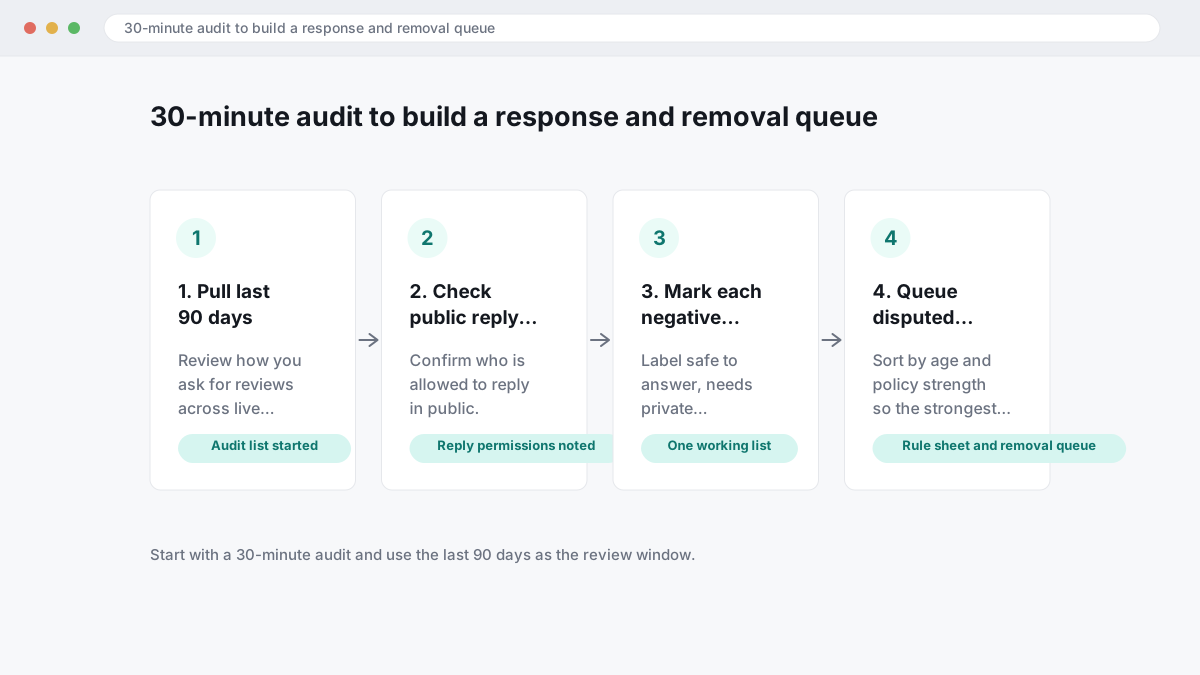
Your next step should produce two outputs: a written response rule sheet for front-desk and practice managers, and a removal queue ordered by age and policy strength. That matters because stale disputes are harder to move. In BGR Review's log of 12,000+ negative review cases from June 2025 to June 2026, reviews raised within 28 days and backed by an identifiable policy issue resolved successfully in roughly 90% of cases; comparable cases raised later dropped to approximately 25-30%.
If you need help, move to the disputed-review removal page or the verified review growth page.