
Quick answer
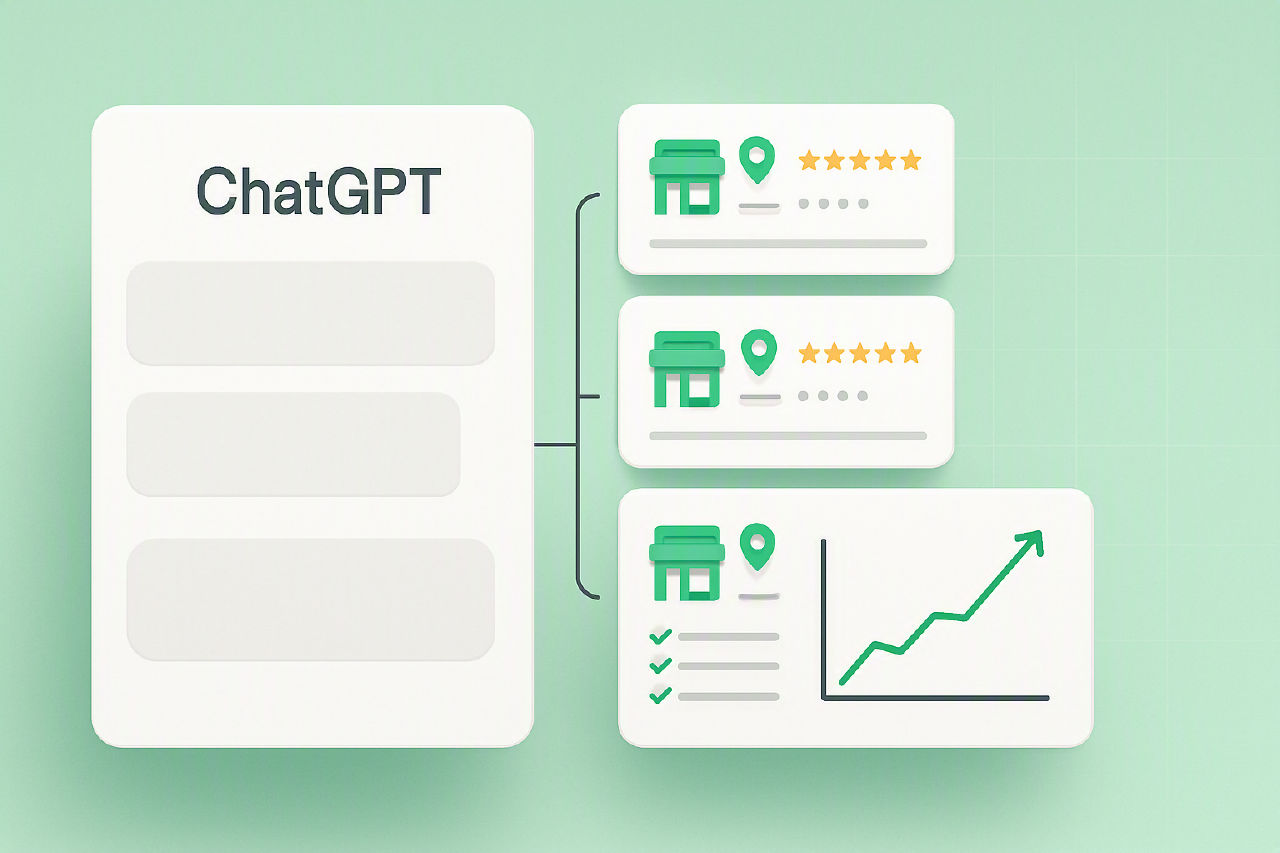
To get named in ChatGPT local business recommendations in 2026, make your business easy to reconcile across public sources: a complete Google Business Profile, one accurate primary category, clean name-address-phone consistency, recent review sentiment that looks genuine, and matching citations on sites such as Yelp, Clutch or TripAdvisor. ChatGPT does not rank local companies from one dashboard the way Google Maps does. It pulls from web sources and entity matching. If your listings conflict, reviews are sparse or stale, or rivals are mentioned more often on trusted profiles, your chances drop.
We work on the signals that usually decide this: verified review velocity, citation cleanup, category corrections and evidence-based negative review removal. On removal cases, the part most owners miss is the evidence pack: the basic report button rarely moves a review, but a dated timeline, transaction check and policy match often does.
BGR Review has served 15,000+ businesses and logs outcomes against a strict three-state model: removed, unresolved or unknown. That matters here because the same source-checking discipline you need for disputed reviews is what helps a business appear consistently when ChatGPT tests the web for a local recommendation.
Why do generic ChatGPT SEO tips miss local business recommendations?
Generic ChatGPT advice misses local recommendations because an AI system has to match a real business entity, location, category and reputation record before it names you. If those records do not reconcile cleanly, stronger page copy and a better blog usually do very little.
Most generic SEO playbooks push topical pages, internal links and longer articles. That helps page-level discovery, but local naming decisions lean harder on entity reconciliation: does your Google Business Profile match your site, do third-party citations repeat the same name-address-phone details, and does your category fit the prompt and the service area relevance the user asked for. In BGR Review audits, the first pass is usually three prompt tests, then source checks, then listing conflicts. A polished homepage with weak location data loses to an average site with clean records.
The other miss is signal weight. Website trust signals still matter, especially contact details, service pages and local business schema, but clean citations, accurate categories and review text that describes the job often outweigh another generic “best service” article. We test this across three query types because the failure mode changes: service queries like “best emergency plumber”, nearby queries like “plumber near me”, and comparison queries like “better roofer than X”. If you want the mention, fix the business record first and the content second.
How does ChatGPT actually decide which local businesses to name?
ChatGPT usually names a local business when several trusted sources agree on the same entity, location, services and customer reputation. A single polished profile rarely carries the decision on its own; cross-source consensus usually does.
Most guides treat local visibility as if one Google Business Profile can do the job. That fails because AI recommendations depend on entity reconciliation: the model has to match your website, map listing, review pages and third-party citations into one business record instead of two near-matches with different phone numbers or suite details. If your address is wrong, your old practitioner listing still exists, or a duplicate profile keeps an outdated category, the model has less confidence in naming you. We see this in live audits when a merged or duplicate entity starts absorbing reviews but keeps conflicting location data, and mentions can drop within days.
The businesses that get named most often give the system four clean signals at once. Relevance comes from the service described on your site and listings, including service area relevance if you travel to customers rather than serve walk-ins. Reputation comes from review sentiment and recency across platforms, not one isolated star rating. Consistency comes from matching name, address and phone details, while third-party corroboration comes from citations on directories, chambers, trade portals and editorial mentions that repeat the same facts.
The practical fix order is blunt. Clean duplicates first, correct the address and primary category everywhere, tighten service-area pages on your site, then update the citations that search systems trust most. At BGR Review, this is also why our review packages include a 30-day free replacement guarantee: recommendation visibility depends on stable, verified signals across platforms, not a one-off listing tweak.
Which local signals most often turn into AI recommendations first?
AI local recommendations usually surface from four checks first: category fit, review sentiment, review recency and corroborating mentions on trusted platforms. A business with cleaner local signals across Google Business Profile, Yelp, Trustpilot, Clutch or TripAdvisor will usually get named before a competitor with a larger website but muddled records.
Primary category selection is often the first relevance gate because it tells the model what job your business is for before it reads a single service page. If your Google Business Profile says “marketing agency” but your reviews and citations describe web design, PPC and SEO in different ways, entity matching gets messy and the recommendation engine has less confidence naming you for a local-intent prompt. Most generic ChatGPT SEO advice pushes more location pages and FAQ copy; that fails when the website says one thing and your local profiles point to another. Clean category alignment works because AI can verify it across sources instead of trusting your own copy.
Recent, descriptive reviews then do the heavy lifting on service quality and use case. In BGR Review’s dataset of 1,485 businesses observed from February to July 2026, new trades and local service firms that reached 20–30 reviews over the first three months were associated with improved local visibility, alongside other ranking factors. The useful part was rarely volume alone. Review sentiment that mentions “emergency boiler repair”, “same-day tow” or “Saturday teeth whitening” gives the model language it can reuse, while stale five-star reviews with no detail do little for map pack click-through rate, conversions or branded search demand.
Trusted third-party citations often decide the tie when two businesses look similar on their own sites. A clean name, address and phone trail, plus consistent service descriptions on platforms the model already knows, confirms prominence beyond your domain and makes the local pack profile easier to trust. If you are deciding where to spend effort first, fix the category, tighten recent review quality, then clean the third-party mentions. Extra website content comes after that.
How much does your Google Business Profile still matter if ChatGPT names businesses?
Google Business Profile still matters because it supplies the business facts that other systems compare against your site and third-party listings. A clean category choice, matching address details and a believable review profile make it easier for ChatGPT and similar tools to name you consistently instead of hesitating or naming a rival.
Treating your Google Business Profile as “just Maps SEO” fails because AI systems use it as a foundational entity source, not only a ranking surface. Your primary category tells external systems what you are, your NAP consistency helps them reconcile whether your website, citations and profile describe the same company, and your reviews add current evidence that you still operate in that category and location. In BGR Review’s dataset of 1,485 businesses observed from February to July 2026, trades businesses with complete enquiry-source data attributed 70–80% of calls and bookings to a Google Business Profile or Yelp listing rather than a website, which is a strong reminder that profile data still shapes both the map pack and downstream branded search demand.
The right approach is to treat the profile as a master reference and remove mismatch signals before you worry about prompt engineering. In a practical audit, the first checks are the primary category, trading name, phone number, hours, service list and whether the same details appear on your site footer and major citations. If your hours are incomplete, your services are missing, or an old address still appears on a directory, you give external systems conflicting inputs that lower confidence and hurt click-through rate, conversions and recommendation consistency.
Incomplete fields create avoidable problems in 2026 because AI tools cross-check more than one source before naming a local business. A plumber with “Contractor” as the primary category, no emergency callout service listed and thin recent reviews will often lose mention share to a profile that says “Plumber”, shows accurate weekend hours and has fresh review sentiment that matches the service area. That does not guarantee top placement in the local pack, but it gives ChatGPT a cleaner entity to recognise.
How are ChatGPT recommendations different from Google Business Profile rankings?
Google Maps weighs proximity hard, so the nearest relevant Google Business Profile can rank even when its wider reputation is thin. ChatGPT works more like a synthesis layer: it can name businesses outside the local pack when the evidence around them is better described, better corroborated and easier to defend.
The wrong approach is to treat AI visibility as a map-pack clone and chase distance alone. That fails because conversational answers are built from multiple signals at once: your category and service match, your review sentiment in the actual text, and whether third-party citations repeat the same business details and claims. A business sitting fourth or fifth in Maps can still get named if its reviews explain the work clearly, its website supports the same service area, and outside profiles back up the entity match.
This comparison is easier to see side by side.
| System | What it tends to reward first | What that changes |
|---|---|---|
| Google Maps / local pack | Distance, category fit, profile completeness, steady review activity on your Google Business Profile | Position and map-pack click-through rate, especially on “near me” searches |
| ChatGPT local recommendations | Most defensible recommendation across sources: strong review sentiment, consistent third-party citations, clear service descriptions, fewer entity conflicts | Whether your brand gets mentioned by name, even outside the top 3 map results |
The right approach is to build for both systems at once. In BGR Review’s dataset of 1,485 businesses observed from February to July 2026, trades firms with complete enquiry-source data attributed 70–80% of calls and bookings to a Google Business Profile or Yelp listing, which tells you Maps still drives conversions; AI mentions help most when they reinforce trust, lift branded search demand and send a better-qualified click before the reader ever reaches your site.
Why do reviews influence whether ChatGPT recommends your business by name?
Reviews shape whether ChatGPT names your business because they contain natural-language proof about what you do, how well you do it, and whether that still holds now. Fresh, specific review text usually carries more recommendation value than vague praise or an old star rating with no recent validation.
The wrong approach is chasing a high star rating alone. A 4.8 average looks strong on a Google Business Profile or Trustpilot page, but if the review recency is weak and the text says nothing beyond “great service”, ChatGPT has little evidence for local-intent prompts such as emergency boiler repair, paediatric dentist, or vegan brunch near me. The right approach is a steady flow of detailed feedback that names the service, context and outcome, because review sentiment becomes machine-readable evidence rather than a bare score.
A fresher 4.6 can beat a stale 4.8 when the query needs confidence about current operations. If your last meaningful praise came 14 months ago, older sentiment may no longer reflect current staff, opening hours, menu changes or service area relevance, and that weakens both map-pack click-through rate and the chance of being named in AI results. In BGR Review’s dataset of 1,485 businesses observed from February to July 2026, new trades and local service businesses typically saw first reviews around two weeks after launch, and reaching 20–30 reviews over the first three months was associated with improved local visibility while other ranking factors were active at the same time.
This is why BGR Review’s review packages carry a 30-day free replacement guarantee instead of a longer headline promise. Recent, specific reviews help branded search demand, calls and bookings more than a dormant profile with a pretty average, and they give ChatGPT clearer language to reconcile with your category, services and location.
How do citations, NAP consistency, and schema help ChatGPT trust your location data?
Citations, NAP consistency and schema help AI systems decide that every mention points to one real business at one real location. If your website, directories and profiles disagree, entity reconciliation gets weaker, recommendation confidence drops, and a competitor with cleaner records becomes the safer name to surface.
Most guides push more directory submissions. That fails when the extra records carry old phone lines, shortened business names, or a suite number on one profile and no suite number on another. ChatGPT and other AI systems do not rank a pile of mentions the way a basic citation-counting checklist suggests; they try to reconcile entities across sources, and duplicate-entity risk rises fast when two versions of your address or phone keep appearing.
The better approach is fewer, cleaner records with matching structured data. Your homepage and location page should use LocalBusiness schema that repeats the exact business name, address, opening hours and phone number shown on your Google Business Profile, then add sameAs links to the profiles you actually control, such as Google, Yelp, Trustpilot or Clutch. That gives crawlers one canonical version to compare against third-party citations instead of forcing them to guess.
This is usually the first location-data check we run before any review package with a 30-day free replacement guarantee or any pay-after-success removal job priced at $449 per removed review link. If a business still lists an old tracking number in two directories, or the website says “Suite 210” while Google Business Profile says “Ste 210”, fix those records before you chase more mentions. Clean source agreement supports map-pack trust, click-through rate and conversions because the business looks easier to verify and easier to contact.
What prompt test should you run to see whether ChatGPT mentions your business?
Test ChatGPT with a fixed set of service, city and comparison prompts, then log which businesses it names and which sources it cites. A 12-prompt audit usually shows whether your problem is service area relevance, reputation signals or plain entity confusion.
A single vanity prompt like “Is your brand the best plumber in Leeds?” tells you almost nothing. It bakes your name into the question, ignores geo modifiers people actually use, and misses answer shifts between “best”, “near me”, “open now” and neighbourhood searches. Run the audit before you pay for review work, citation cleanup or a $449 pay-after-success removal case, because the fix depends on what the prompts expose.
Use the same prompt set every week for 4 weeks, in the same model if possible, and record named businesses, cited sources, and answer changes. That log matters because local-intent outputs can change with service area relevance, fresh review sentiment, or a cleaner third-party citation footprint.
| Query type | Prompt examples | What to log |
|---|---|---|
| City + service | Best emergency plumber in Bristol; roofer in Camden; family dentist in Thornhill; accountant in Midtown Manhattan | Named businesses, source links, map-style language |
| Geo modifiers | Plumber near me; open now locksmith in Soho; HVAC in North York; wedding photographer Shoreditch | Neighbourhood handling, service-area matching, answer drift |
| Comparison intent | Top 3 roofers in Brooklyn; compare York divorce solicitors; who has better reviews: A or B | Whether reviews, directories or website pages drive mentions |
The right approach works because it tests local-intent query types the way a buyer searches, then gives you evidence you can act on. If your company appears only on neighbourhood prompts, widen service area relevance; if competitors win every comparison prompt, fix review recency and third-party mentions first. That is a better use of budget than guessing, even if you later use BGR Review’s 30-day free replacement review packages to close a genuine review gap.
What should you fix first if ChatGPT names competitors instead of your company?
If ChatGPT keeps naming competitors, compare your profile against three real rivals side by side, then repair the obvious trust gaps first. Recovery usually starts with cleaner business records, fresher review signals and tighter location data, not another round of homepage copy.
Put your business next to three competitors ChatGPT does name and check the same fields in the same order. This is the audit sequence we use before suggesting any BGR Review review package with its 30-day free replacement guarantee, because category selection, review recency and citation cleanliness usually move recommendation visibility before content does.
| Check | Your business | Rival 1 / 2 / 3 |
|---|---|---|
| Primary + secondary categories | Do they match the real service? | Exact category gaps often explain mentions |
| Review freshness + sentiment | Recent, detailed, location-specific? | Profiles with newer reviews get cited more often |
| Citation cleanliness | Same name, address, phone everywhere? | Conflicts break entity reconciliation |
| Service area relevance | Clear town and service-page coverage? | Rivals often win on cleaner local intent matching |
The wrong move is publishing more content first. It fails because ChatGPT and similar systems can already crawl your site, but they hesitate when your NAP consistency is weak, your Google Business Profile has duplicates, or third-party citations point to old numbers and old addresses. That split identity blocks entity reconciliation, so branded search demand and map-pack strength do not transfer cleanly into AI mentions.
Fix the records first: merge or remove duplicate listings, correct every NAP variant, tighten categories, and add missing service pages for each live area you actually cover. If a rival has cleaner service area relevance for “emergency plumber in Croydon” or “family dentist in Thornhill,” your general homepage will lose. Re-test the exact same prompt set after 30 days, not 48 hours; citation updates, review freshness and profile trust signals need time to settle before you judge whether mentions, click-through rate and conversions are improving.
Can fake reviews or paid endorsements hurt your chances of being recommended?
Yes. Fake reviews and undisclosed paid endorsements can reduce recommendation visibility because they corrupt trust signals, distort review sentiment, and create compliance risk under platform policies and laws that vary by country. The safer route is genuine review collection with clear disclosure where any incentive exists.
The wrong approach is short-term review inflation: paying for praise, hiding the payment, and hoping the higher average lifts map-pack clicks, branded search demand, and AI mentions. That fails twice. First, the U.S. FTC endorsement guides require material connections to be disclosed, so an undisclosed paid testimonial can become a compliance problem; second, platforms such as Google and Trustpilot apply their own review and misrepresentation rules, and a profile with manipulated sentiment is harder for both users and AI systems to trust. If a review states false facts rather than harsh opinion, defamation issues can arise, but the remedy depends on the country, the wording, and the evidence.
The right approach is documented, policy-safe review generation: ask real customers at the right moment, keep disclosure records, and fix weak service points that keep recurring in review sentiment. This is general information, not legal advice.
Does getting named by ChatGPT actually bring leads, or just curiosity clicks?
Being named by ChatGPT can produce leads when the prompt shows buying intent, especially “best roofer near me”, “compare local accountants” or “who should I call today” type searches. Judge the value over 8 to 12 weeks by tracking calls, form fills and branded search lift before you increase spend.
The wrong approach is counting mentions from broad educational prompts like “how does roof repair work” and treating that as proof of ROI. Those queries drive curiosity clicks, weak conversions and noisy traffic to pages with thin website trust signals. The right approach is to test commercial prompts, then match each mention to enquiry data from your contact form, call tracking and your branded search trend, because provider-selection queries sit much closer to the map pack and booking decision.
If you are not seeing lead movement, fix review recency and third-party citations before you buy new content or software. A profile with old reviews, inconsistent directory mentions and weak service-page proof usually gets named less often in local comparisons, even when the business has decent rankings elsewhere. In BGR Review’s dataset of 1,485 businesses observed February to July 2026, trades firms with complete enquiry-source data attributed 70–80% of calls and bookings to a Google Business Profile or Yelp listing, which is why citation cleanup and fresh review flow usually deserve budget before another tool subscription.
What does a practical 30-day plan look like if you want more ChatGPT mentions?
Start with an audit, then fix category and data mismatches before you chase more content. In a 30-day window, you usually improve your chances of being named in ChatGPT faster by cleaning records than by publishing another generic blog post.
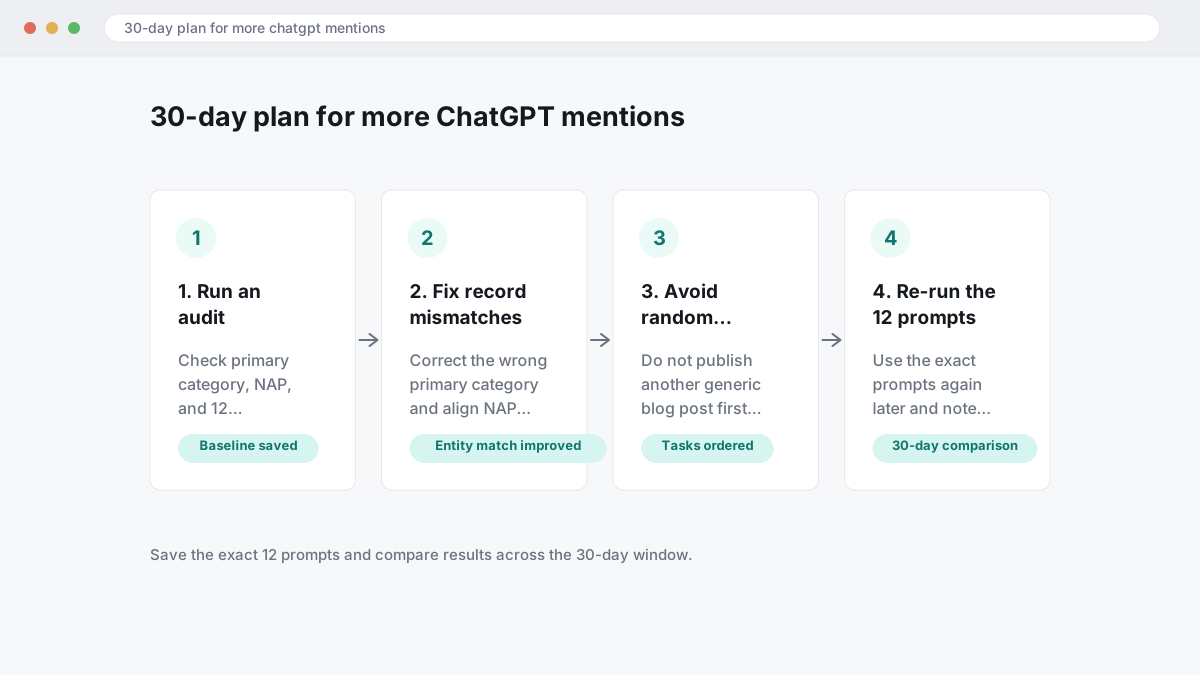
Random optimisation fails because it mixes tasks that depend on each other. If Week 1 finds that your Google Business Profile uses the wrong primary category, your NAP differs across top citation profiles, or your 12 local-intent prompts name three competitors instead of you, adding pages first will not fix the entity match. Save the exact 12 prompts, run them again later, and note whether the model names you, omits you, or confuses you with another location.
Use Week 2 to fix the website layer: local business schema, sameAs links to your live profiles, and any service-area page that targets towns your profile does not actually serve. Then spend Weeks 3 and 4 improving review recency on the platform that drives your local pack clicks first, usually Google Business Profile, because fresh detailed reviews change recommendation confidence faster than static copy edits.
Where to go from here
Run the audit before you chase “AI visibility”. Pull your Google Business Profile, website contact details, top third-party citations, and the last 20 reviews on each live platform into one sheet. Then test the same business through local-intent prompts: “best emergency plumber near me”, “top-rated family dentist in [area]”, “who do people trust for [service] in [city]”. Check whether the answer names you, confuses you with another entity, or skips you entirely.
Fix the trust signals in order. Start with NAP consistency, duplicate or conflicting listings, wrong primary category, missing service areas, and thin review recency. After that, tighten website trust signals and local business schema so entity reconciliation is easier for both search engines and AI systems. This usually changes map-pack click-through rate before it changes recommendation frequency, and stronger click behaviour tends to help calls, bookings, form fills and branded search demand.
If you want a practical baseline, BGR Review audits the same inputs we use in review and removal work: listing conflicts, source mentions, review gaps and policy issues. Keep your expectations realistic. A clean entity footprint helps; it does not force ChatGPT to name you on every prompt.